Hamilton Concedes 2026 F1 Title Race as Antonelli Extends Championship Lead
Antonelli strengthens his championship position with a Spanish Grand Prix victory as Hamilton’s Ferrari campaign suffers another major setback.

Lewis Hamilton’s 2026 Formula One title campaign has effectively reached its end, but the more significant story emerging from the Spanish Grand Prix is the widening gap between Ferrari’s rebuilding project and Mercedes’ rapidly consolidating position at the top of the championship.
Hamilton retired from the Spanish Grand Prix at Madrid’s new Madring circuit on lap six because of a brake problem. The result left the seven-time world champion 101 points behind Mercedes driver Kimi Antonelli, who won the race and strengthened his position at the top of the standings. George Russell, Antonelli’s teammate, remains second, 81 points behind the Italian, with nine race meetings still remaining.
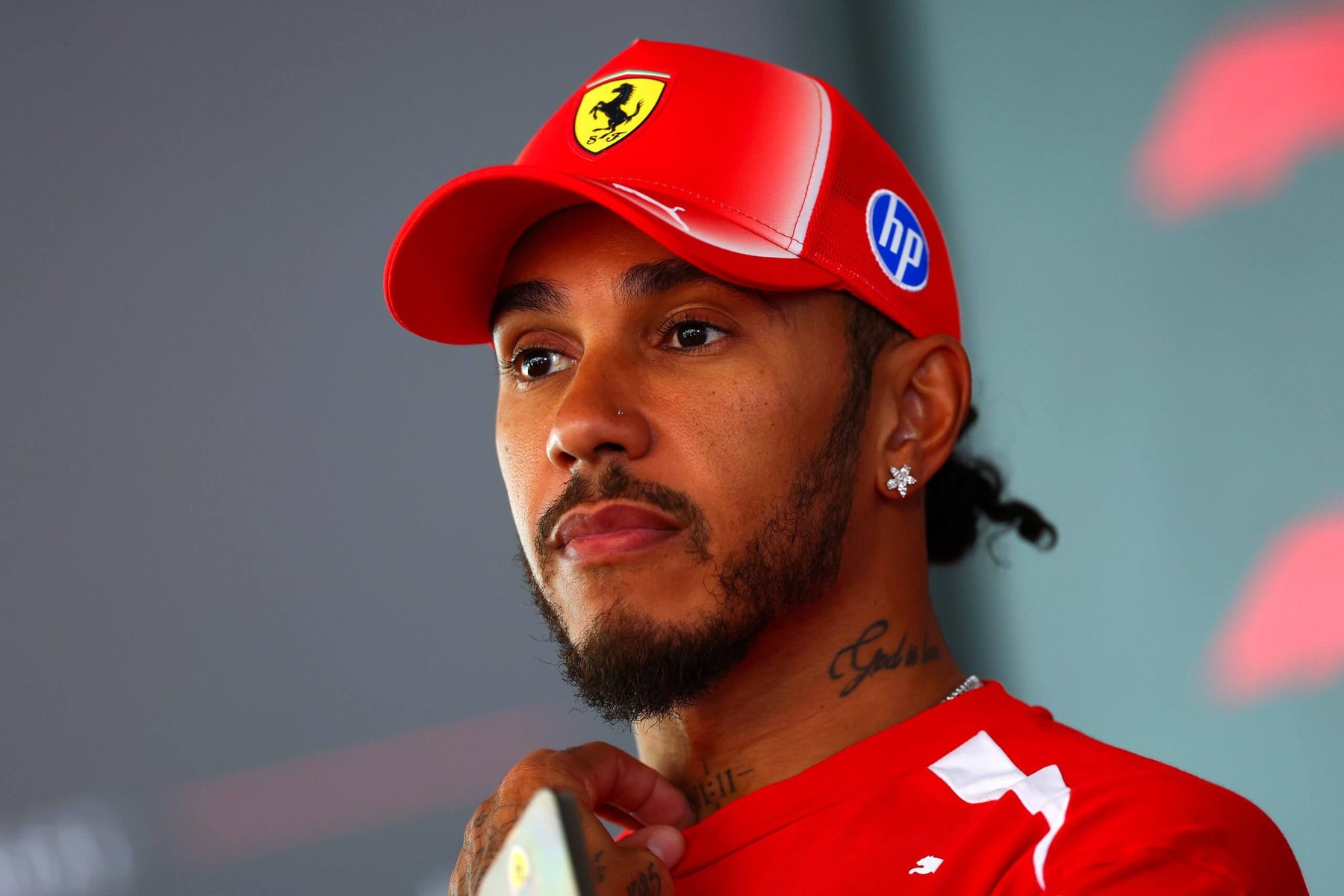
For Hamilton, the result represents another difficult stage in his first season with Ferrari. He had already acknowledged after the Italian Grand Prix that the championship was slipping away, and his latest retirement has effectively removed any realistic path to the title. Yet his comments after the race indicated that he does not view Ferrari’s competitive potential as fundamentally broken.
The Ferrari driver maintained that the team has a capable car and can produce stronger results later in the season. That distinction is important for the Italian manufacturer. The immediate objective is no longer simply recovering lost championship points; it is establishing an operating structure capable of turning performance into consistent results.
Hamilton’s move to Ferrari was one of the most commercially significant driver transfers in recent Formula One history. His arrival created enormous expectations around the team, but the season has demonstrated that a competitive car alone is insufficient. Ferrari must also improve execution, reliability, race operations and coordination between its drivers if it wants to challenge Mercedes and McLaren consistently.
That organizational challenge becomes more visible when compared with Mercedes. Antonelli, who took Hamilton’s former Mercedes seat, has transformed into the leading figure of the championship. His victory in Madrid came after he benefited from the timing of a virtual safety car, allowing him to make a pit stop while Lando Norris was unable to do so without losing track position.
Norris had started from pole and initially controlled the race, but the virtual safety car was deployed immediately after he passed the pit entry. Antonelli was able to stop under the neutralized conditions and emerge ahead. With overtaking extremely difficult around the new circuit, Norris could not recover and finished third, while Max Verstappen took second.
The incident created another debate over Formula One’s sporting regulations. Norris argued that the current virtual-safety-car pit-stop rules can produce outcomes determined more by timing than by racing performance. He suggested that the rules could be adjusted so that drivers receive at least one lap of protection or that pit entry be temporarily closed when a virtual safety car is introduced.
The controversy also highlights a wider commercial issue for Formula One. As the championship expands its global audience and invests in new venues, the quality of racing and the perceived fairness of strategic outcomes become increasingly important to the sport’s entertainment value. A circuit that makes overtaking difficult can place even greater importance on race-control procedures and pit-stop timing.
For Mercedes, however, the Spanish Grand Prix was another confirmation of a successful transition. Antonelli’s rise is particularly significant because he inherited a seat previously occupied by one of the most commercially recognizable drivers in the sport. Instead of creating a prolonged period of uncertainty, Mercedes has rapidly converted its young driver into the central figure of its championship campaign.
That transition also carries strategic implications for the team’s identity. Mercedes is no longer simply defending the legacy of its previous championship era. It is building a new competitive cycle around Antonelli and Russell, with the Italian’s consistency providing the strongest evidence that the team’s long-term investment in young talent is producing results.
Ferrari faces a different challenge. Hamilton remains a major global asset for the team, but the value of his partnership with Ferrari will ultimately be judged by competitive performance as well as visibility. The team therefore has to convert the remaining races into a development program, using the experience of the seven-time champion to identify weaknesses and improve its operational processes before the next championship cycle.
Hamilton himself has also changed his framing of the season. Rather than continuing to focus on an increasingly unrealistic title challenge, he has emphasized Ferrari’s future potential. That approach could allow the team to concentrate on measurable improvements without the pressure of maintaining a championship narrative that no longer reflects the standings.
Antonelli, meanwhile, has moved into a position where the championship is increasingly his to lose. With Russell 81 points behind and Hamilton 101 points adrift, Mercedes controls both the leading driver and the second-place position. The team’s challenge is now to protect that advantage while avoiding reliability problems, internal conflicts or strategic errors that could reopen the contest.
The Spanish Grand Prix therefore produced a decisive shift in the 2026 Formula One story. Hamilton’s championship ambitions have effectively ended, Ferrari’s focus must move toward strengthening its competitive infrastructure, and Mercedes has emerged with a young driver who is rapidly turning promise into championship authority.
For Formula One itself, the emerging rivalry between established stars and a new generation could become one of the defining commercial narratives of the coming seasons. Antonelli’s ascent gives Mercedes a fresh identity, while Hamilton’s Ferrari chapter remains one of the sport’s biggest global stories. The balance between those two narratives will continue to shape the championship long after the 2026 title is decided.
News You Should See
2026 Nobel Medicine Prize Honors Scientists Behind Optogenetics Breakthrough
Oil Prices Edge Lower as Stronger Middle East Exports and G7 Reserves Ease Supply Concerns
Trump Offers U.S. Assistance to Russia After Death at Siberian Plague Research Institute
Trump Takes Economic Message to Nebraska as GOP Faces Rising Cost-of-Living Pressure
U.S. Appeals Court Weighs Trump Administration’s $2.6 Billion Harvard Funding Fight
U.S. Midterm Elections Begin With Resilient Jobs Market and Persistent Cost Pressures
Latest News
The 2026 Nobel Prize in Physiology or Medicine honors Karl Deisseroth, Peter Hegemann and Georg Nagel for pioneering research behind optogenetics and its impact on neuroscience.
Oil prices edged lower as stronger Middle Eastern exports and a planned G7 release of 100 million barrels eased immediate supply concerns, while Gulf security risks and the Strait of Hormuz kept markets alert.
President Donald Trump said the United States would help Russia if needed after a laboratory worker died at a Siberian plague research institute, as Russian authorities imposed precautionary quarantine measures.
Trump’s Nebraska campaign stop highlights rising fuel and grocery costs, beef prices and growing economic pressure on Republicans ahead of the November midterm elections.
A U.S. appeals court is reviewing the Trump administration’s effort to cut Harvard’s federal research funding, with more than $2.6 billion at stake.
The U.S. enters the 2026 midterm elections with unemployment at 4.2%, while higher living and energy costs create economic pressure for households and businesses.
US services growth eased in September as input prices climbed to their highest level since July 2022, with fuel costs, supply-chain disruptions and strong demand increasing pressure on businesses.
Rising Treasury yields are increasing U.S. borrowing costs as Washington manages record debt, persistent inflation and strong economic demand, narrowing its policy options.
A EGP 16 million corporate partnership will establish and equip a bone marrow transplant unit at Cairo’s Coptic Hospital, supporting access to specialized treatment for patients.