Greece’s 13 Beaches That Define the Ultimate Mediterranean Escape
From dramatic shipwreck coves to secluded stretches of sand, Greece offers a beach experience for every kind of traveler

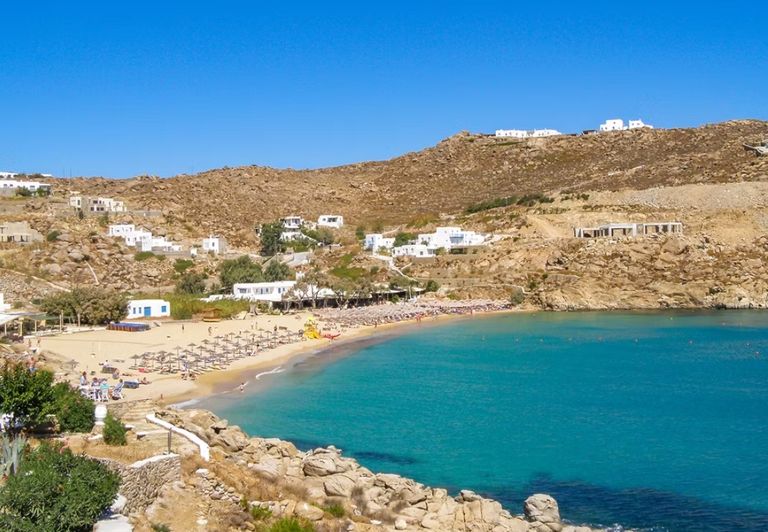
Greece’s appeal as a beach destination comes from the sheer variety of its coastline. Across the Ionian and Aegean seas, travelers can move between dramatic cliffs, broad sandy shores, secluded coves and beaches shaped by distinctive landscapes. The result is a destination where choosing the right beach can be as important as choosing the island itself.
Among the country’s standout coastal destinations is Paleokastritsa in Corfu, a resort area surrounded by rugged mountains, cypress trees and olive groves. Its coastline is divided into a series of picturesque bays, giving visitors a combination of scenery and swimming opportunities. Its popularity, however, means that peak-season visitors should expect crowded stretches of sand and strong demand for sunbeds.
On Crete, Falasarna offers a different proposition. Its broad sandy coastline is particularly attractive toward sunset, when the western-facing shore becomes one of the island’s most memorable places to watch the day end. Clear water, waves and water-sports opportunities add an active dimension to the destination, although visitor numbers rise substantially during the heart of summer.
Karpathos delivers a more secluded experience at Apella Beach. Backed by steep terrain and surrounded by natural scenery, the beach is considered one of the strongest coastal attractions in the Dodecanese. Reaching it requires navigating a challenging road, making access by boat from Pigadia an attractive alternative for travelers seeking convenience and scenery at the same time.
Zakynthos provides perhaps the most instantly recognizable setting at Navagio, or Shipwreck Beach. Towering cliffs surround the cove, while the famous shipwreck provides a defining visual landmark. The beach is accessible by boat, which makes the journey part of the experience but also contributes to heavy visitor traffic during the summer season.
The diversity continues across Greece. Other selections in the guide include beaches suited to different travel priorities, including family-friendly swimming, dramatic landscapes, water sports and quieter escapes. Possidi Cape on the Kassandra Peninsula, for example, stands out for its sense of isolation, with a long stretch of sand bordered by clear water, pine forest and a lighthouse. The lack of facilities makes preparation essential, while strong currents mean visitors need to exercise particular caution.
Seychelles Beach on Ikaria offers another distinctive visual experience. Its large white rocks and secluded setting create an atmosphere that can feel closer to a tropical destination than a conventional Greek island beach. This type of landscape illustrates why Greece competes not simply as a traditional sun-and-sea destination, but as a country offering highly differentiated coastal experiences.
The strategic value of this diversity extends beyond individual beaches.
For Greece’s tourism industry, beaches function as powerful gateways to broader destinations. A traveler attracted by a famous coastline can generate demand for accommodation, restaurants, transportation, boat excursions, local businesses and cultural experiences.
This means that the strongest destinations are not necessarily those with the most famous beaches, but those capable of converting coastal appeal into longer stays and wider tourism spending.
The challenge is managing popularity.
Several of Greece’s best-known beaches experience significant pressure during the high season. Falasarna becomes particularly busy from mid-July through mid-August, while Navagio and Paleokastritsa can also attract substantial crowds.
That creates an increasingly important question for Mediterranean tourism: how can destinations maximize visitor spending without allowing overcrowding to undermine the very landscapes that attract travelers?
The answer may lie in diversification.
Instead of concentrating visitors around a small number of globally recognized beaches, tourism operators and destination authorities can promote a wider network of coastal locations. Greece’s geographical diversity makes this approach particularly viable, as travelers can find different experiences across islands and mainland destinations.
Travel timing is another major factor.
The most famous beaches can become dramatically different experiences outside the busiest weeks of summer. Lower-demand periods can offer more space, easier access and a slower pace, while still allowing visitors to experience many of the landscapes that define Greece’s coastal identity.
For travelers, the lesson is simple: there is no single "best" Greek beach.
The ideal choice depends on what the trip is meant to deliver.
Paleokastritsa is suited to travelers looking for scenery and mythology. Falasarna is particularly compelling for sunset seekers and water-sports enthusiasts. Apella appeals to those willing to trade convenience for a spectacular setting, while Navagio is designed almost perfectly for travelers searching for a dramatic landscape. Possidi Cape is better suited to those prioritizing isolation over facilities.
This segmentation is one of Greece’s greatest tourism strengths.
Rather than competing through a single standardized beach product, the country can offer multiple versions of the Mediterranean holiday: active, luxurious, family-oriented, adventurous, scenic or secluded.
That diversity also supports different tourism business models.
A crowded resort beach can support restaurants, accommodation and organized activities, while a remote beach can appeal to travelers seeking premium experiences built around nature, privacy and exclusivity.
The commercial opportunity is therefore not limited to the beach itself.
It extends to the entire visitor journey.
Transportation providers, local guides, hospitality businesses, water-sports operators and restaurants all benefit when a coastal attraction becomes part of a broader itinerary.
This is particularly important for islands, where tourism represents a major component of local economic activity.
At the same time, the popularity of these destinations reinforces the importance of responsible tourism.
Some beaches have limited facilities or challenging access, while others face environmental and safety considerations. Travelers need to account for conditions, access routes, available services and local regulations rather than treating every famous beach as interchangeable.
The future of Greek beach tourism will likely depend on balancing visibility with sustainability.
International recognition can generate enormous economic value, but excessive concentration can reduce the quality of the visitor experience and place pressure on local ecosystems.
Greece therefore has an opportunity to shift from simply promoting its most photogenic beaches toward marketing a broader coastal portfolio.
That could encourage visitors to explore less crowded destinations, extend their stays and distribute tourism spending more widely.
Ultimately, the appeal of Greece’s beaches is not based on a single landscape or a single type of traveler.
It comes from the ability to offer radically different experiences within one country.
From the dramatic cliffs of Zakynthos to the sunset coastline of Crete, the rugged coves of Karpathos and the quieter shores of Halkidiki, Greece’s beaches form a diverse tourism ecosystem rather than a simple list of postcard locations.
For travelers planning a Mediterranean escape, that diversity is perhaps the country's greatest advantage: the challenge is not finding a beautiful beach in Greece, but finding the one that best matches the experience they want.
News You Should See
2026 Nobel Medicine Prize Honors Scientists Behind Optogenetics Breakthrough
Oil Prices Edge Lower as Stronger Middle East Exports and G7 Reserves Ease Supply Concerns
Trump Offers U.S. Assistance to Russia After Death at Siberian Plague Research Institute
Trump Takes Economic Message to Nebraska as GOP Faces Rising Cost-of-Living Pressure
U.S. Appeals Court Weighs Trump Administration’s $2.6 Billion Harvard Funding Fight
U.S. Midterm Elections Begin With Resilient Jobs Market and Persistent Cost Pressures
Latest News
The 2026 Nobel Prize in Physiology or Medicine honors Karl Deisseroth, Peter Hegemann and Georg Nagel for pioneering research behind optogenetics and its impact on neuroscience.
Oil prices edged lower as stronger Middle Eastern exports and a planned G7 release of 100 million barrels eased immediate supply concerns, while Gulf security risks and the Strait of Hormuz kept markets alert.
President Donald Trump said the United States would help Russia if needed after a laboratory worker died at a Siberian plague research institute, as Russian authorities imposed precautionary quarantine measures.
Trump’s Nebraska campaign stop highlights rising fuel and grocery costs, beef prices and growing economic pressure on Republicans ahead of the November midterm elections.
A U.S. appeals court is reviewing the Trump administration’s effort to cut Harvard’s federal research funding, with more than $2.6 billion at stake.
The U.S. enters the 2026 midterm elections with unemployment at 4.2%, while higher living and energy costs create economic pressure for households and businesses.
US services growth eased in September as input prices climbed to their highest level since July 2022, with fuel costs, supply-chain disruptions and strong demand increasing pressure on businesses.
Rising Treasury yields are increasing U.S. borrowing costs as Washington manages record debt, persistent inflation and strong economic demand, narrowing its policy options.
A EGP 16 million corporate partnership will establish and equip a bone marrow transplant unit at Cairo’s Coptic Hospital, supporting access to specialized treatment for patients.