Google Strengthens Pixel 11 Pro Fold as Durability Becomes Key in the Foldable Market
The new foldable is lighter and thinner, with a redesigned hinge, brighter displays, upgraded cameras and improved durability, but comes with a smaller battery and a $1,899 price tag.

Google is taking a measured approach to its latest foldable smartphone. Rather than redesigning the Pixel 11 Pro Fold around a radically different form factor, the company is concentrating on the areas that have historically determined whether foldable devices can move from premium experiments into durable everyday products.
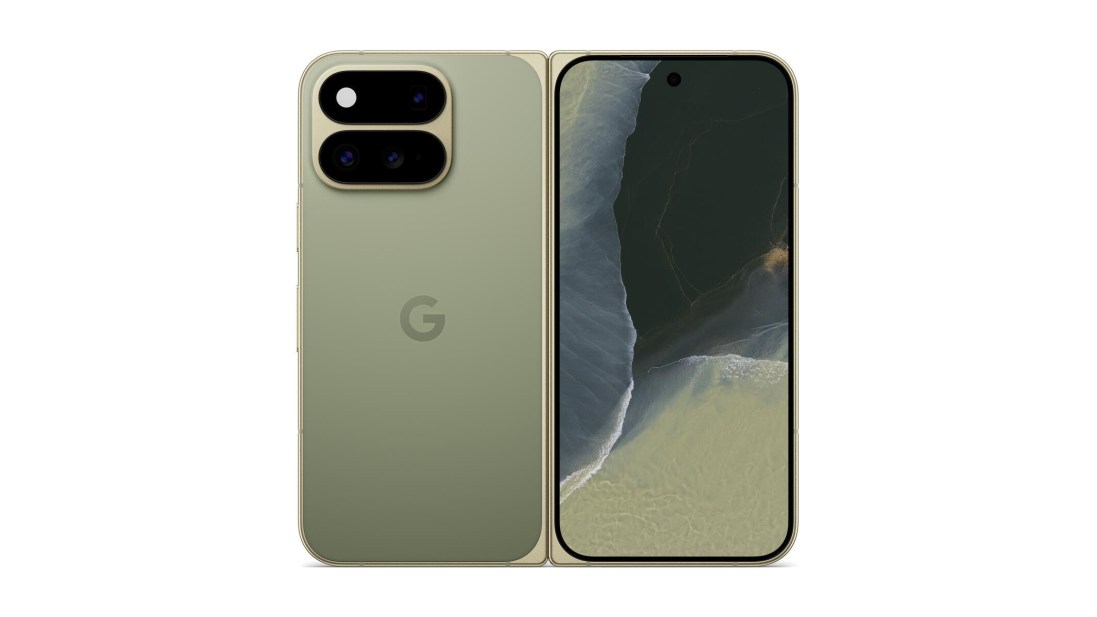
Unveiled as part of Google's latest Pixel hardware lineup, the Pixel 11 Pro Fold retains a familiar external design while introducing a stronger hinge, brighter displays, a lighter body and improvements to the camera system. The device will sell for $1,899 in Olive and Obsidian finishes.
The strategy reflects a broader reality in the foldable market. As manufacturers compete to make these devices thinner and more versatile, durability remains one of the biggest barriers to mainstream adoption. A foldable phone has more mechanical complexity than a conventional smartphone, particularly around the hinge and flexible inner display.
Google's decision to prioritize structural improvements therefore has a direct commercial rationale. Consumers considering a phone at nearly $2,000 are likely to evaluate not only the size and flexibility of its screens but also how well the device can survive years of folding, carrying and everyday use.
The redesigned hinge is central to that proposition. Google says the new mechanism provides additional protection for the inner display, while the phone's glass-fiber composite back is designed to better withstand cracking. The company says these changes make the Pixel 11 Pro Fold three times more durable than its predecessor.
The company is also continuing the IP68 dust and water resistance introduced with the previous generation. This gives Google another way to position the foldable as a more mature product rather than a fragile piece of experimental hardware.
The emphasis on durability is particularly important for the Pixel brand. Google's foldable strategy has increasingly been defined by making the form factor more dependable rather than simply chasing the thinnest possible design.
That approach contrasts with parts of the current market, where manufacturers are experimenting aggressively with new dimensions and increasingly thin bodies. Google is instead making incremental improvements to a familiar design while concentrating on reliability.
The result is a device that is nearly 10% lighter and almost 1mm thinner than the Pixel 10 Pro Fold. The reduction in weight and thickness makes the phone easier to carry while addressing one of the longstanding criticisms of foldable smartphones: their tendency to be substantially heavier and bulkier than conventional flagship devices.
The trade-off, however, is visible in the battery. The Pixel 11 Pro Fold carries a 4,750mAh battery, compared with 5,015mAh in the previous model. The smaller battery appears to contribute to the reduction in overall size and weight, but it creates an important question about whether Google's efficiency improvements can offset the lower capacity.
Google has compensated to some extent on the charging side by adding 25W wireless charging. While this is a relatively modest hardware improvement, it contributes to the broader goal of making the foldable easier to use throughout the day.
Displays represent another major area of improvement.
The outer screen now uses Google's Super Actua display technology and reaches up to 3,600 nits of peak brightness. Both the internal and external displays are 20% brighter than those of the previous generation, according to Google.
Brightness is not simply a specification for a premium foldable. It directly affects usability, particularly when the device is used outdoors. Foldable phones are often purchased because users want a large internal display without giving up the convenience of a conventional outer screen, so improving visibility on both panels strengthens the core proposition of the form factor.
The slimmer bezels also help Google modernize the visual identity of the device without radically changing its overall shape. The company is therefore refining rather than reinventing the foldable design.
Camera improvements provide another reason for existing Pixel users to consider upgrading. The Pixel 11 Pro Fold receives an updated 48-megapixel sensor designed to capture more light and produce more detailed images across different lighting conditions.
Google is also pairing the camera upgrade with its new G6 Tensor chip and updated image processor. Together, these components enable digital zoom of up to 30x, compared with 20x on the previous generation.
The move is strategically important because photography remains a central part of the Pixel brand. Google has built much of its smartphone identity around computational photography, and extending those capabilities to the foldable helps prevent the premium form factor from feeling like a compromise in imaging.
The G6 Tensor platform also reinforces Google's broader hardware strategy. Instead of treating the foldable as a specialized device with a separate technology roadmap, the company is integrating it into the same computational ecosystem that supports the wider Pixel family.
This becomes increasingly relevant as Google's competitive advantage shifts toward the combination of custom silicon, software and artificial intelligence. Hardware specifications can be matched by competitors, but the interaction between Google's processor, imaging software, Android and Gemini creates a more difficult ecosystem to reproduce.
The Pixel 11 Pro Fold is therefore part of a larger transformation in Google's hardware business. The company is building Pixel as a connected family of products rather than a collection of independent devices.
The foldable can benefit from this strategy because its larger internal display provides an attractive environment for multitasking, content consumption, productivity and AI-powered features. At the same time, the external display allows the device to function like a conventional smartphone when the larger screen is unnecessary.
That dual-use proposition remains the fundamental reason for buying a foldable. The challenge for manufacturers is convincing consumers that the additional flexibility justifies the higher price and the compromises associated with a more complex design.
At $1,899, Google's latest model remains firmly positioned in the ultra-premium segment. This means the company is competing not only against other foldables but also against the highest-end conventional smartphones, which can offer advanced cameras, powerful processors and large displays at lower prices.
Google therefore needs durability and software intelligence to become meaningful differentiators rather than secondary specifications.
The stronger construction could be particularly valuable in this context. If consumers view foldable phones as devices that require special care, adoption will remain limited to enthusiasts and affluent early adopters. If manufacturers can demonstrate that these phones can withstand normal long-term use, the category has a better chance of reaching a broader audience.
Google's three-times-durability claim is therefore more than a technical marketing point. It addresses one of the central objections to the foldable business model: whether consumers can reasonably expect a very expensive device with a moving hinge and flexible display to remain reliable over several years.
The market is also becoming more competitive on physical design. Samsung and Chinese manufacturers have been experimenting with thinner bodies, different aspect ratios and alternative approaches to folding phones. TechCrunch notes that Samsung's shorter, wider foldable design has attracted attention, while Google has chosen not to significantly change its own form factor.
That decision suggests Google is prioritizing product maturity over novelty. The company appears more interested in solving the practical weaknesses of the existing design than in creating another dramatic hardware experiment.
For the Pixel brand, this could be a sensible long-term strategy. A foldable phone does not necessarily need to look radically different every year. What matters commercially is whether each generation reduces the compromises that prevent mainstream consumers from adopting the technology.
The Pixel 11 Pro Fold addresses several of those compromises simultaneously: weight is reduced, the body is thinner, the hinge is stronger, the screens are brighter and the camera system is more capable.
The battery reduction is the clearest counterpoint. A smaller battery could become a concern for users who already demand high screen-on time from a foldable device, particularly given the power requirements associated with large displays, advanced imaging and AI features.
Google's success will therefore depend partly on how efficiently its new hardware and software work together. The G6 Tensor platform and Google's software optimization have to compensate for the reduction in battery capacity if the company wants the thinner and lighter design to be perceived as a net improvement.
This trade-off highlights an important direction in the premium smartphone market: manufacturers increasingly have to balance portability against endurance. Making a foldable thinner and lighter can improve its physical appeal, but doing so often requires difficult decisions around battery size and thermal management.
Google is effectively betting that consumers will value the improved ergonomics and durability enough to accept the smaller battery.
The company's pricing makes that bet even more significant. At $1,899, the Pixel 11 Pro Fold is not competing primarily on affordability. Instead, Google is selling the device as a premium combination of foldable flexibility, durability, display quality, photography and software intelligence.
This positioning also strengthens the broader Pixel identity. The Pixel brand is increasingly associated with Google's interpretation of AI-powered personal computing, where hardware serves as a platform for software and intelligent services.
The foldable form factor adds another dimension to that strategy because it provides a larger canvas for Google's AI and productivity features without requiring users to carry a separate tablet-sized device.
From a competitive standpoint, Google's strongest opportunity may therefore lie in integration. The company controls the Android software layer, Tensor silicon, Pixel hardware and Gemini ecosystem. A foldable device can bring all of these elements together in one premium product.
That gives Google the ability to differentiate through the total user experience rather than through a single hardware component.
The Pixel 11 Pro Fold also demonstrates that Google's foldable strategy is becoming more disciplined. The company is not attempting to reinvent the category with every generation. Instead, it is addressing the factors most likely to influence consumer confidence: durability, weight, screen visibility, camera quality and usability.
If this approach succeeds, it could help Google move the Pixel Fold from an experimental premium product toward a more established part of its smartphone portfolio.
The larger question is whether the foldable market itself can expand beyond its current premium position. High prices remain a significant barrier, while conventional flagship smartphones continue to improve in screen quality, cameras and performance.
For foldables to gain broader adoption, their flexible design must provide enough practical value to justify the premium. Larger displays, multitasking and portability are compelling advantages, but consumers will increasingly expect durability and battery performance to approach conventional smartphones.
Google's latest device moves in that direction, even if it does not eliminate every compromise.
The Pixel 11 Pro Fold ultimately represents a strategy of refinement rather than reinvention. Google is strengthening the physical foundation of its foldable, improving the visual experience and enhancing photography while making the device lighter and thinner.
The company is effectively betting that reliability and ecosystem integration will matter more to long-term foldable adoption than dramatic changes in form factor.
That could prove important as the market enters a more mature competitive phase. The next battle among premium foldables is unlikely to be decided solely by who can create the most unusual design. It will increasingly depend on which manufacturer can deliver a device that consumers trust enough to use every day for years.
For Google, Pixel 11 Pro Fold is an attempt to make that proposition stronger while reinforcing Pixel's broader identity around premium hardware, computational photography, artificial intelligence and integrated software.
News You Should See
2026 Nobel Medicine Prize Honors Scientists Behind Optogenetics Breakthrough
Oil Prices Edge Lower as Stronger Middle East Exports and G7 Reserves Ease Supply Concerns
Trump Offers U.S. Assistance to Russia After Death at Siberian Plague Research Institute
Trump Takes Economic Message to Nebraska as GOP Faces Rising Cost-of-Living Pressure
U.S. Appeals Court Weighs Trump Administration’s $2.6 Billion Harvard Funding Fight
U.S. Midterm Elections Begin With Resilient Jobs Market and Persistent Cost Pressures
Latest News
The 2026 Nobel Prize in Physiology or Medicine honors Karl Deisseroth, Peter Hegemann and Georg Nagel for pioneering research behind optogenetics and its impact on neuroscience.
Oil prices edged lower as stronger Middle Eastern exports and a planned G7 release of 100 million barrels eased immediate supply concerns, while Gulf security risks and the Strait of Hormuz kept markets alert.
President Donald Trump said the United States would help Russia if needed after a laboratory worker died at a Siberian plague research institute, as Russian authorities imposed precautionary quarantine measures.
Trump’s Nebraska campaign stop highlights rising fuel and grocery costs, beef prices and growing economic pressure on Republicans ahead of the November midterm elections.
A U.S. appeals court is reviewing the Trump administration’s effort to cut Harvard’s federal research funding, with more than $2.6 billion at stake.
The U.S. enters the 2026 midterm elections with unemployment at 4.2%, while higher living and energy costs create economic pressure for households and businesses.
US services growth eased in September as input prices climbed to their highest level since July 2022, with fuel costs, supply-chain disruptions and strong demand increasing pressure on businesses.
Rising Treasury yields are increasing U.S. borrowing costs as Washington manages record debt, persistent inflation and strong economic demand, narrowing its policy options.
A EGP 16 million corporate partnership will establish and equip a bone marrow transplant unit at Cairo’s Coptic Hospital, supporting access to specialized treatment for patients.