Global Food Prices Hit Highest Level Since November 2022
FAO data show rising sugar and cereal prices are putting renewed pressure on global food markets despite a projected near-record cereal harvest in 2026.

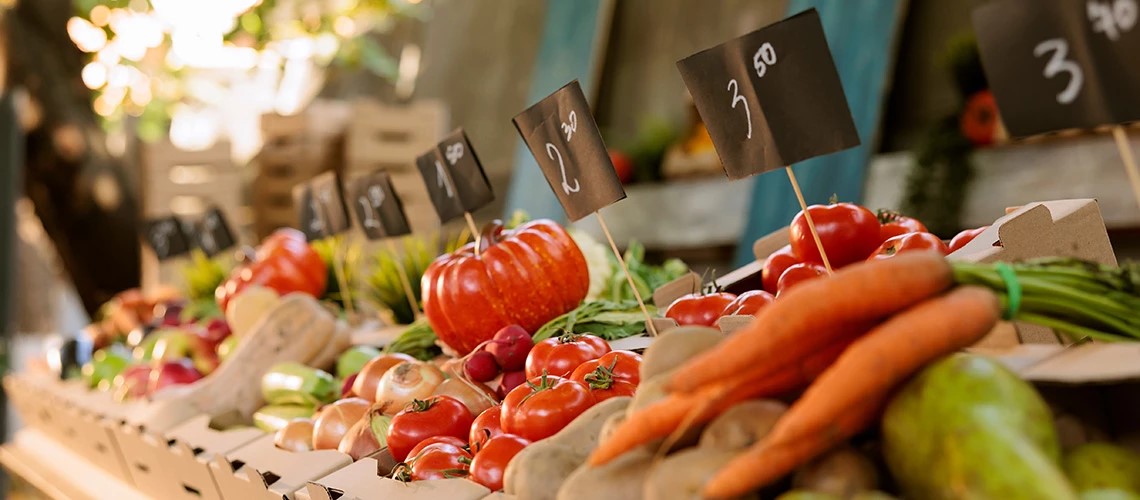
Global food markets entered the final quarter of 2026 under renewed pressure as a combination of shipping disruptions, weather risks and geopolitical instability pushed international commodity prices higher.
The United Nations Food and Agriculture Organization reported that its Food Price Index averaged 136.0 points in September, compared with a revised 134.0 in August. The reading represented the highest level since November 2022, underscoring how supply-chain vulnerabilities continue to influence agricultural commodities several years after the most severe disruptions of the previous global food-price cycle.
The latest increase was not uniform across all food categories. Sugar was one of the strongest contributors, with its FAO index climbing 6.1% during September to reach its highest level in 18 months. Expectations of tighter supplies, partly linked to the potential impact of a strong El Niño weather pattern, contributed to the rise.
Cereal markets also experienced significant upward pressure. The FAO cereal index increased 5.1%, reflecting lower expectations for U.S. corn yields as well as continued disruption to grain shipments through the Black Sea. The development illustrates the growing importance of transportation routes alongside agricultural output itself in determining the availability and cost of staple commodities.
Other segments moved differently. Vegetable oil prices recorded a smaller increase, while the FAO meat index fell 1.1%, influenced in part by weaker poultry prices and changes to European Union import regulations. The divergence between individual food categories indicates that the current increase is being driven by specific supply and logistics pressures rather than a uniform deterioration across global agricultural markets.
For food companies, retailers and other businesses exposed to commodity costs, the development creates a more complicated planning environment. International benchmark prices are an important input, but they do not translate directly into retail prices. Transportation, processing, currency fluctuations, energy costs, domestic competition and local supply conditions can all determine how much of an international commodity increase reaches consumers.
FAO Chief Economist Maximo Torero pointed to disruptions affecting the Strait of Hormuz and the Black Sea, together with climate-related shocks, as sources of pressure on energy, transportation and food commodities. The combination matters because food supply chains depend not only on agricultural production but also on predictable access to fuel, shipping capacity and major trade corridors.
At the same time, the global production outlook provides an important counterweight to concerns about physical food availability. FAO maintained its 2026 cereal production forecast at nearly 2.979 billion metric tons, which would make the year the second-largest cereal harvest on record. This suggests that the current price pressures are not simply a reflection of a broad collapse in global production.
Trade conditions, however, remain more constrained. FAO reduced its forecast for global cereal trade in the 2026-27 season by 0.7%, citing weaker expectations for wheat and maize exports amid shipping constraints. The adjustment highlights a distinction increasingly relevant to global food markets: producing enough food does not necessarily guarantee that supplies can move efficiently between producing and consuming regions.
For businesses, this makes logistics and risk management increasingly central to food-sector strategy. Companies with diversified sourcing, flexible transportation arrangements and stronger inventory planning may have greater capacity to absorb short-term disruptions, while businesses dependent on a narrow group of suppliers or trade corridors can face greater exposure to sudden cost changes.
The September data therefore point to a broader structural issue rather than a single commodity-price event. Global food prices are increasingly shaped by the interaction of climate conditions, geopolitical developments, transportation infrastructure and commodity production. Even with a historically strong cereal harvest expected this year, disruptions along critical trade routes can still alter market conditions quickly.
The next phase of the market will depend on how these forces evolve. Weather developments, shipping conditions and the performance of major agricultural producers will remain important variables, while businesses and consumers will continue to experience the effects differently depending on local market structures and currency conditions.
News You Should See
2026 Nobel Medicine Prize Honors Scientists Behind Optogenetics Breakthrough
Oil Prices Edge Lower as Stronger Middle East Exports and G7 Reserves Ease Supply Concerns
Trump Offers U.S. Assistance to Russia After Death at Siberian Plague Research Institute
Trump Takes Economic Message to Nebraska as GOP Faces Rising Cost-of-Living Pressure
U.S. Appeals Court Weighs Trump Administration’s $2.6 Billion Harvard Funding Fight
U.S. Midterm Elections Begin With Resilient Jobs Market and Persistent Cost Pressures
Latest News
The 2026 Nobel Prize in Physiology or Medicine honors Karl Deisseroth, Peter Hegemann and Georg Nagel for pioneering research behind optogenetics and its impact on neuroscience.
Oil prices edged lower as stronger Middle Eastern exports and a planned G7 release of 100 million barrels eased immediate supply concerns, while Gulf security risks and the Strait of Hormuz kept markets alert.
President Donald Trump said the United States would help Russia if needed after a laboratory worker died at a Siberian plague research institute, as Russian authorities imposed precautionary quarantine measures.
Trump’s Nebraska campaign stop highlights rising fuel and grocery costs, beef prices and growing economic pressure on Republicans ahead of the November midterm elections.
A U.S. appeals court is reviewing the Trump administration’s effort to cut Harvard’s federal research funding, with more than $2.6 billion at stake.
The U.S. enters the 2026 midterm elections with unemployment at 4.2%, while higher living and energy costs create economic pressure for households and businesses.
US services growth eased in September as input prices climbed to their highest level since July 2022, with fuel costs, supply-chain disruptions and strong demand increasing pressure on businesses.
Rising Treasury yields are increasing U.S. borrowing costs as Washington manages record debt, persistent inflation and strong economic demand, narrowing its policy options.
A EGP 16 million corporate partnership will establish and equip a bone marrow transplant unit at Cairo’s Coptic Hospital, supporting access to specialized treatment for patients.