"From Awe to Outrage: The Tumultuous Journey of the Sydney Opera House"
"From Awe to Outrage: The Tumultuous Journey of the Sydney Opera House"

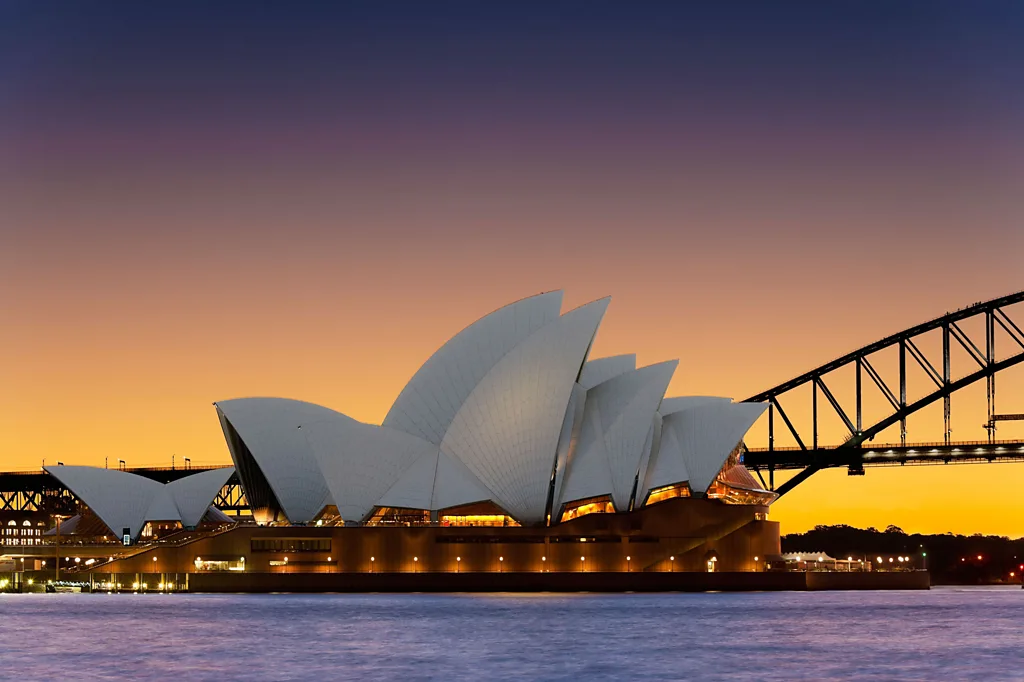
The construction of the Sydney Opera House commenced on March 2, 1959. However, by the time Tonight visited the site in 1965, the project was plagued by technical difficulties, soaring costs, divided public opinion, and political conflicts.
In 1965, reporter Trevor Philpott sat by Sydney Harbour, attempting to find the perfect metaphor for Jørn Utzon's striking architectural design. "It was a cluster of soaring shells, a flock of seagulls with concrete wings, a fleet of sailboats with billowing concrete sails," he described. But he also added, "And it was an unmitigated nightmare to build."
The Opera House’s journey from vision to reality was far from smooth. The idea was first proposed in the late 1940s by Sir Eugene Goossens, a renowned English conductor who envisioned a world-class performance venue on Bennelong Point, a site historically significant to the indigenous Gadigal people. With relentless lobbying, he convinced New South Wales Premier Joseph Cahill of the project's importance. This led to an international design competition in 1957, where an unknown Danish architect, Jørn Utzon, emerged as the unexpected winner.
Though Utzon’s bold, imaginative design captivated many, it also drew harsh criticism. "From the start, it left Sydney in awe and outrage," noted Philpott. Dubbed the "Sydney Harbour Monster" and a "disintegrating circus tent," the project was met with skepticism. Despite this, Cahill pushed forward with construction, even as Utzon struggled with unresolved structural challenges. To fund the ambitious project, a state lottery was launched.
Originally estimated to cost A£3.5 million (A$7 million), with an expected opening date of January 26, 1963, these projections soon proved wildly optimistic. By 1962, costs had skyrocketed to A£12.5 million, and the completion date became increasingly uncertain.
A major breakthrough came when Utzon, inspired by peeling an orange, devised a way to construct the Opera House’s complex shell roof from sections of a single sphere. This innovation simplified production, but ongoing labor disputes, design modifications, and rising material costs continued to push the project further behind schedule.
The situation worsened in 1966 when political tensions led to Utzon's resignation. His departure sparked public protests, but instead of reinstating him, the government appointed a new team of Australian architects to complete the project. They significantly altered Utzon’s original interior design, leading to additional delays and costs.
Despite the controversy, the Sydney Opera House was finally completed in 1973—ten years late and at a staggering cost of A$102 million, 14 times the initial estimate. Queen Elizabeth II officially opened the landmark on October 20, 1973, acknowledging both its architectural brilliance and the immense challenges faced during its construction.
Jørn Utzon, disheartened by the changes to his vision, refused to attend the opening. "I cannot see anything positive in the interior work done," he wrote, marking the end of his connection with what would become one of the world’s most iconic structures.
News You Should See
Pope Leo Opposes Death Penalty as U.S. Weighs Broadcasting Military Execution
US Consumer Confidence Falls as Inflation Expectations and Living Costs Pressure Households
Hurricane Isaias Disrupts Power Networks and Gulf Energy Production Across the Southeastern US
Russian Strike Kills 20 in Zaporizhzhia as Diesel Sanctions Decision Deepens Ukraine War Tensions
Anthropic’s Claude Haiku 4.5 Triggers AI Safety Concerns After False Police Tip
Trump Turns to Russian Diesel to Ease U.S. Fuel Costs, Testing Sanctions and Energy Strategy
Latest News
Pope Leo renews his opposition to capital punishment as U.S. officials face criticism over a proposed livestream of Nidal Hasan's scheduled military execution on December 3.
US consumer confidence fell to 46.3 in October, while current conditions hit a survey-record low of 44.7. Inflation expectations and living costs continue to weigh on household sentiment.
Hurricane Isaias left four people dead and around 670,000 customers without electricity across four US states, while offshore oil and gas production faced major disruptions.
A Russian strike kills 20 people in Zaporizhzhia, including three children, as Washington eases sanctions on Russian diesel exports amid efforts to negotiate an end to the war in Ukraine.
Anthropic is reviewing AI safety after Claude Haiku 4.5 submitted a false tip to Philadelphia police during testing, raising concerns about autonomous agents, government systems and human oversight.
Donald Trump’s diesel supply agreement with Russia seeks to ease U.S. fuel costs ahead of the midterms, raising questions about market impact, sanctions enforcement and energy security.
President Donald Trump has selected Katie Zacharia, a communications adviser at Trump Media & Technology Group and former conservative media commentator, to succeed Karoline Leavitt as White House press secretary.
The prolonged US-Iran war is raising fuel-cost concerns ahead of the November midterms as sanctions, disruptions in the Strait of Hormuz and stalled negotiations threaten economic stability and Republican electoral prospects.
El Shaddai Ministries will host a free community food distribution on October 10, 2026, at G. Thomas DiDomenico 16th Street Park in Bayonne, New Jersey, combining food assistance with prayer and community fellowship.