France Under Pressure: Yellow Vest Revival and Growing Protests Put the Élysée to the Test
Student grievances, economic frustration and street violence raise questions about France’s direction ahead of the presidential election

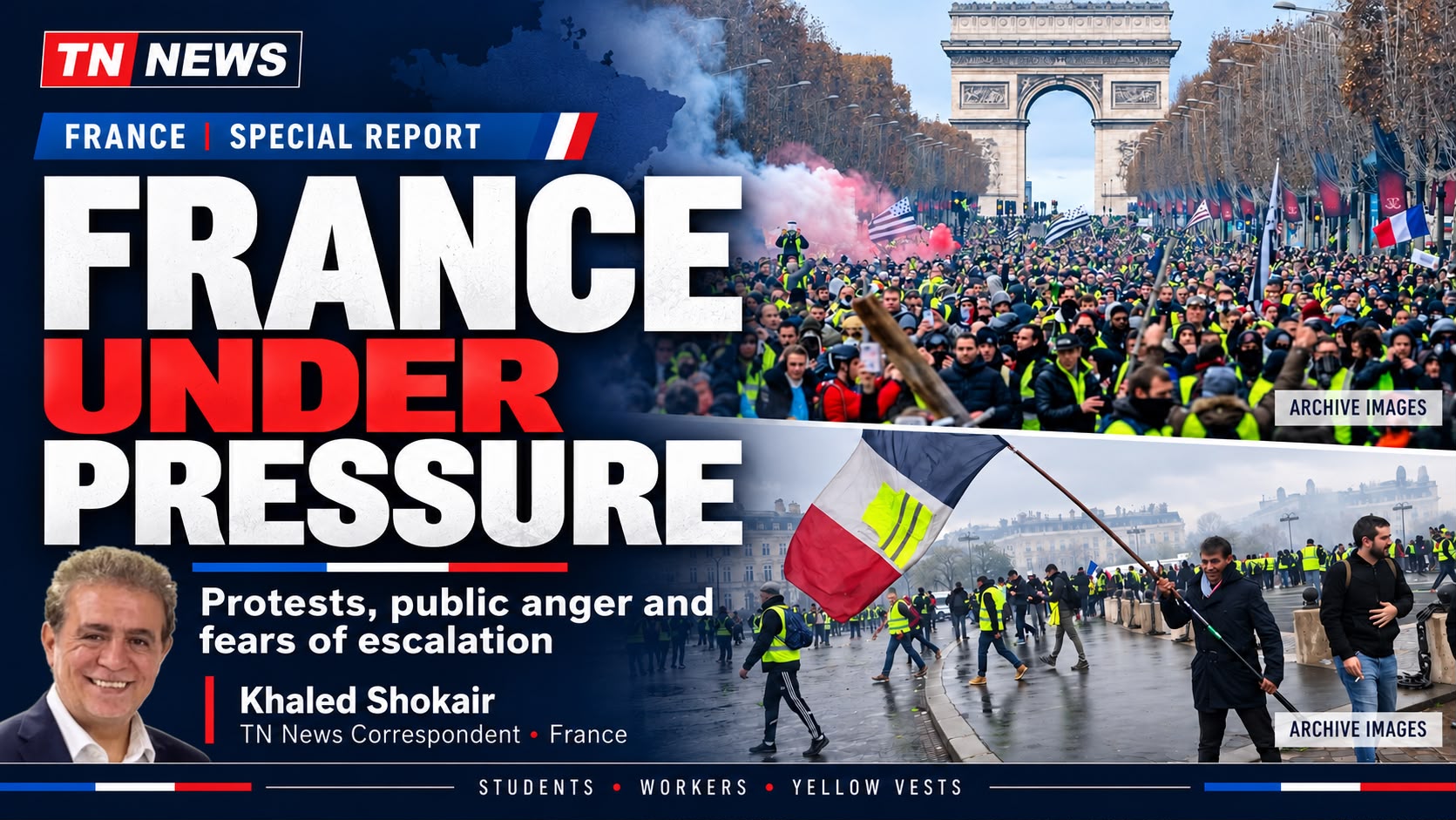
France is facing a wave of protests bringing together anger over living costs, concerns about education and frustration with public services. As clashes between police and groups of demonstrators intensify, the government faces the challenge of restoring calm while addressing the grievances drawing people into the streets.
Hundreds of thousands participated in demonstrations across the country on Saturday, October 17, with yellow vest supporters joining students and trade union members. While many marched peacefully, fires, vandalism and looting broke out in Paris and other cities. Police used tear gas and water cannons during confrontations. (apnews.com)
The unrest raises a question that goes beyond the size of the crowds: can the authorities respond to public frustration while protecting residents, businesses and the right to peaceful protest?
From Classrooms to Wider Social Demands
Student protests have focused on teacher shortages, overcrowded classrooms and deteriorating school buildings. (theguardian.com) These concerns also raise broader questions about equal access to education and whether public services are giving young people a fair opportunity to succeed.
Viewed analytically, the overlap between demands for better education, higher wages and affordable living could widen the protest movement’s appeal. Students worried about their future, parents struggling with household expenses and workers seeking better pay may find common ground in concerns about economic security.
However, shared frustration does not necessarily mean a unified movement. Different groups may have different priorities, representatives and expectations, making negotiations more difficult.
Could France See a Repeat of 2018?
The reappearance of yellow vests recalls the movement that began in 2018 against fuel tax increases before expanding into broader opposition to government policies and social inequality.
Yet familiar symbols do not guarantee the same outcome. The direction of the current protests will depend on whether participation continues, whether organizers can maintain peaceful demonstrations and whether the government offers responses that protesters consider credible.
Talk of an approaching “street war” should therefore be treated as speculation, rather than an established forecast. Serious clashes create risks, but they do not make prolonged nationwide confrontation inevitable.
Violence, Policing and Accountability
The Associated Press reported approximately 2,400 arrests during the weekend unrest. Authorities blamed radical far-left groups and individuals exploiting the disorder to loot. Serious injuries among demonstrators have also renewed scrutiny of police crowd-control weapons.
Those accusations require investigations that establish individual responsibility. Peaceful protesters should not collectively be blamed for destruction, while legitimate social demands do not justify attacks on people or property.
The challenge is to protect lawful demonstrations, prosecute violence and investigate any excessive use of force.
Economic Hardship or a Deeper Social Divide?
Another question concerns young people in France’s suburbs, including French citizens from immigrant backgrounds: do they believe they have fair access to education, employment and political participation?
Their experiences deserve attention. However, reducing the unrest to immigration, or treating suburban communities as a single group, would obscure the different circumstances and motivations involved.
Determining how exclusion contributes to the current protests requires evidence, local reporting and direct testimony. It cannot be established through assumptions about a person’s neighborhood or family background.
A Political Test Before the Presidential Election
The crisis carries additional political weight as France approaches its next presidential election. According to the French government’s official calendar, the first round is scheduled for April 18, 2027, with a second round on May 2.
How the unrest is handled could influence voters’ judgments of both the government and its opponents. Public safety, purchasing power, education and confidence in state institutions may become closely connected issues in the campaign.
The question of who benefits politically must also be separated from the question of who organized or caused the violence. Political advantage is not, by itself, evidence of responsibility.
TN News USA continues its coverage with France correspondent Khaled Shokair, examining the demands behind the demonstrations, the causes of escalation and the prospects for dialogue ahead of the presidential vote.
News You Should See
P&G Raises Fiscal 2027 Cost Warning as Oil and Freight Expenses Threaten Profits
Chemical Tank Leak in Toledo Triggers Evacuations and Industrial Disruptions
Judge Sets December 11 Deadline for Trump Deposition in BBC Defamation Case
Iowa Senate Race Tests How Far Republicans Can Separate Themselves From Trump
California State Workers Strike Over Pay, Healthcare and Return-to-Office Rules
Streaming’s October Showdown: How Disney, Netflix and Major Entertainment Brands Compete for Audiences
Latest News
Procter & Gamble expects commodity, energy and transportation costs to reduce fiscal 2027 profit by $1.4 billion. Quarterly sales rose 4% to $23.28 billion, beating analyst expectations.
A ruptured chemical tank in Toledo, Ohio, prompted evacuations, school closures and an industrial shutdown. Authorities have reduced the restricted zone as the release slows and cleanup preparations continue.
A federal judge has ordered Donald Trump to give a deposition by December 11, 2026, in his $10 billion lawsuit against the BBC, with possible sanctions for noncompliance as the discovery deadline approaches.
Iowa’s 2026 Senate race pits Republican Ashley Hinson, balancing Trump support with economic concerns, against Democrat Josh Turek, who emphasizes bipartisanship amid rising campaign spending.
Thousands of California state workers struck on October 21 over a proposed three-year pay increase, healthcare costs and a four-day office attendance requirement as contract negotiations continued.
October 2026 brings major entertainment releases across Disney+, Netflix, HBO Max, Hulu, Prime Video and Peacock. Explore how familiar franchises, exclusive programming, new music and video games shape competition for streaming audiences.
Saudia advises travelers to book flights through Al Qassim Airport for Riyadh connections, offering free hourly shuttle buses in both directions until further notice.
An AP-NORC poll shows Democratic confidence in accurate vote counting falling to 55%, while Republican confidence rises to 38%, highlighting election integrity concerns ahead of the 2026 US midterms.
Donald Trump campaigns in North Carolina ahead of the November 2026 midterms as low approval ratings, rising fuel costs, Democratic early-voting gains and funding disparities challenge Republican efforts to retain control of Congress.