France School Protests Spread Nationwide as 400 High Schools Close
Student demonstrations over teacher shortages, overcrowding and deteriorating facilities are spreading across France, intensifying pressure on the government as education funding faces tighter fiscal constraints.

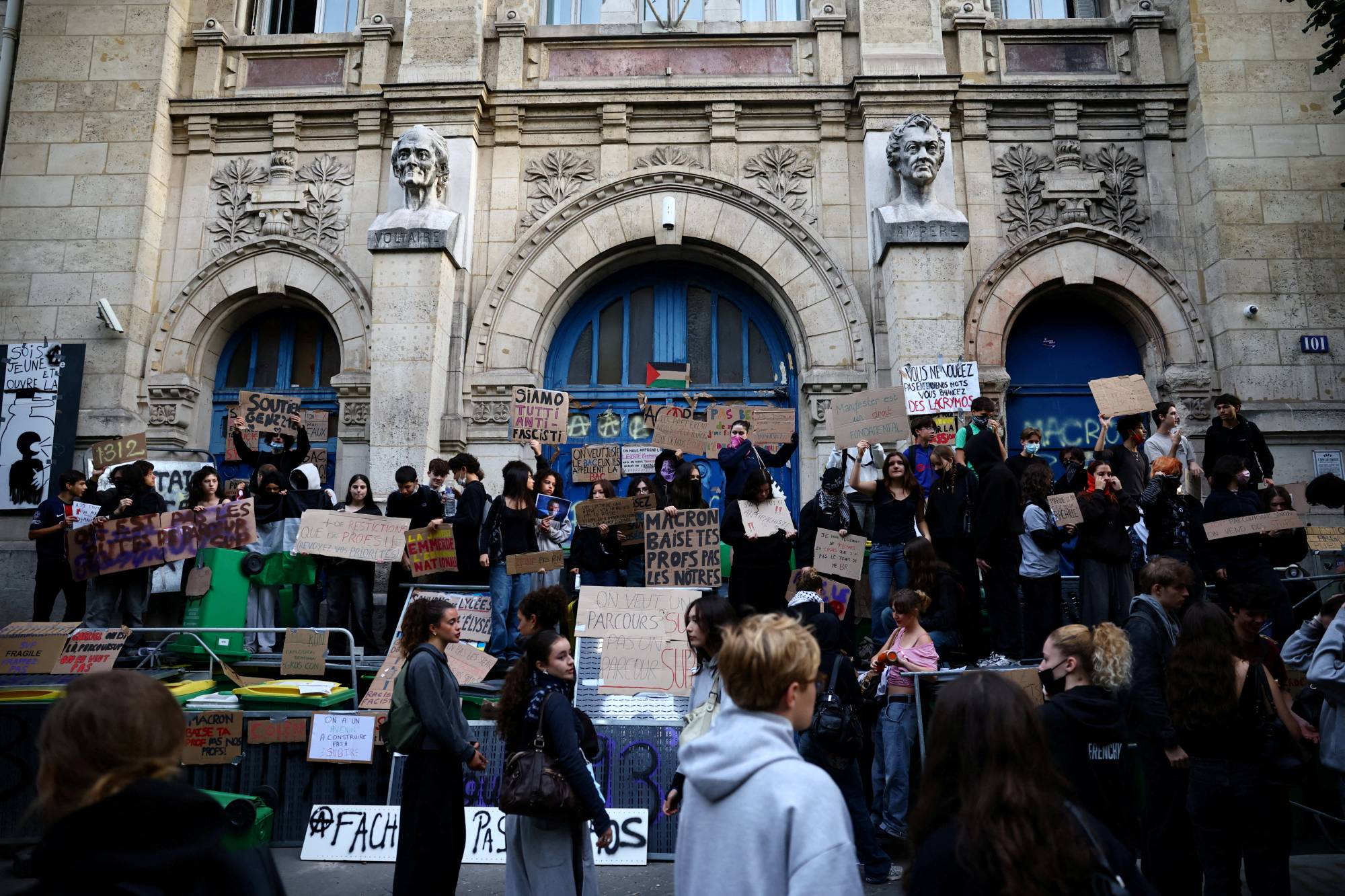
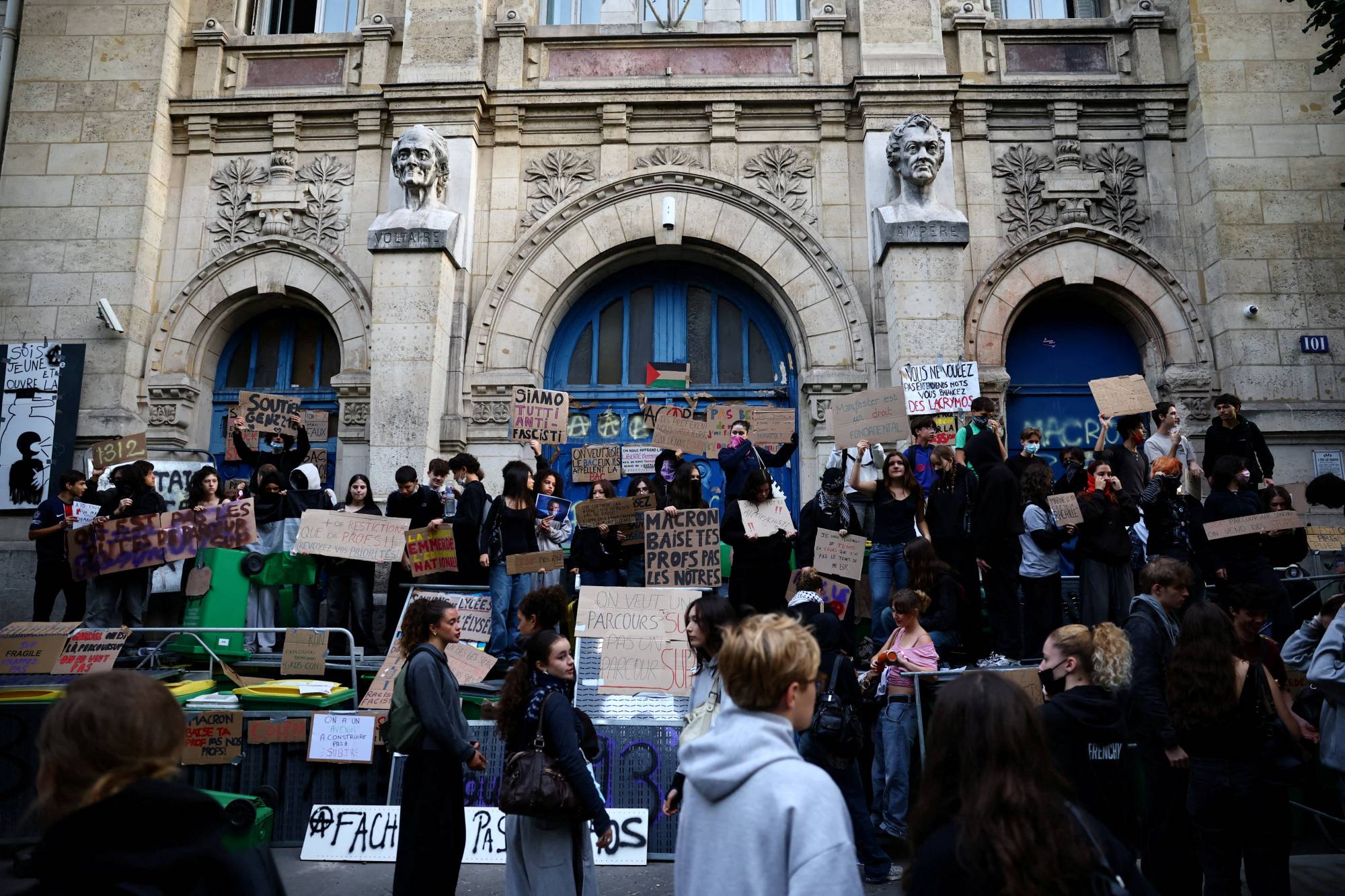
France is facing a widening school protest movement that has moved beyond the Paris region and disrupted education across the country, exposing the financial and operational pressures facing one of the government's largest public-service commitments.
Around 400 high schools, equivalent to roughly one in 10, were closed on Friday as demonstrations spread to cities including Strasbourg, Marseille, Rennes and Toulouse. The protests began with demands focused on practical problems inside schools, including teacher shortages, overcrowded classrooms and deteriorating buildings, but have increasingly developed into a broader confrontation involving police, government officials and political parties.
The scale of the disruption highlights the gap between the resources required to maintain France's education system and the government's current fiscal room. Under the draft 2027 budget presented this week, education spending is scheduled to rise 1.7% to €65.53 billion, excluding teacher pensions. That increase is below inflation, while debt-servicing costs are projected to reach €74.5 billion, making debt payments larger than education spending for the first time under the draft plan.
From a public-sector management perspective, the dispute is not limited to the size of the education budget. Teacher availability, classroom capacity and the condition of school buildings directly affect the government's ability to deliver services with existing resources. Repeated shortages can also increase pressure on local authorities and schools to absorb disruptions without equivalent increases in staffing or infrastructure investment.
The demonstrations have also created a significant institutional challenge. What started as student action over education conditions has expanded into confrontations with police in several cities. French authorities say more than 2,000 people, most of them teenagers, have been arrested since the protests began. The Interior Ministry has opened three investigations into allegations of police violence, while Amnesty International has called for students' rights to be protected.
The government's response is therefore being tested on two fronts: maintaining public order while addressing the underlying concerns that brought students into the streets. Justice Minister Gerald Darmanin has argued that parents should be required to pay reparations when their children damage property, while Education Minister Edouard Geffray has urged parents to discourage students from joining street demonstrations because of safety risks.
The political dimension adds another layer of complexity. Intelligence agencies reportedly told a government crisis meeting that politicians from the hard-left France Unbowed party had initiated the movement. Senior members of the party rejected that allegation and accused the government of politicising the protests ahead of next year's presidential election. These competing claims have made the education dispute part of a wider debate over government credibility and public policy.
For the education system itself, the immediate economic issue is whether additional spending can be directed toward the bottlenecks most visible to students and families. A larger headline budget does not automatically resolve shortages if funding is constrained by staffing costs, pensions, infrastructure requirements and broader government debt obligations. The current protests demonstrate how quickly operational weaknesses can become a national policy issue when they affect a large number of schools simultaneously.
The unrest is also beginning to attract attention outside France. Student protests were reported in Liège, Belgium, where high schools were closed on Friday, suggesting that concerns over education resources and conditions could resonate beyond the French political environment.
The next phase will depend on whether authorities can contain the violence while responding credibly to the education-related grievances. For the government, the challenge extends beyond reopening schools: it involves restoring confidence in the capacity of public institutions to provide adequate staffing, infrastructure and learning conditions within increasingly restrictive fiscal parameters.
News You Should See
2026 Nobel Medicine Prize Honors Scientists Behind Optogenetics Breakthrough
Oil Prices Edge Lower as Stronger Middle East Exports and G7 Reserves Ease Supply Concerns
Trump Offers U.S. Assistance to Russia After Death at Siberian Plague Research Institute
Trump Takes Economic Message to Nebraska as GOP Faces Rising Cost-of-Living Pressure
U.S. Appeals Court Weighs Trump Administration’s $2.6 Billion Harvard Funding Fight
U.S. Midterm Elections Begin With Resilient Jobs Market and Persistent Cost Pressures
Latest News
The 2026 Nobel Prize in Physiology or Medicine honors Karl Deisseroth, Peter Hegemann and Georg Nagel for pioneering research behind optogenetics and its impact on neuroscience.
Oil prices edged lower as stronger Middle Eastern exports and a planned G7 release of 100 million barrels eased immediate supply concerns, while Gulf security risks and the Strait of Hormuz kept markets alert.
President Donald Trump said the United States would help Russia if needed after a laboratory worker died at a Siberian plague research institute, as Russian authorities imposed precautionary quarantine measures.
Trump’s Nebraska campaign stop highlights rising fuel and grocery costs, beef prices and growing economic pressure on Republicans ahead of the November midterm elections.
A U.S. appeals court is reviewing the Trump administration’s effort to cut Harvard’s federal research funding, with more than $2.6 billion at stake.
The U.S. enters the 2026 midterm elections with unemployment at 4.2%, while higher living and energy costs create economic pressure for households and businesses.
US services growth eased in September as input prices climbed to their highest level since July 2022, with fuel costs, supply-chain disruptions and strong demand increasing pressure on businesses.
Rising Treasury yields are increasing U.S. borrowing costs as Washington manages record debt, persistent inflation and strong economic demand, narrowing its policy options.
A EGP 16 million corporate partnership will establish and equip a bone marrow transplant unit at Cairo’s Coptic Hospital, supporting access to specialized treatment for patients.