Federal Court Weighs Trump Administration's Bid to Hold Back 20,000 California Ballots
Judges question the Justice Department’s bid to block ballots over suspected noncitizen links, citing concerns about federal authority and state election control.

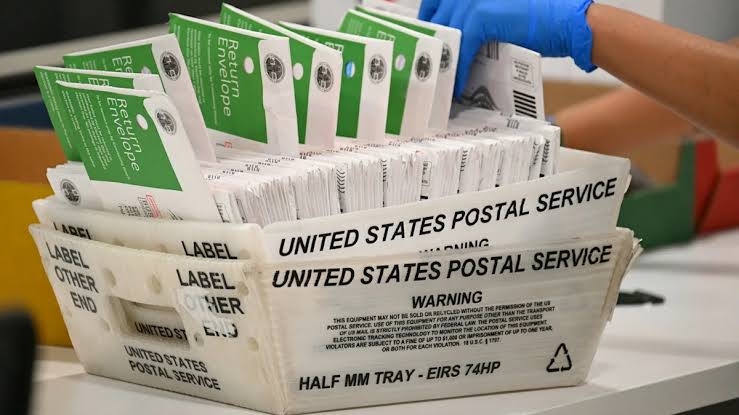
A federal appeals court is scrutinizing the Trump administration’s effort to prevent California from counting approximately 20,000 mail ballots associated with people the federal government suspects may not be U.S. citizens. The dispute has become a test of how far federal authorities can go in directing state election procedures, particularly when the requested intervention could affect ballots cast ahead of the November 3, 2026, midterm elections.
During an unusual Sunday hearing, two of the three judges on the 9th U.S. Circuit Court of Appeals appeared skeptical of the administration’s lawsuit, which was filed in mid-October. The Justice Department alleges that California election officials failed to meet a 48-hour deadline to review a list of 20,000 names identified by federal authorities as likely noncitizens.
The administration wants a federal judge to require California to withhold the associated ballots from counting until the voters’ immigration status can be verified. The lower court scheduled a hearing for October 27, but federal officials appealed, arguing that the timetable was too slow given the volume of ballots being processed.
The case raises a fundamental question for election administrators: how can suspected violations be investigated without allowing uncertain information to interfere with the rights of eligible voters or disrupt the state’s established election procedures?
A constitutional dispute over election authority
The Justice Department argues that California is causing irreparable harm by allowing potentially ineligible voters to participate in elections, contending that ballots cannot simply be reversed once they have been counted. Department attorney Matthew Donnelly maintained that the state should enforce its own prohibition against voting by noncitizens and that refusing the federal request undermines the purpose of federal law.
The judges, however, questioned both the timing of the appeal and the legal authority for the requested intervention.
Judge Mark Bennett, appointed by President Donald Trump, questioned whether the appeals court had jurisdiction to consider the dispute before the lower court had issued a ruling. He also pointed to the Constitution’s Elections Clause, which grants state legislatures authority over the time, place and manner of congressional elections. Bennett’s questions highlighted the distinction between federal enforcement of election law and federal control over the procedures states use to administer elections.
Judge Gabriel Sanchez, appointed by former President Joe Biden, raised concerns about the Tenth Amendment, questioning whether the federal government was effectively directing California to carry out a federal enforcement objective through its own election machinery.
The administration rejected that interpretation. Donnelly argued that federal officials were asking California to enforce existing law, not take on a new responsibility. He also contended that the lower court’s schedule was too slow to address the government’s concerns while election offices continued processing ballots.
A third judge, Patrick Bumatay, appointed by Trump, emphasized the public interest in ensuring that only eligible citizens vote. He suggested that an emergency injunction could provide clarity about whether unlawful voting was occurring. Bennett, meanwhile, said the panel would seek to issue a decision quickly.
The disagreement illustrates the legal complexity of election oversight. A shared commitment to enforcing eligibility requirements does not necessarily settle which government authority can compel a particular procedure, what evidence is sufficient or how quickly officials must act.
Data accuracy becomes central to the case
Los Angeles County officials have challenged the reliability of the federal list, arguing that its use could expose eligible voters to the risk of having their ballots excluded. The county’s concerns are particularly significant because the federal government’s request is based on names flagged for review rather than a final determination that each person is ineligible.
In a sample of 200 records reviewed by county staff, officials found canceled or inactive registrations, people with no voting history and individuals who appeared to have been born in the United States. Assistant Registrar-Recorder Monica Flores described the findings in a court filing, noting that apparent U.S. birth was strong evidence of citizenship.
The sample does not establish the status of every person on the federal list. It does, however, raise questions about whether the screening process can reliably distinguish potential violations from outdated records, incomplete information and administrative mistakes.
This distinction matters because voter registration databases are administrative tools, not substitutes for individual eligibility determinations. If records from different government systems do not match accurately, a person may be flagged for reasons unrelated to their actual citizenship status.
California’s Secretary of State Shirley Weber, represented in court by attorney Sam Siegel, argued that the federal government had not provided credible evidence supporting its suspicions. Siegel said the state disputed the underlying premise that noncitizens were voting in the manner alleged by the administration. He also argued that Congress, rather than the executive branch, could change election procedures if federal officials disagreed with California’s approach.
The administration maintains that further review is necessary. The legal question is whether the evidence and statutory authority are sufficient to justify the particular emergency measure being requested.
The operational cost of reviewing millions of ballots
The dispute also exposes the practical difficulties of implementing a broad screening requirement close to an election.
Los Angeles County expected to process approximately 2.75 million mail ballots. County attorney Seth Waxman told the court that checking every ballot against the federal list would impose a substantial administrative burden. Even if staff spent only three minutes checking each ballot, the process would require an estimated 140,000 labor-hours, equivalent to roughly 16 years of working time.
That calculation illustrates the gap between a legal demand and the operational capacity needed to carry it out. Election offices must verify records, process incoming ballots, maintain secure procedures and meet statutory deadlines. A new screening requirement could divert staff from other essential duties and require additional coordination between state, county and federal agencies.
A targeted review based on reliable evidence could help identify genuine eligibility problems. A broad review driven by inaccurate or outdated information, however, could delay processing and increase the risk of eligible ballots being improperly set aside. The court must therefore consider not only the government’s stated objective but also whether the requested measure is legally justified and workable.
The administration’s demand is particularly consequential because California sends mail ballots to registered voters. Any process that places ballots on hold would need to distinguish between a person whose eligibility has been established and one whose records merely require clarification.
Political stakes ahead of the midterms
The lawsuit is part of the Trump administration’s broader effort to identify suspected noncitizen registrations and voting before the midterm elections. The administration has made the issue a priority, although noncitizen voting is exceptionally rare.
The case arrives at a time when election procedures, voter eligibility and public confidence are already central political issues. Allegations involving voter rolls can have consequences beyond the individuals named in a database, influencing how voters perceive the reliability of election administration and how officials communicate the results of eligibility reviews.
For election agencies, the challenge is to demonstrate that potential violations are investigated while ensuring that allegations are not treated as proof before verification. Transparent standards, reliable records and a meaningful opportunity to correct errors are essential to maintaining confidence in the process.
For the federal government, the case tests the limits of its ability to intervene in state-run elections through litigation and emergency court orders. For California, it raises the question of how much discretion state officials retain when federal authorities demand a rapid review of voter records.
The dispute also has resource implications. Additional checks require personnel, technical systems and legal oversight. If similar demands are made across multiple states, the cumulative burden could become a significant issue for election administrators working under fixed deadlines.
What the court’s decision could mean
The appeals panel said it would attempt to rule as quickly as possible. The lower court hearing was scheduled for October 27, following the administration’s request for expedited action.
The decision could determine whether California must temporarily separate the ballots at issue or whether the dispute should continue through the ordinary lower-court process. It may also help define how federal election laws interact with the constitutional authority of states to administer congressional elections.
The immediate case concerns approximately 20,000 names and associated ballots, but its implications extend to the use of government databases, the standard of evidence needed to challenge voter eligibility and the circumstances in which a court can order an emergency change to election procedures.
As November 3 approaches, the central issue is not simply whether election rules should be enforced. It is whether the proposed enforcement measures are supported by reliable evidence, authorized by law and designed to protect the integrity of the process without unnecessarily putting eligible voters’ ballots at risk.
News You Should See
Man City Faces Calls for Further Premier League Investigation Over Post-2018 Finances
Apple Maps Blurs Satellite Images of Key U.S. Military and NASA Sites
Who Is Delorean Bijon Brandon? The Case of Christina Downer’s Disappearance and Suspected Murder
From Siskel and Ebert to The Beatles: Celebrating Entertainment Legends
Olive Oil Before Carbs: Could Timing Influence Blood Sugar?
Jack Hughes Leads Devils to Shootout Victory, Ending Oilers’ Winning Run
Latest News
Premier League executives are debating a possible new investigation into Manchester City's finances after 2018, while the club appeals a verdict involving 114 financial-rule breaches.
Apple Maps has blurred satellite imagery of several U.S. military and NASA sites, including Cape Canaveral and Area 51. The reason for the changes remains unclear.
Delorean Bijon Brandon, 41, has been charged in connection with Christina Downer’s suspected murder after her disappearance in September 2025.
Chicago will honor film critics Gene Siskel and Roger Ebert with life-sized bronze statues, celebrating a partnership that reshaped popular film criticism.
Researchers are examining whether taking olive oil before glucose can slow stomach emptying and influence blood sugar levels, based on promising findings in mice.
Jack Hughes scores twice and adds an assist as the New Jersey Devils defeat the Edmonton Oilers 4-3 in a shootout, ending their three-game winning streak.
Researchers found that physical contact with dogs after an initial stressful task was associated with lower stress levels during a second challenge.
Researchers analyzed genetic data from 2.8 million people and identified 48 previously unknown genomic regions associated with Alzheimer's disease risk.
Screen-free schools are gaining interest among Silicon Valley tech families, raising questions about children's digital exposure and the role of technology in education.