Federal Court Halts FCC's Early Review of Eight ABC-Owned TV Stations
A federal judge grants ABC and Disney temporary legal protection, finding a likelihood of success in their First Amendment challenge to the FCC's accelerated licensing review.

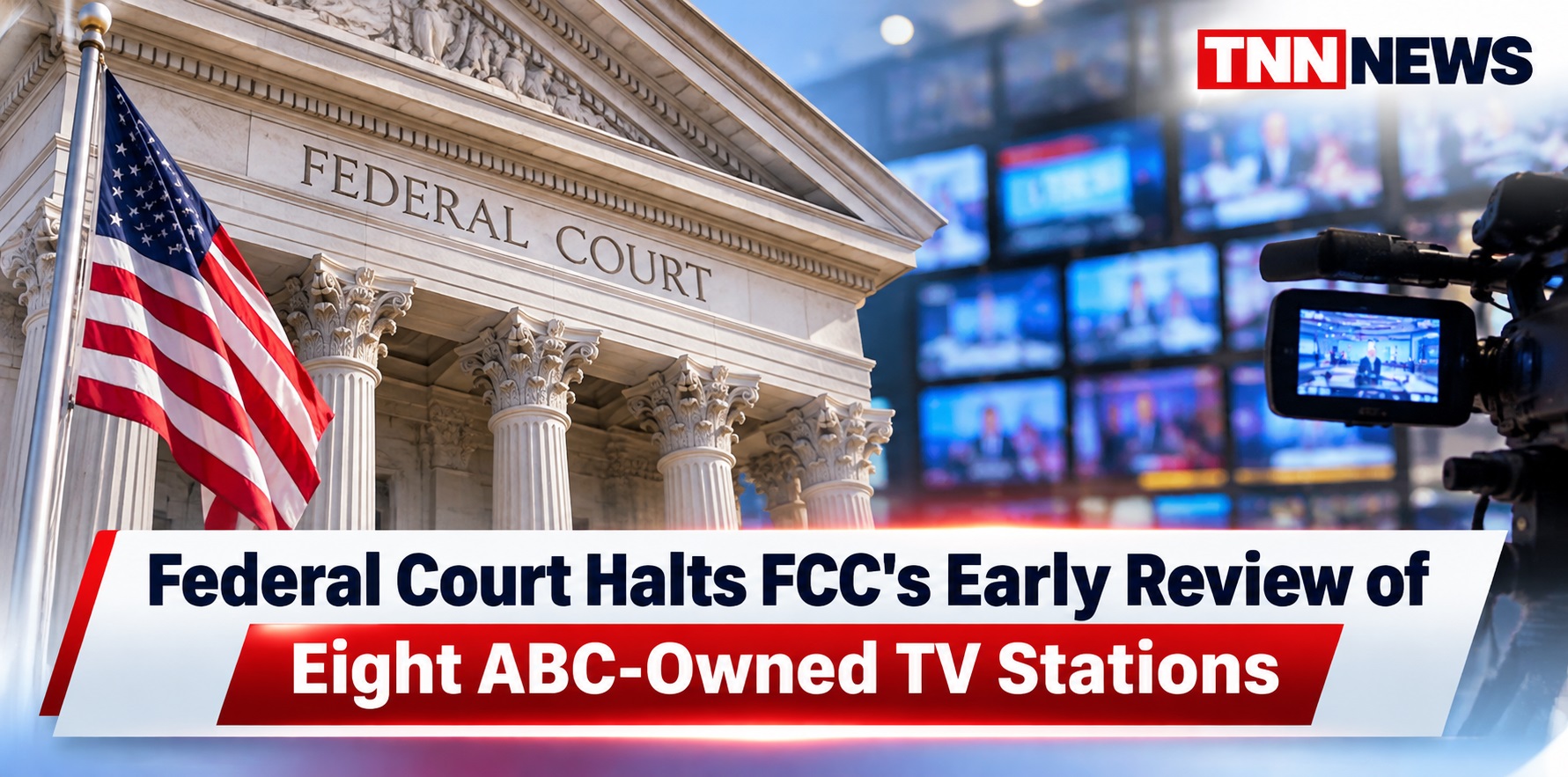
US Court Restrains FCC's Licensing Push Against ABC as Free Speech Dispute Escalates
A federal court ruling has introduced a significant legal obstacle to the Federal Communications Commission's regulatory campaign involving ABC-owned television stations, placing constitutional protections for broadcasters at the center of a growing dispute over government oversight of the American media industry.
US District Judge Loren AliKhan, based in Washington, granted ABC and its parent company, Disney, temporary legal protection against an accelerated review of broadcast licenses held by eight network-owned stations. The decision, issued on Wednesday, followed a legal challenge arguing that the FCC's actions could constitute retaliation connected to the network's editorial and programming decisions.
The ruling is particularly significant because it addresses the relationship between federal regulatory authority and the First Amendment, which protects freedom of speech and expression in the United States.
A Regulatory Dispute With Broader Implications
The conflict developed after the FCC directed eight ABC-owned television stations in April to pursue license renewals substantially earlier than their normal schedules required.
The decision attracted attention because it followed public criticism from President Donald Trump concerning ABC's programming. Among the incidents cited in the broader dispute was Trump's demand that the network dismiss late-night television host Jimmy Kimmel over a joke.
ABC and Disney subsequently challenged the commission's decision through a lawsuit filed in August against the FCC and Commissioner Brendan Carr.
Their legal arguments also addressed regulatory scrutiny involving the daytime television program The View and questions surrounding the application of equal-time requirements.
Taken together, these developments have transformed what might otherwise have been an administrative licensing disagreement into a wider confrontation over the extent to which federal regulators can exercise authority over broadcasters whose programming becomes politically controversial.
The Legal Basis Behind the Court's Decision
Judge AliKhan determined that ABC had demonstrated a likelihood of succeeding on its First Amendment claim, an important consideration when evaluating whether temporary judicial intervention is justified.
The court also considered evidence presented by the network concerning what it characterized as a pattern of retaliatory conduct associated with its programming choices.
A central element of the decision was the potential for irreparable harm. The judge concluded that allowing the accelerated licensing process to proceed could damage the network's constitutional rights in ways that might not be adequately remedied through financial compensation or a subsequent legal ruling.
However, the court did not grant ABC unrestricted protection against future regulatory scrutiny. AliKhan declined to impose a broader prohibition covering other potential FCC actions that had not been specifically identified in the lawsuit.
This distinction is important for both sides. The decision protects the eight stations against the particular licensing action under challenge, but it does not eliminate the commission's general authority to regulate broadcasting.
Government Oversight Versus Media Independence
The Justice Department opposed the requested judicial restrictions, arguing that preventing the FCC from reviewing broadcast licenses would interfere with the government's regulatory responsibilities.
This position reflects a longstanding tension within the US media system. Broadcast licenses are subject to federal oversight, and regulators have responsibilities involving compliance with applicable rules and public-interest requirements.
At the same time, regulatory powers operate within constitutional limits. Government agencies cannot use administrative procedures as a means of punishing protected speech or influencing editorial decisions.
The court's intervention therefore raises questions extending beyond ABC's immediate commercial interests. Its implications could influence how broadcasters assess regulatory risks when covering politically sensitive subjects or making programming decisions that attract criticism from public officials.
Commercial and Competitive Consequences
For Disney, the parent company of ABC, the dispute has implications beyond the legal status of eight television licenses.
Broadcasting remains an important component of the company's wider media portfolio, contributing to its audience reach, advertising relationships and overall brand presence in the US market.
Uncertainty surrounding station licenses can complicate long-term operational planning, particularly when broadcasters must consider regulatory exposure alongside audience development, advertising strategies and investments in programming.
The temporary injunction provides ABC with greater legal certainty while the case proceeds. It also limits the immediate uncertainty associated with the accelerated review, allowing the network to continue operating without the specific licensing process moving forward under the challenged timetable.
From a competitive perspective, the case highlights the importance of regulatory stability for media companies operating in an environment where traditional television broadcasting increasingly competes with streaming platforms and digital content providers.
For major media groups, the ability to maintain consistent operations and protect editorial independence is closely connected to their long-term market positioning and institutional credibility.
A Test Case for the Future of Broadcasting
The decision should not be interpreted as a final judgment on the entire dispute. The court has granted temporary relief, while the underlying legal arguments remain subject to further proceedings.
The next stages will determine how the parties' competing interpretations of federal regulatory authority and constitutional protections are ultimately assessed.
The case could become an important reference point in future disputes involving broadcast licensing, government oversight and freedom of expression.
Its wider significance lies in the balance it seeks to establish between two principles: the government's legitimate responsibility to regulate the broadcasting sector and the constitutional protection that prevents regulatory authority from becoming a tool for influencing media content.
For ABC and Disney, the immediate outcome represents a meaningful legal advantage. For the wider American media industry, the proceedings offer an opportunity to clarify the boundaries between administrative oversight and editorial independence.
Ultimately, the final outcome may have consequences extending well beyond the eight stations involved, particularly as the relationship between political institutions, traditional broadcasters and digital media companies continues to evolve.
News You Should See
Let Go of Their Harm and Trust Allah: Friday Sermon Explores Healing from Past Wounds and Finding Peace Without Abandoning Justice
Misr El-Kheir International to Launch in the United States with Inaugural New York Gala on December 12
Kevin Durant Reaches 33,000 Career Points as Houston Rockets Defeat Phoenix Suns
Duran Duran's Original Guitarist Andy Taylor Dies at 65 After Cancer Battle
MiniMax Faces Data Security Questions After Confidential AI Links Were Reportedly Accessed
SAP Reportedly Weighs 10,000 Job Cuts as AI Reshapes Its Business Strategy
Latest News
A Friday khutbah by Detective Mohamed Amen explores how faith, forgiveness, acceptance, and trust in Allah can help individuals overcome emotional pain while preserving their rights and seeking justice.
Misr El-Kheir International will launch in the United States with an inaugural gala on December 12, 2026, at 583 Park Avenue in New York, featuring humanitarian initiatives and fundraising activities.
Kevin Durant became the fifth NBA player to reach 33,000 career points as the Houston Rockets defeated the Phoenix Suns 116-104. Alperen Sengun recorded a triple-double.
Andy Taylor, original Duran Duran guitarist, has died at 65 following prostate cancer. His guitar work helped define the band's iconic 1980s sound.
A cybersecurity investigation raises concerns after confidential links submitted to Chinese AI company MiniMax were reportedly accessed by unidentified parties, highlighting data privacy and third-party security risks.
SAP is reportedly considering cutting at least 10,000 jobs in an AI-driven restructuring that could affect around 9% of its global workforce.
Growing GLP-1 use is changing Thanksgiving meals in the US, with smaller portions, reduced appetites and new dietary considerations for families and medication users.
Rising debt costs and credit risks are challenging the AI infrastructure boom, with SoftBank and CoreWeave facing growing investor concerns over financing and returns.
A Georgia judge temporarily suspends an order requiring Fulton County to hand over digital copies of 2020 election ballots and records to the State Election Board pending an appeal.