"Extraordinary Measures Were Taken to Contain the Last Major Measles Outbreaks in the U.S."
"Extraordinary Measures Were Taken to Contain the Last Major Measles Outbreaks in the U.S."

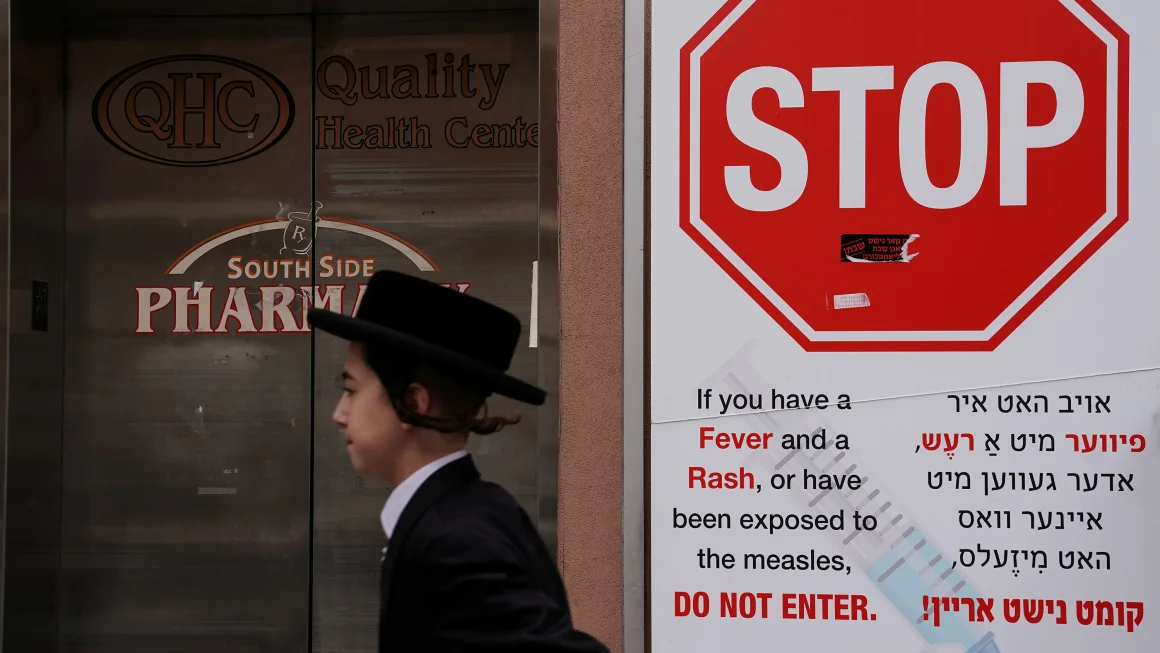
Six years ago, two communities in New York—Brooklyn and Rockland County—faced some of the worst measles outbreaks the United States had seen in decades. Despite measles being declared eliminated in the U.S. in 2000, the 2019 outbreak nearly jeopardized that status.
Now, new measles outbreaks are emerging in West Texas and New Mexico. In response, testing sites and vaccination clinics have been established in affected areas, and the U.S. Centers for Disease Control and Prevention (CDC) has deployed teams to Texas. However, local health officials warn that the outbreak could persist for months.
The 2019 outbreak was controlled through aggressive and sustained efforts tailored to the affected communities' specific needs. Public health workers, backed by policy changes, played a crucial role in stopping the virus's spread. Experts emphasize that the New York response highlights the necessity of a comprehensive, community-focused approach to controlling future outbreaks.
The Key Role of Vaccination
The outbreaks in New York, which began in late 2018 and continued through most of 2019, were primarily concentrated in Orthodox Jewish communities that had been exposed to anti-vaccine misinformation for years.
Public health officials involved in the response stress that building trust within the community was essential in increasing vaccine uptake. “Vaccination is the most effective way to prevent the devastating effects of measles,” said Dr. Neil Vora, executive director of Preventing Pandemics at the Source. As a CDC employee at the time, he worked closely with New York City's health department to combat the outbreak.
The measles vaccine is highly effective, with two doses providing 97% protection and long-lasting immunity. To prevent outbreaks, health agencies recommend a 95% vaccination rate. During the New York outbreak, thousands received vaccinations—over 200,000 doses were administered in New York City alone, while Rockland County distributed approximately 30,000 doses, tripling its annual average.
However, overcoming vaccine hesitancy was a challenge. “We faced significant resistance in getting people vaccinated as quickly as we had hoped,” said Dr. Oxiris Barbot, president and CEO of the United Hospital Fund, who was New York City's health commissioner during the outbreak. “The deep-rooted nature of vaccine misinformation in the community made our efforts more complex.”
To counter this, health officials relied on trusted community figures to encourage vaccination. New York City’s robust vaccine registry also helped identify high-risk individuals, allowing for targeted interventions.
The Impact of Vaccine Campaigns
The rapid rollout of vaccines prevented the outbreak from escalating further. A retrospective modeling study found that the vaccination efforts in New York likely prevented an outbreak at least 10 times worse than what occurred. Without these interventions, the number of infections could have reached 8,100 cases instead of the 649 reported.
However, experts caution that increasing vaccination rates alone isn't enough. The study also highlighted the role of "measles parties"—gatherings where children were deliberately exposed to measles to develop natural immunity—which contributed to the virus’s rapid spread.
Infants were particularly vulnerable, as they are typically not eligible for vaccination until their first birthday. At the start of the outbreak in September 2018, over half of the infants in the affected communities were susceptible to infection. Vaccination campaigns helped lower these rates, temporarily slowing the outbreak. However, early 2019 saw a surge in transmission, suggesting increased close contact among young children played a role.
The data also indicated that vaccine uptake surged at key moments—such as the start of the school year and after a city mandate requiring vaccinations for children in certain ZIP codes to attend school or daycare.
A Coordinated Emergency Response
By April 2019, five months after the first reported cases, New York City and Rockland County declared a state of emergency. This extraordinary step, rarely taken before the COVID-19 pandemic, provided critical resources to sustain outbreak containment efforts.
While government mandates were essential, experts stress that grassroots efforts played an equally crucial role. Public health workers collaborated with community leaders to dispel vaccine misinformation and highlight the dangers of measles.
Dr. Blima Marcus, a nurse practitioner at Bellevue Hospital Center and a member of the Orthodox Jewish community, led culturally sensitive outreach efforts. She emphasized that mobilizing from within the community was key to shifting public perception.
Marcus and her team developed a targeted pamphlet addressing common vaccine concerns, which was distributed to 10,000 households. The goal was to counteract anti-vaccine messaging and reach those less likely to seek information online.
Experts agree that fighting misinformation and increasing vaccine uptake require a persistent, community-driven approach. “It’s essential to have trusted messengers making vaccines accessible and emphasizing their importance,” Barbot said. “We can’t overstate how crucial that is.”
As the U.S. faces new outbreaks in Texas and New Mexico, the lessons from New York’s measles crisis serve as a critical guide: swift action, strong community engagement, and a comprehensive vaccination strategy are key to preventing further spread.
News You Should See
Never Stop Making Du’a: Allah’s Door Is Never Closed
P&G Raises Fiscal 2027 Cost Warning as Oil and Freight Expenses Threaten Profits
Chemical Tank Leak in Toledo Triggers Evacuations and Industrial Disruptions
Judge Sets December 11 Deadline for Trump Deposition in BBC Defamation Case
Iowa Senate Race Tests How Far Republicans Can Separate Themselves From Trump
California State Workers Strike Over Pay, Healthcare and Return-to-Office Rules
Latest News
Mohamed Amen’s Friday khutbah explores persistent du’a, patience during uncertainty, emotional resilience, and the importance of trusting Allah while pursuing practical solutions.
Procter & Gamble expects commodity, energy and transportation costs to reduce fiscal 2027 profit by $1.4 billion. Quarterly sales rose 4% to $23.28 billion, beating analyst expectations.
A ruptured chemical tank in Toledo, Ohio, prompted evacuations, school closures and an industrial shutdown. Authorities have reduced the restricted zone as the release slows and cleanup preparations continue.
A federal judge has ordered Donald Trump to give a deposition by December 11, 2026, in his $10 billion lawsuit against the BBC, with possible sanctions for noncompliance as the discovery deadline approaches.
Iowa’s 2026 Senate race pits Republican Ashley Hinson, balancing Trump support with economic concerns, against Democrat Josh Turek, who emphasizes bipartisanship amid rising campaign spending.
Thousands of California state workers struck on October 21 over a proposed three-year pay increase, healthcare costs and a four-day office attendance requirement as contract negotiations continued.
October 2026 brings major entertainment releases across Disney+, Netflix, HBO Max, Hulu, Prime Video and Peacock. Explore how familiar franchises, exclusive programming, new music and video games shape competition for streaming audiences.
Saudia advises travelers to book flights through Al Qassim Airport for Riyadh connections, offering free hourly shuttle buses in both directions until further notice.
An AP-NORC poll shows Democratic confidence in accurate vote counting falling to 55%, while Republican confidence rises to 38%, highlighting election integrity concerns ahead of the 2026 US midterms.