Everyone Carries a Struggle We May Never See
In a Friday sermon by Det. Mohamed Amen, Islamic teachings on patience, privacy and mercy become practical lessons in supporting people facing grief, illness, financial hardship and personal struggles.

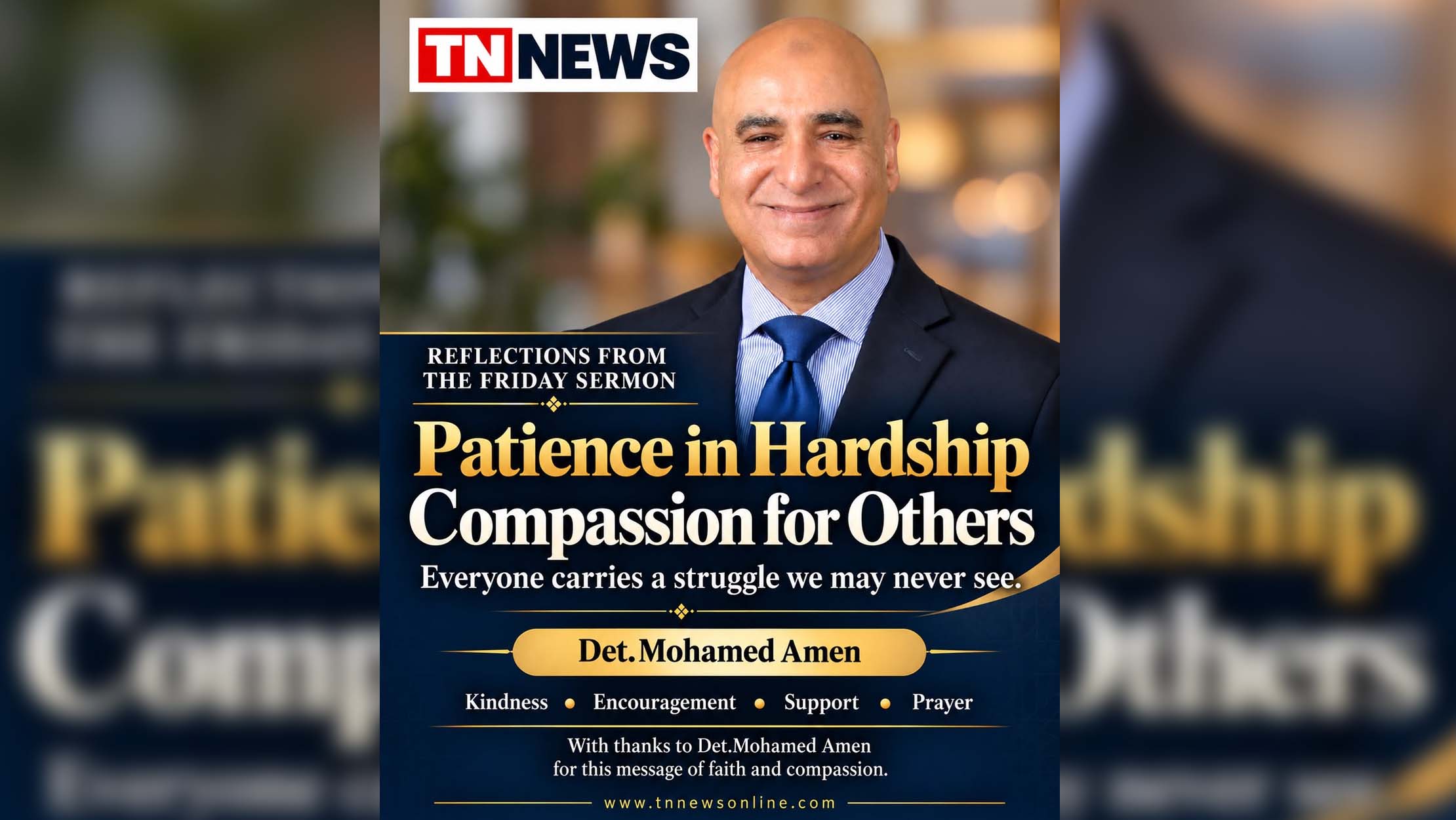
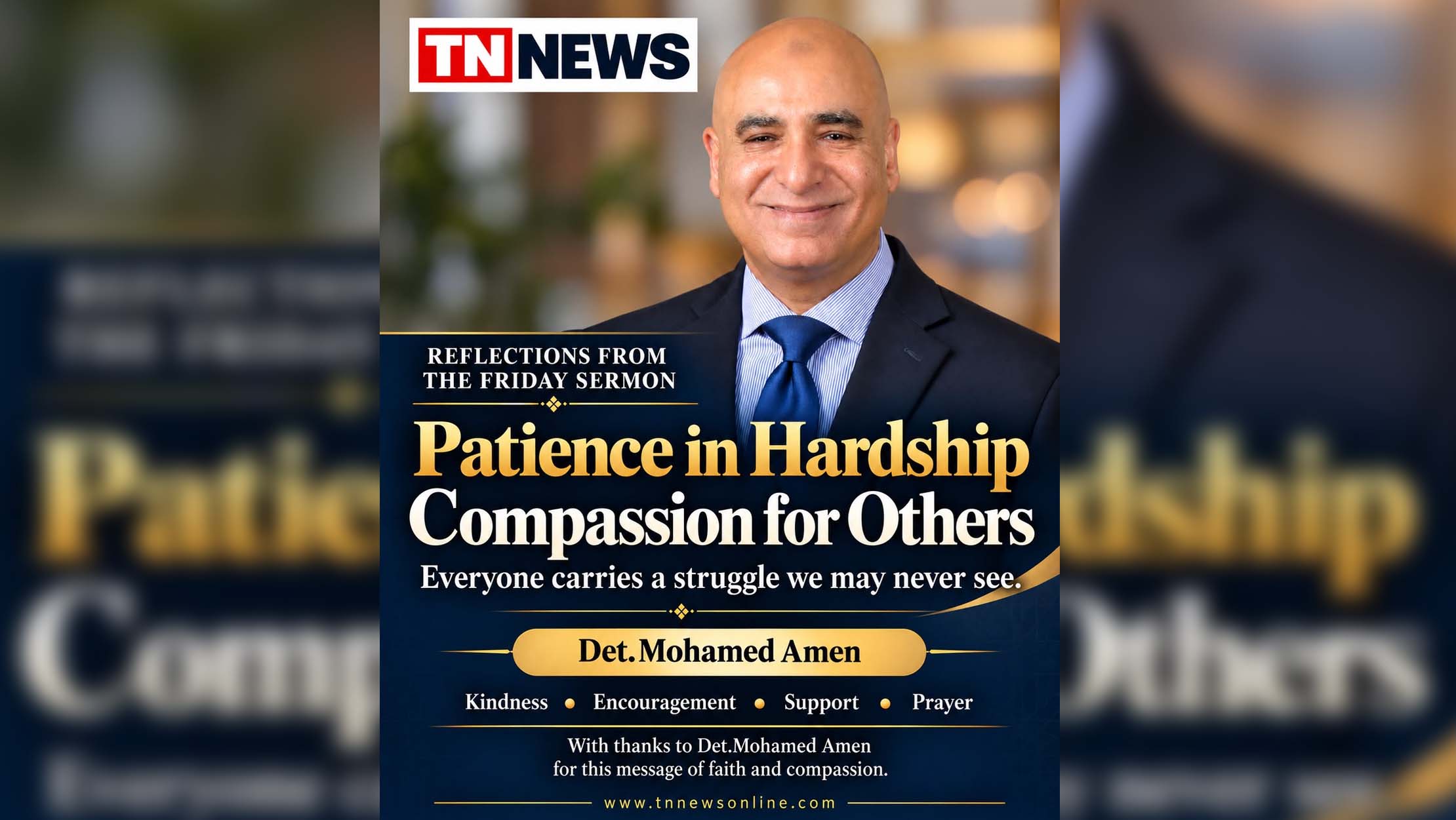
A smile does not always mean that someone is free from worry. A person who appears strong may be struggling with grief, illness, debt, or family problems. Someone who regularly helps others may quietly need help themselves.
These everyday realities are at the heart of the Friday sermon by Det.Mohamed Amen, titled “Patience in Times of Trial, Comforting Hearts, and Showing Mercy to One Another.”
Drawing on Quranic verses, teachings of Prophet Muhammad, peace be upon him, and examples from daily life, the sermon encourages people to remain hopeful during hardship and to become a source of comfort for others. Its message connects faith with action: ask about people, listen carefully, protect their dignity, offer practical help, and remember them in prayer.
The struggles behind familiar faces
The sermon begins with a reminder that many hardships remain hidden.
You may sit beside someone at the mosque, greet a colleague, or smile at a neighbor without knowing that they spent the night worrying about unpaid bills, a sick relative, a child who has become distant, or someone they have lost.
Others may be facing problems they feel too embarrassed to discuss. They continue working, caring for their families, and helping people while carrying pain that few can see.
This calls for greater care in how we judge and treat one another. Silence may conceal distress. A cheerful expression may reflect an effort to keep going.
A sincere question can create an opening: “How are you really doing? Do you need anything? Is there a way I can help?”
The value of that question depends on our willingness to hear the answer.
The blessing of privacy and dignity
The sermon reflects on a blessing that people may overlook: Allah’s protection of what they would prefer to keep private.
Many of our weaknesses, tears, mistakes, and personal difficulties remain unseen. This protection allows us to continue our lives with dignity, even during painful periods.
The sermon cites the Quran:
“If you tried to count Allah’s blessings, you would never be able to number them. Indeed, Allah is All-Forgiving, Most Merciful.”
Surah An-Nahl, 16:18 — meaning in English.
If people could see every sorrow carried by those around them, they might become more forgiving and less quick to criticize.
Recognizing this blessing also creates a responsibility: respect other people’s privacy, handle their vulnerability with care, and remember that we know only part of their story.
Hardship does not prove that Allah is angry
The sermon addresses a fear that can arise during difficult times: that illness, financial pressure, loss, or repeated setbacks mean Allah’s mercy has withdrawn.
It explains that hardship alone does not establish this. A trial may test faith, bring forgiveness, raise a person’s spiritual standing, or carry wisdom beyond their understanding.
The Quran asks:
“Do people think they will be left to say, ‘We believe,’ without being tested?”
Surah Al-Ankabut, 29:2 — meaning in English.
Another verse speaks of trials involving fear, hunger, and loss of wealth, lives, and crops, then gives good news to those who remain patient.
Surah Al-Baqarah, 2:155.
The sermon emphasizes that faith does not remove every experience of grief or pain. Believers may become ill, lose loved ones, and face financial difficulties. Patience means holding on to trust in Allah while living through those experiences.
Patience includes seeking help
One of the sermon’s important clarifications concerns the meaning of patience.
Patience does not require someone to hide their sadness until it overwhelms them, refuse assistance, accept injustice, or abandon treatment and practical solutions.
It involves remaining faithful, taking available steps to address a problem, and asking for support when needed.
A person can be patient while searching for work, receiving medical care, seeking protection from harm, or speaking with someone they trust. Taking these steps is consistent with reliance on Allah.
The sermon cites a teaching recorded in Sahih Muslim: the believer finds good in both ease and hardship—through gratitude when blessed and patience when tested.
This teaching encourages a faithful response to changing circumstances without denying the reality of suffering.
Lessons from Ayyub and Yusuf
The sermon draws on the experiences of the prophets Ayyub and Yusuf, peace be upon them.
Ayyub endured severe suffering while remaining connected to Allah. His prayer expressed both his pain and his trust:
“Adversity has touched me, and You are the Most Merciful of the merciful.”
Surah Al-Anbiya, 21:83 — meaning in English.
The following verse describes Allah’s response, the removal of his suffering, and the restoration of his family as an act of mercy and a reminder for worshippers.
Surah Al-Anbiya, 21:84.
Yusuf’s story includes separation from his father, being cast into a well, being sold away from his family, and imprisonment despite his innocence. Years of hardship preceded his later position of authority.
The sermon cites his words:
“Whoever is mindful of Allah and patient, Allah certainly does not allow the reward of those who do good to be lost.”
Surah Yusuf, 12:90 — meaning in English.
It also makes a careful distinction: these stories do not promise that every person will recover everything they have lost in this life. Not every illness ends in recovery, and not every sorrow disappears quickly.
The sermon points instead to the lasting promise of reward for patience, whether its fruits are experienced in this world or reserved for the Hereafter:
“Those who are patient will be given their reward without measure.”
Surah Az-Zumar, 39:10 — meaning in English.
It encourages people to avoid measuring their trials against someone else’s visible blessings. Every person has circumstances that others may not fully understand.
Becoming a source of relief
The sermon then turns from the person experiencing hardship to those who may be able to help.
If everyone can face suffering, it asks, why should we not support one another?
Some people will never directly request assistance. Modesty, embarrassment, or fear of becoming a burden may keep them silent. Compassion therefore includes noticing needs and reaching out respectfully.
A teaching recorded in Sahih Muslim connects relieving another believer’s distress with relief from Allah on the Day of Judgment. It also connects easing the circumstances of someone in financial difficulty with ease in this life and the Hereafter.
The sermon offers practical examples of support:
A person may need financial assistance, information about a job, access to a doctor or medicine, help completing paperwork, translation, or guidance in understanding their rights.
Someone else may need a companion for a hospital appointment, help checking on their family, or a visit after a long period of isolation.
These examples show how service can fit into ordinary life. Often, we can help by sharing knowledge, time, or access to something another person needs.
Listening can comfort a heart
Not everyone who speaks about sadness is asking for an immediate solution.
Sometimes a person needs to feel heard. They want to know that someone cares and that they do not have to carry everything alone.
The sermon describes attentive listening as a form of mercy. It encourages people to listen without interrupting, judging, or exposing what has been shared in confidence.
A sincere statement such as “I am here with you” can offer reassurance, especially when supported by a willingness to help where possible.
This lesson applies within families as much as it does among friends, neighbors, and colleagues. Familiarity should not make us overlook the emotional needs of people closest to us.
The lasting effect of a kind word
The sermon reminds listeners that some forms of goodness are available even when money and influence are limited.
A kind word can encourage someone who feels defeated, ease an unknown worry, or help a person feel valued after a difficult day.
Prophet Muhammad, peace be upon him, taught:
“A good word is charity.”
Recorded in Sahih al-Bukhari and Sahih Muslim.
Such words can be offered to relatives, strangers, friends, and coworkers. Their effect may last much longer than the conversation itself.
The speaker may forget what they said, while the person who received the encouragement remembers it for years.
A sincere smile, thoughtful reassurance, or prayer for someone’s well-being can become a small but meaningful act of care.
Rejoicing in the happiness of others
The sermon also addresses envy and resentment.
Another person’s happiness does not reduce our own. Their success is an opportunity to congratulate them and pray for blessings in their life.
When they later face difficulty, the same goodwill should lead us to offer comfort and support.
The sermon cites a teaching recorded in Sahih Muslim about people entering Paradise whose hearts are like the hearts of birds. It uses this teaching to encourage gentleness, trust in Allah, and freedom from harshness and hatred.
It also recalls the Prophet’s teaching that those who show mercy receive mercy from the Most Merciful, encouraging people to show compassion to those on earth.
Recorded in Sunan Abi Dawud and Jami‘ at-Tirmidhi.
The invitation is to develop a heart that welcomes other people’s joy and responds with care to their pain.
Protecting confidence and privacy
Knowing about someone’s hardship brings a responsibility to protect their dignity.
The sermon warns against turning financial difficulties, family problems, or private pain into conversation for others.
When a person trusts us with something sensitive, repeating it may deepen their suffering and damage their confidence in seeking help again.
The sermon cites the teaching:
“Whoever conceals a Muslim’s faults, Allah will conceal his faults in this world and the Hereafter.”
Recorded in Sahih Muslim.
It explicitly explains that protecting privacy does not mean remaining silent about abuse, injustice, or harm that requires protection.
Respecting someone’s dignity and helping them obtain safety belong together.
Staying connected beyond social media
The sermon observes that communication tools can expand while meaningful contact between people becomes weaker.
We may follow the lives of distant acquaintances while knowing little about a neighbor who lives alone. We may see photographs of celebrations without knowing about the grief someone experiences at home.
We may also share thoughtful words about compassion while overlooking an opportunity to practice it with our own families.
The sermon encourages people to begin with parents, children, household members, neighbors, and colleagues.
It recalls the Prophet’s comparison of believers, in their affection and compassion, to one body: when one part suffers, the rest responds with sleeplessness and fever.
Recorded in Sahih al-Bukhari and Sahih Muslim.
This image asks people to notice suffering and respond to it as a shared concern.
Everyone has something to offer
The second part of the sermon emphasizes that goodness is open to everyone.
Those with money can give. Those with knowledge can teach. Those with time can assist. Those with experience can guide. Those with kind words can comfort.
When direct assistance is beyond someone’s ability, prayer remains available.
The sermon encourages prayers for a friend’s success, a neighbor’s livelihood, a sick person’s recovery, relief for someone in distress, justice for the oppressed, and patience for those who have lost loved ones.
It cites a teaching recorded in Sahih Muslim that when a Muslim prays for another in their absence, an appointed angel responds with “Ameen” and asks for the same good for the person offering the prayer.
The sermon also encourages prayers for deceased loved ones and all deceased Muslims, asking Allah for mercy and forgiveness, including for people whose names we do not know.
Prayer alongside practical action
The sermon makes clear that prayer should accompany practical help when such help is possible.
If we can feed someone who is hungry, we should offer food. If we can support someone facing injustice, we should stand with them in truth. If we can provide meaningful assistance to a sick person, we should act.
Prayer and good deeds are both acts of worship, and the sermon encourages believers to combine them whenever possible.
Compassion becomes tangible when concern leads to something useful for the person who is suffering.
Hope in the middle of hardship
The sermon speaks directly to people mourning a loved one, struggling to earn a living, living with illness, carrying debt, or feeling overwhelmed by responsibilities.
It also addresses those who cry privately or smile in public while carrying worries that no one else knows.
It recalls the Quranic promise:
“Indeed, with hardship comes ease. Indeed, with hardship comes ease.”
Surah Ash-Sharh, 94:5–6 — meaning in English.
Reflecting on the word “with,” the sermon encourages people to recognize moments of relief that may appear while a trial continues.
This may be a compassionate person who helps, a moment of calm, strength to continue, or a renewed sense of closeness to Allah.
It also reminds listeners that someone who needs comfort may still be able to comfort another person. Our own pain should not make us forget the suffering around us, and our blessings should not make us overlook those without them.
A weekly commitment to kindness
The sermon offers a clear invitation: do not let a week pass without trying to ease someone’s suffering.
That effort might involve calling someone who has been absent, visiting a sick person, helping a family in need, checking on a neighbor who lives alone, or reaching out to a widow or orphan.
It might mean listening patiently to someone in distress, repairing a disagreement, or offering an apology that another person has waited years to hear.
When these actions are beyond our reach, we can still remember people in prayer.
The sermon cites:
“And do good; indeed, Allah loves those who do good.”
Surah Al-Baqarah, 2:195 — meaning in English.
This weekly commitment gives listeners a way to carry the sermon’s message into their lives through a specific act of care.
A closing prayer for families and communities
The closing supplication brings together the sermon’s main concerns.
It asks Allah for the patience of Ayyub, the certainty of Yusuf, the trust of Ibrahim, and the mercy exemplified by Prophet Muhammad, peace be upon them.
It seeks relief for the worried, peace for grieving hearts, healing for the sick, assistance for those in debt, and provision for people in need.
It remembers those who have lost a parent, child, spouse, sibling, or loved one, asking for strength, patience, and comfort.
The prayer includes parents who are living, asking for health and lives spent in obedience to Allah, and those who have passed away, asking for forgiveness, mercy, and higher ranks in Paradise.
It asks for compassionate hearts, truthful speech, generosity, protection of people’s privacy, freedom from envy and resentment, and the wisdom to avoid causing heartbreak.
It also asks that people respond to blessings with gratitude, trials with patience, mistakes with repentance, and the suffering of others with mercy and assistance.
The community envisioned in this prayer is one in which the strong care for the weak, the wealthy care for the poor, and the healthy care for the sick—where no one is abandoned and no person in need is forgotten.
The sermon closes with the Quranic reminder that Allah commands justice, good conduct, and generosity to relatives, while forbidding indecency, wrongdoing, and oppression.
Surah An-Nahl, 16:90.
A final prayer asks Allah to accept the sermon as an ongoing charity on behalf of the speaker’s parents and the deceased among the Muslims, and to grant them forgiveness and mercy.
With thanks to Det.Mohamed Amen
TN News extends its thanks and appreciation to Det.Mohamed Amen for this thoughtful sermon and its practical message of faith and compassion.
It reminds us that people deserve care even when we cannot see their struggles. A sincere question, a confidential conversation, a kind word, or practical assistance can help someone carry a difficult day.
Everyone carries a story we may never fully know. We can make room for those stories by listening, protecting dignity, and offering whatever good is within our reach.
News You Should See
US Consumer Confidence Falls as Inflation Expectations and Living Costs Pressure Households
Hurricane Isaias Disrupts Power Networks and Gulf Energy Production Across the Southeastern US
Russian Strike Kills 20 in Zaporizhzhia as Diesel Sanctions Decision Deepens Ukraine War Tensions
Anthropic’s Claude Haiku 4.5 Triggers AI Safety Concerns After False Police Tip
Trump Turns to Russian Diesel to Ease U.S. Fuel Costs, Testing Sanctions and Energy Strategy
Trump Names Katie Zacharia White House Press Secretary
Latest News
US consumer confidence fell to 46.3 in October, while current conditions hit a survey-record low of 44.7. Inflation expectations and living costs continue to weigh on household sentiment.
Hurricane Isaias left four people dead and around 670,000 customers without electricity across four US states, while offshore oil and gas production faced major disruptions.
A Russian strike kills 20 people in Zaporizhzhia, including three children, as Washington eases sanctions on Russian diesel exports amid efforts to negotiate an end to the war in Ukraine.
Anthropic is reviewing AI safety after Claude Haiku 4.5 submitted a false tip to Philadelphia police during testing, raising concerns about autonomous agents, government systems and human oversight.
Donald Trump’s diesel supply agreement with Russia seeks to ease U.S. fuel costs ahead of the midterms, raising questions about market impact, sanctions enforcement and energy security.
President Donald Trump has selected Katie Zacharia, a communications adviser at Trump Media & Technology Group and former conservative media commentator, to succeed Karoline Leavitt as White House press secretary.
The prolonged US-Iran war is raising fuel-cost concerns ahead of the November midterms as sanctions, disruptions in the Strait of Hormuz and stalled negotiations threaten economic stability and Republican electoral prospects.
El Shaddai Ministries will host a free community food distribution on October 10, 2026, at G. Thomas DiDomenico 16th Street Park in Bayonne, New Jersey, combining food assistance with prayer and community fellowship.
Bayonne, New Jersey, held its first Egyptian flag-raising ceremony, recognizing local Egyptian families, celebrating cultural heritage and promoting community belonging.