Egypt’s Iran Diplomacy Brings Maritime Security and Economic Stability Into Focus
On the sidelines of the UN General Assembly, Cairo links regional de-escalation with the protection of trade routes, energy supplies and diplomatic channels

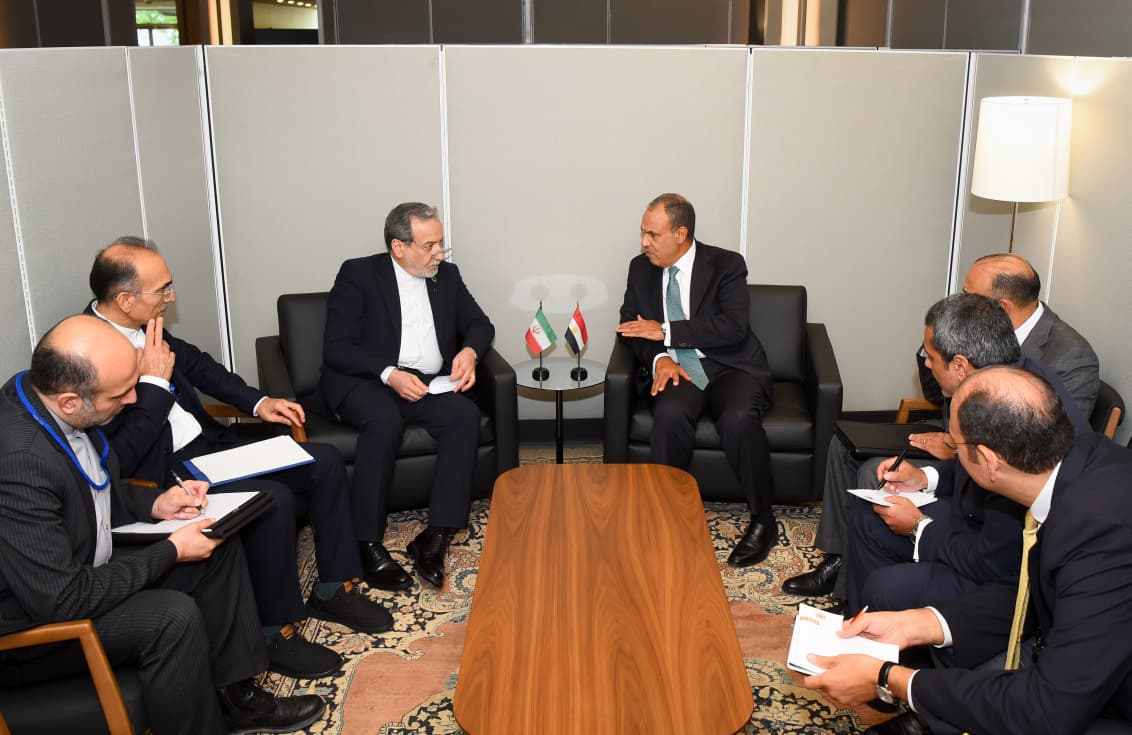
The significance of Egypt’s latest discussion with Iran lies less in the meeting itself than in the economic risks surrounding the diplomatic question. When Egyptian Foreign Minister Badr Abdelatty met Iranian Foreign Minister Abbas Araghchi on September 24 on the sidelines of the 81st United Nations General Assembly in New York, maritime security, energy supplies and international trade were already inseparable from the wider regional crisis.
That is an important shift in the way the regional confrontation should be viewed. A crisis involving Washington and Tehran is not confined to diplomacy or security calculations. Once tensions affect shipping routes, energy flows and fertilizer supplies, the consequences move quickly into the global economy. Egypt’s emphasis on freedom of navigation therefore reflects a direct concern with the functioning of international commerce as much as with regional security.
For Cairo, geography makes this issue particularly consequential. Egypt sits at a critical intersection of international maritime trade, while its economic interests are exposed to disruptions that raise transportation costs, delay deliveries or complicate the movement of strategic commodities. The concern expressed by Abdelatty over navigation and supply chains consequently places economic resilience alongside diplomatic de-escalation.
The meeting also reinforces a consistent element of Egypt’s current diplomatic approach toward the Iranian crisis: keeping political channels open while arguing that escalation should be contained through negotiations. Abdelatty stressed the need for a return to dialogue between the United States and Iran and for understandings capable of stopping the escalation. Egypt has made similar calls in recent weeks, including in discussions with European officials and other regional counterparts.
The wider setting of the meeting matters as well. The UN General Assembly’s high-level week has become a concentrated platform for diplomatic consultations, allowing governments to conduct multiple bilateral discussions alongside formal multilateral proceedings. Abdelatty’s meetings in New York with Iranian, British, Dutch and other officials show how Egypt is using that diplomatic environment to address regional crises while also advancing economic and political relationships.
Iran’s own diplomatic activity in New York adds another layer to the picture. Araghchi has held a series of meetings with foreign counterparts during the UN General Assembly, including officials from Europe, Asia and the Middle East. That activity does not by itself indicate that a negotiated settlement is imminent, but it demonstrates that diplomatic engagement remains an active channel alongside the broader confrontation.
The economic stakes are particularly visible in shipping. International maritime routes are not simply infrastructure for trade; they are part of the pricing mechanism for goods moving across continents. Prolonged disruption can increase freight and insurance costs, create delivery delays and complicate business planning. Energy and fertilizer markets are especially sensitive because disruptions in either can affect production costs far beyond the immediate conflict zone.
For Egypt, this creates a dual diplomatic interest. The country has a security interest in preventing wider regional escalation, while its economic interests are tied to maintaining predictable maritime commerce. These two objectives reinforce each other rather than operating separately.
The Gulf dimension is equally important. Abdelatty stressed the need to respect the security and stability of Gulf states and other countries in the region. This position places the protection of neighboring states and maritime routes within the same broader framework of containing spillover effects. Reuters has also reported that Egypt joined Turkey, Saudi Arabia and Pakistan in a September 22 statement emphasizing safe navigation and dialogue during a meeting on the sidelines of the UN General Assembly.
There is also a practical limit to what diplomatic meetings can accomplish. A bilateral discussion between Egypt and Iran cannot by itself resolve the underlying disputes between Washington and Tehran. Its significance instead lies in maintaining communication, articulating regional concerns and supporting conditions in which broader negotiations could take place.
That distinction matters. Diplomacy should not be measured only by immediate agreements. In periods of elevated tension, preventing further deterioration can itself become an important objective, particularly when the economic costs of escalation extend across borders.
The New York meeting therefore points to a broader reality: regional diplomacy and economic stability are increasingly connected. Egypt’s message to Iran combines calls for de-escalation with concern over navigation, Gulf security and the effects of disruption on international trade. Whether this diplomatic approach can contribute to a wider reduction in tensions will depend on developments between the principal parties, but the economic stakes make the preservation of diplomatic channels increasingly consequential.
News You Should See
2026 Nobel Medicine Prize Honors Scientists Behind Optogenetics Breakthrough
Oil Prices Edge Lower as Stronger Middle East Exports and G7 Reserves Ease Supply Concerns
Trump Offers U.S. Assistance to Russia After Death at Siberian Plague Research Institute
Trump Takes Economic Message to Nebraska as GOP Faces Rising Cost-of-Living Pressure
U.S. Appeals Court Weighs Trump Administration’s $2.6 Billion Harvard Funding Fight
U.S. Midterm Elections Begin With Resilient Jobs Market and Persistent Cost Pressures
Latest News
The 2026 Nobel Prize in Physiology or Medicine honors Karl Deisseroth, Peter Hegemann and Georg Nagel for pioneering research behind optogenetics and its impact on neuroscience.
Oil prices edged lower as stronger Middle Eastern exports and a planned G7 release of 100 million barrels eased immediate supply concerns, while Gulf security risks and the Strait of Hormuz kept markets alert.
President Donald Trump said the United States would help Russia if needed after a laboratory worker died at a Siberian plague research institute, as Russian authorities imposed precautionary quarantine measures.
Trump’s Nebraska campaign stop highlights rising fuel and grocery costs, beef prices and growing economic pressure on Republicans ahead of the November midterm elections.
A U.S. appeals court is reviewing the Trump administration’s effort to cut Harvard’s federal research funding, with more than $2.6 billion at stake.
The U.S. enters the 2026 midterm elections with unemployment at 4.2%, while higher living and energy costs create economic pressure for households and businesses.
US services growth eased in September as input prices climbed to their highest level since July 2022, with fuel costs, supply-chain disruptions and strong demand increasing pressure on businesses.
Rising Treasury yields are increasing U.S. borrowing costs as Washington manages record debt, persistent inflation and strong economic demand, narrowing its policy options.
A EGP 16 million corporate partnership will establish and equip a bone marrow transplant unit at Cairo’s Coptic Hospital, supporting access to specialized treatment for patients.