Egypt-U.S. Strategic Coordination Deepens as Sisi Meets CIA Director
Talks in Cairo address Gaza, Iran, Sudan, Somalia and maritime security as Egypt and the United States seek to strengthen intelligence and regional coordination.

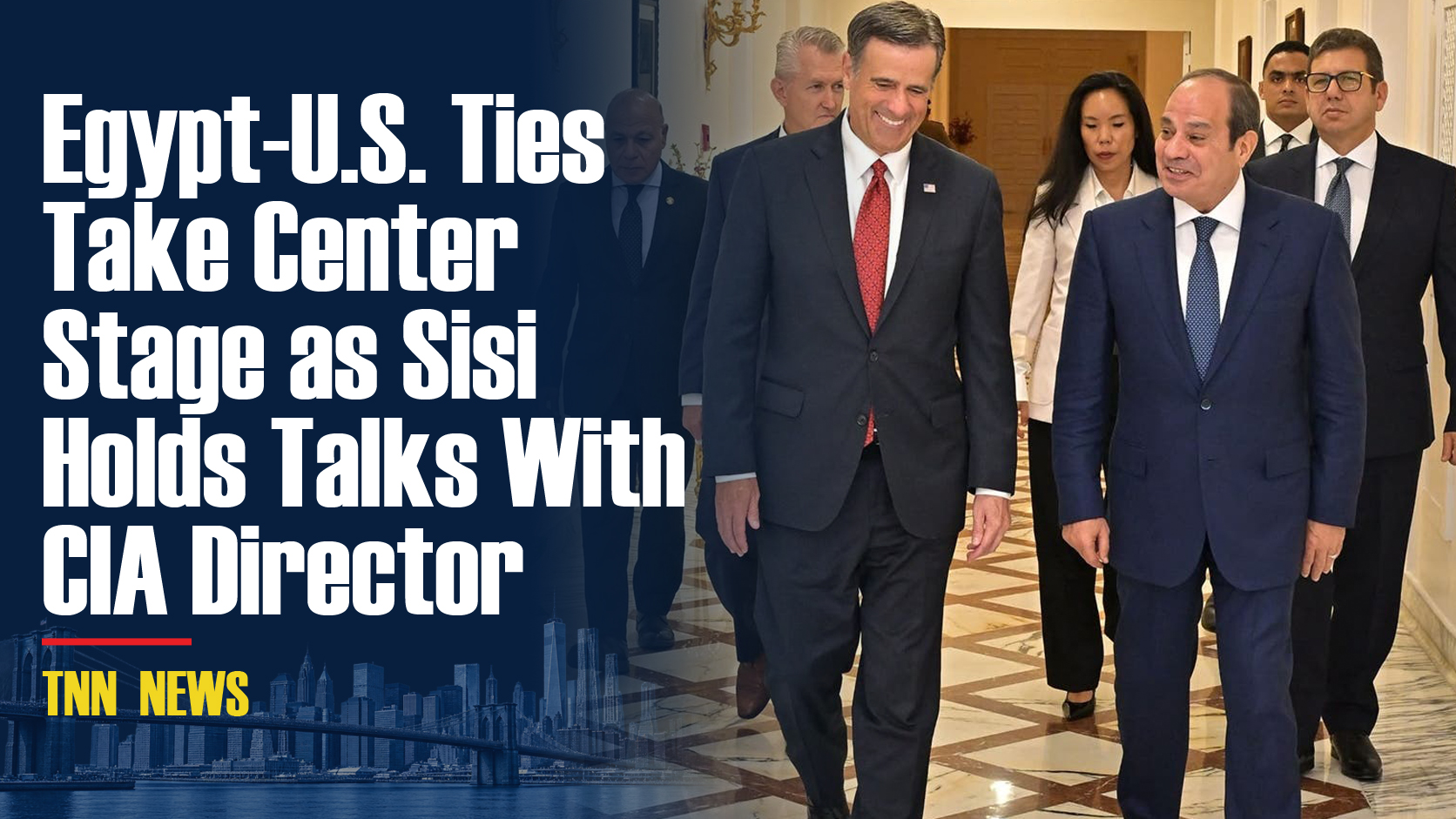
Egypt is positioning its relationship with Washington around a broader regional security framework, with President Abdel Fattah El-Sisi’s meeting with U.S. Central Intelligence Agency Director John Ratcliffe highlighting the expanding importance of intelligence, diplomacy and strategic coordination between the two countries.
The September 20 meeting in Cairo, attended by General Intelligence Service Director Minister Hassan Rashad, brought political, security and geopolitical priorities into a single discussion. According to the Egyptian Presidency, the talks focused on strengthening the longstanding relationship between Egypt and the United States and maintaining consultation on issues affecting regional and international security.
For Egypt, the relationship with the United States extends beyond traditional diplomatic engagement. Cairo describes Washington as a strategic partner across political, security and economic fields, while the meeting demonstrated how regional instability is increasingly connecting those areas. Security developments, maritime routes, counterterrorism and political settlements all have direct implications for trade, investment and the wider economic environment.
The Middle East was central to the discussions. El-Sisi reaffirmed Egypt’s support for efforts to reach a comprehensive resolution to the Iranian crisis, linking a reduction in regional tensions to the restoration of stability and the protection of international navigation. Egypt also reiterated its opposition to attacks on Arab states and its preference for political and diplomatic mechanisms capable of addressing the underlying causes of regional conflicts.
The Gaza crisis represented another major component of the talks. El-Sisi emphasized the importance of implementing the second phase of the U.S. president’s plan for consolidating the ceasefire in Gaza and highlighted Egypt’s priorities of protecting civilians, maintaining the ceasefire and ensuring sufficient and unhindered humanitarian assistance. Cairo also continues to advocate conditions that would allow the political process to resume toward a comprehensive settlement based on international resolutions and the two-state framework.
Ratcliffe’s comments placed particular emphasis on Egypt’s role as a regional intermediary. He recognized Cairo’s contribution to efforts that produced the Gaza ceasefire agreement and its continued involvement in advancing the broader peace process. From a strategic perspective, this reflects Egypt’s position as a country whose geographic location, diplomatic relationships and security institutions give it a significant role in managing crises that affect the wider Middle East.
The intelligence dimension of the relationship was equally prominent. Ratcliffe pointed to established cooperation between the CIA and Egypt’s General Intelligence Service in areas including counterterrorism, organized crime and transnational criminal activity. Continued intelligence coordination can serve as an important mechanism for identifying security threats before they develop into wider regional disruptions, particularly when threats cross national borders.
Sudan was also discussed as a major security and humanitarian concern. El-Sisi reaffirmed Egypt’s support for Sudan’s unity, sovereignty, territorial integrity and legitimate national institutions, while stressing the need to end the war, reduce human suffering and support a political settlement. Egypt’s engagement through regional and international frameworks places the Sudanese conflict within a broader effort to protect stability along a strategically important part of North and East Africa.
The Horn of Africa added another layer to the strategic agenda. Egypt expressed support for security and stability in Somalia and rejected actions that could undermine Somali sovereignty or territorial integrity. For Washington and Cairo alike, developments in the Horn of Africa have implications that extend beyond national borders, particularly because of their connection to maritime security, trade routes and wider geopolitical competition.
The meeting therefore illustrates how the Egypt-U.S. relationship is increasingly shaped by interconnected security and economic considerations. Stability in Gaza, Sudan, Somalia and the broader Red Sea and Horn of Africa region can affect international shipping, energy flows, investment conditions and the movement of goods. Intelligence-sharing and diplomatic coordination consequently have significance beyond the security sector.
The emphasis on sustained consultation also points to an institutional approach rather than cooperation centered on a single crisis. Regular exchanges between Egyptian and U.S. security authorities can provide both sides with a mechanism for sharing assessments, coordinating responses and addressing threats linked to terrorism, organized crime and regional instability.
For Egypt, maintaining this channel with Washington reinforces its role as a diplomatic and security actor across the Middle East and Africa. For the United States, continued coordination with Cairo provides access to a partner with established relationships across several of the region’s most sensitive political and security files.
The broader significance of the meeting lies in the convergence of these priorities. Gaza, Sudan, Somalia, Iran and maritime security are separate crises, but their effects overlap through migration pressures, trade routes, security risks and political instability. The discussions between El-Sisi and Ratcliffe indicate that Egypt and the United States are seeking to manage these interconnected challenges through a combination of intelligence cooperation, diplomatic engagement and sustained strategic consultation.
News You Should See
2026 Nobel Medicine Prize Honors Scientists Behind Optogenetics Breakthrough
Oil Prices Edge Lower as Stronger Middle East Exports and G7 Reserves Ease Supply Concerns
Trump Offers U.S. Assistance to Russia After Death at Siberian Plague Research Institute
Trump Takes Economic Message to Nebraska as GOP Faces Rising Cost-of-Living Pressure
U.S. Appeals Court Weighs Trump Administration’s $2.6 Billion Harvard Funding Fight
U.S. Midterm Elections Begin With Resilient Jobs Market and Persistent Cost Pressures
Latest News
The 2026 Nobel Prize in Physiology or Medicine honors Karl Deisseroth, Peter Hegemann and Georg Nagel for pioneering research behind optogenetics and its impact on neuroscience.
Oil prices edged lower as stronger Middle Eastern exports and a planned G7 release of 100 million barrels eased immediate supply concerns, while Gulf security risks and the Strait of Hormuz kept markets alert.
President Donald Trump said the United States would help Russia if needed after a laboratory worker died at a Siberian plague research institute, as Russian authorities imposed precautionary quarantine measures.
Trump’s Nebraska campaign stop highlights rising fuel and grocery costs, beef prices and growing economic pressure on Republicans ahead of the November midterm elections.
A U.S. appeals court is reviewing the Trump administration’s effort to cut Harvard’s federal research funding, with more than $2.6 billion at stake.
The U.S. enters the 2026 midterm elections with unemployment at 4.2%, while higher living and energy costs create economic pressure for households and businesses.
US services growth eased in September as input prices climbed to their highest level since July 2022, with fuel costs, supply-chain disruptions and strong demand increasing pressure on businesses.
Rising Treasury yields are increasing U.S. borrowing costs as Washington manages record debt, persistent inflation and strong economic demand, narrowing its policy options.
A EGP 16 million corporate partnership will establish and equip a bone marrow transplant unit at Cairo’s Coptic Hospital, supporting access to specialized treatment for patients.