Economic Discontent and Trump's Falling Approval Drive Democratic Gains in 2026 US Midterm Elections
A large-scale voter survey reveals how economic pressures, declining presidential approval and growing demands for political change influenced Democratic gains in the 2026 US midterm elections.

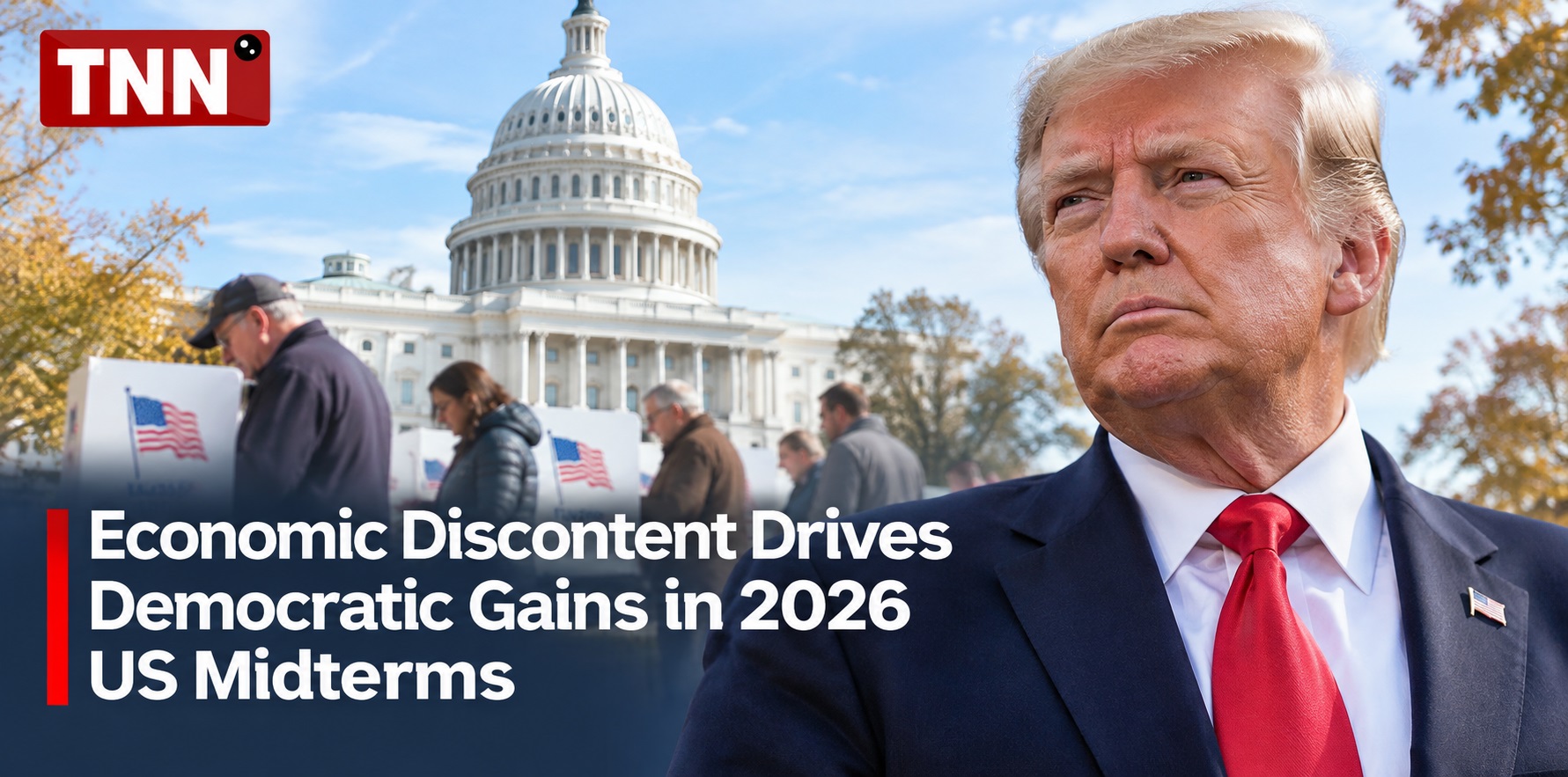
Economic Discontent and Political Realignment Reshape the US Political Landscape After the 2026 Midterms
Economic pressure has emerged as a defining factor in the political realignment witnessed during the 2026 US midterm elections, exposing the extent to which household financial concerns can influence voter behavior and reshape the balance of political support. A large-scale survey of more than 90,000 voters, conducted by NORC and analyzed by The Washington Post, points to a combination of economic dissatisfaction, declining confidence in President Donald Trump and widespread frustration with the country's direction as major contributors to the Democratic Party's strong performance.
The findings suggest that the election was shaped by more than traditional party loyalty. For a significant segment of the electorate, the state of the economy became a measure of political accountability, with voters increasingly evaluating the administration through their personal financial circumstances.
Economic Pressure Becomes a Political Liability
Economic conditions ranked as the leading concern among surveyed voters, reinforcing the connection between household financial stability and electoral decisions. Respondents who expressed dissatisfaction with the economy supported Democratic candidates by more than a two-to-one margin.
This pattern is particularly significant because it indicates that economic frustration extended beyond the Democratic Party's traditional voter base. Some financially struggling Americans who had supported Trump in the 2024 presidential election shifted their preferences, suggesting that previous political support was not necessarily guaranteed when economic expectations remained unmet.
For political parties, this development highlights the importance of economic performance as a determinant of electoral credibility. Promises of growth and prosperity can generate initial support, but their political value depends heavily on whether voters experience tangible improvements in their daily lives.
The shift also presents a challenge for Republicans as they seek to retain economically sensitive constituencies that previously contributed to Trump's electoral success.
Trump's Approval Rating Reflects a Wider Confidence Problem
The survey placed Trump's approval rating at 39%, compared with 61% who disapproved of his performance. Although presidential approval and voting decisions are not identical measures, the figures indicate a substantial gap between the administration and a considerable share of the electorate.
The decline in approval appears alongside dissatisfaction with the economy and concerns about the country's overall direction. Together, these indicators suggest that political frustration was not confined to a single policy area.
The implications extend beyond the president's personal standing. Republican candidates in competitive races faced an electoral environment in which voters' perceptions of the administration could influence their assessment of the wider party.
This dynamic is particularly relevant in midterm elections, when voters often use congressional contests to express approval or disapproval of the governing party.
Independent and Younger Voters Strengthen Democratic Momentum
Independent voters played an important role in the Democratic gains, particularly in closely contested Senate races. Their influence underscores the growing importance of voters who do not consistently identify with either major political party.
Democrats also improved their position among Hispanic and younger voters while narrowing Republican advantages across several other demographic groups.
These developments point to a broader competitive challenge for Republicans. Maintaining support among established constituencies may not be sufficient if the party simultaneously loses ground among younger generations and independent voters.
For Democrats, the results offer an opportunity to expand their coalition, although sustaining these gains will depend on translating electoral support into credible policy priorities, particularly in areas such as employment, healthcare and household affordability.
Healthcare and Immigration Remain Divisive Issues
Despite the prominence of economic concerns, the survey indicates that the electorate remained divided across several major policy issues.
Healthcare costs and the cost of living continued to attract significant attention, reflecting concerns about the affordability of essential services and everyday expenses.
Immigration and crime, meanwhile, remained particularly influential among voters who identified these issues as their primary concerns. This distinction demonstrates that the electorate was not responding to a single national narrative. Different voter groups continued to prioritize different policy questions when evaluating candidates.
For both parties, the challenge is therefore to build a political strategy that addresses economic dissatisfaction without neglecting the social and security concerns that remain important to substantial segments of the population.
Demand for Political Change Creates Pressure on Both Parties
One of the most significant findings concerns public dissatisfaction with the country's overall direction. More than 60% of respondents expressed negative views about where the United States was heading, while approximately three-quarters supported substantial change or a complete political overhaul.
These figures reveal a broader climate of political dissatisfaction that goes beyond conventional disagreements between Democrats and Republicans.
The demand for change represents both an opportunity and a risk for the winning party. Democratic gains may reflect a desire for an alternative to the current political direction, but electoral success alone does not guarantee long-term public confidence.
Voters who supported change may expect visible improvements in economic conditions, healthcare affordability and government performance. Failure to deliver meaningful progress could create similar pressures for the party benefiting from the current political shift.
Implications for the Next Congress
The survey provides an important indication of the economic and political pressures facing the newly elected Congress as it prepares to take office.
For Republicans, the findings highlight the need to reassess their approach to economic concerns and rebuild confidence among voters who have become less satisfied with the country's financial outlook.
For Democrats, the opportunity lies in maintaining the coalition that supported their gains while establishing a practical legislative agenda capable of addressing the issues that influenced voting decisions.
Ultimately, the 2026 midterm elections demonstrate how economic expectations, presidential approval and demands for institutional change can interact to reshape the American political landscape. The durability of the Democratic gains will depend not only on the strength of the electoral coalition but also on whether the next phase of government can respond effectively to the concerns that brought voters to the ballot box.
News You Should See
FEMA and FCC Set Nationwide Emergency Alert System Test for Today
Lisa's 'Always Lalisa' Documentary Set for November 18 YouTube Premium Release
Darius Rucker Documentary Traces His Rise From Rock to Country Music
Hollywood Honors Glenn Close and Ridley Scott at Governors Awards
Toronto Tempo Claim Top Selection in 2027 WNBA Draft Lottery
Detroit Lions Overpower Patriots 35-10 in Munich Behind Jahmyr Gibbs' Outstanding Performance
Latest News
FEMA and the FCC will test America's Emergency Alert System on November 17 at 2:20 p.m. ET. Radio and TV broadcasts will be interrupted briefly.
Lisa's Always Lalisa documentary arrives on YouTube Premium November 18, featuring her solo career, Coachella performances and The White Lotus experience.
The Hulu documentary explores Darius Rucker's journey from Charleston to rock success with Hootie & the Blowfish and his country music career.
Glenn Close and Ridley Scott receive honorary Oscars alongside Floyd Norman, Pamela Koffler and Christine Vachon at Hollywood's Governors Awards.
Toronto Tempo secure the No. 1 pick in the 2027 WNBA Draft, raising expectations around the franchise's rebuilding plans and potential interest in JuJu Watkins.
Detroit Lions defeat New England Patriots 35-10 in Munich as Jahmyr Gibbs records 252 scrimmage yards and two touchdowns.
Minnesota Vikings defeat Green Bay Packers 30-10 as Kirk Cousins throws two touchdowns and the defense delivers eight sacks and four turnovers.
AAA expects 81.5 million Americans to travel for Thanksgiving 2026, with nearly six million flying as transportation costs influence holiday plans.
Nvidia's upcoming earnings report could offer insights into AI chip demand, data center investments and investor confidence amid uncertainty in the technology market.