Dyson’s Hot+Cool HF1 Redefines Home Climate Control Through an All-in-One Smart Design
The HF1 blends heating, cooling, smart automation, and minimalist engineering into a single connected appliance, reflecting the industry's move toward premium multifunctional home technology.

Dyson continues to strengthen its position in the premium consumer technology market by expanding the concept of multifunctional home appliances. The company's latest Hot+Cool HF1 represents more than a seasonal fan or portable heater; it reflects a broader product strategy focused on consolidating multiple household functions into a single intelligent platform that delivers convenience, efficiency, and modern aesthetics.
After several months of real-world testing, the HF1 demonstrated how one connected appliance can effectively replace both a conventional space heater during colder months and a ceiling or standing fan throughout the summer. Rather than encouraging consumers to purchase separate seasonal products, Dyson positions the HF1 as a year-round climate management solution capable of reducing clutter while simplifying daily home comfort.
From a design perspective, the HF1 follows Dyson's recognizable bladeless engineering philosophy. Beyond creating a distinctive visual identity, the bladeless architecture provides practical benefits by making cleaning significantly easier and reducing maintenance compared with conventional fans that require disassembly to remove dust from blades and protective grilles. The absence of exposed blades also enhances household safety, particularly in environments where children or pets are present.
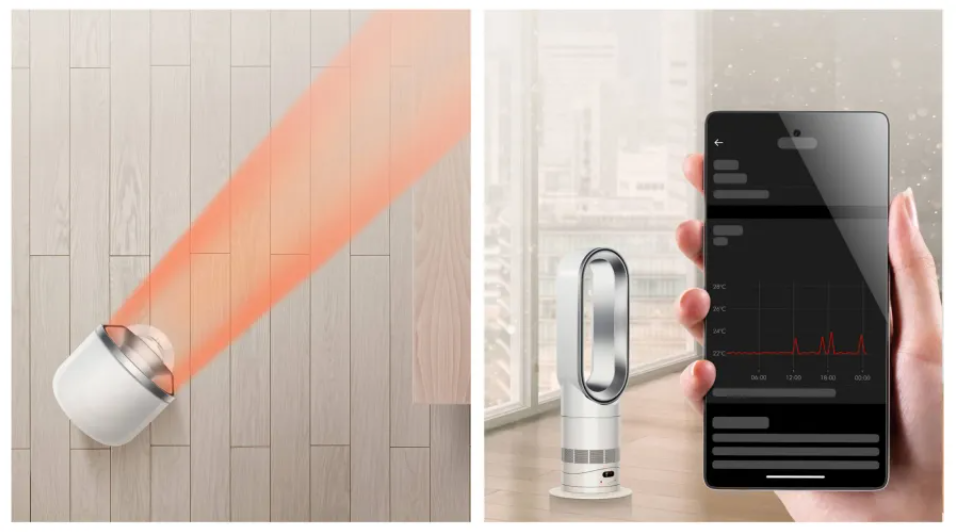
One of the strongest differentiators of the HF1 lies in its connected ecosystem. Users can operate the appliance directly through onboard controls, an included remote, or the MyDyson mobile application. The smartphone experience extends functionality beyond basic on-and-off commands by allowing remote operation, scheduled routines, oscillation adjustments, timer management, and customized operating schedules. These capabilities transform the product from a simple household appliance into part of a connected smart-home ecosystem.
The heating system is driven by an intelligent thermostat that continuously monitors room conditions and automatically regulates heat output to maintain the selected temperature while avoiding unnecessary energy consumption. During warmer seasons, the cooling function operates as a high-performance air circulator rather than a conventional air conditioner. Although it does not actively reduce ambient room temperature, it delivers consistent airflow that improves personal comfort while consuming less space than maintaining separate heating and cooling equipment.
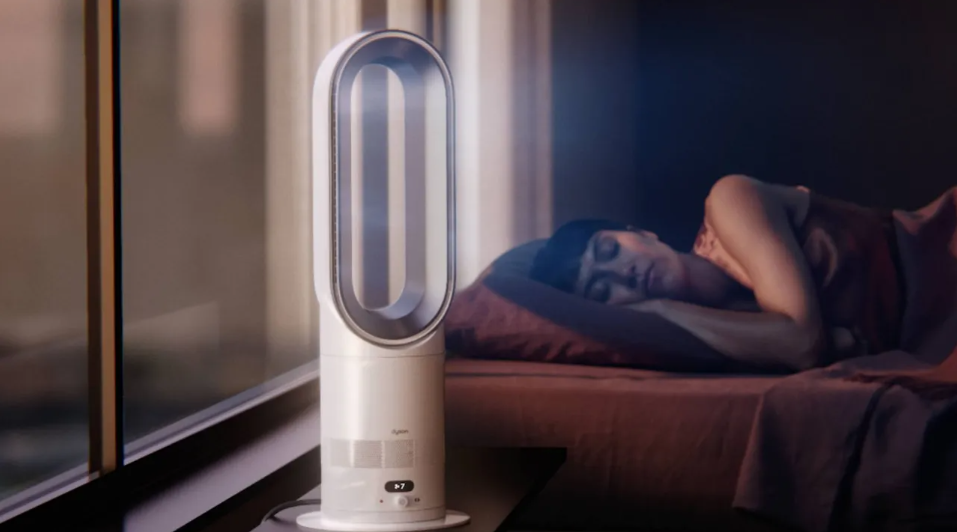
Dyson also emphasizes user experience through quiet operation. Sleep Mode reduces operating noise to approximately 26 decibels while dimming the display automatically, making the appliance suitable for bedrooms and home offices where acoustic comfort is an important purchasing factor. Adjustable airflow angles, oscillation options of 15, 40, and 70 degrees, together with a tilting mechanism, allow users to direct airflow according to different room layouts and personal preferences.
Economically, the HF1 occupies the premium segment with a retail price around $499. While this positions it above conventional portable heaters or standalone fans, Dyson's strategy is based on value consolidation rather than price competition. Consumers purchasing one multifunctional product may avoid acquiring, storing, and maintaining multiple seasonal appliances over time. This approach reflects a broader industry movement toward premium devices that combine hardware innovation with software-enabled convenience.
The HF1 also reinforces Dyson's broader brand identity. Rather than competing solely on performance specifications, the company differentiates itself through industrial design, engineering quality, smart connectivity, and premium user experience. These attributes strengthen Dyson's positioning as a technology-driven lifestyle brand rather than simply a manufacturer of household appliances.
Despite its advantages, the product is not without limitations. Users expecting true air conditioning should understand that the cooling mode circulates air instead of lowering room temperature. Additionally, the premium purchase price may limit adoption among budget-conscious consumers. Nevertheless, for buyers prioritizing intelligent automation, elegant design, reduced maintenance, and year-round usability, the HF1 presents a compelling example of how consumer electronics continue evolving toward integrated smart-home ecosystems that combine functionality, design excellence, and long-term convenience.
News You Should See
2026 Nobel Medicine Prize Honors Scientists Behind Optogenetics Breakthrough
Oil Prices Edge Lower as Stronger Middle East Exports and G7 Reserves Ease Supply Concerns
Trump Offers U.S. Assistance to Russia After Death at Siberian Plague Research Institute
Trump Takes Economic Message to Nebraska as GOP Faces Rising Cost-of-Living Pressure
U.S. Appeals Court Weighs Trump Administration’s $2.6 Billion Harvard Funding Fight
U.S. Midterm Elections Begin With Resilient Jobs Market and Persistent Cost Pressures
Latest News
The 2026 Nobel Prize in Physiology or Medicine honors Karl Deisseroth, Peter Hegemann and Georg Nagel for pioneering research behind optogenetics and its impact on neuroscience.
Oil prices edged lower as stronger Middle Eastern exports and a planned G7 release of 100 million barrels eased immediate supply concerns, while Gulf security risks and the Strait of Hormuz kept markets alert.
President Donald Trump said the United States would help Russia if needed after a laboratory worker died at a Siberian plague research institute, as Russian authorities imposed precautionary quarantine measures.
Trump’s Nebraska campaign stop highlights rising fuel and grocery costs, beef prices and growing economic pressure on Republicans ahead of the November midterm elections.
A U.S. appeals court is reviewing the Trump administration’s effort to cut Harvard’s federal research funding, with more than $2.6 billion at stake.
The U.S. enters the 2026 midterm elections with unemployment at 4.2%, while higher living and energy costs create economic pressure for households and businesses.
US services growth eased in September as input prices climbed to their highest level since July 2022, with fuel costs, supply-chain disruptions and strong demand increasing pressure on businesses.
Rising Treasury yields are increasing U.S. borrowing costs as Washington manages record debt, persistent inflation and strong economic demand, narrowing its policy options.
A EGP 16 million corporate partnership will establish and equip a bone marrow transplant unit at Cairo’s Coptic Hospital, supporting access to specialized treatment for patients.