Dr. Björn Zoëga Outlines a Patient-Focused Vision for AI and Medical Innovation at C3 New York Summit
Björn Zoëga highlights clinical research growth, advanced-therapy manufacturing and digital hospital operations as pillars of healthcare transformation

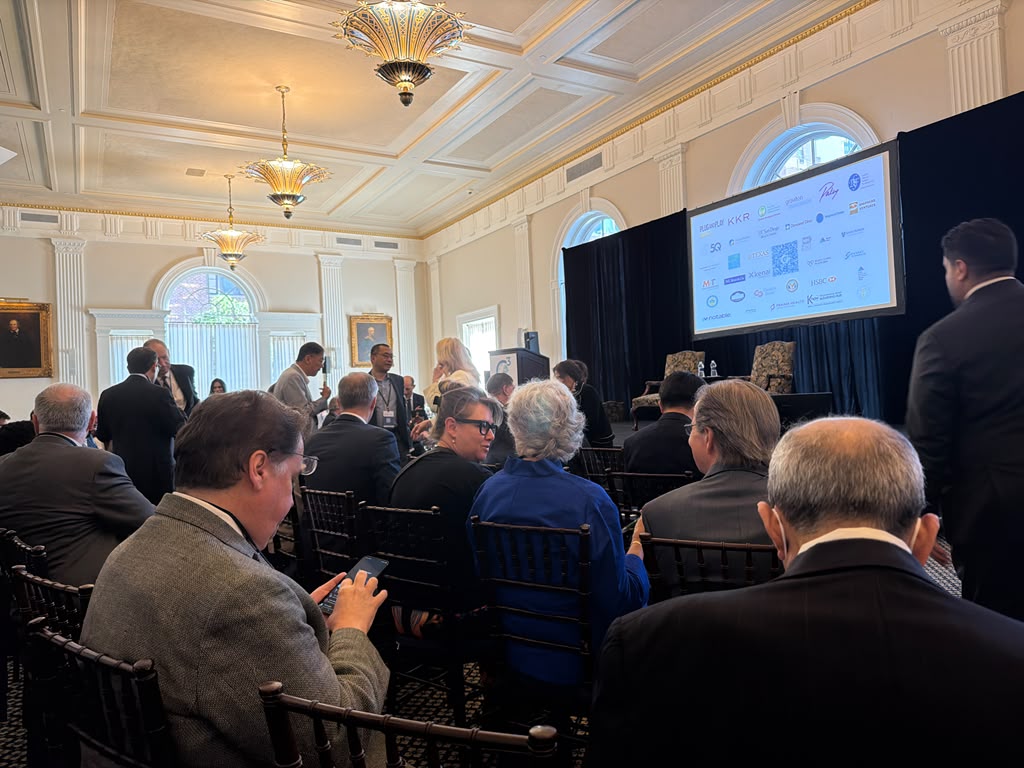
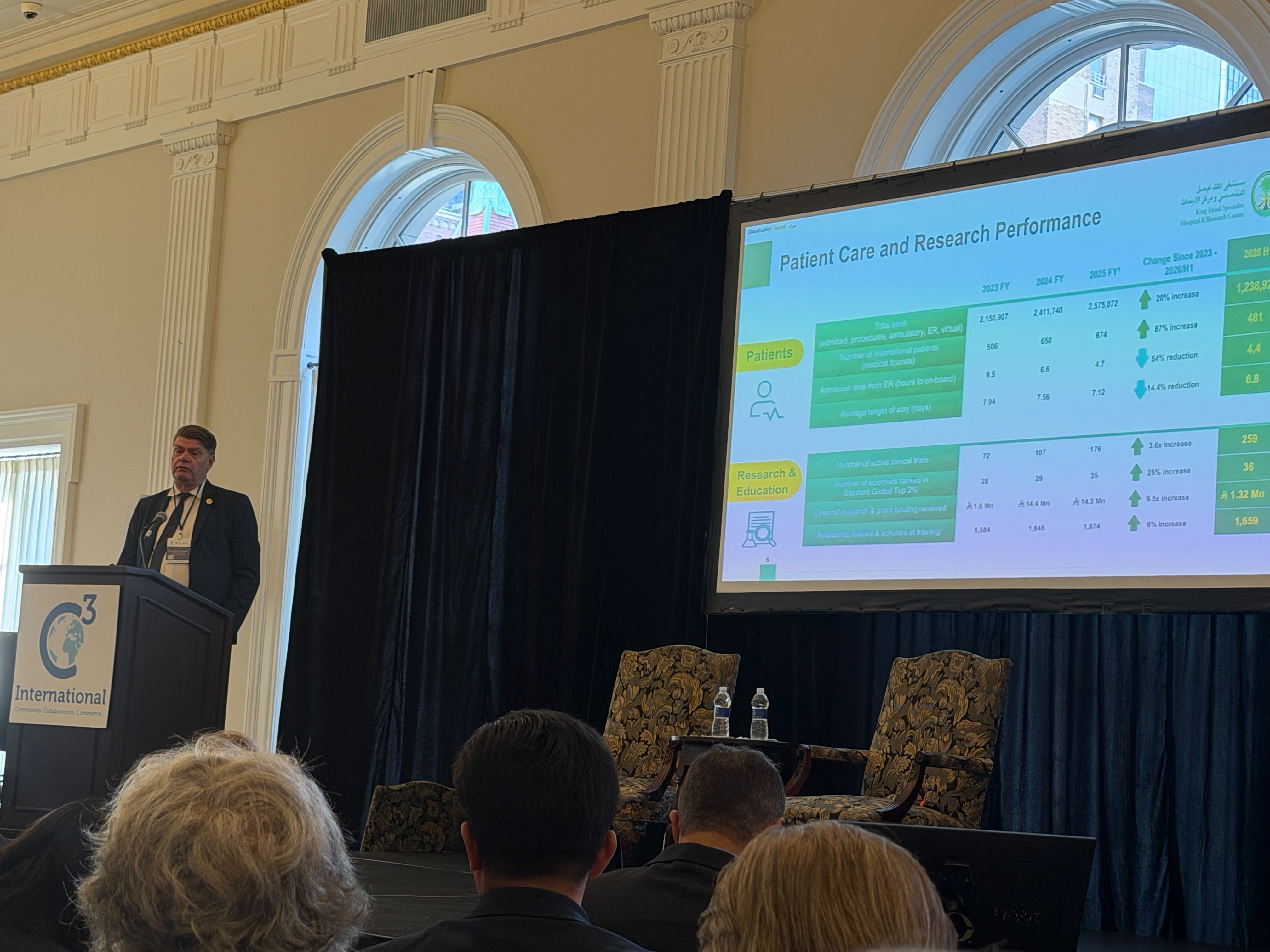
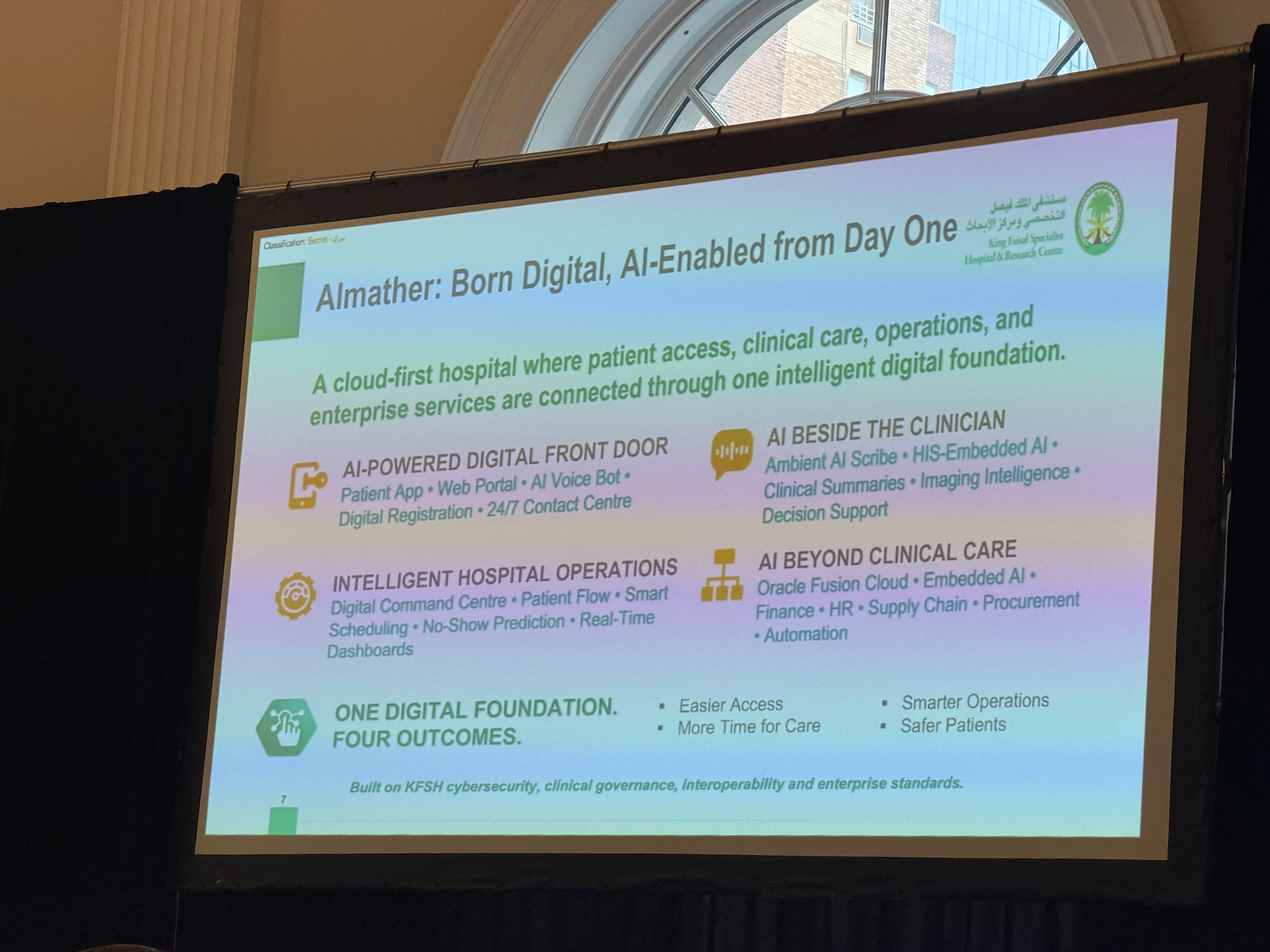
The King Faisal Specialist Hospital & Research Centre leader highlights expanding clinical trials, advanced therapy manufacturing and digital hospital care.
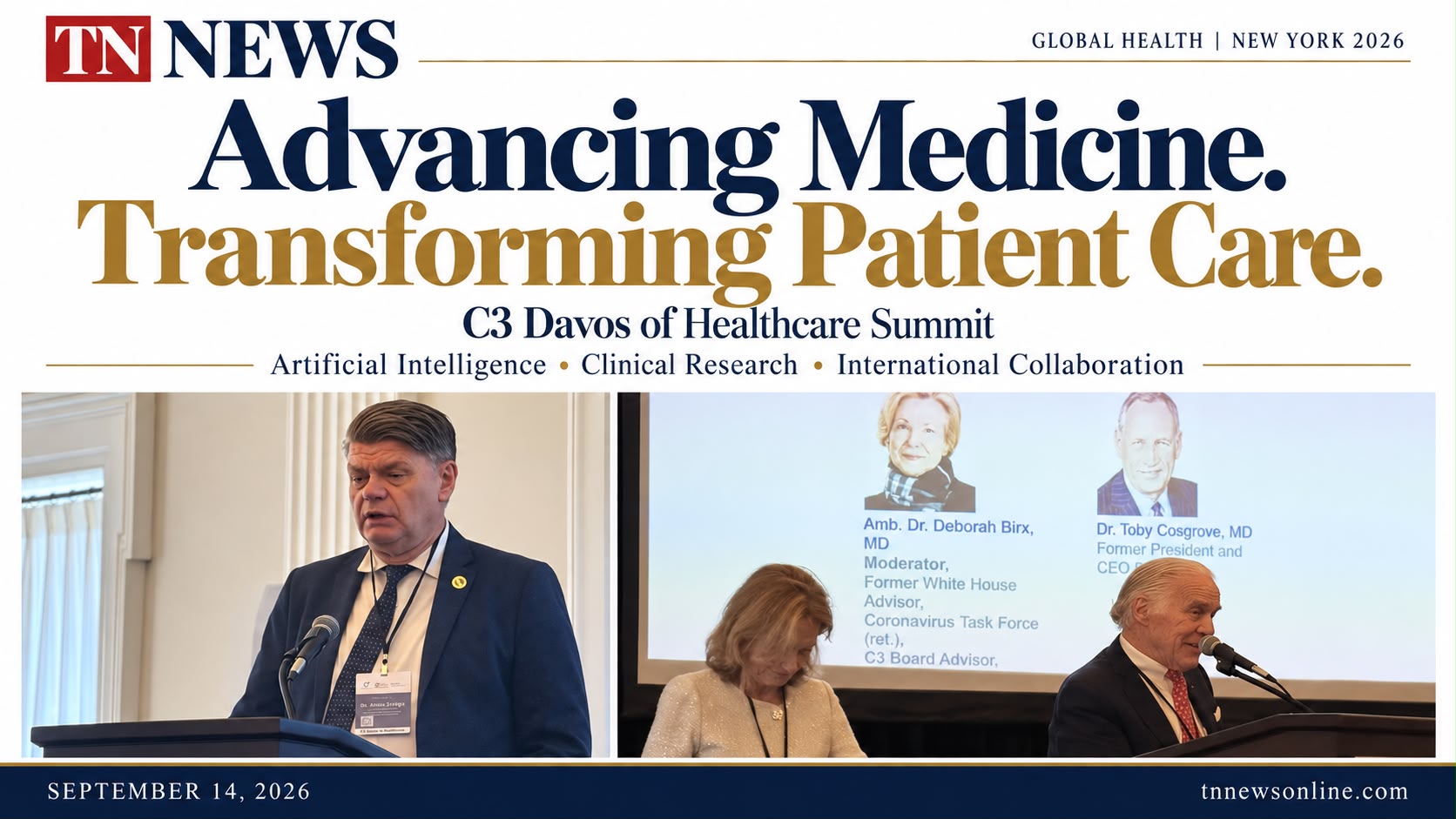
NEW YORK, September 14, 2026 — TN News — Dr. Björn Zoëga called for healthcare institutions to move scientific discoveries into patient care more quickly, outlining a vision built on expanding clinical research, practical applications of artificial intelligence and sustained international collaboration during his opening address at the C3 Davos of Healthcare Summit in New York.
Zoëga, chief executive officer of King Faisal Specialist Hospital & Research Centre in Riyadh, emphasized that progress must ultimately serve patients: extending life, improving its quality and making treatments possible that cannot yet be delivered today. His leadership role is confirmed by the hospital’s official website.
“We should be courageous and not afraid, but do it right,” he told participants.
His remarks addressed a central challenge for modern medicine—the time it takes for promising research to produce benefits in clinical practice. Zoëga argued that better use of data, digital tools and collaboration could help shorten that journey while maintaining the ethical and safety standards required in healthcare.
Speaking under the summit’s theme, “Challenging Science: How Research, AI and Biotech Are Racing to End Disease,” he connected the possibilities of emerging technology with the practical responsibilities of running a major medical institution. Official summit overview
Zoëga offered a measured assessment of artificial intelligence. Despite the attention surrounding the technology, he said its transformative impact across healthcare remains a work in progress. Fragmented digital systems, including platforms that struggle to communicate with one another, have contributed to slow adoption.
He identified research and genomics as areas where AI could help connect complex information and support scientific progress. The priority, he suggested, is to turn those capabilities into useful applications that reach researchers, clinicians and patients.
At King Faisal Specialist Hospital & Research Centre, Zoëga described a substantial expansion in clinical research. According to figures he presented, the number of active clinical trials grew from 32 in 2022 to approximately 260 by the month before the summit.
He also said the hospital conducts close to 60 percent of clinical trials in Saudi Arabia and treats approximately a quarter of the kingdom’s cancer patients. These figures, presented as part of his institutional update, illustrated the scale of its role in research and complex care.
Alongside that growth, Zoëga emphasized the continuing importance of education and developing the next generation of healthcare professionals and researchers.
He also outlined investment in a phased manufacturing facility intended to support advanced therapies. According to his remarks, funding had been secured for construction and the first five years of operation, with some cell-therapy capabilities expected to be ready in early 2027.
Zoëga invited potential research and commercial partners to explore opportunities at the facility, placing international cooperation at the center of its development.
His address also highlighted Almather Hospital, the recently opened secondary-care hospital in Riyadh, as an opportunity to rethink how digital technology supports everyday care.
King Faisal Specialist Hospital & Research Centre announced Almather’s inauguration on August 31, describing a connected care model supported by AI applications in appointment scheduling, diagnostic assistance and patient follow-up. Official Almather opening announcement
At the summit, Zoëga described an approach extending beyond isolated technology projects. The aim, he explained, is to integrate useful digital solutions into clinical work and hospital operations, then expand successful applications across the larger Riyadh campus.
Early feedback from Almather, he said, suggested that some solutions were already freeing nurses’ time—an example of how technology’s value can be reflected in the working day of healthcare staff.
Reducing patient waiting was another stated ambition. Zoëga described plans for a smoother patient journey and smaller waiting areas, presenting these as goals of the hospital’s operating model.
Throughout the address, he returned to the importance of cooperation that produces meaningful work. He reaffirmed his institution’s support for C3 as a place to exchange ideas, develop relationships and identify partners.
C3 founder Ransel Potter welcomed Zoëga and acknowledged the hospital’s longstanding support for the summit, providing the setting for an address focused on the connection between institutional investment and patient benefit.
Zoëga closed with an invitation to continue those conversations and build substantive partnerships.
“We want real collaborations,” he said.
His message placed a clear expectation on medical innovation: advances in technology and research must translate into better care, supported by institutions prepared to work together and put effective ideas into practice.
News You Should See
2026 Nobel Medicine Prize Honors Scientists Behind Optogenetics Breakthrough
Oil Prices Edge Lower as Stronger Middle East Exports and G7 Reserves Ease Supply Concerns
Trump Offers U.S. Assistance to Russia After Death at Siberian Plague Research Institute
Trump Takes Economic Message to Nebraska as GOP Faces Rising Cost-of-Living Pressure
U.S. Appeals Court Weighs Trump Administration’s $2.6 Billion Harvard Funding Fight
U.S. Midterm Elections Begin With Resilient Jobs Market and Persistent Cost Pressures
Latest News
The 2026 Nobel Prize in Physiology or Medicine honors Karl Deisseroth, Peter Hegemann and Georg Nagel for pioneering research behind optogenetics and its impact on neuroscience.
Oil prices edged lower as stronger Middle Eastern exports and a planned G7 release of 100 million barrels eased immediate supply concerns, while Gulf security risks and the Strait of Hormuz kept markets alert.
President Donald Trump said the United States would help Russia if needed after a laboratory worker died at a Siberian plague research institute, as Russian authorities imposed precautionary quarantine measures.
Trump’s Nebraska campaign stop highlights rising fuel and grocery costs, beef prices and growing economic pressure on Republicans ahead of the November midterm elections.
A U.S. appeals court is reviewing the Trump administration’s effort to cut Harvard’s federal research funding, with more than $2.6 billion at stake.
The U.S. enters the 2026 midterm elections with unemployment at 4.2%, while higher living and energy costs create economic pressure for households and businesses.
US services growth eased in September as input prices climbed to their highest level since July 2022, with fuel costs, supply-chain disruptions and strong demand increasing pressure on businesses.
Rising Treasury yields are increasing U.S. borrowing costs as Washington manages record debt, persistent inflation and strong economic demand, narrowing its policy options.
A EGP 16 million corporate partnership will establish and equip a bone marrow transplant unit at Cairo’s Coptic Hospital, supporting access to specialized treatment for patients.