Don’t Just Ask What Your Country Can Do for You
Egypt needs both accountable government and responsible citizens, with national progress built through shared rights, duties and civic responsibility.

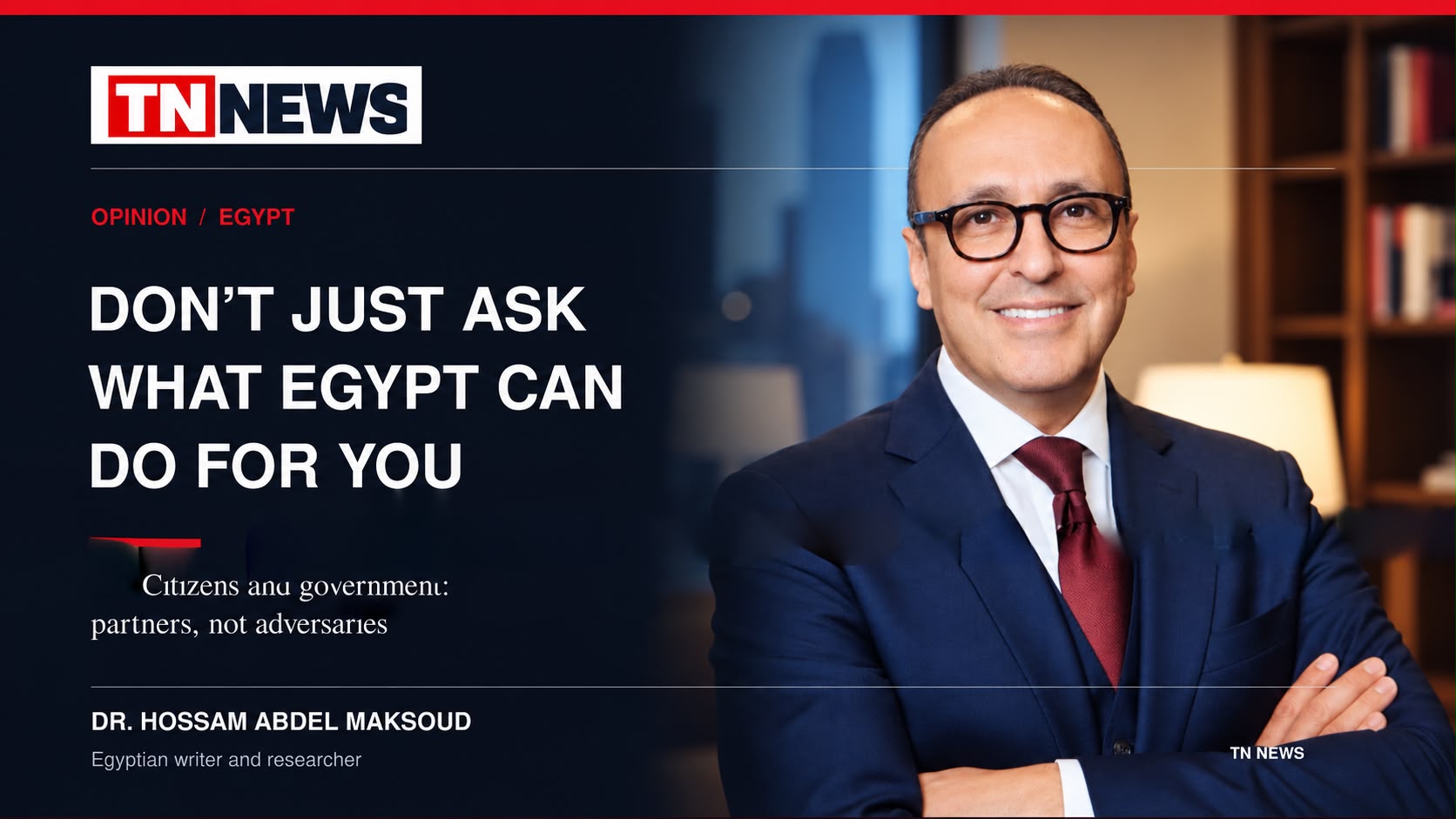
When people discuss the relationship between citizens and government, the conversation often begins with what the state should provide. Better services, stronger institutions, greater transparency and meaningful accountability are all legitimate expectations. But there is another question that deserves equal attention: what can citizens themselves contribute to the country they expect their government to improve?
Egypt faces challenges that are felt directly in everyday life. Rising prices, housing costs and the continuing need to improve healthcare and education all place pressure on families and communities. These realities give citizens every reason to demand better performance from public institutions and to question decisions that affect their lives.
Government has a clear responsibility in this relationship. Public institutions must work to improve services, address corruption, communicate decisions more clearly and create systems through which officials can be held accountable. These are not favors granted to citizens; they are fundamental elements of effective public administration.
Yet government responsibility should not make citizenship a passive relationship in which individuals simply wait for institutions to solve every problem.
A society is also shaped by the choices people make every day. Respecting the law, doing one's work properly, protecting public property, rejecting bribery and contributing to the community may appear to be individual actions, but together they influence the strength and stability of society.
Corruption offers a clear example. The government has the institutional responsibility to prevent corruption, enforce the law and establish transparent procedures. But citizens also have a role. Refusing to participate in bribery or normalize improper practices can reinforce institutional efforts to address corruption. Rules can create a framework for integrity, but everyday behavior helps determine whether that framework works in practice.
The same principle applies to public property. Roads, schools, hospitals, parks and other public facilities require government investment and maintenance, but they are also used by millions of citizens. Treating these resources as a shared responsibility can encourage greater care and reduce the damage caused by neglect or misuse.
None of this should be understood as an argument against criticism of government. Citizens have the right to question public policies, demand transparency and hold officials accountable. Constructive criticism is an important part of any healthy relationship between society and government.
The idea of partnership simply adds another dimension to that relationship. Government and citizens do not have identical responsibilities, nor do they possess equal institutional powers. The state has duties that individuals cannot perform, including managing public resources, providing essential services and enforcing laws. Citizens, meanwhile, have responsibilities connected to their conduct, work, communities and respect for the rules that govern public life.
For that reason, national progress cannot depend entirely on one side of the relationship. More effective institutions can create better conditions for citizens, while responsible civic behavior can help those institutions operate within a stronger social environment.
This balance is particularly important for the economy. Businesses and communities benefit from predictable rules, functioning public services and institutions that are accountable. At the same time, productivity, professional integrity and respect for regulations are influenced by the behavior of individuals and organizations themselves.
Perhaps the more useful question, then, is not only what Egypt can do for its citizens, but also what each citizen can do for Egypt.
The answer does not necessarily begin with grand gestures. It can begin with doing one's work well, respecting the law, refusing corruption, protecting public resources and taking responsibility for the community.
A country is built through institutions, but institutions operate within a society. Government has a responsibility to improve its performance, and citizens have a responsibility to play their part. Seeing these responsibilities as connected rather than competing can create a more constructive understanding of the relationship between the state and the people it serves.
News You Should See
2026 Nobel Medicine Prize Honors Scientists Behind Optogenetics Breakthrough
Oil Prices Edge Lower as Stronger Middle East Exports and G7 Reserves Ease Supply Concerns
Trump Offers U.S. Assistance to Russia After Death at Siberian Plague Research Institute
Trump Takes Economic Message to Nebraska as GOP Faces Rising Cost-of-Living Pressure
U.S. Appeals Court Weighs Trump Administration’s $2.6 Billion Harvard Funding Fight
U.S. Midterm Elections Begin With Resilient Jobs Market and Persistent Cost Pressures
Latest News
The 2026 Nobel Prize in Physiology or Medicine honors Karl Deisseroth, Peter Hegemann and Georg Nagel for pioneering research behind optogenetics and its impact on neuroscience.
Oil prices edged lower as stronger Middle Eastern exports and a planned G7 release of 100 million barrels eased immediate supply concerns, while Gulf security risks and the Strait of Hormuz kept markets alert.
President Donald Trump said the United States would help Russia if needed after a laboratory worker died at a Siberian plague research institute, as Russian authorities imposed precautionary quarantine measures.
Trump’s Nebraska campaign stop highlights rising fuel and grocery costs, beef prices and growing economic pressure on Republicans ahead of the November midterm elections.
A U.S. appeals court is reviewing the Trump administration’s effort to cut Harvard’s federal research funding, with more than $2.6 billion at stake.
The U.S. enters the 2026 midterm elections with unemployment at 4.2%, while higher living and energy costs create economic pressure for households and businesses.
US services growth eased in September as input prices climbed to their highest level since July 2022, with fuel costs, supply-chain disruptions and strong demand increasing pressure on businesses.
Rising Treasury yields are increasing U.S. borrowing costs as Washington manages record debt, persistent inflation and strong economic demand, narrowing its policy options.
A EGP 16 million corporate partnership will establish and equip a bone marrow transplant unit at Cairo’s Coptic Hospital, supporting access to specialized treatment for patients.