Dollar Holds Steady as US Inflation Data and Federal Reserve Decision Approach
Investors are assessing US inflation and third-quarter growth figures ahead of the Federal Reserve's December meeting, while diverging monetary policy expectations in Australia and Japan add pressure to global currency markets.

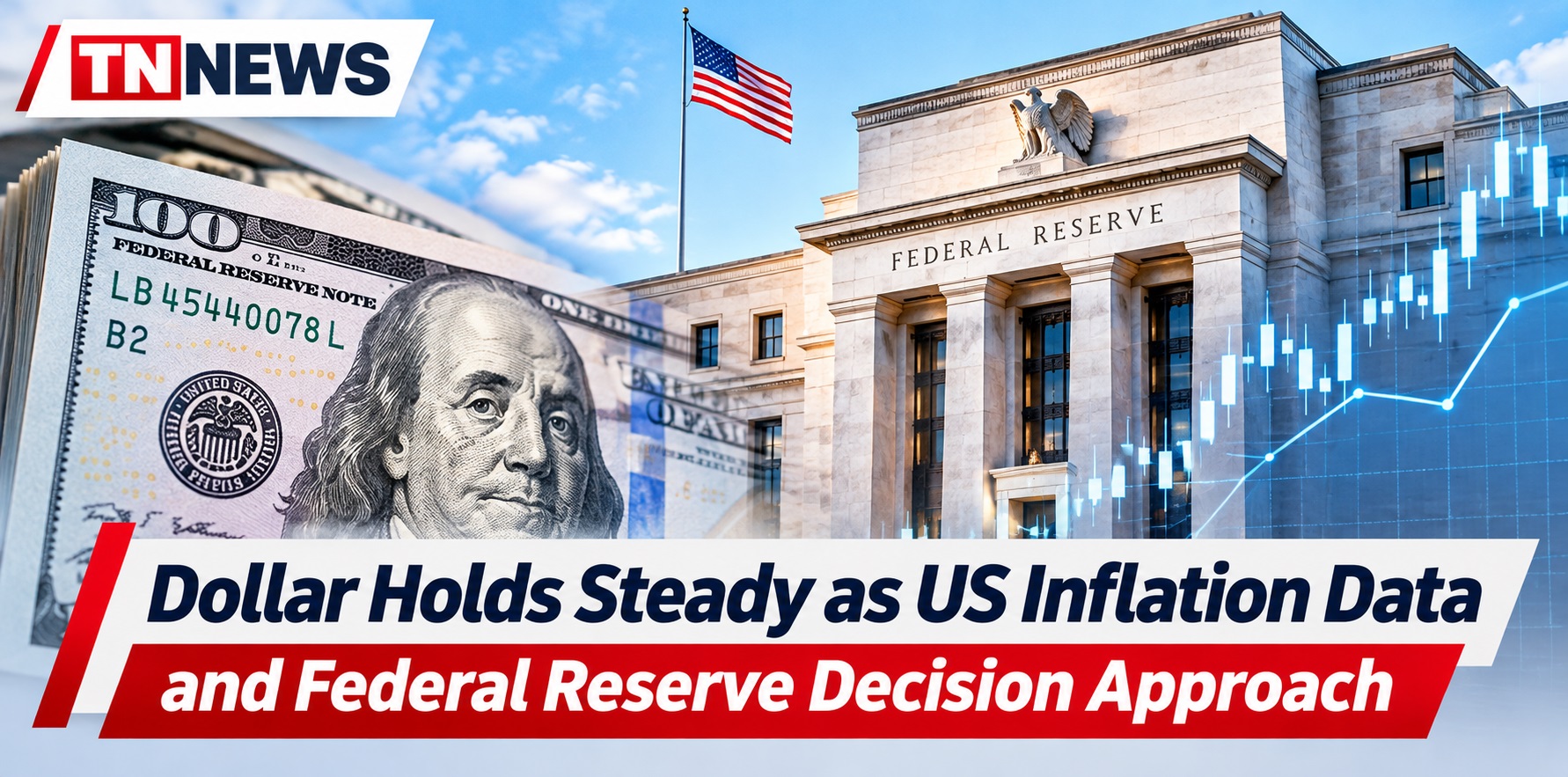
Dollar Stability Masks Growing Uncertainty Over Inflation, Interest Rates and Global Currency Trends
The US dollar entered Wednesday's trading session with limited movement, reflecting a market increasingly focused on economic evidence rather than short-term currency fluctuations. Investors are awaiting new figures on American economic growth and inflation, which could influence expectations for the Federal Reserve's next interest-rate decision.
The dollar index stood at 103.85, broadly unchanged after losing 0.44% in the previous session. The euro, Japanese yen and British pound also showed relatively narrow trading ranges, suggesting that currency investors are reluctant to establish stronger positions before the release of important economic indicators.
The immediate focus is on US third-quarter gross domestic product figures and October inflation data. Together, these releases are expected to provide a clearer picture of the strength of economic activity and the persistence of price pressures ahead of the Federal Reserve's December policy meeting.
Monetary Policy Expectations Drive Currency Markets
Interest-rate expectations remain a central factor behind the dollar's performance. Market pricing indicated a 97% probability of another Federal Reserve rate increase in December, alongside a 66% probability of a further increase in January.
Such expectations reflect concerns that inflation may remain sufficiently persistent to require additional monetary tightening. Higher interest rates generally support a currency by increasing the relative attractiveness of assets denominated in that currency, although the actual market response depends on whether policy decisions match or exceed existing expectations.
The dollar's relatively stable performance suggests that investors are balancing expectations of tighter monetary policy against uncertainty surrounding the broader economic outlook.
The upcoming inflation report is particularly important because it could influence the Fed's assessment of whether price increases are slowing sufficiently or whether additional measures are necessary.
Inflation and Economic Growth Under the Spotlight
Economists were expecting personal consumption expenditures inflation, the Federal Reserve's preferred inflation measure, to rise by 0.3% in October.
Meanwhile, annualized US economic growth in the third quarter was forecast to reach 3.5%.
These figures could present policymakers with a complicated combination of economic signals. Strong growth may indicate that the economy remains resilient, while persistent inflation could reinforce the case for maintaining restrictive financial conditions.
For businesses and households, the implications extend beyond currency trading. Higher borrowing costs can increase financing expenses, influence investment decisions and put pressure on consumer spending.
Companies operating in capital-intensive industries may face particularly difficult decisions if interest rates remain elevated for an extended period.
Technology Stocks and AI Investment Add Another Layer of Risk
Currency investors are also monitoring volatility in technology shares and the wider artificial intelligence investment sector.
The rapid expansion of AI-related investment has become an important factor in financial markets, attracting substantial capital toward technology companies, infrastructure providers and businesses seeking to integrate advanced computing capabilities.
However, concerns about market valuations and the economic consequences of higher financing costs have introduced additional uncertainty.
A sustained increase in interest rates could raise the cost of funding large-scale technology projects and influence how investors value companies whose expected returns depend heavily on future growth.
This creates a broader challenge for policymakers: monetary tightening may help contain inflation, but it can also affect investment activity in sectors that have become increasingly important to economic growth.
Australia and Japan Signal Diverging Monetary Trends
Developments outside the United States are adding another dimension to currency movements.
The Australian dollar advanced 0.29% to $0.6657 after consumer inflation exceeded expectations, with underlying price pressures remaining persistent. The data strengthened attention on the Reserve Bank of Australia's potential policy response.
Japan is also attracting market attention after service-sector prices increased by 4.2% year over year in October.
The rise has reinforced expectations that the Bank of Japan could consider another interest-rate increase in the near future. Such a move would be significant for global currency markets because changes in Japanese monetary policy can influence international capital flows and the attractiveness of yen-denominated investments.
The differing economic conditions in Australia, Japan and the United States illustrate how central bank decisions are increasingly shaping relative currency valuations.
Oil Prices and Geopolitical Risks Complicate the Outlook
Energy markets remain another important source of uncertainty. Elevated oil prices and geopolitical tensions in the Middle East have contributed to concerns about inflation and the possibility of tighter monetary conditions across several economies.
Higher energy costs can feed into transportation, manufacturing and household expenditure, creating additional pressure on consumer prices.
For central banks, this presents a difficult policy challenge. Energy-driven inflation may be harder to control through interest-rate increases alone, particularly when supply disruptions and geopolitical developments are involved.
The interaction between energy prices, inflation expectations and monetary policy therefore remains an important factor for currency investors.
Economic Data Could Set the Next Direction for the Dollar
The dollar's near-term trajectory will depend largely on whether upcoming US indicators reinforce or weaken expectations of further monetary tightening.
Stronger-than-expected inflation or economic growth could increase pressure on the Federal Reserve to maintain an aggressive policy stance. Conversely, signs of cooling price pressures or weakening economic activity could lead markets to reassess the likelihood and timing of additional rate increases.
For international investors, the implications extend to exchange rates, borrowing costs and capital allocation across major economies.
The current stability in the dollar should therefore not be interpreted as a sign that uncertainty has disappeared. Rather, markets are waiting for information capable of changing the balance between inflation risks, economic resilience and monetary policy.
As the December Federal Reserve meeting approaches, the relationship between US economic performance and interest-rate expectations is likely to remain the dominant influence on currency trading.
News You Should See
Before Thanksgiving: Tips to Cut Travel Costs and Avoid Traffic and Airport Congestion in the US
Dollar Holds Steady as US Inflation Data and Federal Reserve Decision Approach
US Appeals Court Ends Justice Department Lawsuit Targeting 20,000 California Ballots
Democrats Win Historic House Majority, Reshaping Washington's Political Landscape
Thanksgiving Storm Threatens Major US East Coast Travel Routes With Flooding and 60 MPH Winds
Manchester City Prepare for Tactical Battle Against Napoli in Champions League
Latest News
About 81.5 million Americans are expected to travel for Thanksgiving, facing higher airfare, heavy road traffic and crowded airports. Discover key travel preparations and cost-saving tips.
The dollar index holds near 103.85 as investors await US inflation and GDP figures, with December rate expectations and global monetary policy shaping currency markets.
The 9th Circuit Court of Appeals approved the Justice Department's request to dismiss its lawsuit targeting approximately 20,000 California ballots, ending a dispute over federal election oversight and state authority.
Democrats secure at least 259 House seats and a 56-seat Senate majority, setting the stage for major changes in US healthcare, spending and congressional oversight.
A developing Thanksgiving storm threatens the US East Coast with heavy rain, coastal flooding and wind gusts of up to 60 mph, raising concerns about airport operations, road travel and holiday transportation in major cities.
Manchester City host Napoli in a key Champions League clash, with Haaland, Foden and Cherki expected to lead the English side's attacking efforts.
Arsenal prepare to host Borussia Dortmund in a crucial Champions League clash, with injuries and tactical decisions potentially shaping the outcome.
The Hunger Games: Sunrise on the Reaping earns $225 million worldwide in its opening weekend, strengthening the franchise's box-office position.
Harvard research estimates that 403 US hyperscale data centers consume up to 99 terawatt-hours annually, raising concerns about AI's environmental impact.