Disillusionment in the Ranks: California National Guard Questions Mission Amid Trump’s LA Deployment
What began as a wildfire response mission has morphed into a controversial immigration crackdown, sparking dissent among troops and legal scrutiny over the use of federal forces in Los Angeles.

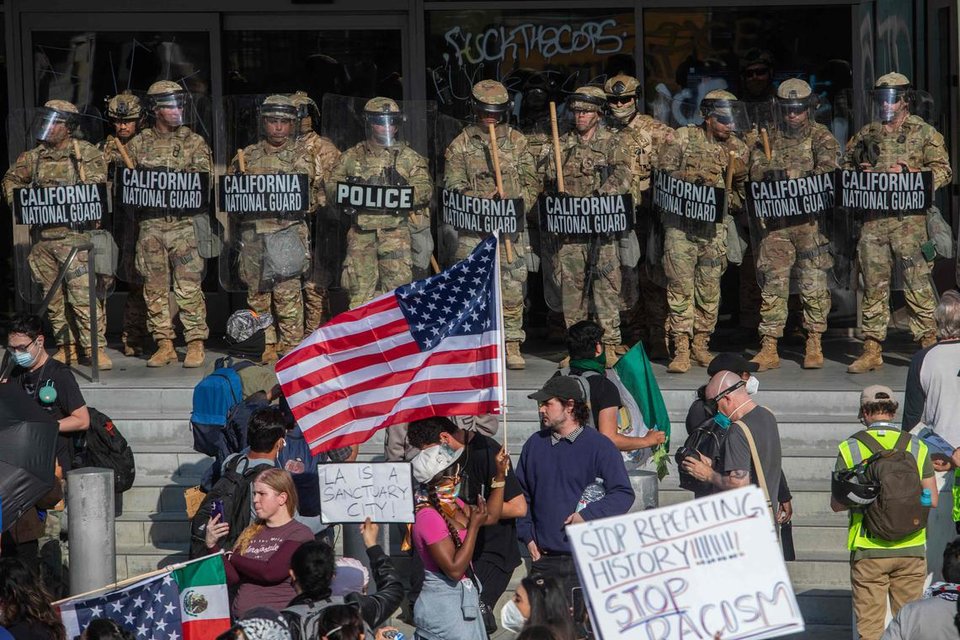
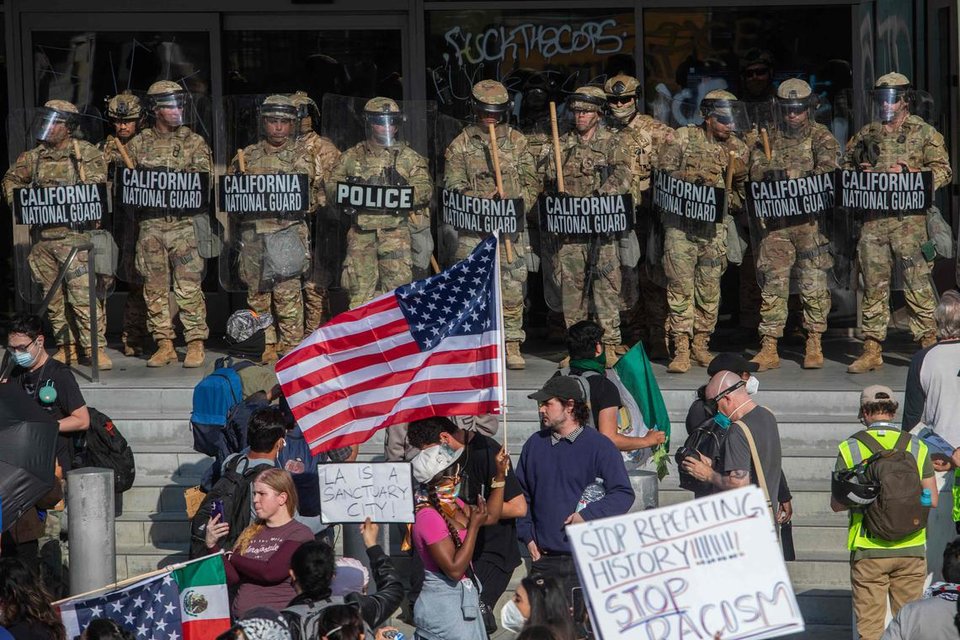
LOS ANGELES – When the California National Guard rolled into wildfire-ravaged Los Angeles last January, local residents welcomed them as saviors. Celebrities expressed gratitude in Pacific Palisades, and suburban families praised troops at traffic checkpoints in Altadena.
But just months later, the mood has dramatically shifted.
Now, protesters jeer at soldiers stationed outside federal buildings, commuters express frustration with convoy gridlocks, and even family members question whether Guardsmen should be following federal orders tied to immigration enforcement.
The shift follows President Donald Trump’s June decision to repurpose the Guard’s presence in Los Angeles from disaster response to supporting immigration crackdowns, a move that has sparked controversy both on the streets and inside the military.
“Nobody’s handing out Disneyland tickets now,” one soldier said, referencing the perks offered during their wildfire mission — now replaced with suspicion and criticism.
In interviews with nearly two dozen individuals — including soldiers, officers, officials, and civilians — a recurring theme emerged: morale is collapsing. Six soldiers and officers, speaking anonymously, expressed concerns about the legality, purpose, and optics of the deployment. Several called it a “fake mission”, forced upon them by a federal agenda they didn’t sign up for.
While only a fraction of the thousands deployed, these voices align with other troubling signs:
Over 105 Guardsmen have sought mental health counseling.
A company commander and battalion commander were reassigned after raising objections.
Reports surfaced of soldiers defecating in Humvees and showers, triggering increased security at their Southern California base.
From the 72 soldiers whose enlistments were set to expire during the mission, 55 say they will not re-enlist, according to Governor Gavin Newsom’s office. That would represent a retention rate of just 21%, far below the usual 60%.
“The moral injuries of this operation will be enduring,” said one Guard official. “This is not what our military was built for.”
The Trump administration ordered the deployment of 4,100 California National Guard members — traditionally under state control — along with 700 Marines. Their mission: bolster federal agents after immigration raids sparked public protests.
Operations like the MacArthur Park crackdown and a controversial cannabis farm raid in Ventura County, where a farmworker died fleeing, have provoked fierce criticism. On July 15, the Pentagon began demobilizing 1,990 troops, but nearly 1,900 remain, with no clear end in sight.
Legal questions loom large. California officials argue the deployment may violate the Posse Comitatus Act, a 19th-century law that limits military involvement in domestic law enforcement. A federal judge has scheduled a trial in August to determine if the deployment crossed legal boundaries.
The Joint Forces Training Base in Los Alamitos, where most troops are housed, has also become a point of contention. Emails from local agencies cite discomfort with the military presence: scientists are reportedly unsettled by trucks carrying explosives, and bathroom crowding has sparked complaints from civilian workers.
“We call it the circus — they look like big circus tents,” said Mayor Shelley Hasselbrink of Los Alamitos.
Officials who visited the base, including Navy veteran Josh Fryday and Representative Derek Tran, criticized the scale and cost of the mission — projected at $134 million.
“If they can do this here,” Fryday warned, “they can do it in any community.”
For now, the soldiers remain — caught between federal orders, constitutional uncertainty, and a growing sense that this mission, unlike the one that earned them cheers in January, may leave a permanent scar on the Guard’s reputation.
News You Should See
The Hunger Games: Sunrise on the Reaping Delivers $225 Million Global Box Office Debut
US Data Centers Consume as Much Electricity as Michigan, Harvard Study Reveals
AI Enables a 12,000-Pound John Deere Loader to Perform Two-Wheel Stunts
Kodak Launches SlideTag, a Digital Photo Frame with Built-In Bluetooth Tracking
Samsung May Shift Galaxy Watch to a Two-Year Launch Cycle Amid Sales Challenges
Barcelona Stage Stunning Comeback to Defeat Villarreal 3-2 and Extend LaLiga Lead
Latest News
The Hunger Games: Sunrise on the Reaping earns $225 million worldwide in its opening weekend, strengthening the franchise's box-office position.
Harvard research estimates that 403 US hyperscale data centers consume up to 99 terawatt-hours annually, raising concerns about AI's environmental impact.
Researchers train a 12,000-pound John Deere 332G loader using AI and reinforcement learning to balance on two wheels and perform controlled movements.
Kodak introduces SlideTag, a $34.99 digital photo accessory featuring a 1.54-inch E Ink screen, photo storage, and Bluetooth tracking support.
Samsung may skip next year's Galaxy Watch launch after disappointing sales expectations, potentially shifting to a two-year release cycle while prioritizing software improvements.
Barcelona come from two goals down to beat Villarreal 3-2 at Camp Nou, with Gerard Martín, Fermín López, and Pau Navarro's own goal securing victory.
Liverpool defeat Manchester United 4-0 at Anfield after Leny Yoro's early red card marks a difficult Premier League debut for Mauricio Pochettino.
Five Aberdeen Township police officers receive New Jersey PBA Valor Awards for their bravery during an alleged kerosene attack.
NYC hate crimes prevention director Vijah Ramjattan meets Muslim community members to discuss public safety, trust, inclusion, and hate crime prevention.