Dawah Pharma USA and AIMS Forge U.S.–Saudi–Egypt Pharmaceutical Partnership
Dawah Pharma USA and AIMS plan to combine U.S. pharmaceutical expertise, Saudi investment priorities and Egyptian manufacturing capabilities to expand medicine access and strengthen regional supply chains.

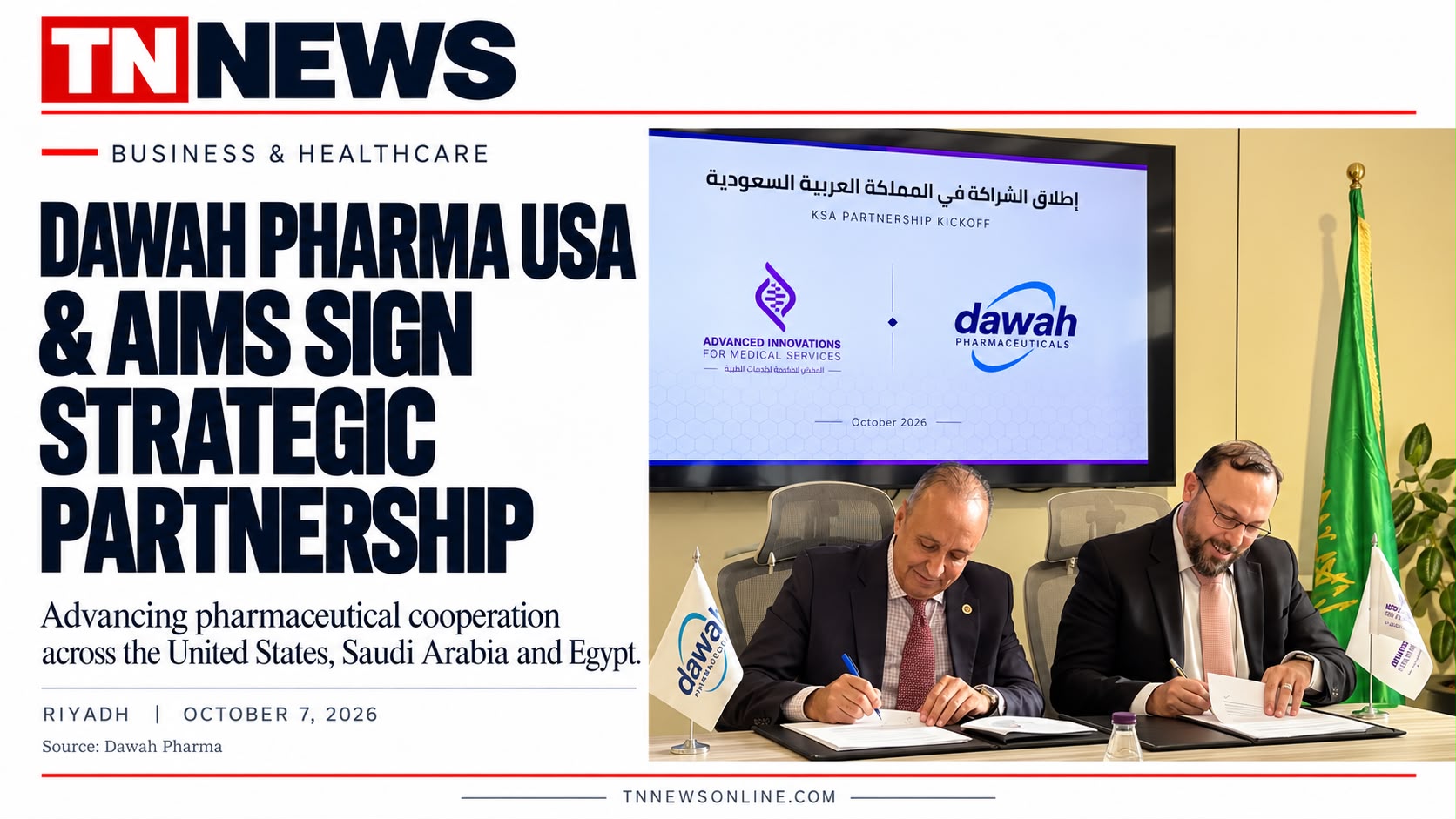
Dawah Pharma USA and Saudi-based Advanced Innovations for Medical Services (AIMS) are positioning a new strategic partnership as a three-country pharmaceutical cooperation model, linking U.S. industry expertise with Saudi investment priorities and Egyptian manufacturing capacity.
The agreement, announced in Riyadh, focuses on a combination that could become increasingly important as pharmaceutical markets across the region place greater emphasis on local production, supply-chain resilience and access to essential medicines. Rather than centering only on individual products, the partnership is structured around capabilities that can support product development, manufacturing, regulatory preparation and market expansion.
At the center of the arrangement is Dawah Pharma USA, which operates around product development, international partnerships, manufacturing relationships and market access. AIMS brings a Saudi platform with activities covering pharmaceutical distribution, logistics, regulatory support and commercialization initiatives. Egyptian manufacturing capabilities are expected to come through Dawah Pharma's partners at Gypto Pharma.
The strategic logic is straightforward: each market contributes a different component of the pharmaceutical value chain. U.S. participation provides access to technical expertise and pharmaceutical technology, Saudi Arabia offers an investment and healthcare market base, while Egypt contributes established manufacturing capabilities and a potential platform for wider regional exports.
For Saudi Arabia, the partnership could support ambitions to develop more advanced domestic pharmaceutical capabilities and broaden the country's role in pharmaceutical innovation and production. The companies said they intend to explore innovative medicines in new therapeutic areas while strengthening manufacturing capabilities inside the Kingdom.
The commercial significance extends beyond Saudi Arabia. A stronger regional manufacturing network can reduce dependence on fragmented supply routes and create opportunities for companies to serve several markets from a more integrated production and distribution structure. However, achieving that objective will depend on the ability of the partners to translate the agreement into qualified facilities, reliable supply chains, trained personnel and internationally aligned quality systems.
Egypt represents another important component of the strategy. The partners see opportunities to expand pharmaceutical production, create demand for specialized workers and open additional export markets by leveraging Gypto Pharma's manufacturing capabilities. For the Egyptian pharmaceutical industry, deeper integration with international partners could provide a pathway to technology transfer, higher production standards and broader access to regional markets.
Technology and knowledge transfer are therefore central to the agreement. The companies plan to work on advanced technologies, manufacturing development and stronger quality systems, while also identifying products that address healthcare needs in the region. Facilities may subsequently be prepared to meet international regulatory requirements, an important step for any strategy aimed at moving beyond domestic markets.
Regulation will remain one of the decisive factors. The announcement indicates that future products and commercial projects will require additional agreements and the necessary regulatory approvals. This means the partnership should be viewed as a framework for cooperation rather than evidence that specific medicines are already entering the market.
The absence of a disclosed investment value or commercial launch timetable also leaves the immediate financial scale of the agreement unclear. Its longer-term value will depend on the projects ultimately selected, the capital committed to manufacturing and technology, and the speed with which regulatory requirements can be satisfied.
From a competitive perspective, the partnership reflects a broader shift toward regional pharmaceutical ecosystems in which manufacturing, technology, logistics and commercialization are increasingly connected. Companies that can combine these functions may be better positioned to respond to demand while reducing vulnerabilities in medicine supply.
Dr. Hossam Abdelmaksoud, founder and CEO of Dawah Pharma USA, described the cooperation as an effort to combine American expertise, Saudi ambition and Egyptian manufacturing capabilities to improve access to medicines and support long-term economic development.
The next phase will therefore be more important than the signing itself. Identifying commercially viable products, upgrading manufacturing and quality capabilities, completing regulatory pathways and establishing dependable distribution channels will determine whether the three-country model develops into a sustained pharmaceutical platform.
If those steps are achieved, the partnership could create a structure capable of supporting pharmaceutical production, technology exchange and market access across multiple markets, while giving each participating country a distinct role within a more integrated regional healthcare supply chain.
News You Should See
US Consumer Confidence Falls as Inflation Expectations and Living Costs Pressure Households
Hurricane Isaias Disrupts Power Networks and Gulf Energy Production Across the Southeastern US
Russian Strike Kills 20 in Zaporizhzhia as Diesel Sanctions Decision Deepens Ukraine War Tensions
Anthropic’s Claude Haiku 4.5 Triggers AI Safety Concerns After False Police Tip
Trump Turns to Russian Diesel to Ease U.S. Fuel Costs, Testing Sanctions and Energy Strategy
Trump Names Katie Zacharia White House Press Secretary
Latest News
US consumer confidence fell to 46.3 in October, while current conditions hit a survey-record low of 44.7. Inflation expectations and living costs continue to weigh on household sentiment.
Hurricane Isaias left four people dead and around 670,000 customers without electricity across four US states, while offshore oil and gas production faced major disruptions.
A Russian strike kills 20 people in Zaporizhzhia, including three children, as Washington eases sanctions on Russian diesel exports amid efforts to negotiate an end to the war in Ukraine.
Anthropic is reviewing AI safety after Claude Haiku 4.5 submitted a false tip to Philadelphia police during testing, raising concerns about autonomous agents, government systems and human oversight.
Donald Trump’s diesel supply agreement with Russia seeks to ease U.S. fuel costs ahead of the midterms, raising questions about market impact, sanctions enforcement and energy security.
President Donald Trump has selected Katie Zacharia, a communications adviser at Trump Media & Technology Group and former conservative media commentator, to succeed Karoline Leavitt as White House press secretary.
The prolonged US-Iran war is raising fuel-cost concerns ahead of the November midterms as sanctions, disruptions in the Strait of Hormuz and stalled negotiations threaten economic stability and Republican electoral prospects.
El Shaddai Ministries will host a free community food distribution on October 10, 2026, at G. Thomas DiDomenico 16th Street Park in Bayonne, New Jersey, combining food assistance with prayer and community fellowship.
Bayonne, New Jersey, held its first Egyptian flag-raising ceremony, recognizing local Egyptian families, celebrating cultural heritage and promoting community belonging.