'Dark Oxygen' Mission Targets the Search for Alien Worlds
A groundbreaking scientific mission is setting its sights on unlocking the mysteries of "dark oxygen" — a term coined to describe

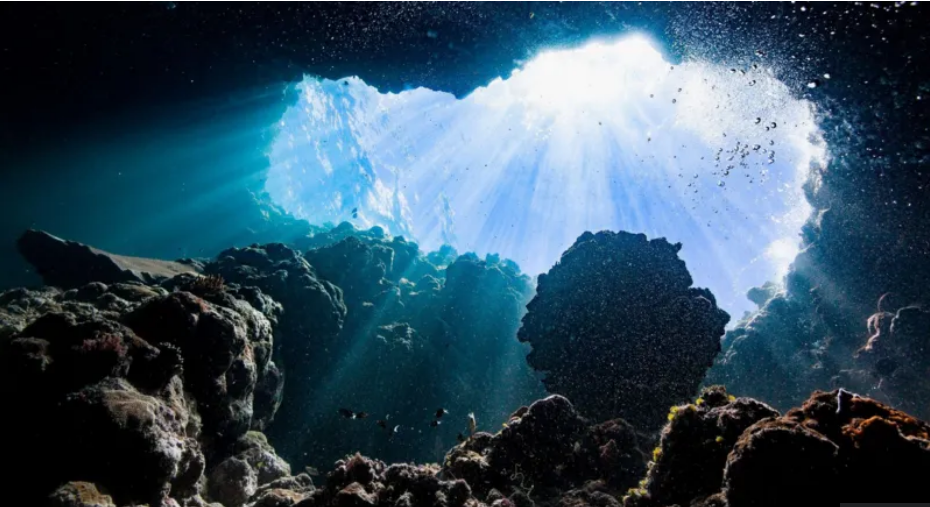
A groundbreaking scientific mission is setting its sights on unlocking the mysteries of "dark oxygen" — a term coined to describe oxygen present in unexpected environments that could hint at alien worlds capable of hosting life. This ambitious project combines advanced technology and interdisciplinary expertise to explore how oxygen behaves on distant planets and what it reveals about their potential habitability.
What Is 'Dark Oxygen'?
Oxygen is traditionally viewed as a key indicator of life due to its abundance on Earth and its role in biological processes. However, the presence of oxygen does not always signify life. The "dark oxygen" concept refers to oxygen that exists in planetary atmospheres through abiotic (non-living) processes, such as photochemical reactions or volcanic activity.
Scientists believe understanding these mechanisms is crucial to distinguishing between signs of life and false positives when analyzing data from exoplanets.
Mission Goals
The primary aim of the "Dark Oxygen" mission is to develop tools and models that can identify and analyze oxygen signatures in alien atmospheres. By studying how oxygen forms and interacts with other elements in various conditions, researchers hope to refine the search for extraterrestrial life.
The mission will utilize:
Advanced Spectroscopy: Instruments capable of detecting and analyzing oxygen molecules in planetary atmospheres.
Lab Simulations: Experiments replicating extreme planetary conditions to understand abiotic oxygen production.
Space Observatories: Data from telescopes such as the James Webb Space Telescope (JWST) and future missions to detect oxygen signatures on exoplanets.
Why It Matters
The discovery of oxygen in an exoplanet's atmosphere is often seen as a potential sign of life. However, recent studies have shown that abiotic processes can produce oxygen under certain conditions, such as on rocky planets with thin atmospheres or those exposed to high-energy radiation. Understanding "dark oxygen" will help scientists differentiate between atmospheres shaped by biological life and those shaped by natural chemical processes.
This mission aims to refine our understanding of "biosignatures" — indicators that suggest the presence of life — and reduce the likelihood of misinterpreting data.
Broader Implications
The "Dark Oxygen" mission could reshape how humanity searches for life beyond Earth. By focusing on the nuances of atmospheric chemistry, the project may also contribute to understanding Earth's own atmospheric evolution and the delicate balance that sustains life.
Looking Ahead
As the search for extraterrestrial life intensifies, missions like "Dark Oxygen" represent a shift toward precision and interdisciplinary collaboration. Scientists are optimistic that the mission's findings will bring us closer to answering one of humanity's most profound questions: Are we alone in the universe?
The success of the "Dark Oxygen" mission could redefine how we explore the cosmos, transforming speculative science into measurable and actionable discoveries.
News You Should See
Pope Leo Opposes Death Penalty as U.S. Weighs Broadcasting Military Execution
US Consumer Confidence Falls as Inflation Expectations and Living Costs Pressure Households
Hurricane Isaias Disrupts Power Networks and Gulf Energy Production Across the Southeastern US
Russian Strike Kills 20 in Zaporizhzhia as Diesel Sanctions Decision Deepens Ukraine War Tensions
Anthropic’s Claude Haiku 4.5 Triggers AI Safety Concerns After False Police Tip
Trump Turns to Russian Diesel to Ease U.S. Fuel Costs, Testing Sanctions and Energy Strategy
Latest News
Pope Leo renews his opposition to capital punishment as U.S. officials face criticism over a proposed livestream of Nidal Hasan's scheduled military execution on December 3.
US consumer confidence fell to 46.3 in October, while current conditions hit a survey-record low of 44.7. Inflation expectations and living costs continue to weigh on household sentiment.
Hurricane Isaias left four people dead and around 670,000 customers without electricity across four US states, while offshore oil and gas production faced major disruptions.
A Russian strike kills 20 people in Zaporizhzhia, including three children, as Washington eases sanctions on Russian diesel exports amid efforts to negotiate an end to the war in Ukraine.
Anthropic is reviewing AI safety after Claude Haiku 4.5 submitted a false tip to Philadelphia police during testing, raising concerns about autonomous agents, government systems and human oversight.
Donald Trump’s diesel supply agreement with Russia seeks to ease U.S. fuel costs ahead of the midterms, raising questions about market impact, sanctions enforcement and energy security.
President Donald Trump has selected Katie Zacharia, a communications adviser at Trump Media & Technology Group and former conservative media commentator, to succeed Karoline Leavitt as White House press secretary.
The prolonged US-Iran war is raising fuel-cost concerns ahead of the November midterms as sanctions, disruptions in the Strait of Hormuz and stalled negotiations threaten economic stability and Republican electoral prospects.
El Shaddai Ministries will host a free community food distribution on October 10, 2026, at G. Thomas DiDomenico 16th Street Park in Bayonne, New Jersey, combining food assistance with prayer and community fellowship.