Curiosity Rover Discovers New Clues to Life’s Building Blocks on Mars
A groundbreaking experiment reveals complex organic molecules that may reshape our understanding of Mars’ past

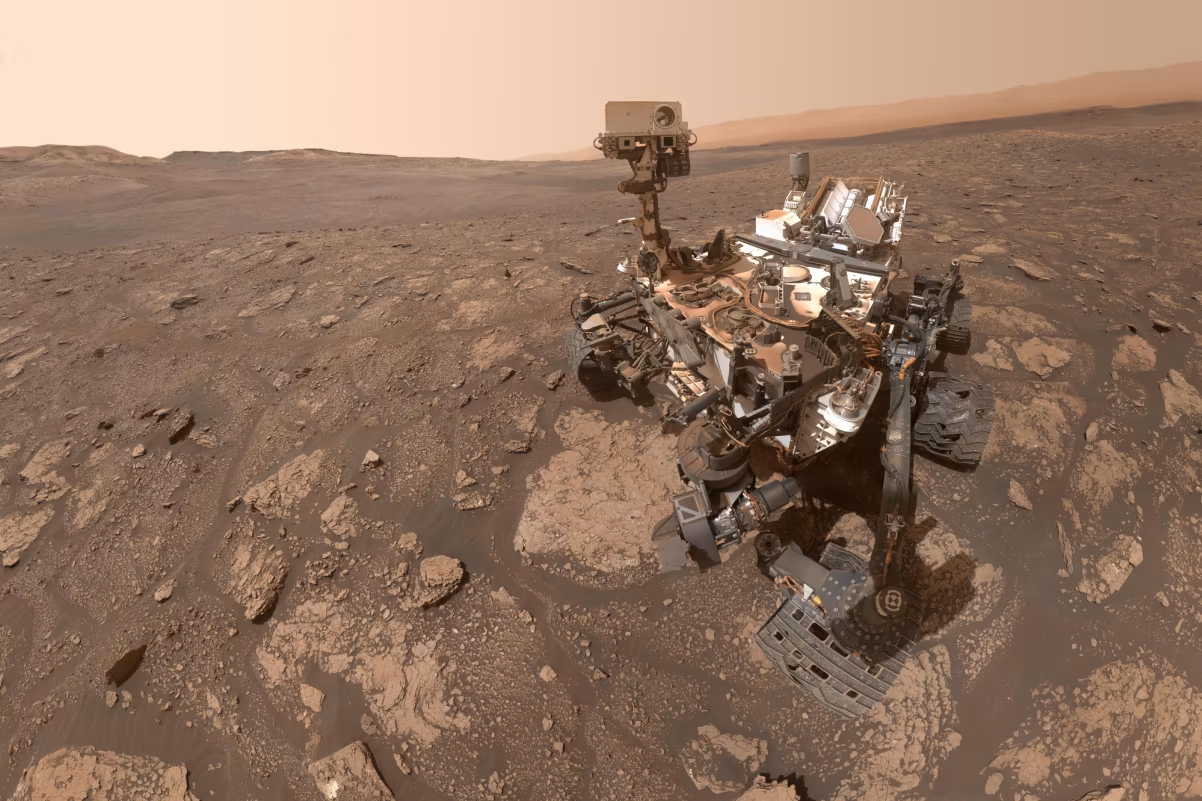
In a major scientific breakthrough, NASA’s Curiosity rover has uncovered the most diverse collection of organic molecules ever detected on Mars—some of which have never been seen on the planet before.
These molecules, which contain carbon, are considered essential building blocks for life as we know it on Earth.
The discovery comes from a unique experiment in which the rover drilled into a rock sample and dissolved it using a chemical solution to analyze its composition. This approach allowed scientists to detect compounds that would otherwise remain hidden.
Researchers believe these organic materials may have been preserved for around 3.5 billion years, despite Mars’ harsh radiation environment. This suggests that the planet may have once provided conditions suitable for life.
The mission, led by NASA, has been exploring Gale Crater since 2012, searching for signs that Mars was once habitable. Over time, the rover climbed Mount Sharp, targeting layers rich in clay—materials known for preserving organic matter.
After years of exploration, scientists selected a site known as “Mary Anning” to conduct a rare wet chemistry experiment. Using a specialized instrument onboard, the rover heated and chemically treated the sample, revealing 21 organic compounds.
Among the most significant findings were complex molecules containing nitrogen—key components related to DNA and RNA structures. These molecules had never been detected on Mars before, marking a major milestone in planetary science.
However, scientists caution that these findings do not confirm the existence of past life. The molecules could have formed through geological processes or been delivered by meteorites.
Still, the discovery strengthens the case that Mars once had environments capable of supporting life.
Scientists emphasize that the only way to answer the question definitively is to bring Martian samples back to Earth for detailed analysis. Future missions by European Space Agency and NASA aim to continue this search using more advanced experiments.
For now, the findings represent a significant step forward—offering a clearer picture of Mars’ ancient environment and bringing humanity closer to answering one of its biggest questions: Did life ever exist beyond Earth?
News You Should See
P&G Raises Fiscal 2027 Cost Warning as Oil and Freight Expenses Threaten Profits
Chemical Tank Leak in Toledo Triggers Evacuations and Industrial Disruptions
Judge Sets December 11 Deadline for Trump Deposition in BBC Defamation Case
Iowa Senate Race Tests How Far Republicans Can Separate Themselves From Trump
California State Workers Strike Over Pay, Healthcare and Return-to-Office Rules
Streaming’s October Showdown: How Disney, Netflix and Major Entertainment Brands Compete for Audiences
Latest News
Procter & Gamble expects commodity, energy and transportation costs to reduce fiscal 2027 profit by $1.4 billion. Quarterly sales rose 4% to $23.28 billion, beating analyst expectations.
A ruptured chemical tank in Toledo, Ohio, prompted evacuations, school closures and an industrial shutdown. Authorities have reduced the restricted zone as the release slows and cleanup preparations continue.
A federal judge has ordered Donald Trump to give a deposition by December 11, 2026, in his $10 billion lawsuit against the BBC, with possible sanctions for noncompliance as the discovery deadline approaches.
Iowa’s 2026 Senate race pits Republican Ashley Hinson, balancing Trump support with economic concerns, against Democrat Josh Turek, who emphasizes bipartisanship amid rising campaign spending.
Thousands of California state workers struck on October 21 over a proposed three-year pay increase, healthcare costs and a four-day office attendance requirement as contract negotiations continued.
October 2026 brings major entertainment releases across Disney+, Netflix, HBO Max, Hulu, Prime Video and Peacock. Explore how familiar franchises, exclusive programming, new music and video games shape competition for streaming audiences.
Saudia advises travelers to book flights through Al Qassim Airport for Riyadh connections, offering free hourly shuttle buses in both directions until further notice.
An AP-NORC poll shows Democratic confidence in accurate vote counting falling to 55%, while Republican confidence rises to 38%, highlighting election integrity concerns ahead of the 2026 US midterms.
Donald Trump campaigns in North Carolina ahead of the November 2026 midterms as low approval ratings, rising fuel costs, Democratic early-voting gains and funding disparities challenge Republican efforts to retain control of Congress.