CNN, MS NOW and Politico Take White House Access Fight to Court
The lawsuit puts presidential media access, First Amendment protections and the future relationship between the White House and major news organizations under renewed legal scrutiny.

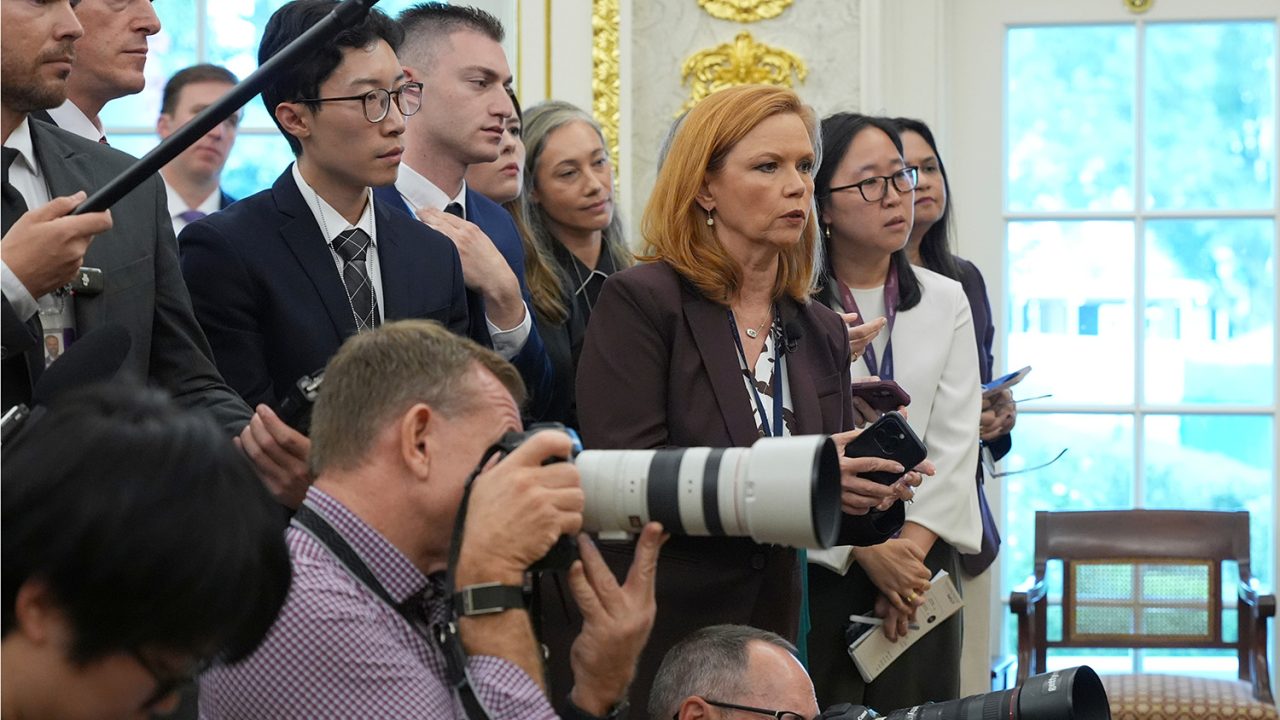
The dispute between the Trump administration and major U.S. news organizations has escalated into a federal court case after CNN, MS NOW and Politico challenged the administration’s decision to revoke press access for their journalists at the White House.
The lawsuit follows the administration’s decision to deactivate the credentials of reporters from the three organizations after President Donald Trump criticized their coverage and accused them of producing what he described as “fake news.” The affected journalists were subsequently prevented from entering the White House to carry out their regular reporting duties.
The dispute has significance beyond the three organizations involved. Access to the White House remains a central component of political journalism in Washington, allowing reporters to cover presidential events directly, gather information on site and provide real-time coverage of decisions emerging from the executive branch.
The restrictions have also created operational consequences. CNN had been scheduled to participate in the television pool covering Trump’s trip to New York for the United Nations General Assembly. Its removal from the assignment disrupted the traditional pool arrangement and highlighted the practical importance of White House access for major news organizations.
The companies argue that government officials cannot selectively restrict journalists because they object to the content of their reporting. Their legal position relies on First Amendment protections for freedom of speech and the press and on the principle that government access should not be conditioned on favorable coverage.
The administration has defended the decision by framing it as a response to what Trump considers inaccurate or unfair reporting. Trump has continued to distinguish his criticism of specific news organizations from opposition to the press as a whole.
The case also carries broader implications for the U.S. media industry. Access, speed and original reporting are important competitive assets for major news organizations, particularly those maintaining large Washington operations. Restrictions on access can affect the way newsrooms deploy reporters, produce live coverage and obtain original material from government institutions.
The dispute follows earlier legal confrontations between the Trump administration and major media organizations, including a case involving the Associated Press over restrictions on access for its journalists.
Press-freedom organizations have also expressed concern about the broader implications of the dispute. Jameel Jaffer, executive director of Columbia University’s Knight First Amendment Institute, said the decision raises questions about press freedom and the public’s ability to receive independent information about government. The institute is supporting the lawsuit through a legal filing.
The White House Correspondents’ Association has similarly raised concerns that a precedent allowing access to be withdrawn over unfavorable coverage could eventually affect other news organizations.
For the media industry, the dispute therefore extends beyond the immediate question of press credentials. It raises broader questions about the relationship between government access and independent journalism, as well as the operational and economic consequences for news organizations if access to government institutions becomes less predictable.
The courts will determine the legal boundaries of the dispute, but its implications for political journalism are already apparent. The case places renewed attention on how government institutions manage media access and how news organizations can maintain independent reporting operations when access to official channels becomes contested.
News You Should See
2026 Nobel Medicine Prize Honors Scientists Behind Optogenetics Breakthrough
Oil Prices Edge Lower as Stronger Middle East Exports and G7 Reserves Ease Supply Concerns
Trump Offers U.S. Assistance to Russia After Death at Siberian Plague Research Institute
Trump Takes Economic Message to Nebraska as GOP Faces Rising Cost-of-Living Pressure
U.S. Appeals Court Weighs Trump Administration’s $2.6 Billion Harvard Funding Fight
U.S. Midterm Elections Begin With Resilient Jobs Market and Persistent Cost Pressures
Latest News
The 2026 Nobel Prize in Physiology or Medicine honors Karl Deisseroth, Peter Hegemann and Georg Nagel for pioneering research behind optogenetics and its impact on neuroscience.
Oil prices edged lower as stronger Middle Eastern exports and a planned G7 release of 100 million barrels eased immediate supply concerns, while Gulf security risks and the Strait of Hormuz kept markets alert.
President Donald Trump said the United States would help Russia if needed after a laboratory worker died at a Siberian plague research institute, as Russian authorities imposed precautionary quarantine measures.
Trump’s Nebraska campaign stop highlights rising fuel and grocery costs, beef prices and growing economic pressure on Republicans ahead of the November midterm elections.
A U.S. appeals court is reviewing the Trump administration’s effort to cut Harvard’s federal research funding, with more than $2.6 billion at stake.
The U.S. enters the 2026 midterm elections with unemployment at 4.2%, while higher living and energy costs create economic pressure for households and businesses.
US services growth eased in September as input prices climbed to their highest level since July 2022, with fuel costs, supply-chain disruptions and strong demand increasing pressure on businesses.
Rising Treasury yields are increasing U.S. borrowing costs as Washington manages record debt, persistent inflation and strong economic demand, narrowing its policy options.
A EGP 16 million corporate partnership will establish and equip a bone marrow transplant unit at Cairo’s Coptic Hospital, supporting access to specialized treatment for patients.