China’s Aircraft Carrier Shandong Docks in Hong Kong Amid Show of Naval Strength
Beijing showcases military might as its domestically built aircraft carrier arrives in Hong Kong following dual-carrier exercises and rising regional tensions.

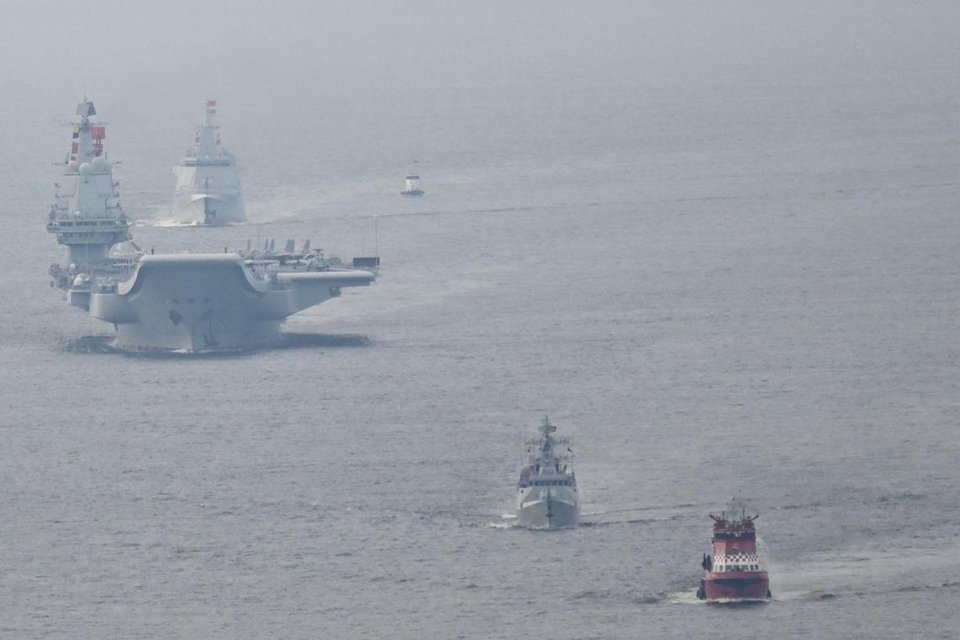
HONG KONG – China’s first domestically built aircraft carrier, the Shandong, sailed into Hong Kong on July 3 for a high-profile visit that underscores Beijing’s expanding naval ambitions and growing regional assertiveness.
Commissioned in 2019, the 300-meter-long Shandong is the second carrier in China’s fleet and a cornerstone of President Xi Jinping’s massive naval modernisation push. The five-day visit, featuring guided tours and cultural exchange events, comes just after Hong Kong marked the 28th anniversary of its return to Chinese rule.
The arrival of the Shandong and its escort ships – including the destroyer Zhanjiang and frigate Yuncheng – follows its participation in large-scale dual-carrier exercises in the western Pacific alongside China’s first carrier, the Liaoning. These drills, a first for China, involved simulated combat operations and reflected Beijing’s increasing capacity to operate far from its shores.
Both the Shandong and Liaoning are based on a modified Soviet carrier design, featuring a “ski jump” ramp for aircraft takeoff. China's third and most advanced aircraft carrier, the Fujian, is currently undergoing sea trials and is expected to significantly enhance Beijing’s power projection capabilities.
Crowds gathered along Hong Kong’s southern coast and waterfront areas on July 3 to catch a glimpse of the imposing vessel, while tickets to board the ship were quickly snapped up on Chinese social media platform WeChat.
Experts say the port call is as much a symbolic gesture as a strategic one.
“The idea appears to impress upon the Hong Kong public the Communist Party’s ambition to build a maritime great power,” said Dr. Collin Koh, a naval affairs specialist at Singapore’s S. Rajaratnam School of International Studies.
This marks only the second time a Chinese aircraft carrier has visited Hong Kong – the first being the Liaoning in 2017.
According to the U.S. Department of Defense, China now boasts the world’s largest navy by number of vessels, with a battle force exceeding 370 ships and submarines as of late 2024. Its growing fleet is central to Beijing’s strategy to counter U.S. influence in the Indo-Pacific and enforce its territorial claims.
In June, Japan reported that China’s dual-carrier drills marked a significant operational milestone. Experts, however, caution that questions remain about how intensively the carriers can be deployed and how sustainable such operations are in a real conflict scenario.
The Shandong has played a visible role in recent regional flashpoints. In April, it took part in drills simulating a blockade of Taiwan—an island Beijing considers a breakaway province. The ship also appeared in contested Philippine waters during a joint U.S.-Philippines military exercise, further escalating tensions with Manila.
While Beijing promotes the visit as a goodwill gesture, the carrier’s presence is a clear reminder of China’s growing military clout—and its readiness to deploy it.
News You Should See
Thanksgiving Storm Threatens Major US East Coast Travel Routes With Flooding and 60 MPH Winds
Manchester City Prepare for Tactical Battle Against Napoli in Champions League
Arsenal Face Borussia Dortmund in High-Stakes Champions League Test
The Hunger Games: Sunrise on the Reaping Delivers $225 Million Global Box Office Debut
US Data Centers Consume as Much Electricity as Michigan, Harvard Study Reveals
AI Enables a 12,000-Pound John Deere Loader to Perform Two-Wheel Stunts
Latest News
A developing Thanksgiving storm threatens the US East Coast with heavy rain, coastal flooding and wind gusts of up to 60 mph, raising concerns about airport operations, road travel and holiday transportation in major cities.
Manchester City host Napoli in a key Champions League clash, with Haaland, Foden and Cherki expected to lead the English side's attacking efforts.
Arsenal prepare to host Borussia Dortmund in a crucial Champions League clash, with injuries and tactical decisions potentially shaping the outcome.
The Hunger Games: Sunrise on the Reaping earns $225 million worldwide in its opening weekend, strengthening the franchise's box-office position.
Harvard research estimates that 403 US hyperscale data centers consume up to 99 terawatt-hours annually, raising concerns about AI's environmental impact.
Researchers train a 12,000-pound John Deere 332G loader using AI and reinforcement learning to balance on two wheels and perform controlled movements.
Kodak introduces SlideTag, a $34.99 digital photo accessory featuring a 1.54-inch E Ink screen, photo storage, and Bluetooth tracking support.
Samsung may skip next year's Galaxy Watch launch after disappointing sales expectations, potentially shifting to a two-year release cycle while prioritizing software improvements.
Barcelona come from two goals down to beat Villarreal 3-2 at Camp Nou, with Gerard Martín, Fermín López, and Pau Navarro's own goal securing victory.