China Unveils Bold Strategy to Revitalize Its Economy and Lead in High-Tech Innovation
China Unveils Bold Strategy to Revitalize Its Economy and Lead in High-Tech Innovation

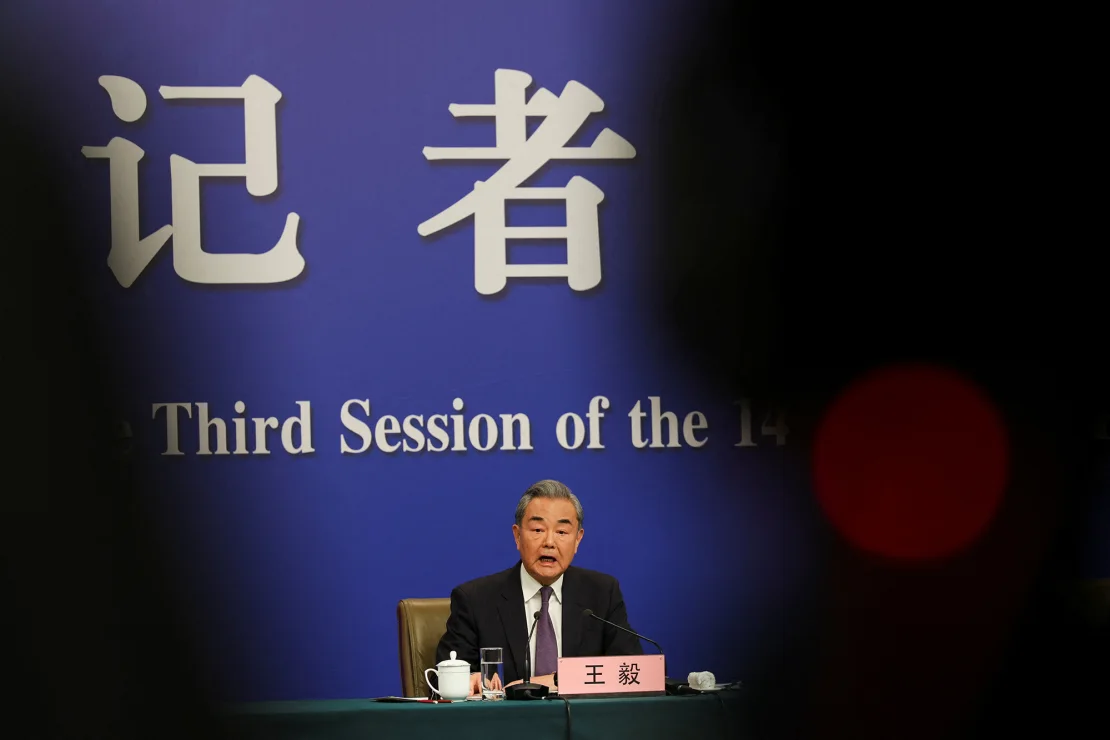
Over the past week, China’s leadership has unveiled a sweeping strategy to navigate economic challenges and transform the country into a global technological powerhouse, while ramping up investment to achieve an ambitious growth target.
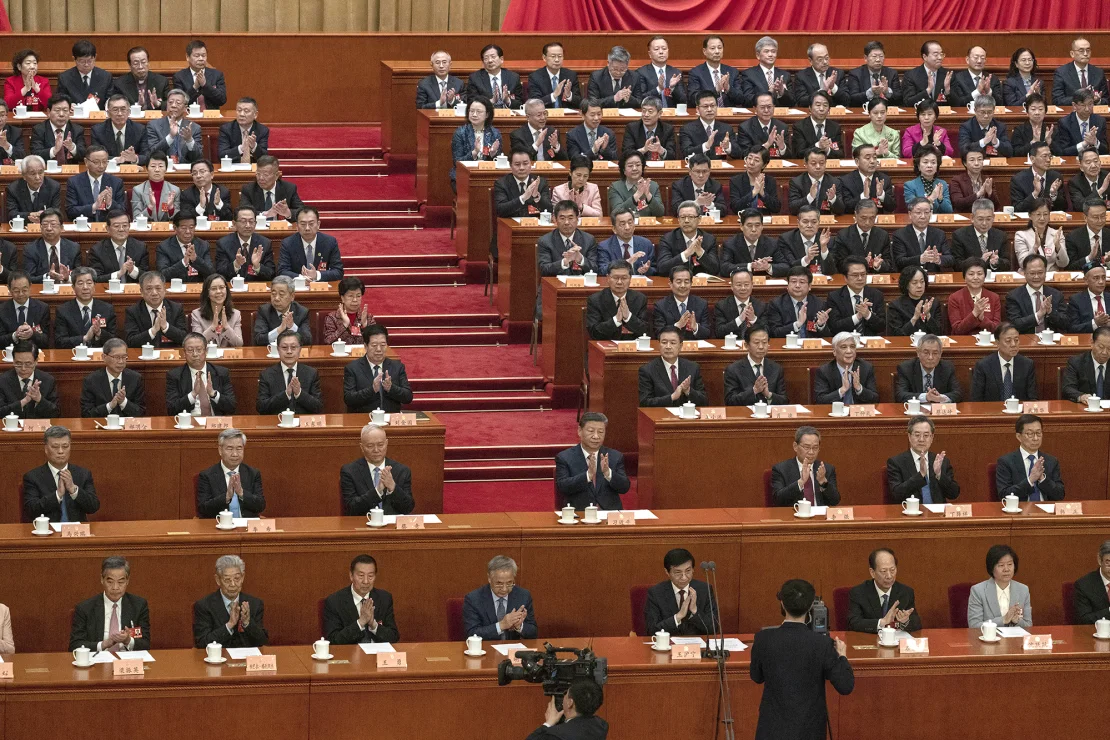
Thousands of delegates gathered in Beijing for the annual "Two Sessions" meeting, where China’s legislature and top political advisory body are set to approve the plan on Tuesday with near-unanimous support.
The stakes are high for the Chinese government and President Xi Jinping, the country’s most powerful leader in decades, as they tackle domestic economic struggles, including a deepening real estate crisis, soaring local government debt, and sluggish consumer demand. At the same time, China faces mounting external pressure from the U.S., as former President Donald Trump escalates tariffs on Chinese imports and threatens further restrictions on American investments in China.
New economic data released Sunday highlighted these concerns, revealing that consumer prices in China fell to their lowest level in 13 months in February, underscoring persistent deflationary pressures.
Despite acknowledging these challenges, Chinese officials expressed confidence in the country’s future. Premier Li Qiang, speaking at the National People’s Congress (NPC) on Wednesday, emphasized that China’s 5% growth target reflects its determination to confront obstacles head-on.
While the event is primarily ceremonial, the policies and statements made by Xi and top officials offer a crucial glimpse into how Beijing plans to sustain economic growth and technological progress amid rising geopolitical tensions.
Key Takeaways from China’s Economic Strategy
1. Prioritizing AI and Next-Generation Industries
Artificial intelligence (AI) took center stage at this year’s discussions, fueled by the rapid success of Chinese tech firm DeepSeek. The company’s advanced AI model, launched in January, surprised Silicon Valley by rivaling American counterparts, despite U.S. restrictions on AI-related chip exports to China.
In response, Chinese economic planners announced a state-backed fund aimed at supporting AI and emerging technologies, projecting that it could attract nearly 1 trillion yuan ($138 billion) in investment over the next two decades from both government and private sources.
Beijing’s latest economic roadmap calls for significant investment in cutting-edge fields such as biomanufacturing, quantum technology, embodied AI, and 6G networks. The plan aligns with Xi Jinping’s broader vision of achieving technological self-sufficiency, particularly as U.S. restrictions on Chinese access to American tech continue to tighten.
“China is signaling to the world that it is becoming increasingly independent from the U.S.,” said Wang Yiwei, a professor at Renmin University in Beijing, pointing to the country’s recent breakthroughs and its determination to drive innovation domestically.
Xi has also sought to mobilize private enterprises for this high-tech push. In a recent meeting with leading Chinese tech executives, he declared it was "prime time" for private companies to fully leverage their strengths in advancing China’s technological ambitions.
2. Stimulating Demand and Economic Growth
To support its ambitious 5% growth target, China’s government announced plans for increased public spending, raising its budget deficit to about 4% of GDP—the highest level in decades.
Despite these efforts, analysts remain skeptical about whether these measures will be sufficient to counter potential economic headwinds, particularly if trade tensions with the U.S. escalate further.
Premier Li Qiang emphasized the urgency of boosting consumer demand, calling it the "main engine" of economic growth. Key measures include job creation, wage increases, expanded social benefits, and initiatives to stimulate spending—such as extending a program for trading in old household appliances.
The government also outlined efforts to address the struggling real estate sector, including a new mechanism for local governments to repurchase unsold properties to stabilize the market.
However, experts caution that Beijing is relying heavily on local governments to fund these initiatives—many of which are already burdened with high debt. Without new revenue sources, such as increased taxation, local governments may struggle to implement these measures effectively, potentially dampening consumption instead of boosting it.
3. A ‘Fighting Spirit’ in the Face of Global Tensions
Despite economic uncertainties and intensifying competition with the U.S., Beijing’s message was one of resilience and confidence.
At a key press conference during the Two Sessions meeting, Foreign Minister Wang Yi positioned China as a stable global force, contrasting it with the U.S. and its “America First” approach. He also took aim at Washington’s trade policies, warning that no country should expect to suppress China while maintaining positive relations with it.
“If the U.S. insists on launching a tariff war, a trade war, or any other kind of war, China will fight to the end,” a foreign ministry spokesperson declared earlier in the week.
Beyond the rhetoric, the extent to which China’s optimism translates into economic momentum will depend on government policy execution in the months ahead.
“The mood in China has become more optimistic this year,” said Yao Yang, a professor at Peking University’s China Center for Economic Research, citing successes like DeepSeek. “But for that optimism to last, the government must take decisive action to support the economy and private enterprise.”
News You Should See
FEMA and FCC Set Nationwide Emergency Alert System Test for Today
Lisa's 'Always Lalisa' Documentary Set for November 18 YouTube Premium Release
Darius Rucker Documentary Traces His Rise From Rock to Country Music
Hollywood Honors Glenn Close and Ridley Scott at Governors Awards
Toronto Tempo Claim Top Selection in 2027 WNBA Draft Lottery
Detroit Lions Overpower Patriots 35-10 in Munich Behind Jahmyr Gibbs' Outstanding Performance
Latest News
FEMA and the FCC will test America's Emergency Alert System on November 17 at 2:20 p.m. ET. Radio and TV broadcasts will be interrupted briefly.
Lisa's Always Lalisa documentary arrives on YouTube Premium November 18, featuring her solo career, Coachella performances and The White Lotus experience.
The Hulu documentary explores Darius Rucker's journey from Charleston to rock success with Hootie & the Blowfish and his country music career.
Glenn Close and Ridley Scott receive honorary Oscars alongside Floyd Norman, Pamela Koffler and Christine Vachon at Hollywood's Governors Awards.
Toronto Tempo secure the No. 1 pick in the 2027 WNBA Draft, raising expectations around the franchise's rebuilding plans and potential interest in JuJu Watkins.
Detroit Lions defeat New England Patriots 35-10 in Munich as Jahmyr Gibbs records 252 scrimmage yards and two touchdowns.
Minnesota Vikings defeat Green Bay Packers 30-10 as Kirk Cousins throws two touchdowns and the defense delivers eight sacks and four turnovers.
AAA expects 81.5 million Americans to travel for Thanksgiving 2026, with nearly six million flying as transportation costs influence holiday plans.
Nvidia's upcoming earnings report could offer insights into AI chip demand, data center investments and investor confidence amid uncertainty in the technology market.