China Proposes Global AI Governance Body as U.S. Ramps Up Tech Competition
Beijing positions itself as a champion for equitable AI development and access, calling for a new international organization to guide global cooperation.

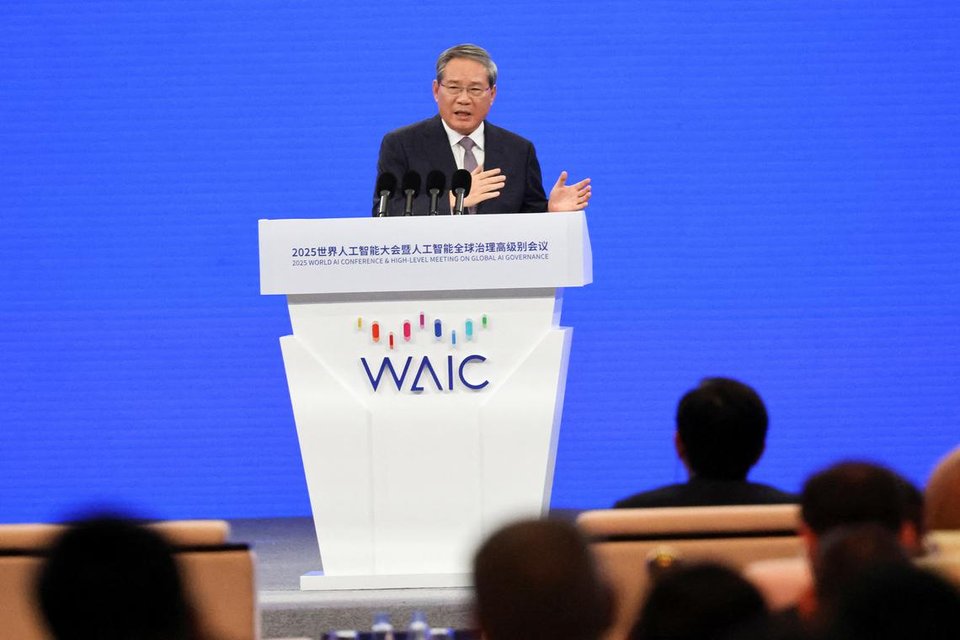
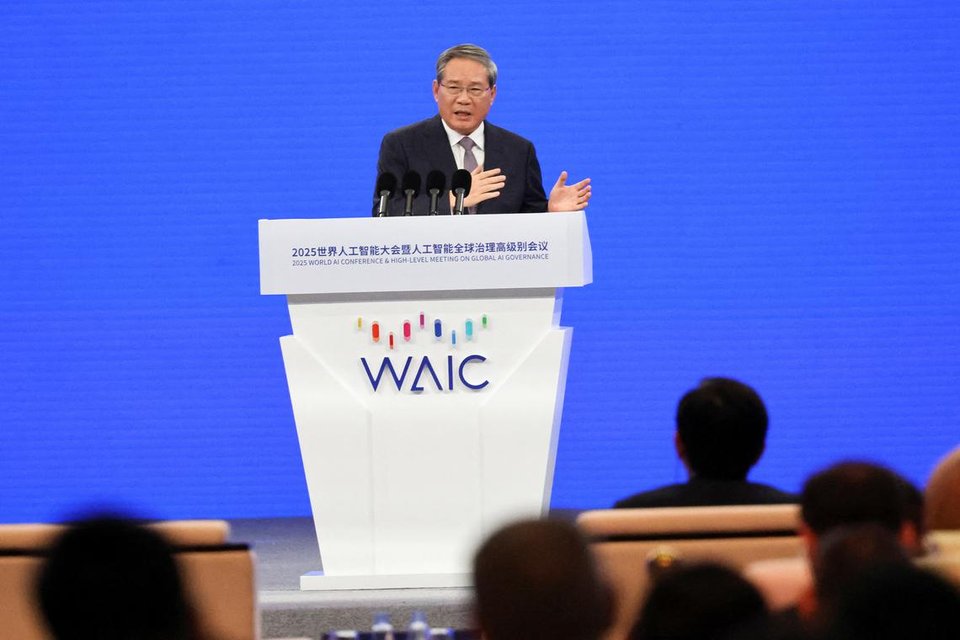
SHANGHAI – China has proposed creating a global organization to oversee artificial intelligence (AI) cooperation and regulation, signaling its ambitions to shape the future of AI as the technology becomes a central pillar of geopolitical competition.
The proposal was announced by Chinese Premier Li Qiang at the World Artificial Intelligence Conference (WAIC) in Shanghai on July 26, with China positioning itself as a collaborative alternative to the U.S.-led approach to AI development and export.
China Calls for Equitable AI Access
Without directly naming the United States, Premier Li warned against the dangers of AI becoming the “exclusive game of a few countries and companies,” a pointed reference to U.S. export restrictions on AI chips and technology to China.
“China stands ready to share its development experience and products with all countries, especially the Global South,” Li said.
“We must ensure equal rights for all countries and companies to access and use AI.”
The Global South refers broadly to developing nations, many of which are eager to adopt AI to boost economic growth but lack the resources of wealthier nations.
AI Governance and Regulation: A Fragmented Landscape
Li also emphasized the need for global regulation, pointing to bottlenecks such as limited chip supplies and restrictions on international talent exchange.
“Overall global AI governance is still fragmented,” he said. “We should strengthen coordination to form a governance framework with broad consensus as soon as possible.”
China’s Ministry of Foreign Affairs echoed this in a newly published AI action plan, inviting governments, enterprises, and research institutions to collaborate via an open-source community and cross-border exchanges.
China is considering establishing the proposed AI governance body in Shanghai, according to Vice-Foreign Minister Ma Zhaoxu, who spoke at a closed-door roundtable attended by officials from over 30 countries, including Germany, South Africa, Russia, Qatar, and South Korea.
U.S. Counters with AI Export Strategy
China’s announcement comes just three days after U.S. President Donald Trump’s administration unveiled a sweeping AI export blueprint aimed at scaling up American AI exports to allies, part of a broader effort to maintain a strategic edge over China.
The U.S. sees AI as a militarily sensitive technology, and Washington has restricted exports of advanced AI chips and equipment to Beijing, citing national security risks.
Yet, despite these curbs, Chinese firms continue to make strides, prompting concern—and scrutiny—from U.S. officials.
Global Industry Leaders Join the Dialogue
The WAIC drew over 800 companies showcasing more than 3,000 AI technologies, including 40 large language models, 60 intelligent robots, and a wide array of AI-powered devices.
Major Chinese firms in attendance included Huawei, Alibaba, and humanoid robotics firm Unitree. International heavyweights like Tesla, Alphabet, and Amazon also participated, though Tesla CEO Elon Musk, a regular fixture at previous conferences, was notably absent this year.
Notable speakers on July 26 included:
Anne Bouverot, French envoy for AI
Geoffrey Hinton, “godfather of AI”
Eric Schmidt, former Google CEO
The event highlighted the increasingly competitive and politically charged landscape of global AI development.
China’s Strategic Messaging
China’s narrative is clear: it wants to be seen as a champion of open AI cooperation, in contrast to what it portrays as the exclusionary policies of the West.
“We want to share AI with the world—not monopolize it,” Li emphasized.
Whether China’s proposed AI governance body garners broad support remains uncertain. But the move underscores Beijing’s intent to shape global AI rules, particularly in partnership with developing nations looking for accessible tech solutions.
News You Should See
Vancouver Launches 12th Annual Korey’s Joy Drive to Support Local Families
Agassi Sports Entertainment Joins Sinclair and Tennis Channel to Expand Padel and Pickleball
Vizrt Completes Chyron Acquisition to Expand Global Broadcast Technology Capabilities
Anyma and Jean-Michel Jarre Announce Major Pyramids of Giza Concerts for 2027
Arsenal Women Strike First Against Barcelona in Champions League Showdown
New Egypt Group Backs Latin Social Organization’s Thanksgiving Food Drive in Bayonne
Latest News
Vancouver, Washington launches its 12th Korey’s Joy Drive, collecting toys, holiday gifts and winter supplies for families through local nonprofits.
Agassi Sports Entertainment partners with Sinclair and Tennis Channel to promote padel and pickleball through nationwide television and digital platforms.
Vizrt completes its acquisition of Chyron, combining broadcast graphics technologies to expand cloud production and real-time augmented reality solutions.
Anyma and Jean-Michel Jarre announce two electronic music performances at Egypt's Great Pyramids in spring 2027, with presale tickets starting November 18.
Arsenal Women take a 1-0 lead over Barcelona after Frida Maanum's 21st-minute goal in their 2026-27 UEFA Women's Champions League encounter.
New Egypt Group supports Latin Social Organization’s Thanksgiving Food Drive in Bayonne by contributing food supplies to help local families prepare for the holiday.
Shorter winter days can affect appetite, sleep and energy. A dietitian explains the biological reasons behind seasonal cravings and the importance of meal planning.
Medical leaders debate whether AI will improve diagnosis and healthcare delivery or weaken doctors' clinical skills through growing reliance on technology.
A study published in PNAS Nexus suggests that differences in immune cells may help explain variations in obesity and fat distribution between males and females.