China and Russia Expand ASEAN Influence as U.S. Struggles to Keep Pace
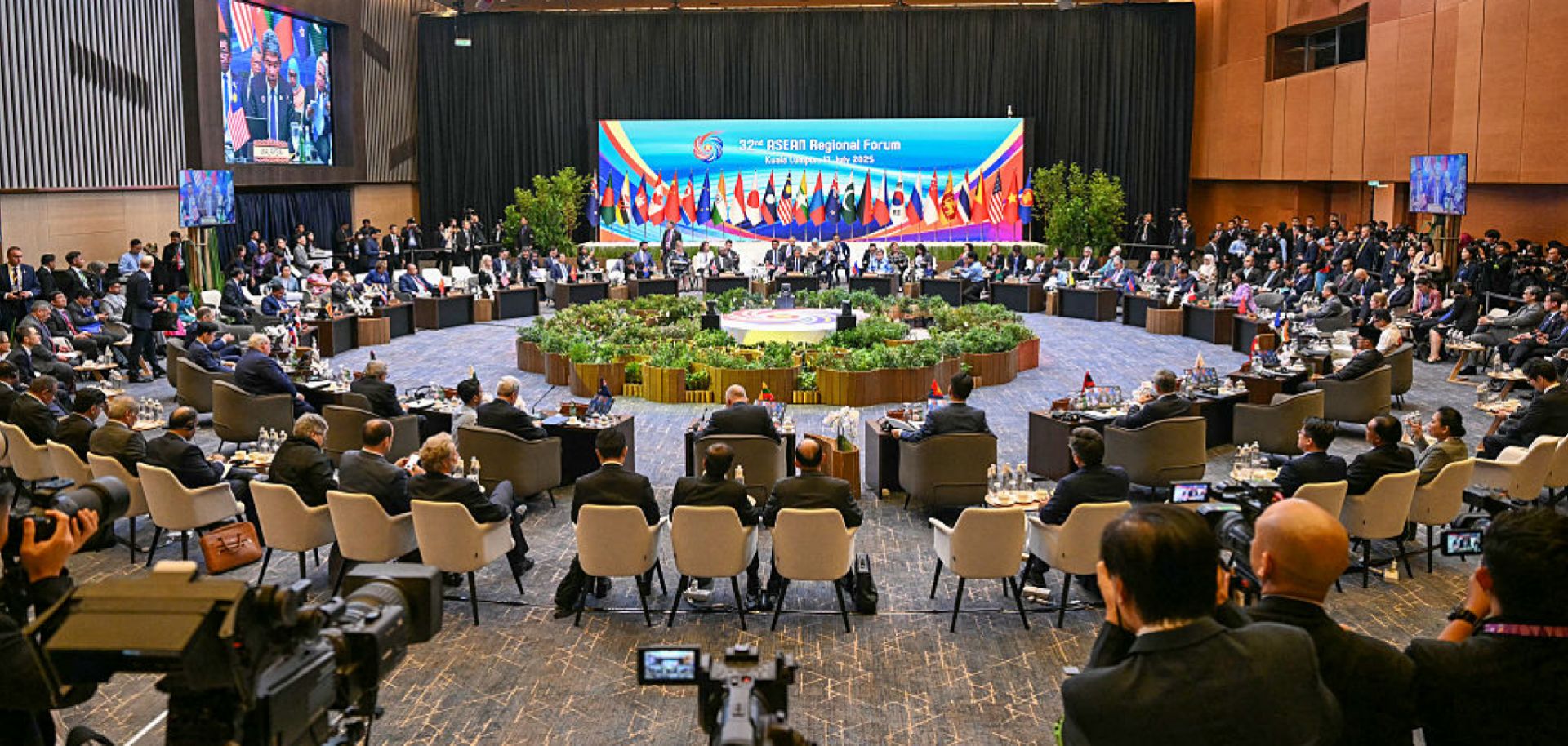
At the 2025 ASEAN Foreign Ministers' Meeting, China and Russia cemented diplomatic and strategic footholds in Southeast Asia as U.S. engagement faltered amid protectionist trade moves.

China and Russia Expand ASEAN Influence as U.S. Struggles to Keep Pace
At the 2025 ASEAN Foreign Ministers’ Meeting (July 8–10 in Kuala Lumpur), China and Russia took major steps to deepen their regional influence, leveraging institutional diplomacy, economic cooperation, and strategic symbolism — all while the United States faced backlash and offered no new regional initiatives.
🇨🇳 China: Strategic Gestures Coupled with Economic Frameworks
China pledged to sign the Southeast Asia Nuclear Weapon-Free Zone (SEANWFZ) treaty “without reservation”, fulfilling a long-standing ASEAN goal and casting itself as a responsible security partner. However, this symbolic gesture comes at no real military cost, as China has never stationed nuclear weapons in the region.
Beijing also reaffirmed the upgrade of the ASEAN-China Free Trade Area (ACTFA 3.0), introducing cooperation in digital economy, green growth, and supply chain connectivity — positioning China as a regional standards-setter.
Yet, China's assertiveness in the South China Sea and ongoing delays in finalizing a code of conduct continue to undermine trust, despite growing economic interdependence.
🇷🇺 Russia: Security Platform Engagement Without Economic Leverage
Russia scored a diplomatic win by securing the 2026–2030 Comprehensive Plan of Action (CPA) with ASEAN. This roadmap formalizes Russia’s structured participation in regional security forums such as the ASEAN Defence Ministers’ Meeting-Plus and outlines cooperation in cybersecurity, peacekeeping, and non-traditional maritime security.
However, Russia’s engagement remains symbolic and institutional, lacking economic depth or development infrastructure. It continues to rely on arms sales and defense diplomacy, but has limited ability to compete with either China or Western partners on trade or investment.
🇺🇸 United States: Tariffs Undermine Engagement
In contrast, the U.S. saw limited diplomatic returns. While Secretary of State Marco Rubio held bilateral talks, he spent much of his time defending Trump’s new “Liberation Day” tariffs, which impose duties of up to 40% on eight ASEAN nations beginning August 1.
These tariffs — including 40% on Laos and Myanmar, 36% on Thailand and Cambodia, and 25% on Malaysia — have triggered discontent and intra-ASEAN calls for trade self-reliance. Rubio’s defense of the measures as a "negotiation strategy" did little to reassure partners already wary of U.S. commitment to multilateralism.
While Rubio’s meeting with Chinese Foreign Minister Wang Yi was described as “constructive,” it primarily emphasized crisis management rather than forward-looking cooperation. A separate meeting with Russian Foreign Minister Lavrov was more contentious, centered on the Ukraine war and looming U.S. sanctions.
🌐 ASEAN: Still a Balancing Act — For Now
ASEAN continues to serve as a neutral platform for great power diplomacy, but its strategic autonomy is under growing strain. Three factors threaten its cohesion:
Rising Chinese assertiveness in maritime disputes — especially critical with the Philippines chairing ASEAN in 2026.
Russia’s lack of economic tools, limiting its influence beyond defense.
U.S. absence of economic initiatives, forcing ASEAN to lean more on Chinese-led trade frameworks.
Unless Washington re-engages with a tailored economic strategy — such as a regional digital trade initiative — it risks being outpaced in the region it once led.
🧭 Conclusion: The New Strategic Chessboard
The 2025 ASEAN summit made clear that China and Russia are playing the long game in Southeast Asia. Both are embedding themselves in ASEAN’s institutional architecture, while the U.S. risks strategic drift.
As tariff wars heat up and global institutions falter, ASEAN’s role as a diplomatic hedge zone will be harder to maintain. The choices it faces in the coming years — especially around maritime disputes, economic alignment, and security cooperation — may well shape the future of Indo-Pacific geopolitics.
News You Should See
Queens Celebrates Arts, Music and Family Activities with Diverse Weekend Events
Hollywood Faces New AI Debate as Startup Explores Selling Digital Versions of Human Faces
Arsenal Face Goalkeeping Concerns After David Raya Injury
European Leaders Urge New Iran Policy, Back Democratic Opposition and Reject Monarchy
Bayonne Mayor Sharon Ashe-Nadrowski Joins Thanksgiving Turkey Drive, Praises Community Organizations and Invites Residents to Attend
Seattle Communities Celebrate Holiday Season with Local Markets and Cultural Activities
Latest News
Queens hosts a weekend of cultural events featuring artisan markets, children's classical music activities, documentary screenings, gardening workshops and theater.
A microdrama startup explores selling AI-generated digital faces, raising concerns about consent, ownership, compensation, and the future of Hollywood performers.
Arsenal draw 2-2 with Newcastle as goalkeeper David Raya suffers an injury, raising concerns for Mikel Arteta ahead of upcoming Premier League fixtures.
Former European leaders and parliamentarians call for a new Western policy toward Iran, supporting an Iranian-led democratic transition and stronger human rights measures while rejecting a return to monarchy.
Bayonne Mayor Sharon Ashe-Nadrowski joins a Thanksgiving turkey drive with local organizations, police officers, and volunteers to support families.
Explore holiday markets, handmade gifts, live music, and cultural events in Shoreline and Lake Forest Park, Washington, on November 22.
Nvidia faces contrasting industry expectations as AI demand grows, with its financial performance and leadership shaping the future of computing.
Signal introduces mobile screenshot restrictions on Android and iOS as concerns grow over AI-powered surveillance and digital privacy.
AI agents are transforming messaging platforms by helping users organize daily activities, plan travel, manage work, and complete everyday tasks.