China and Germany Move to Repair Ties After Trade Tensions Ease
High-level talks signal a reset in Beijing–Berlin ties after months of strain over export curbs and supply-chain disruptions.

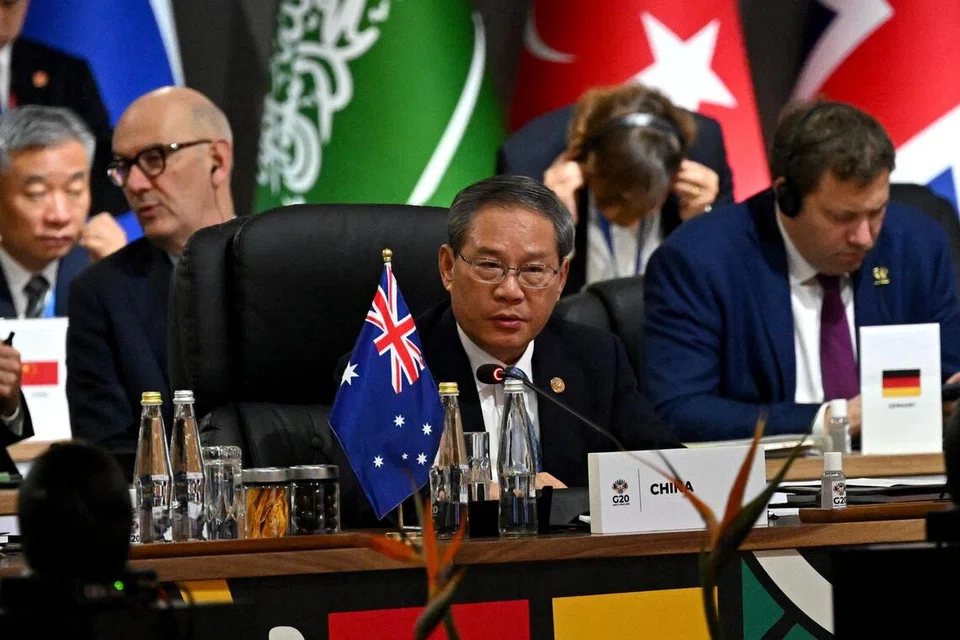
China has moved quickly to improve relations with Germany’s new government, seeking to ease tensions that arose after Beijing imposed export curbs on rare earths and semiconductor-related materials—measures that disrupted German factories and intensified calls in Berlin for reducing dependence on China.
Those restrictions led German Foreign Minister Johann Wadephul to cancel a planned visit to China in October. However, both sides have recently shifted tone. At the G-20 Summit on November 23, Chinese Premier Li Qiang met German Chancellor Friedrich Merz and emphasized the importance of close economic ties between the two countries. According to a Xinhua report, Li said that the two governments should boost dialogue to address concerns and expand cooperation across several strategic sectors.
Only months ago, such a meeting had appeared unlikely. But with both economies affected by the broader U.S.–China trade dispute and seeking to diversify their partnerships, Beijing and Berlin have decided to stabilise relations.
Merz is expected to travel to China soon, with a meeting with President Xi Jinping anticipated. Wadephul and Chinese Foreign Minister Wang Yi also agreed earlier in November to reschedule the foreign minister’s postponed trip. Meanwhile, German Finance Minister Lars Klingbeil met Chinese Vice-Premier He Lifeng last week for talks that both sides described as constructive.
Despite disagreements on issues such as China’s support for Russia, tensions in the Indo-Pacific, human rights concerns, and industrial subsidies, the two countries remain economically intertwined. In 2024, China imported US$95 billion worth of German goods—about 12 percent of which were automobiles—placing Germany among its top trading partners. Germany bought US$107 billion of Chinese products, mainly electronic components and chips.
China also counts Germany as a major investment partner. German firms invested US$6.6 billion in China in 2024, representing 45 percent of all EU and UK foreign direct investment into the country, according to the Mercator Institute for China Studies.
At the G-20 meeting, Li expressed hope that Germany would take a “rational and pragmatic” approach toward China and resist external pressure. Berlin has not yet released its own readout of the conversation.
For Germany, China remains a crucial market, especially for its automotive industry, which relies on China for nearly a third of global sales. German chemical and pharmaceutical companies also have a significant presence in the country, though they face rising competition from Chinese firms.
Li said China is ready to work with Germany to capture new economic opportunities in areas such as new energy, smart manufacturing, biomedicine, hydrogen technologies, and intelligent driving.
News You Should See
P&G Raises Fiscal 2027 Cost Warning as Oil and Freight Expenses Threaten Profits
Chemical Tank Leak in Toledo Triggers Evacuations and Industrial Disruptions
Judge Sets December 11 Deadline for Trump Deposition in BBC Defamation Case
Iowa Senate Race Tests How Far Republicans Can Separate Themselves From Trump
California State Workers Strike Over Pay, Healthcare and Return-to-Office Rules
Streaming’s October Showdown: How Disney, Netflix and Major Entertainment Brands Compete for Audiences
Latest News
Procter & Gamble expects commodity, energy and transportation costs to reduce fiscal 2027 profit by $1.4 billion. Quarterly sales rose 4% to $23.28 billion, beating analyst expectations.
A ruptured chemical tank in Toledo, Ohio, prompted evacuations, school closures and an industrial shutdown. Authorities have reduced the restricted zone as the release slows and cleanup preparations continue.
A federal judge has ordered Donald Trump to give a deposition by December 11, 2026, in his $10 billion lawsuit against the BBC, with possible sanctions for noncompliance as the discovery deadline approaches.
Iowa’s 2026 Senate race pits Republican Ashley Hinson, balancing Trump support with economic concerns, against Democrat Josh Turek, who emphasizes bipartisanship amid rising campaign spending.
Thousands of California state workers struck on October 21 over a proposed three-year pay increase, healthcare costs and a four-day office attendance requirement as contract negotiations continued.
October 2026 brings major entertainment releases across Disney+, Netflix, HBO Max, Hulu, Prime Video and Peacock. Explore how familiar franchises, exclusive programming, new music and video games shape competition for streaming audiences.
Saudia advises travelers to book flights through Al Qassim Airport for Riyadh connections, offering free hourly shuttle buses in both directions until further notice.
An AP-NORC poll shows Democratic confidence in accurate vote counting falling to 55%, while Republican confidence rises to 38%, highlighting election integrity concerns ahead of the 2026 US midterms.
Donald Trump campaigns in North Carolina ahead of the November 2026 midterms as low approval ratings, rising fuel costs, Democratic early-voting gains and funding disparities challenge Republican efforts to retain control of Congress.