Canada's Political Crisis: Exploring Justin Trudeau's Options Amid Mounting Challenges
Canadian Prime Minister Justin Trudeau finds himself at a critical juncture as his government faces growing instability following

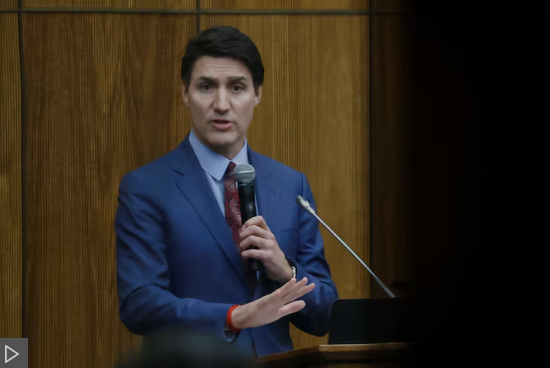
Canadian Prime Minister Justin Trudeau finds himself at a critical juncture as his government faces growing instability following the withdrawal of support from a key political ally. The potential for a no-confidence vote looms large, threatening his minority government and raising the specter of early elections. As the crisis unfolds, Trudeau must carefully weigh his options to navigate this turbulent political landscape.
The Current Political Climate
Trudeau's Liberal Party has relied on alliances with smaller parties to maintain its minority government since the 2021 federal election. However, the recent withdrawal of support from a key ally, citing dissatisfaction with the government’s policies, has left Trudeau's administration vulnerable. The move has emboldened opposition parties, who are now contemplating a no-confidence vote that could force the country into an election.
Option 1: Rebuild Alliances
One of Trudeau’s most immediate options is to rebuild alliances within parliament. This could involve reaching out to disenchanted allies or forming new partnerships with other parties. While this approach might help secure the necessary support to avoid a no-confidence vote, it could require significant policy concessions, potentially alienating parts of his base.
Political analysts suggest that Trudeau may approach the New Democratic Party (NDP) or other smaller parties to forge a new understanding. However, such negotiations would likely be complex and time-sensitive.
Option 2: Call for Early Elections
Trudeau could also preempt a no-confidence vote by dissolving parliament and calling for early elections. While risky, this move would allow Trudeau to appeal directly to voters for a fresh mandate. However, public opinion polls suggest waning support for the Liberal Party, making this option a gamble that could result in losing power altogether.
An election campaign would also place additional financial and logistical burdens on Canadians, potentially sparking voter frustration and apathy.
Option 3: Adjust Policy Priorities
To regain lost support, Trudeau could shift his government’s policy priorities to address the concerns raised by his former ally and the opposition. This might involve revising contentious policies or fast-tracking legislation on key issues such as healthcare, housing, or climate change. While this approach could help rebuild trust, it risks being perceived as reactive or politically expedient.
Option 4: Stand Firm and Wait
Another approach would be for Trudeau to stand firm and challenge his critics to bring forward a no-confidence motion. This strategy would test whether opposition parties are willing to risk an election in the current climate. If no motion materializes, Trudeau’s government could continue governing, albeit under heightened scrutiny and pressure.
Implications for Trudeau’s Leadership
Trudeau’s handling of this crisis will have significant implications for his legacy and the future of his party. His ability to navigate these challenges effectively will determine whether he can maintain control of his government or face a premature end to his tenure as prime minister.
The crisis also underscores broader concerns about the effectiveness of minority governments in Canada, particularly in times of political division and economic uncertainty.
The Stakes for Canada
This political turmoil comes at a critical time for Canada, with pressing issues such as inflation, housing shortages, healthcare reform, and climate change demanding immediate attention. Prolonged instability risks delaying crucial policy decisions and eroding public confidence in the country’s political system.
What Lies Ahead?
As Trudeau weighs his options, the coming weeks will be decisive for the future of his government and Canada’s political stability. Whether he chooses to rebuild alliances, adjust policies, or take the gamble of early elections, Trudeau faces a formidable challenge in navigating this crisis while maintaining public trust.
For Canadians, this moment highlights the delicate balance of power in a minority government and the importance of political accountability in addressing the country’s most pressing issues.
News You Should See
Pope Leo Opposes Death Penalty as U.S. Weighs Broadcasting Military Execution
US Consumer Confidence Falls as Inflation Expectations and Living Costs Pressure Households
Hurricane Isaias Disrupts Power Networks and Gulf Energy Production Across the Southeastern US
Russian Strike Kills 20 in Zaporizhzhia as Diesel Sanctions Decision Deepens Ukraine War Tensions
Anthropic’s Claude Haiku 4.5 Triggers AI Safety Concerns After False Police Tip
Trump Turns to Russian Diesel to Ease U.S. Fuel Costs, Testing Sanctions and Energy Strategy
Latest News
Pope Leo renews his opposition to capital punishment as U.S. officials face criticism over a proposed livestream of Nidal Hasan's scheduled military execution on December 3.
US consumer confidence fell to 46.3 in October, while current conditions hit a survey-record low of 44.7. Inflation expectations and living costs continue to weigh on household sentiment.
Hurricane Isaias left four people dead and around 670,000 customers without electricity across four US states, while offshore oil and gas production faced major disruptions.
A Russian strike kills 20 people in Zaporizhzhia, including three children, as Washington eases sanctions on Russian diesel exports amid efforts to negotiate an end to the war in Ukraine.
Anthropic is reviewing AI safety after Claude Haiku 4.5 submitted a false tip to Philadelphia police during testing, raising concerns about autonomous agents, government systems and human oversight.
Donald Trump’s diesel supply agreement with Russia seeks to ease U.S. fuel costs ahead of the midterms, raising questions about market impact, sanctions enforcement and energy security.
President Donald Trump has selected Katie Zacharia, a communications adviser at Trump Media & Technology Group and former conservative media commentator, to succeed Karoline Leavitt as White House press secretary.
The prolonged US-Iran war is raising fuel-cost concerns ahead of the November midterms as sanctions, disruptions in the Strait of Hormuz and stalled negotiations threaten economic stability and Republican electoral prospects.
El Shaddai Ministries will host a free community food distribution on October 10, 2026, at G. Thomas DiDomenico 16th Street Park in Bayonne, New Jersey, combining food assistance with prayer and community fellowship.