California Wildfires Destroy Coastal Homes as Santa Ana Winds Force Mass Evacuations
Fast-moving flames damage coastal properties in Southern California as extreme winds, power shutoffs and evacuation orders disrupt communities and raise concerns over wildfire preparedness.

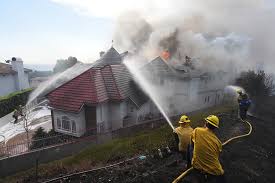
Southern California faced renewed wildfire pressure on Friday, October 16, as hot, dry winds pushed flames through residential areas in Orange County, destroying homes, forcing large-scale evacuations and prompting precautionary electricity shutdowns. The fires exposed the challenges facing coastal communities where residential development, dry vegetation and difficult weather conditions can combine to accelerate the spread of a blaze.
At least six homes were destroyed as the Norte Fire moved from San Clemente into neighboring San Juan Capistrano. By Friday night, authorities had ordered approximately 16,000 people to evacuate. Emergency shelters were established in both communities, while firefighters worked to contain the flames under conditions that remained dangerous even as the strongest winds were expected to ease.
Two firefighters were hospitalized with heat-related injuries. Officials had not determined what caused the Norte Fire, which covered less than one square mile as of Friday evening. The relatively limited size of the burn area did not eliminate the threat to nearby homes, illustrating how quickly a wind-driven fire can endanger populated neighborhoods.
Weather Conditions Complicate Fire Response
The immediate danger was linked to Santa Ana winds, which carry warm, dry air from inland areas toward the Southern California coast. These winds can lower humidity and push flames and embers across vegetation and residential boundaries, leaving emergency crews with little time to establish effective containment lines.
Fire danger was expected to persist through Saturday night, according to the National Weather Service. A heat advisory remained in effect until 8 p.m. Saturday for coastal areas of Orange and San Diego counties. Officials also issued a red flag warning for parts of central and Northern California, where weather conditions could allow new fires to spread rapidly.
The episode demonstrated that wildfire exposure is not confined to remote forests or mountainous terrain. Communities built near hillsides and open land can face sudden evacuation risks when strong winds carry a fire toward housing, roads and public facilities.
Power Shutdowns Become a Critical Prevention Measure
Electricity disruptions added another layer of pressure. More than 118,000 customers across California were without power on Friday, according to outage tracking data cited in contemporary reporting. Utilities have increasingly used preventive shutdowns during periods of extreme fire danger because electrical equipment can ignite dry vegetation or contribute to a fire's spread.
The approach presents a difficult operational trade-off. Cutting electricity may reduce the risk of ignition, but prolonged outages can interrupt household routines, affect businesses and complicate communications and emergency arrangements. Hospitals, care facilities, transport operators and other essential services may also need contingency plans when power interruptions coincide with evacuations.
For electricity providers, the challenge extends beyond deciding when to shut down lines. Decisions must balance public safety, network reliability and the economic consequences of leaving large numbers of customers without service. The scale of the latest outages underscores how wildfire prevention has become an infrastructure management issue as well as a firefighting concern.
Transport and Public Services Face Disruption
A separate fire near Marine Corps Base Camp Pendleton forced the temporary closure of part of Interstate 5, a major route linking Orange County with San Diego. The closure added hours to some journeys and disrupted a transport corridor used by commuters and regional traffic.
Nine schools in San Juan Capistrano were also closed on Friday. The effects extended to vulnerable residents beyond the immediate fire perimeter, with an assisted-living facility in nearby Dana Point preparing buses in case an evacuation became necessary.
These disruptions show how the cost of a wildfire extends well beyond the properties directly damaged. School closures, delayed journeys, emergency shelter operations and power interruptions can affect employment, local commerce, caregiving and access to essential services even when flames do not reach every neighborhood.
Property Exposure and the Economic Consequences
The destruction of homes in coastal Orange County raises concerns about the financial exposure of residential communities located close to hillsides and dry vegetation. The region includes established coastal neighborhoods, recreational destinations and valuable properties. A fire can therefore create losses through direct structural damage as well as temporary displacement, business interruptions and emergency response costs.
The latest incident does not, by itself, establish the total economic damage or indicate how insurance claims will develop. Those assessments depend on the final number of damaged properties, the cause of the fire, the duration of evacuations and the extent of infrastructure disruption.
However, recurring fire emergencies can place pressure on homeowners, insurers, utility companies and local authorities. Property owners may need to reassess preparedness measures, while public agencies must allocate resources to evacuation planning, firefighting capacity and recovery operations. Businesses may also face short-term revenue losses when roads close or customers and employees cannot reach their destinations.
Preparedness Will Shape the Next Phase
The Norte Fire began in San Clemente and spread into San Juan Capistrano as winds carried it toward neighboring communities. Officials established evacuation shelters, while residents were urged to leave threatened areas rather than remain behind to protect property. Some homeowners attempted to wet roofs and move propane tanks before departing, illustrating the difficult decisions families face when evacuation orders arrive quickly.
The immediate priority remains public safety and containment, particularly while dry and windy conditions continue. Longer term, the incident reinforces the importance of early warnings, clear evacuation routes, reliable emergency communications, vegetation management and coordination between fire agencies, utilities and local governments.
The broader challenge is managing the risks created when extreme weather intersects with developed areas. No single measure can eliminate wildfire danger, but timely evacuation planning, infrastructure safeguards and sustained preparedness can reduce the likelihood that a fast-moving fire will turn into a wider community emergency.
As Southern California continues to confront periods of elevated fire danger, the effectiveness of these systems will be measured not only by how quickly crews contain a blaze, but also by how well communities protect residents, maintain essential services and recover from disruption.
News You Should See
P&G Raises Fiscal 2027 Cost Warning as Oil and Freight Expenses Threaten Profits
Chemical Tank Leak in Toledo Triggers Evacuations and Industrial Disruptions
Judge Sets December 11 Deadline for Trump Deposition in BBC Defamation Case
Iowa Senate Race Tests How Far Republicans Can Separate Themselves From Trump
California State Workers Strike Over Pay, Healthcare and Return-to-Office Rules
Streaming’s October Showdown: How Disney, Netflix and Major Entertainment Brands Compete for Audiences
Latest News
Procter & Gamble expects commodity, energy and transportation costs to reduce fiscal 2027 profit by $1.4 billion. Quarterly sales rose 4% to $23.28 billion, beating analyst expectations.
A ruptured chemical tank in Toledo, Ohio, prompted evacuations, school closures and an industrial shutdown. Authorities have reduced the restricted zone as the release slows and cleanup preparations continue.
A federal judge has ordered Donald Trump to give a deposition by December 11, 2026, in his $10 billion lawsuit against the BBC, with possible sanctions for noncompliance as the discovery deadline approaches.
Iowa’s 2026 Senate race pits Republican Ashley Hinson, balancing Trump support with economic concerns, against Democrat Josh Turek, who emphasizes bipartisanship amid rising campaign spending.
Thousands of California state workers struck on October 21 over a proposed three-year pay increase, healthcare costs and a four-day office attendance requirement as contract negotiations continued.
October 2026 brings major entertainment releases across Disney+, Netflix, HBO Max, Hulu, Prime Video and Peacock. Explore how familiar franchises, exclusive programming, new music and video games shape competition for streaming audiences.
Saudia advises travelers to book flights through Al Qassim Airport for Riyadh connections, offering free hourly shuttle buses in both directions until further notice.
An AP-NORC poll shows Democratic confidence in accurate vote counting falling to 55%, while Republican confidence rises to 38%, highlighting election integrity concerns ahead of the 2026 US midterms.
Donald Trump campaigns in North Carolina ahead of the November 2026 midterms as low approval ratings, rising fuel costs, Democratic early-voting gains and funding disparities challenge Republican efforts to retain control of Congress.