California State Workers Strike Over Pay, Healthcare and Return-to-Office Rules
Thousands of California state employees staged a one-day walkout on October 21 as negotiations over pay increases, healthcare contributions and mandatory office attendance remained unresolved.

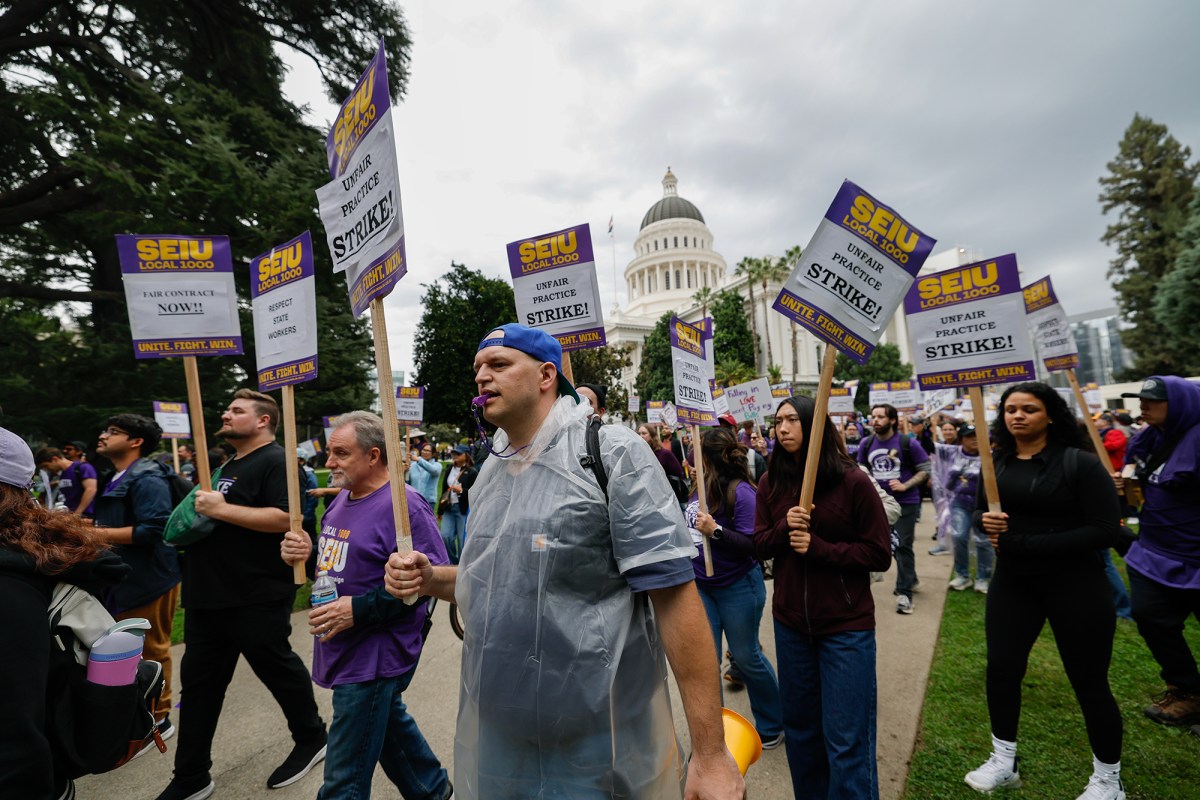
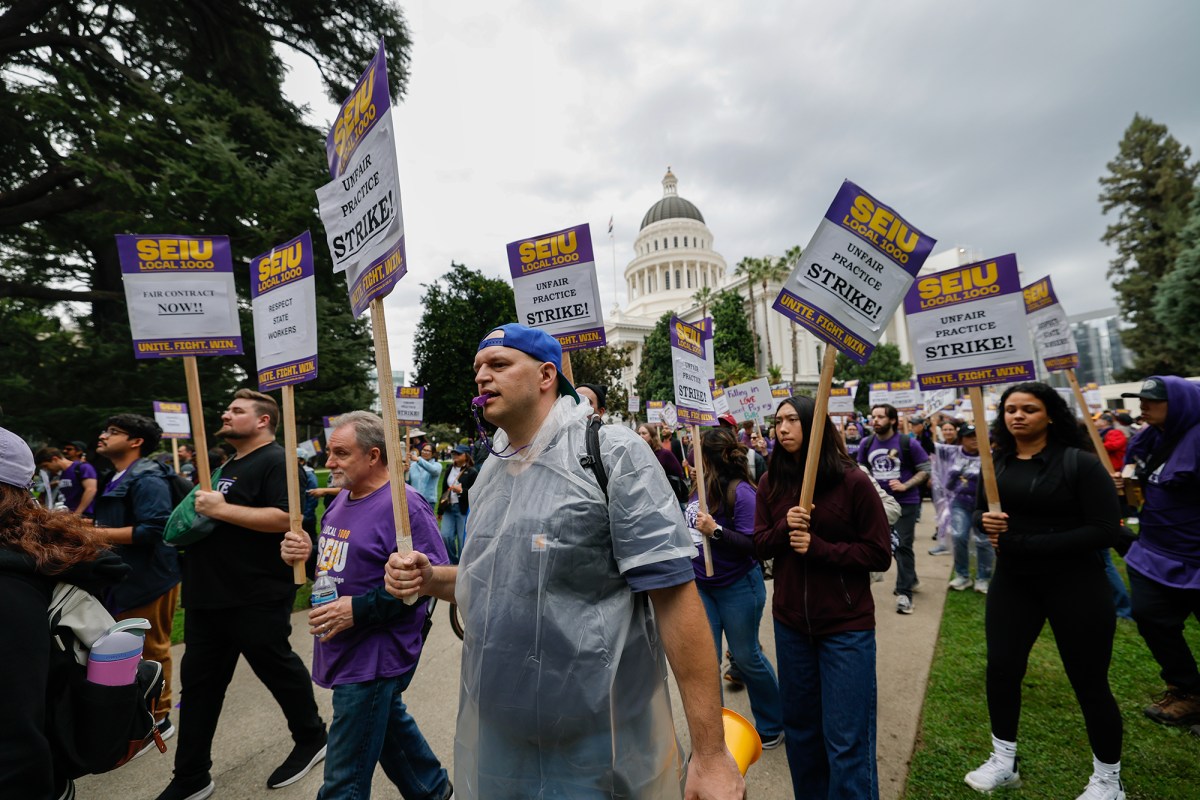
California’s state government is facing renewed pressure to settle a labor dispute that brings together three increasingly important questions for public-sector employers: how to compensate employees amid cost-of-living pressures, how to manage healthcare expenses, and how much flexibility workers should retain over where they perform their jobs.
Thousands of state employees joined a one-day strike on October 21, challenging Governor Gavin Newsom’s administration to reach a replacement labor agreement. The walkout, organized by SEIU Local 1000, followed the expiration of the union’s previous contract in June without a successor agreement.
The union represents more than 100,000 California state workers across a range of occupations, including nurses, auditors and employment-services personnel. The breadth of its membership gives the dispute significance beyond any single department, particularly because staffing stability and employee retention are directly connected to the government’s ability to deliver public services.
At the center of the negotiations is compensation. SEIU Local 1000 is seeking a 20% pay increase over three years, alongside changes to employee contributions toward healthcare. These demands reflect the financial pressures facing workers, but they also present a budgetary challenge for the state. Any agreement must balance employees’ expectations against the cost of public-sector employment and the government’s wider spending obligations.
Healthcare contributions add another dimension to the negotiations. The value of a compensation package depends not only on headline salary increases but also on the amount employees must spend to maintain their benefits. Changes in healthcare costs can therefore influence how workers assess their overall remuneration, making benefits a central component of negotiations rather than a secondary consideration.
Workplace attendance has become an equally contentious issue. The state requires employees to return to the office four days a week, a policy the union opposes in the broader contract dispute. Union members argue that commuting costs and reduced flexibility place additional pressure on employees.
The disagreement reflects a wider challenge for employers adapting to the evolution of remote and hybrid work. Office attendance policies affect more than workplace routines: they can influence employees’ household expenses, daily schedules and work-life arrangements. For government agencies, however, workplace decisions must also account for operational requirements, coordination and the continuity of public services. Determining the appropriate balance requires more than a uniform attendance rule; it requires consideration of the responsibilities and working conditions of different roles.
The strike also carries institutional significance. It was the first strike by SEIU Local 1000 since the union was established in 2004, marking a notable escalation in its relationship with the state administration. Demonstrations took place at multiple locations across California, increasing the visibility of a dispute that had remained unresolved since the previous agreement expired.
The administration has stated that it remains committed to negotiating a fair agreement. That position leaves room for further bargaining, but the competing priorities are substantial. The union is seeking stronger compensation, more affordable healthcare and greater workplace flexibility, while the government must consider public finances, staffing needs and service delivery.
The outcome could influence how the state approaches recruitment and retention in a competitive labor market. Compensation and benefits affect its ability to attract qualified personnel, while workplace flexibility can shape how employees evaluate the overall appeal of public-sector employment. Conversely, any agreement that raises employment costs must be assessed within the constraints of the state budget.
The immediate walkout lasted one day, but its broader implications will depend on what follows. A negotiated settlement could restore stability and establish clearer expectations for wages, benefits and office attendance. Continued disagreement could prolong uncertainty for employees and managers alike.
Ultimately, the dispute is about more than a pay increase. It is a test of how a major public employer can reconcile financial discipline with employee expectations in a workplace increasingly shaped by healthcare affordability, commuting costs and the changing definition of flexibility. The next stage of negotiations will determine whether both sides can turn those competing pressures into a workable labor agreement.
News You Should See
P&G Raises Fiscal 2027 Cost Warning as Oil and Freight Expenses Threaten Profits
Chemical Tank Leak in Toledo Triggers Evacuations and Industrial Disruptions
Judge Sets December 11 Deadline for Trump Deposition in BBC Defamation Case
Iowa Senate Race Tests How Far Republicans Can Separate Themselves From Trump
California State Workers Strike Over Pay, Healthcare and Return-to-Office Rules
Streaming’s October Showdown: How Disney, Netflix and Major Entertainment Brands Compete for Audiences
Latest News
Procter & Gamble expects commodity, energy and transportation costs to reduce fiscal 2027 profit by $1.4 billion. Quarterly sales rose 4% to $23.28 billion, beating analyst expectations.
A ruptured chemical tank in Toledo, Ohio, prompted evacuations, school closures and an industrial shutdown. Authorities have reduced the restricted zone as the release slows and cleanup preparations continue.
A federal judge has ordered Donald Trump to give a deposition by December 11, 2026, in his $10 billion lawsuit against the BBC, with possible sanctions for noncompliance as the discovery deadline approaches.
Iowa’s 2026 Senate race pits Republican Ashley Hinson, balancing Trump support with economic concerns, against Democrat Josh Turek, who emphasizes bipartisanship amid rising campaign spending.
Thousands of California state workers struck on October 21 over a proposed three-year pay increase, healthcare costs and a four-day office attendance requirement as contract negotiations continued.
October 2026 brings major entertainment releases across Disney+, Netflix, HBO Max, Hulu, Prime Video and Peacock. Explore how familiar franchises, exclusive programming, new music and video games shape competition for streaming audiences.
Saudia advises travelers to book flights through Al Qassim Airport for Riyadh connections, offering free hourly shuttle buses in both directions until further notice.
An AP-NORC poll shows Democratic confidence in accurate vote counting falling to 55%, while Republican confidence rises to 38%, highlighting election integrity concerns ahead of the 2026 US midterms.
Donald Trump campaigns in North Carolina ahead of the November 2026 midterms as low approval ratings, rising fuel costs, Democratic early-voting gains and funding disparities challenge Republican efforts to retain control of Congress.