Britain’s Debate Over the Muslim Brotherhood Enters a New Phase Following Public Opinion Shift
A nationwide survey, renewed international scrutiny and existing legal standards are reshaping discussions over whether Britain should reconsider its approach toward the Muslim Brotherhood.

British Poll Shows Growing Support for Proscribing the Muslim Brotherhood
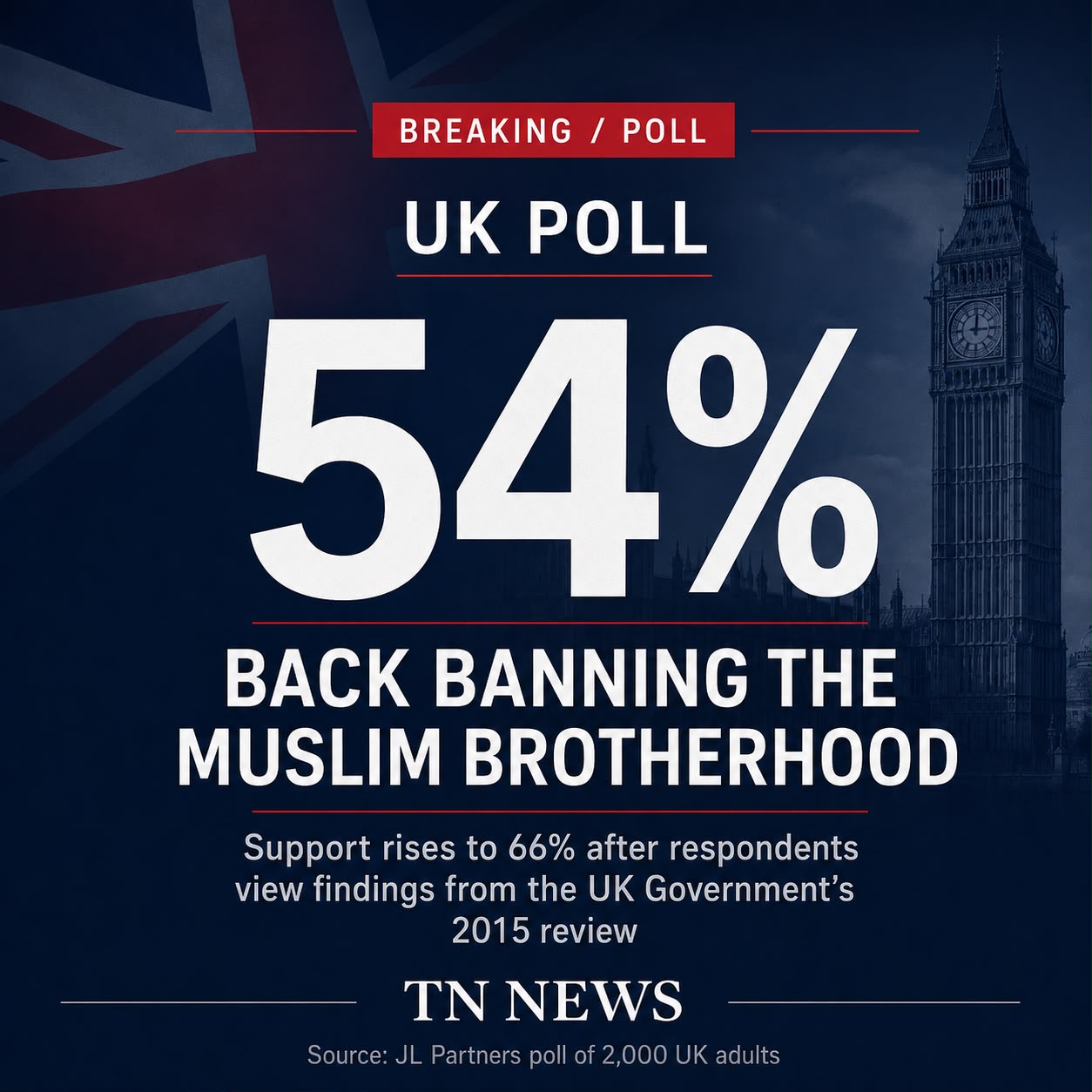
A majority of British adults support proscribing the Muslim Brotherhood under UK terrorism legislation, according to a new nationwide opinion poll that is likely to intensify political debate over the organization’s activities and influence in Britain.
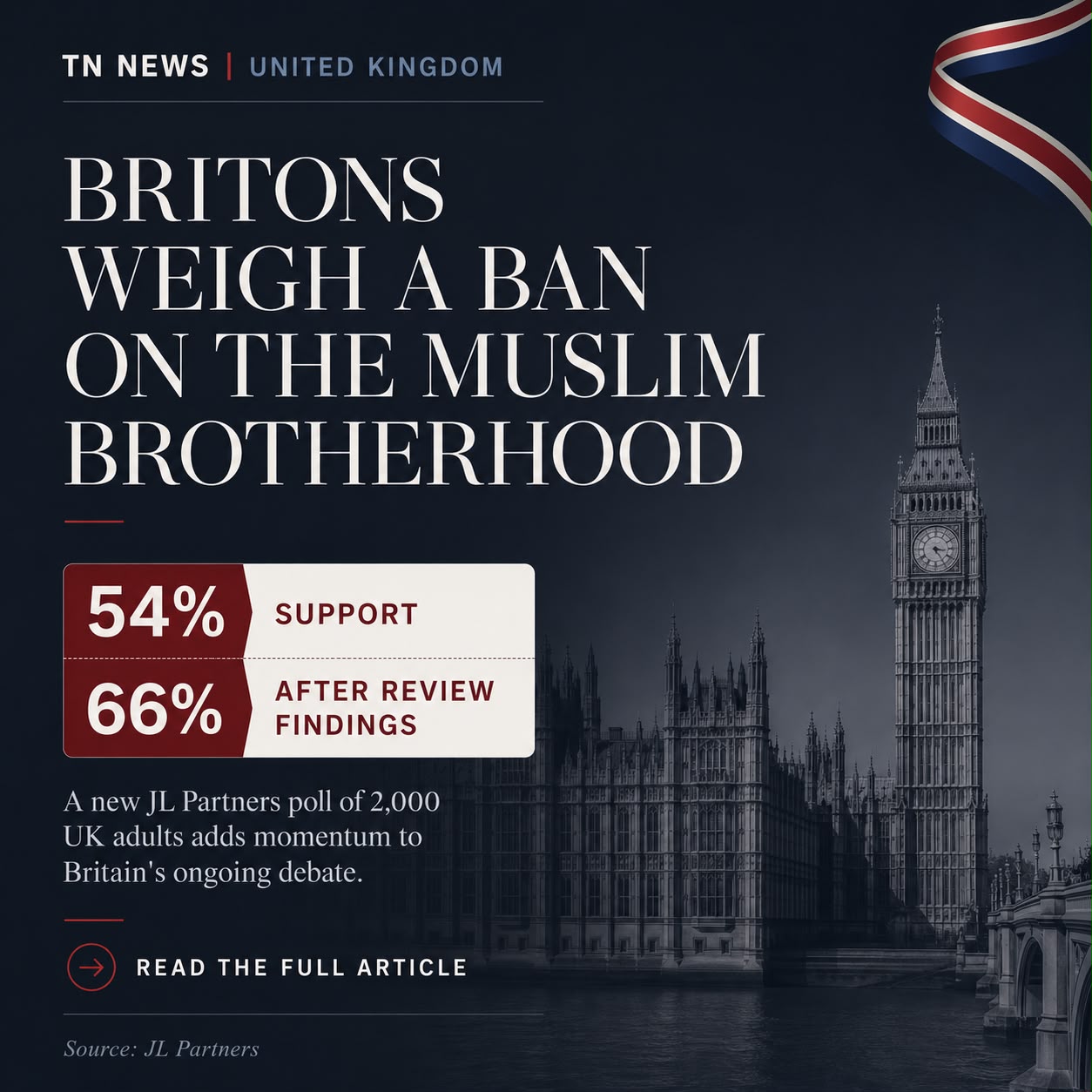
The survey, conducted by JL Partners and commissioned by the campaign group Muslims Against Antisemitism and Christianphobia, questioned approximately 2,000 adults across the United Kingdom. According to the published findings, 54% supported proscription, while 10% opposed it.
Support increased to 66% after respondents were presented with selected findings from the British government’s 2015 review of the Muslim Brotherhood.
The increase suggests that the information presented to participants had a significant effect on their responses. However, as with any commissioned survey, the results should be assessed alongside the methodology, wording of the questions and material shown to respondents.
The 2015 Government Review
Britain’s most significant official examination of the Muslim Brotherhood began in April 2014, when then-Prime Minister David Cameron commissioned an internal review of the organization’s origins, ideology, political record, structure and activities in the United Kingdom and abroad.
The government published the review’s main findings in December 2015. It concluded that membership of, association with or influence by the Muslim Brotherhood should be regarded as a “possible indicator of extremism.”
The review also described the relationship between parts of the organization and violent extremism as highly ambiguous. It raised concerns about secrecy surrounding certain activities and identified differences between some of the movement’s public statements and its communications in other contexts.
Despite those concerns, the government did not impose a comprehensive ban. Instead, it announced continued scrutiny of individuals and organizations associated with the movement, closer examination of funding arrangements and measures to prevent extremists from entering the country.
Challenges Surrounding a Potential Ban
Any attempt to proscribe the Muslim Brotherhood would present significant legal and practical difficulties.
Unlike organizations that operate through a clearly identifiable command structure, the Muslim Brotherhood is widely described as a broad transnational movement with national branches, affiliated entities and ideologically aligned individuals and institutions.
Critics argue that this decentralized structure enables the movement to exercise influence through political, charitable, educational and community organizations while maintaining distance from a single central authority.
Those accused of having links to the movement frequently dispute such characterizations. They argue that ideological similarities do not establish organizational control and that individuals or institutions should not be held responsible for the conduct of separate entities without clear evidence.
For British authorities, the central challenge would be establishing legally defensible connections between specific organizations, individuals and activities. Any assessment would also need to distinguish formal membership and operational coordination from ideological sympathy or lawful community and political engagement.
US Action Renews International Scrutiny
The debate gained further momentum after US President Donald Trump signed an executive order on November 24, 2025, initiating a process to consider designating specified Muslim Brotherhood chapters in Egypt, Jordan and Lebanon as Foreign Terrorist Organizations and Specially Designated Global Terrorists.
The order did not automatically classify the entire Muslim Brotherhood as a terrorist organization. Instead, it directed relevant US agencies to examine particular chapters and assess allegations concerning involvement in violence or support for groups considered a threat to the United States and its allies.
Formal designations, if issued following the required legal review, could result in financial sanctions, asset freezes and restrictions on individuals and entities found to be providing prohibited support.
The American action has added an international dimension to the British discussion and increased pressure on London to clarify its position toward organizations and networks alleged to be associated with the movement.
The Legal Threshold in Britain
The British government has said that the Muslim Brotherhood’s activities remain under close review, amid growing calls from some parliamentarians for a more decisive response. No decision has been made to proscribe the organization in the United Kingdom.
Under the Terrorism Act 2000, the Home Secretary may proscribe an organization when there are reasonable grounds to believe that it is concerned in terrorism. The statutory test includes committing or participating in acts of terrorism, preparing for terrorism, promoting or encouraging terrorism, or otherwise being concerned in terrorist activity.
The government must also determine whether proscription would be proportionate to the nature and level of the threat.
If an organization is proscribed, membership and certain forms of support become criminal offences. Depending on the offence and circumstances, violations involving membership or support may carry a maximum sentence of 14 years’ imprisonment.
Public opinion, however, cannot replace this legal process. A survey may influence the political climate, but proscription requires evidence capable of meeting the statutory threshold.
A Shift in the Public Debate
The poll does not compel the government to act, and its findings should not be interpreted as evidence that a ban is imminent. Nevertheless, it indicates substantial support among respondents for a tougher approach.
The government could continue its current policy of monitoring the movement, intensify scrutiny of funding and institutional relationships, or consider formal legal action if sufficient evidence emerges.
The findings also challenge the perception that support for proscription is confined to a small political constituency. At the same time, responsible policymaking will require careful examination of the evidence and clear distinctions between proven organizational connections, ideological association and lawful civic activity.
As scrutiny increases in Britain and abroad, the future of the Muslim Brotherhood’s status in the United Kingdom will ultimately depend not on opinion polling alone, but on verified evidence, legal proportionality and the government’s assessment of national security risks.
News You Should See
2026 Nobel Medicine Prize Honors Scientists Behind Optogenetics Breakthrough
Oil Prices Edge Lower as Stronger Middle East Exports and G7 Reserves Ease Supply Concerns
Trump Offers U.S. Assistance to Russia After Death at Siberian Plague Research Institute
Trump Takes Economic Message to Nebraska as GOP Faces Rising Cost-of-Living Pressure
U.S. Appeals Court Weighs Trump Administration’s $2.6 Billion Harvard Funding Fight
U.S. Midterm Elections Begin With Resilient Jobs Market and Persistent Cost Pressures
Latest News
The 2026 Nobel Prize in Physiology or Medicine honors Karl Deisseroth, Peter Hegemann and Georg Nagel for pioneering research behind optogenetics and its impact on neuroscience.
Oil prices edged lower as stronger Middle Eastern exports and a planned G7 release of 100 million barrels eased immediate supply concerns, while Gulf security risks and the Strait of Hormuz kept markets alert.
President Donald Trump said the United States would help Russia if needed after a laboratory worker died at a Siberian plague research institute, as Russian authorities imposed precautionary quarantine measures.
Trump’s Nebraska campaign stop highlights rising fuel and grocery costs, beef prices and growing economic pressure on Republicans ahead of the November midterm elections.
A U.S. appeals court is reviewing the Trump administration’s effort to cut Harvard’s federal research funding, with more than $2.6 billion at stake.
The U.S. enters the 2026 midterm elections with unemployment at 4.2%, while higher living and energy costs create economic pressure for households and businesses.
US services growth eased in September as input prices climbed to their highest level since July 2022, with fuel costs, supply-chain disruptions and strong demand increasing pressure on businesses.
Rising Treasury yields are increasing U.S. borrowing costs as Washington manages record debt, persistent inflation and strong economic demand, narrowing its policy options.
A EGP 16 million corporate partnership will establish and equip a bone marrow transplant unit at Cairo’s Coptic Hospital, supporting access to specialized treatment for patients.