Billionaires Race to Space: Musk vs Bezos and the Future of Humanity
Two powerful visions aim to reshape humanity’s future beyond Earth—but both face massive challenges

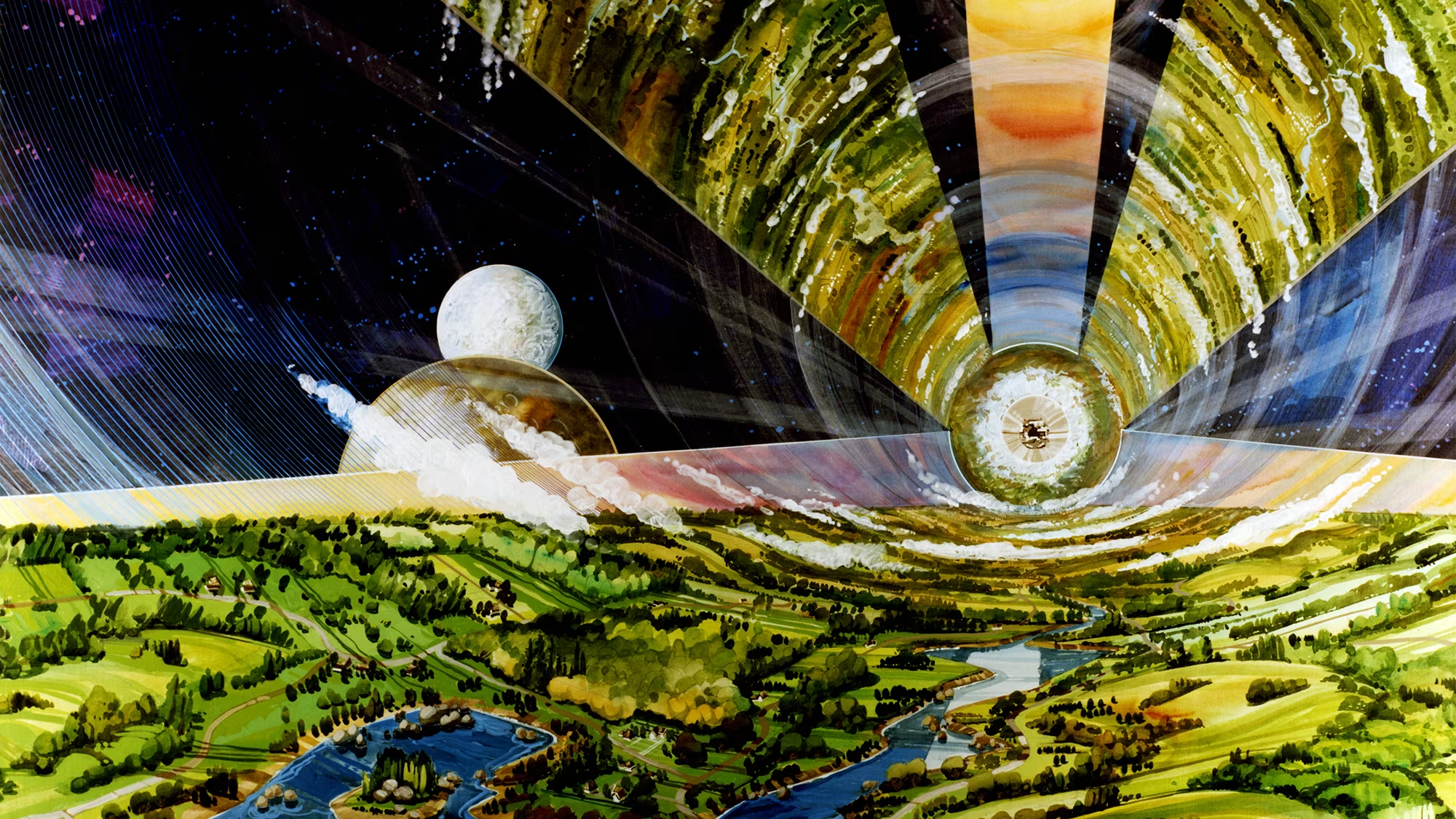
For decades, living in space has been a dream shaped by science fiction. Today, that dream is slowly turning into a serious ambition—driven largely by two influential billionaires: Elon Musk and Jeff Bezos.
Both men are investing heavily in space exploration, but their visions for humanity’s future beyond Earth couldn’t be more different.
Musk, through SpaceX, is focused on colonizing Mars. His long-term goal is to build a self-sustaining city on the Red Planet, where humans could live independently from Earth. This includes ambitious ideas like sending fleets of spacecraft, building habitats, and even transforming Mars’ environment through a process known as terraforming.
However, scientists remain skeptical. Turning Mars into an Earth-like planet may require technology far beyond what currently exists. Even Musk himself admits the journey will be dangerous, with a real risk to human life.
On the other hand, Bezos is taking a different route. Through Blue Origin, he envisions massive space stations—known as O’Neill colonies—orbiting Earth. These rotating habitats could host millions of people, allowing heavy industry to move off Earth while preserving the planet as a place for living and leisure.
Bezos’ idea is inspired by physicist Gerard O’Neill, who proposed that humans could thrive in large artificial environments in space rather than settling on other planets.
Experts are divided on which vision makes more sense. Some argue that staying closer to Earth, as Bezos suggests, is more practical and sustainable. Others believe Musk’s Mars plan could open the door to deeper space exploration.
Despite their differences, both approaches face enormous obstacles. Technological limitations, environmental concerns, and ethical questions all stand in the way. For example, increasing rocket launches could harm Earth’s atmosphere, while building space habitats raises questions about inequality and control over resources.
There is also the issue of power. If space becomes the next economic frontier, companies like SpaceX and Blue Origin could gain unprecedented influence, potentially reshaping global economics.
Still, the idea of becoming a spacefaring civilization continues to inspire. For many, it represents hope, curiosity, and the desire to push beyond human limits.
But even if humans succeed in building cities on Mars or in orbit, one truth remains clear: Earth is still our only true home—and protecting it may be just as important as exploring beyond it.
News You Should See
P&G Raises Fiscal 2027 Cost Warning as Oil and Freight Expenses Threaten Profits
Chemical Tank Leak in Toledo Triggers Evacuations and Industrial Disruptions
Judge Sets December 11 Deadline for Trump Deposition in BBC Defamation Case
Iowa Senate Race Tests How Far Republicans Can Separate Themselves From Trump
California State Workers Strike Over Pay, Healthcare and Return-to-Office Rules
Streaming’s October Showdown: How Disney, Netflix and Major Entertainment Brands Compete for Audiences
Latest News
Procter & Gamble expects commodity, energy and transportation costs to reduce fiscal 2027 profit by $1.4 billion. Quarterly sales rose 4% to $23.28 billion, beating analyst expectations.
A ruptured chemical tank in Toledo, Ohio, prompted evacuations, school closures and an industrial shutdown. Authorities have reduced the restricted zone as the release slows and cleanup preparations continue.
A federal judge has ordered Donald Trump to give a deposition by December 11, 2026, in his $10 billion lawsuit against the BBC, with possible sanctions for noncompliance as the discovery deadline approaches.
Iowa’s 2026 Senate race pits Republican Ashley Hinson, balancing Trump support with economic concerns, against Democrat Josh Turek, who emphasizes bipartisanship amid rising campaign spending.
Thousands of California state workers struck on October 21 over a proposed three-year pay increase, healthcare costs and a four-day office attendance requirement as contract negotiations continued.
October 2026 brings major entertainment releases across Disney+, Netflix, HBO Max, Hulu, Prime Video and Peacock. Explore how familiar franchises, exclusive programming, new music and video games shape competition for streaming audiences.
Saudia advises travelers to book flights through Al Qassim Airport for Riyadh connections, offering free hourly shuttle buses in both directions until further notice.
An AP-NORC poll shows Democratic confidence in accurate vote counting falling to 55%, while Republican confidence rises to 38%, highlighting election integrity concerns ahead of the 2026 US midterms.
Donald Trump campaigns in North Carolina ahead of the November 2026 midterms as low approval ratings, rising fuel costs, Democratic early-voting gains and funding disparities challenge Republican efforts to retain control of Congress.