Big Tech Stocks Surge as US Election Results Fuel Expectations for AI Infrastructure Expansion
Amazon, Meta, Alphabet, Microsoft and Apple could collectively gain more than $750 billion in market value as investors reassess AI infrastructure spending, data center regulations and competitive advantages in the US technology sector.

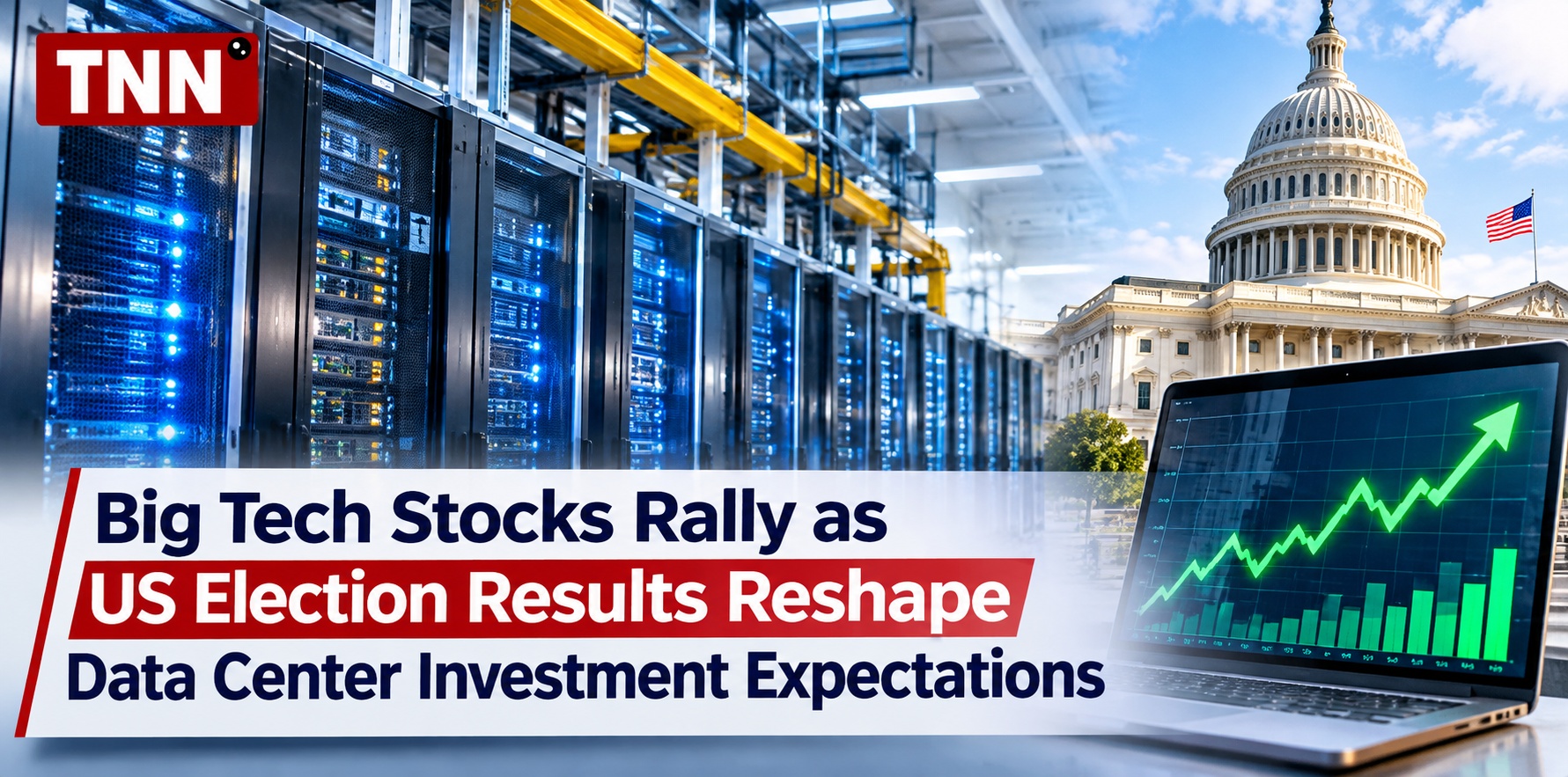
Big Tech's Market Rally Highlights the Growing Economic Importance of AI Infrastructure
The latest rally in major US technology stocks has brought renewed attention to the financial implications of artificial intelligence infrastructure, as investors reconsider how political developments could influence data center construction, electricity demand and the competitive position of established technology companies.
Amazon, Meta Platforms, Alphabet, Microsoft and Apple recorded significant share price increases following the Democratic Party's sweeping victories in the US midterm elections. Collectively, the five companies could add more than $750 billion to their market capitalization if the gains are sustained.
The market reaction reflects more than short-term investor optimism. It points to a changing assessment of the relationship between technology investment, infrastructure availability and the regulatory environment surrounding the expansion of AI computing capacity.
Technology Giants Lead the Market Gains
Amazon recorded the strongest increase among the five companies, with its shares climbing 7.4%. Apple advanced nearly 7%, reaching a record high, while Meta, Alphabet and Microsoft registered gains ranging from approximately 2% to 6.3%.
The scale of these movements highlights the influence that a relatively small group of technology companies continues to exert on the broader market.
These businesses occupy strategic positions across cloud computing, digital platforms, software, consumer technology and artificial intelligence. Their ability to finance and operate large computing networks gives them an advantage in an industry where access to infrastructure has become increasingly important.
The potential addition of more than $750 billion in market value also illustrates how quickly investor expectations can change when political developments are interpreted as favorable to the long-term business models of major technology companies.
However, the projected market capitalization increase depends on the share price gains holding, rather than representing an already realized increase in company valuations.
Data Center Expansion Becomes a Strategic Investment Issue
At the center of the market reaction is the growing debate over the expansion of data centers across the United States.
Artificial intelligence systems require substantial computing capacity, supported by specialized facilities, advanced processors, electricity supplies and cooling infrastructure. As demand for AI services increases, technology companies are competing to secure the physical resources needed to support future growth.
The five major companies are expected to spend more than $740 billion on infrastructure during 2026, compared with approximately $400 billion in the previous year.
This projected increase demonstrates the scale of the investment cycle surrounding artificial intelligence. Infrastructure spending is no longer a secondary operational expense; it has become a central component of corporate strategy and a major factor in determining which companies can compete effectively in the next phase of technological development.
Yet the expansion is facing growing resistance in some communities. Data centers consume significant amounts of electricity and water, placing pressure on local resources and raising questions about the impact of large facilities on energy availability.
These concerns have turned infrastructure planning into a political and economic issue, with local opposition and potential restrictions influencing expectations about the timing and feasibility of new projects.
Why Established Technology Companies May Have an Advantage
Investors are increasingly examining whether tighter conditions for building new data centers could benefit companies that already possess extensive computing infrastructure.
Amazon, Microsoft, Google parent Alphabet and Meta have invested heavily in digital infrastructure over several years. Their existing facilities and established operational networks may provide a competitive advantage if securing approval for additional construction becomes more difficult.
Companies with substantial existing capacity could potentially maintain their expansion plans more effectively than smaller competitors that depend on building new facilities to enter or expand within the AI market.
This creates an important distinction between companies that already control large infrastructure networks and businesses whose growth depends on securing new construction projects.
Apple's inclusion in the stock rally also reflects the broader market exposure of major technology companies to changing expectations surrounding the sector, although its business model and infrastructure requirements differ from those of cloud and data center operators.
The market is therefore responding not simply to expectations of higher AI demand, but also to the possibility that infrastructure ownership could become an increasingly important source of competitive advantage.
Smaller AI Infrastructure Companies Face a Different Outlook
While established technology companies benefited from the rally, several smaller businesses involved in AI infrastructure development experienced share price declines.
Their weaker performance reflects investor concerns about the financial risks associated with debt-funded expansion and the possibility that new data center construction could proceed more slowly than previously anticipated.
For smaller companies, infrastructure projects often require substantial upfront financing. Delays in construction, higher borrowing costs or difficulties securing energy supplies can affect profitability and increase financial pressure.
Unlike large technology groups, which can draw on diversified revenue streams and established infrastructure, specialized infrastructure developers may have fewer options to absorb unexpected costs or delays.
This difference helps explain why developments that support the market valuations of established technology companies may simultaneously create uncertainty for smaller participants in the AI supply chain.
Energy Availability and Regulation Shape the Next Investment Cycle
The growing importance of electricity and water resources is changing the economics of data center development.
Access to reliable and affordable energy has become a major consideration when technology companies evaluate potential locations for new facilities. In areas where electricity supplies are already under pressure, additional demand from large computing facilities may face greater scrutiny.
This creates a broader challenge for the AI industry: technological demand can grow faster than the infrastructure and regulatory systems required to support it.
The issue also extends beyond technology companies themselves. Energy providers, infrastructure developers, local governments and communities are becoming increasingly important stakeholders in decisions about the location and scale of future projects.
For investors, these factors introduce a new dimension to evaluating technology companies. Financial performance and demand for AI services remain important, but the ability to secure electricity, obtain construction approvals and manage infrastructure costs may become equally significant.
What the Market Shift Means for the Future of AI
The latest stock movements highlight a potential change in how investors assess the artificial intelligence industry.
The first phase of the AI investment boom was largely driven by expectations surrounding software capabilities, computing demand and the commercial opportunities created by advanced AI systems. The next phase is increasingly dependent on physical infrastructure, capital expenditure and access to essential resources.
For the largest technology companies, existing infrastructure could become a more valuable strategic asset as competition for computing capacity intensifies.
For smaller developers, the challenge will be to manage financing risks and demonstrate that their expansion plans can remain commercially viable amid uncertainty surrounding construction and energy availability.
The projected infrastructure spending of more than $740 billion by the five major technology companies in 2026 illustrates the financial scale of this transition. However, the sustainability of that investment cycle will depend on whether demand for AI services justifies the cost of building and operating increasingly complex infrastructure networks.
Ultimately, the market reaction following the US midterm elections demonstrates how political decisions and local infrastructure policies can influence investment expectations across the technology sector. The companies best positioned to secure computing capacity, energy resources and long-term operating flexibility may hold an increasingly important advantage in the global AI competition.
News You Should See
FEMA and FCC Set Nationwide Emergency Alert System Test for Today
Lisa's 'Always Lalisa' Documentary Set for November 18 YouTube Premium Release
Darius Rucker Documentary Traces His Rise From Rock to Country Music
Hollywood Honors Glenn Close and Ridley Scott at Governors Awards
Toronto Tempo Claim Top Selection in 2027 WNBA Draft Lottery
Detroit Lions Overpower Patriots 35-10 in Munich Behind Jahmyr Gibbs' Outstanding Performance
Latest News
FEMA and the FCC will test America's Emergency Alert System on November 17 at 2:20 p.m. ET. Radio and TV broadcasts will be interrupted briefly.
Lisa's Always Lalisa documentary arrives on YouTube Premium November 18, featuring her solo career, Coachella performances and The White Lotus experience.
The Hulu documentary explores Darius Rucker's journey from Charleston to rock success with Hootie & the Blowfish and his country music career.
Glenn Close and Ridley Scott receive honorary Oscars alongside Floyd Norman, Pamela Koffler and Christine Vachon at Hollywood's Governors Awards.
Toronto Tempo secure the No. 1 pick in the 2027 WNBA Draft, raising expectations around the franchise's rebuilding plans and potential interest in JuJu Watkins.
Detroit Lions defeat New England Patriots 35-10 in Munich as Jahmyr Gibbs records 252 scrimmage yards and two touchdowns.
Minnesota Vikings defeat Green Bay Packers 30-10 as Kirk Cousins throws two touchdowns and the defense delivers eight sacks and four turnovers.
AAA expects 81.5 million Americans to travel for Thanksgiving 2026, with nearly six million flying as transportation costs influence holiday plans.
Nvidia's upcoming earnings report could offer insights into AI chip demand, data center investments and investor confidence amid uncertainty in the technology market.