Beyond the 10,000-Step Rule: Rethinking Movement, Health and the Business of Fitness Tracking
The popular daily benchmark was shaped more by commercial history than medical evidence, while research shows that meaningful health gains can begin well below the five-digit target.

The 10,000-step target has become one of the most recognizable symbols of modern fitness culture. It appears on smartwatches, fitness applications and activity dashboards as if it were a medically established threshold separating an active lifestyle from an inactive one. Yet the history and science behind the number tell a more nuanced story. The benchmark is not a biological switch, and reaching 10,000 steps does not suddenly activate a new level of health protection. Its widespread adoption reflects a combination of consumer technology, memorable branding and the human tendency to translate complex health objectives into a simple numerical target.
The commercial roots of the figure are particularly important when examining why it became so influential. The original Life & Health Network article points to 1965, when Japan's Yamasa Clock and Instrument Company marketed a pedometer known as Manpo-kei, a name that roughly translates to “10,000 steps meter.” The number therefore gained visibility through a consumer product rather than emerging from a clinical trial that established 10,000 steps as the minimum requirement for good health. Research published in JAMA Internal Medicine later reinforced this distinction, noting that the 10,000-step goal had limited scientific basis despite becoming deeply embedded in public fitness culture and wearable-device defaults.
This distinction matters economically as well as medically. Once a numerical benchmark becomes culturally familiar, it becomes easier for technology companies to build products and services around it. Step counters, fitness bands, smartwatches and mobile applications can convert everyday movement into a measurable performance indicator. A user can receive a daily target, monitor progress toward it, maintain streaks and compare activity with friends. The number becomes both a health metric and a behavioral design mechanism. In that sense, the 10,000-step benchmark has functioned as an effective piece of fitness branding: it is simple, memorable, measurable and sufficiently demanding to encourage continued engagement with tracking technology.
The scientific evidence, however, suggests that health should not be reduced to a pass-or-fail score. A major study led by Dr. I-Min Lee and published in JAMA Internal Medicine examined 16,741 older women participating in the Women's Health Study. Participants had a mean age of approximately 72 years and wore accelerometers during waking hours for seven days. Researchers then examined the relationship between daily step volume, stepping intensity and all-cause mortality over an average follow-up period of 4.3 years. The study found that women averaging approximately 4,400 steps per day had significantly lower mortality rates than those averaging about 2,700 steps per day.
The relationship was not limited to a single threshold. Mortality rates continued to decline as daily step volume increased, with the association leveling off at approximately 7,500 steps per day. This finding is important because it changes the way a daily step target should be interpreted. The evidence does not suggest that 4,400 steps is a universal prescription for every person, nor does it establish 7,500 as a mandatory target. Instead, it demonstrates that meaningful associations with lower mortality can occur well before someone reaches 10,000 steps.
The study also examined whether the intensity of walking independently explained the relationship with mortality. Although some measures of higher stepping intensity were initially associated with lower mortality, most of those relationships were substantially weakened after researchers accounted for the total number of steps taken. In the context of that study, the amount of movement accumulated throughout the day was more consistently associated with mortality outcomes than simply making every step faster or more intense.
For people who are largely inactive, this has an important behavioral implication. A five-digit target can appear so difficult that it discourages action altogether. The original article highlights the idea that many people accumulate roughly 2,500 steps through ordinary activities such as walking around the home or workplace, going to the bathroom and collecting the mail. Adding approximately 2,000 steps—roughly equivalent to one additional mile—can therefore represent a more accessible first stage than attempting to immediately reach 10,000.
This incremental approach also changes the economics of fitness. Improving activity does not necessarily require a gym membership, specialized equipment or a highly structured exercise program. Movement can be integrated into existing routines. Parking farther from a supermarket or workplace can add walking without requiring a separate workout session. Taking a short walk during a lunch or work break can transform otherwise sedentary time into active time. Household chores and outdoor work can also contribute steps, particularly when they involve repeated movement between rooms, stairs or outdoor tasks such as mowing, raking and gardening.
Play and social activity provide another pathway. Joining a recreational basketball game, participating in an adult sports league, walking with children or exploring local parks can turn physical activity into a social or family experience rather than a solitary obligation. This is strategically important because behaviors that are enjoyable and socially reinforced may be easier to maintain than activities performed solely to satisfy a numerical target.
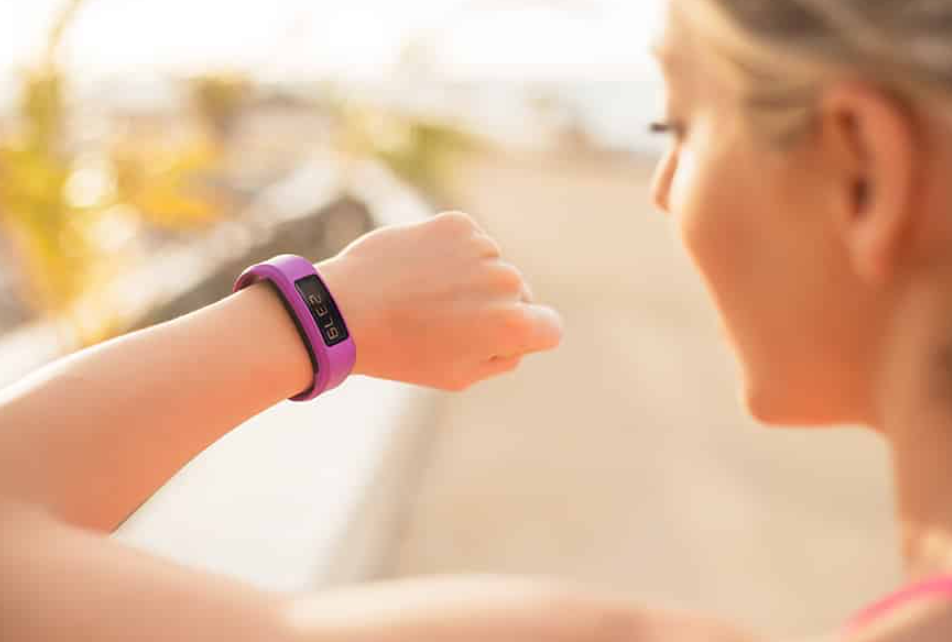
Technology can still play a useful role in this model. A basic pedometer or smartwatch can provide feedback, establish a daily objective and make otherwise invisible movement visible to the user. More advanced devices can connect activity data with mobile applications and social networks, allowing users to share progress or participate in friendly competition. The value of these devices, however, lies in their ability to support behavior rather than dictate a universal definition of health. Tracking can motivate movement, but the number displayed on the screen should remain a guide rather than a judgment.
The broader strategic lesson is that health communication works best when a complex objective is made actionable without becoming misleading. The 10,000-step figure succeeded as a piece of public-facing health branding because it is exceptionally easy to remember. Its weakness is that people can interpret that simplicity as scientific certainty. A more evidence-sensitive approach recognizes that activity exists on a continuum: moving more is generally preferable to remaining sedentary, and meaningful benefits can begin before an individual reaches a conventional fitness benchmark.
It is also important to recognize the limits of the evidence. The major study cited here focused on older women, and its primary outcome was all-cause mortality. Its findings should therefore not be transformed into a universal prescription for every age group, sex or health condition. The research provides strong evidence that increasing movement is associated with better outcomes within the population studied, but it does not mean that every individual should adopt exactly the same step target.
Ultimately, the most useful interpretation of the 10,000-step debate is not that 10,000 steps are unnecessary, but that the number should lose its status as a rigid health threshold. Someone capable of reaching 10,000 steps can reasonably continue doing so, while someone currently taking far fewer steps should not view the gap as a reason to give up. The more productive strategy is to establish a realistic baseline, increase movement gradually and build habits that can survive ordinary work, family and lifestyle demands.
The future of fitness technology may therefore depend less on promoting a single iconic number and more on helping individuals understand their own activity patterns. A useful health platform should encourage progress, provide context and recognize incremental improvement. In practical terms, an additional walk, a longer route across the workplace, household activity, outdoor chores or recreational play can all contribute to a more active day.
The central message is consequently straightforward: 10,000 steps can be a useful goal, but it is not a biological requirement. The evidence suggests that the journey toward greater movement matters more than the symbolic achievement of a particular number. By shifting the focus from rigid targets to sustainable behavior, the fitness industry can move from selling a benchmark to supporting a healthier relationship with everyday activity.
News You Should See
2026 Nobel Medicine Prize Honors Scientists Behind Optogenetics Breakthrough
Oil Prices Edge Lower as Stronger Middle East Exports and G7 Reserves Ease Supply Concerns
Trump Offers U.S. Assistance to Russia After Death at Siberian Plague Research Institute
Trump Takes Economic Message to Nebraska as GOP Faces Rising Cost-of-Living Pressure
U.S. Appeals Court Weighs Trump Administration’s $2.6 Billion Harvard Funding Fight
U.S. Midterm Elections Begin With Resilient Jobs Market and Persistent Cost Pressures
Latest News
The 2026 Nobel Prize in Physiology or Medicine honors Karl Deisseroth, Peter Hegemann and Georg Nagel for pioneering research behind optogenetics and its impact on neuroscience.
Oil prices edged lower as stronger Middle Eastern exports and a planned G7 release of 100 million barrels eased immediate supply concerns, while Gulf security risks and the Strait of Hormuz kept markets alert.
President Donald Trump said the United States would help Russia if needed after a laboratory worker died at a Siberian plague research institute, as Russian authorities imposed precautionary quarantine measures.
Trump’s Nebraska campaign stop highlights rising fuel and grocery costs, beef prices and growing economic pressure on Republicans ahead of the November midterm elections.
A U.S. appeals court is reviewing the Trump administration’s effort to cut Harvard’s federal research funding, with more than $2.6 billion at stake.
The U.S. enters the 2026 midterm elections with unemployment at 4.2%, while higher living and energy costs create economic pressure for households and businesses.
US services growth eased in September as input prices climbed to their highest level since July 2022, with fuel costs, supply-chain disruptions and strong demand increasing pressure on businesses.
Rising Treasury yields are increasing U.S. borrowing costs as Washington manages record debt, persistent inflation and strong economic demand, narrowing its policy options.
A EGP 16 million corporate partnership will establish and equip a bone marrow transplant unit at Cairo’s Coptic Hospital, supporting access to specialized treatment for patients.