Beyond Health Tracking: The Smart Ring Market Enters a New Race for Design, Features and Ecosystem Power
As Oura prepares for the public markets, a new generation of competitors is redefining the smart ring from a discreet health wearable into a strategic platform for payments, AI, haptics and connected experiences.

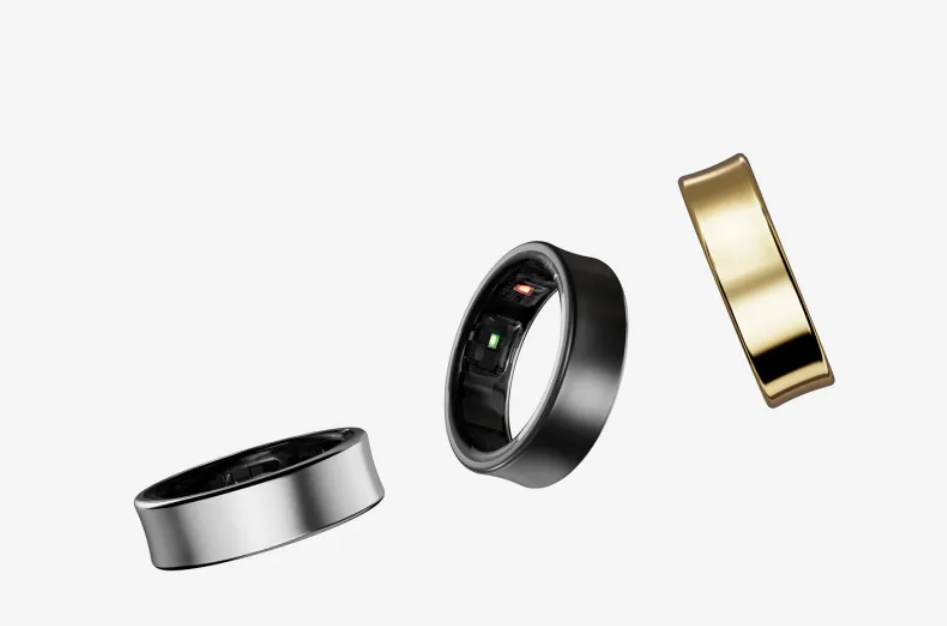
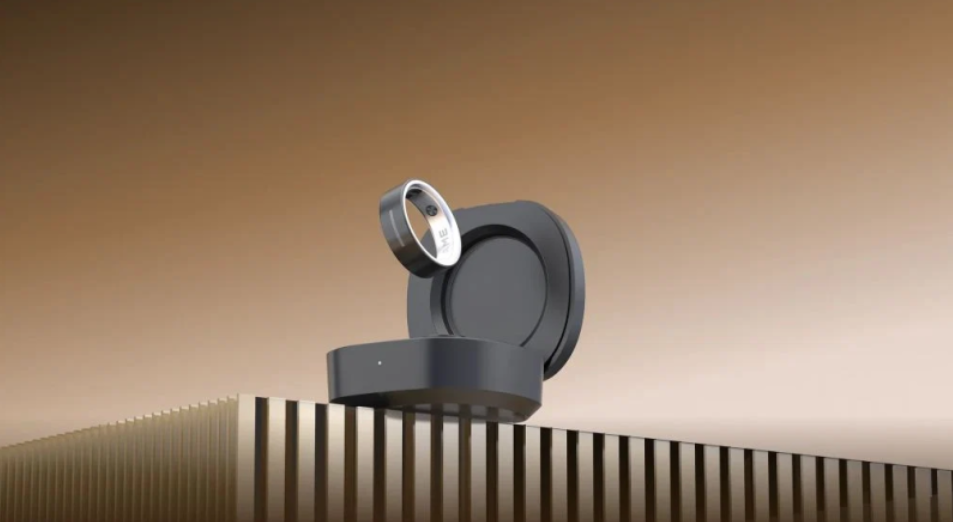
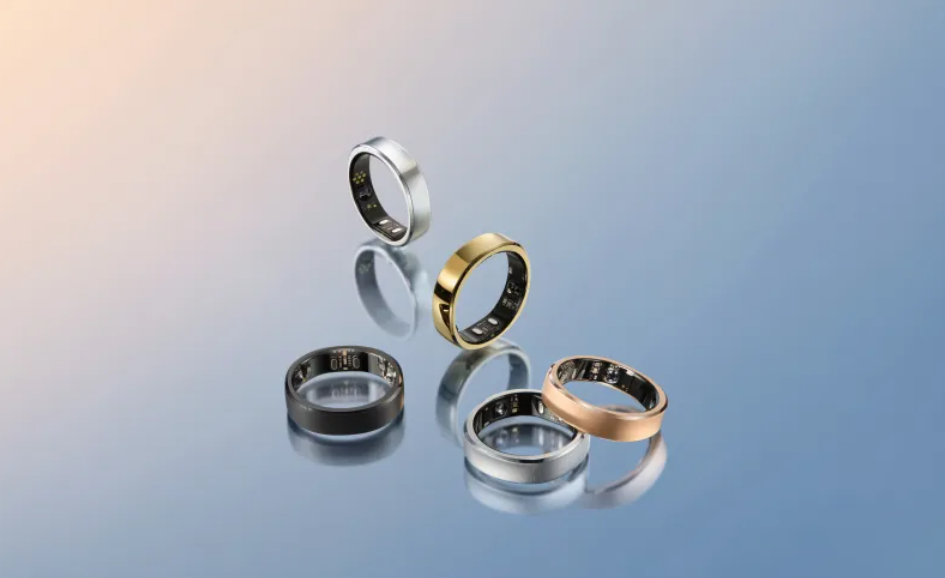
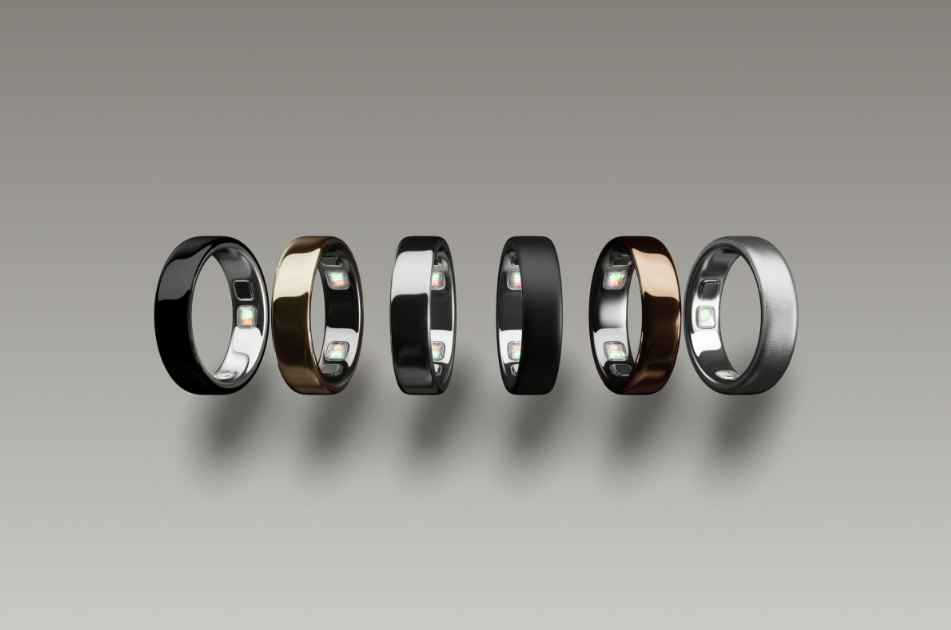
The smart ring industry is entering a more competitive and strategically complex phase as Oura moves toward the public markets while a growing number of technology companies attempt to challenge the category leader with different combinations of design, health technology, artificial intelligence and connected-device functionality.
For years, Oura has been one of the most recognizable brands in the smart ring market, helping establish the idea that advanced health monitoring could be delivered through a small and relatively discreet piece of wearable technology. Unlike smartwatches, which rely heavily on screens and frequent interaction, smart rings initially built their appeal around a different design philosophy: technology that could remain largely invisible while continuously collecting information about sleep, activity and other health metrics.
That original proposition is now beginning to change.
As Oura prepares for a new stage in its corporate development through a public offering, competitors are increasingly experimenting with ways to transform the smart ring into something broader than a passive health-tracking device. Payments, haptic communication, touch controls, on-device computing and future AI capabilities are becoming part of the competitive conversation.
Oura officially filed to go public on September 3, entering the public markets from a position of considerable commercial strength.
The Finnish company reported that its revenue nearly doubled to $1.21 billion during the nine months ending June 30. It also said that it sold 3.6 million rings over the previous year and had approximately 5 million paid members.
The move toward a public listing also follows the recent introduction of the Oura Ring 5, described as the company’s slimmest and lightest ring to date.
From a brand and product-design perspective, this combination is important.
Oura is not simply selling hardware. Its business model increasingly combines physical product design with recurring membership revenue and a broader health-data ecosystem. The ring serves as the physical entry point into a service model in which software, analytics and membership relationships contribute to the long-term value of the brand.
The company’s growth has therefore helped demonstrate that the smart ring can function as more than a niche wearable category.
But Oura’s success has also attracted a growing number of competitors, each pursuing a different interpretation of what a smart ring should become.
French company Circular is expanding the concept through payment technology and more active forms of interaction. Chinese company RingConn is using haptic capabilities to make the device more responsive to the wearer. Indian company Ultrahuman is pursuing a strategy built around more advanced on-device processing and ambitions that extend beyond traditional health tracking.
Meanwhile, major technology brands and newer hardware companies are approaching the market from their own strategic positions.
The result is a category that is becoming increasingly fragmented but also significantly more innovative.
The race is no longer focused exclusively on which company can provide the most detailed sleep score or the most comprehensive heart-rate analysis.
It is increasingly about product philosophy.
Should the smart ring remain an unobtrusive health device?
Should it become a miniature communication tool?
Should it function as a contactless payment device?
Should it support artificial intelligence directly on the device?
Or should it gradually evolve into a screen-equipped and interactive computing platform worn on the finger?
These questions are beginning to define the next stage of the industry.
Ultrahuman represents one of the most ambitious attempts to expand the technological identity of the smart ring.
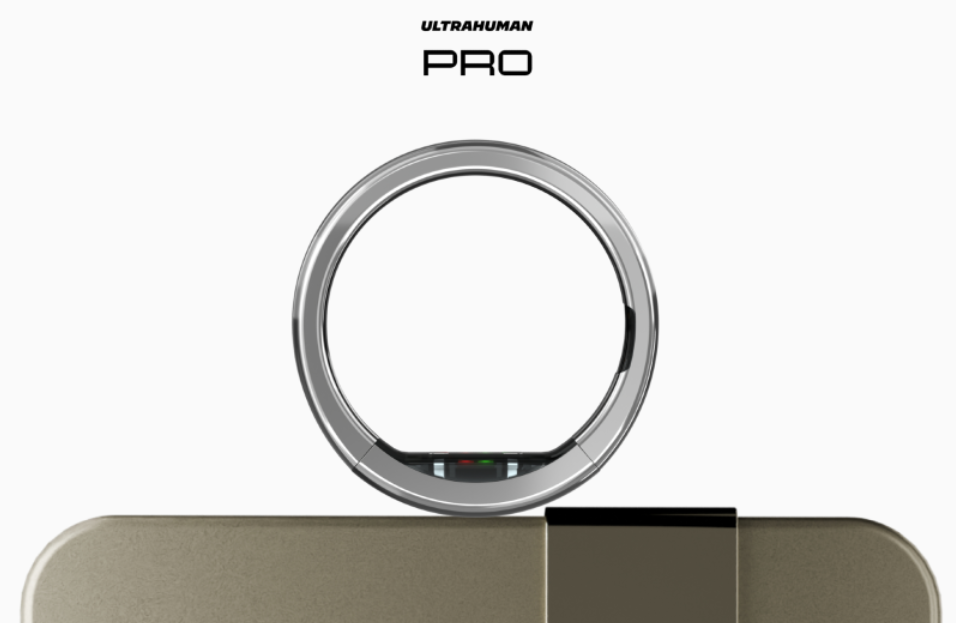
Earlier in the year, the company introduced its third-generation device, the $479 Ring Pro, which is scheduled to begin shipping in the United States in mid-September.
The launch carries particular strategic importance because Ultrahuman’s U.S. business faced a significant disruption in October 2025 following a patent dispute with Oura.
The U.S. International Trade Commission ruled in Oura’s favor, preventing Ultrahuman from importing new ring inventory into the country.
Rather than withdrawing from the market, Ultrahuman responded by developing the Ring Pro with a redesigned form factor intended to avoid the patent restrictions that had affected its previous products.
This makes the Ring Pro more than a standard product update.
Its physical redesign is directly connected to intellectual property strategy and market access.
The case demonstrates how industrial design in emerging hardware categories can become closely connected to legal positioning. The shape, structure and engineering of a product may determine not only its user experience but also whether a company can continue operating in a major market.
Ultrahuman’s new ring includes a redesigned heart-rate sensing system designed to improve signal quality during sleep.
It also features a new dual-core processor intended to support more accurate data collection and greater levels of processing directly on the device.
This approach reflects a larger strategic direction.
Ultrahuman has indicated that future smart rings could move beyond sleep and health monitoring toward more advanced software experiences, including AI interactions and potentially gaming.
The company reinforced those ambitions by announcing that it had raised $70 million with backing from Qualcomm’s venture arm.
The investment signals that the competition around smart rings may increasingly involve computing capability as much as wearable health technology.
The concept of on-device processing is particularly significant because it could allow smart rings to operate with greater independence from smartphones.
In the current wearable market, many devices remain heavily dependent on companion applications and cloud-based systems.
A more powerful processor inside a smart ring could gradually change that relationship, allowing the device to handle additional functions directly rather than simply acting as a sensor connected to a phone.
From an economic perspective, that transition could also create new opportunities for software services and platform-based business models.
Circular is taking a different approach by emphasizing communication and practical interaction.
The French company announced its upcoming Ring 3 series, which will include a Pro model and a Slim option and is expected to launch early next year.
Both devices will include an integrated NFC chip for contactless payments.
The rings will also feature on-finger vibrations that can support silent wake-up alarms, reminders, vital health alerts and other notifications.
The inclusion of NFC introduces an important shift in how smart rings can fit into everyday behavior.
Health tracking is primarily observational. It collects information and provides insight.
Payments, by contrast, turn the wearable into an active transaction tool.
This changes the relationship between the user and the device.
Instead of wearing the ring primarily to measure what happens to the body, the user can also use it to perform an action in the physical economy.
That distinction could become strategically important as wearable technology companies search for ways to increase the daily relevance of their products.
Circular's Ring 3 Pro also focuses heavily on health capabilities.
The device is expected to feature a slimmer design than its predecessor, combining a more refined physical form with FDA-cleared ECG technology for AFib detection.
It will also offer blood pressure trend tracking, glucose tracking, advanced sleep analysis and comprehensive biometric monitoring.
Circular's strategy therefore combines two directions that are becoming increasingly important in wearable design.
The first is miniaturization.
As technology becomes more complex, companies are under pressure to integrate additional sensors and capabilities without making products physically larger or more intrusive.
The second is multifunctionality.
The device is designed not only to monitor health but also to communicate information and support transactions.
Pricing for the upcoming Circular rings has not yet been announced.
RingConn is pursuing another version of the smart ring experience, focusing on health monitoring while introducing haptic alerts in a more limited and targeted way.
The RingConn Gen 3 launched in May with a starting price of $349.
One of its notable features is vascular health analysis.
The ring uses sensor data to assess changes in vascular strain over time after calibration using externally measured blood pressure values.
In addition to vascular insights, the device tracks heart rate, blood oxygen saturation, sleep, activity and stress.
It also includes vibration alerts for changes related to health, reminders about sedentary behavior and low battery notifications.
RingConn's approach demonstrates that haptic technology does not necessarily have to transform a smart ring into a communication device in the same way Circular is attempting to do.
Instead, vibration can remain closely tied to the ring's original health-focused identity.
This distinction illustrates how companies are developing different design languages for the same physical product category.
Some are making smart rings more interactive.
Others are making them more informative.
Others are attempting to turn them into independent computing devices.
Samsung brings another important strategic dimension to the market: ecosystem power.
The company became the first major technology giant to launch a smart ring in 2024.
Its Galaxy Ring is priced at $399 and represents one of the strongest alternatives for consumers who are already invested in Samsung's broader device ecosystem.
This position gives Samsung a structural advantage that many dedicated smart ring companies do not possess.
Oura, Circular, RingConn and Ultrahuman must build relationships with users primarily around the ring and the services connected to it.
Samsung can integrate the Galaxy Ring into a larger network of smartphones, watches, tablets and software services.
For consumers, the value of the product may therefore depend less on the individual specifications of the ring and more on how efficiently it works with other devices they already own.
This ecosystem strategy has become one of the defining competitive models in consumer technology.
A product does not always need to offer the most advanced feature in every category if it provides the smoothest experience within an existing network of devices.
However, the Galaxy Ring remains relatively limited compared with some specialized competitors when it comes to advanced health and sleep features.
It does not offer capabilities such as sleep apnea detection, which is available through RingConn, Oura and Ultrahuman.
It also lacks AFib detection, which is offered on Circular and RingConn smart rings.
This illustrates a broader tension within the market.
Specialized companies can focus deeply on individual functions.
Large technology companies can focus on ecosystem integration.
The competition between these two models may determine how the smart ring market develops.
Dreame represents another direction: expanding the interface itself.
The company, which is a relatively new participant in the smart ring category, introduced a device earlier this year that combines health tracking with haptic alerts for alarms, calls, messages and other notifications.
The ring also includes a small touchpad that can be used to control functions on a smartphone, including skipping songs and taking photographs.
It is also expected to offer heart-rate monitoring, blood oxygen tracking, heart-rate variability insights and sleep analysis.
Pricing and availability have not yet been announced.
The inclusion of a touchpad is particularly interesting from a design perspective.
Smart rings originally gained attention because they reduced the need for screens and direct interaction.
A touch interface moves the category in the opposite direction.
It introduces the possibility that the finger-worn device itself could become an active controller for digital experiences.
This reflects a wider debate about the future of wearable technology.
The original attraction of smart rings was partly their ability to make technology feel less intrusive.
Users could remove themselves from the visual intensity of smartphones and smartwatches while still collecting information about their health.
The technology was present, but it did not constantly demand attention.
As companies add screens, touchpads, vibrations, payment functions and more advanced computing capabilities, that philosophy may begin to change.
The smart ring could gradually move closer to becoming a miniature version of the smartphone.
The industry is already showing signs of that transition.
Products such as the Pebble Halo have demonstrated that rings can include screens, although the device is currently available only in India.
Other products, including the Dreame Ring, are exploring touch-based interaction.
These developments suggest that the future of the category may involve a tension between two competing design philosophies.
One philosophy values invisibility, simplicity and reduced digital intrusion.
The other values functionality, connectivity and the ability to perform a growing number of tasks.
The challenge for manufacturers will be determining how much technology can be added before the ring loses the simplicity that made the category attractive in the first place.
The physical limitations of the product make this challenge particularly difficult.
Companies are attempting to integrate sensors, processors, batteries, wireless connectivity and new interaction systems into a titanium band that weighs approximately two grams.
Every additional feature creates new design and engineering challenges involving battery life, heat management, durability, comfort and physical size.
The more functionality companies attempt to include, the greater the risk that the product becomes larger, heavier or more complicated.
This is where design strategy becomes central to the economics of the smart ring market.
Companies are not simply competing on the number of sensors or features they can advertise.
They are competing on how efficiently they can integrate technology without compromising the physical identity of the product.
A smart ring must remain a ring.
It must be comfortable enough to wear continuously, subtle enough to fit into everyday life and durable enough to survive constant physical contact.
That creates a different set of challenges from those faced by smartphones and smartwatches.
The economic opportunity, however, is substantial.
Oura's nearly doubled revenue, 3.6 million rings sold over the past year and approximately 5 million paid members demonstrate that consumers are willing to invest in the category.
The combination of hardware sales and paid memberships is particularly attractive because it creates recurring revenue beyond the initial device purchase.
This business model also increases the strategic importance of user retention.
Once a consumer begins using a ring to collect long-term health data, switching to another platform may involve losing continuity in personal analytics and digital habits.
As a result, smart ring companies are not only competing to sell a piece of hardware.
They are competing to become the long-term platform through which consumers understand their health, manage certain interactions and potentially access new digital services.
The arrival of AI adds another potential layer to this competition.
If future smart rings can perform more processing directly on the device, they may eventually support personalized AI experiences based on continuous streams of health and behavioral data.
That possibility could create entirely new categories of services.
However, it also raises questions about privacy, data ownership and the appropriate use of highly personal information.
The more capable the ring becomes, the more important those issues are likely to become.
For Oura, the challenge is therefore no longer simply maintaining leadership in a health-tracking category it helped define.
The company must now protect its brand identity while the market around it changes.
Its public offering places additional attention on its ability to maintain growth, retain paid members and defend its position against both specialized startups and major technology companies.
The brand's identity has been built around refined design, discreet technology and health intelligence.
Competitors are now testing whether consumers want that formula to remain focused or expand into a much broader technological experience.
Ultrahuman is betting on processing power and future software capabilities.
Circular is betting on payments, communication and advanced health monitoring.
RingConn is strengthening the health-focused proposition while using vibration as a practical alert mechanism.
Samsung is leveraging its broader ecosystem.
Dreame is experimenting with a more interactive interface.
Together, these strategies demonstrate that the smart ring market does not yet have a universally accepted definition of what the product should be.
That uncertainty is precisely what makes the category commercially interesting.
The next market leader may not necessarily be the company with the most sensors or the largest number of features.
It may be the company that best understands which technologies should remain invisible and which should become part of the user's daily interaction.
As Oura enters the public markets, the smart ring industry is moving into a new phase of competition.
The category is becoming a testing ground for miniature hardware design, wearable health technology, artificial intelligence, payment systems, ecosystem integration and new approaches to human-device interaction.
The outcome will depend on whether companies can expand the functionality of the ring without turning it into the very kind of intrusive digital device that smart rings were originally designed to avoid.
The central question for the industry is therefore becoming increasingly clear.
Will the smart ring remain a discreet extension of personal health technology, or will it evolve into a new generation of miniature computing platforms worn on the finger?
The answer may ultimately determine not only who challenges Oura's leadership, but also how the entire wearable technology market defines its next major product category.
News You Should See
2026 Nobel Medicine Prize Honors Scientists Behind Optogenetics Breakthrough
Oil Prices Edge Lower as Stronger Middle East Exports and G7 Reserves Ease Supply Concerns
Trump Offers U.S. Assistance to Russia After Death at Siberian Plague Research Institute
Trump Takes Economic Message to Nebraska as GOP Faces Rising Cost-of-Living Pressure
U.S. Appeals Court Weighs Trump Administration’s $2.6 Billion Harvard Funding Fight
U.S. Midterm Elections Begin With Resilient Jobs Market and Persistent Cost Pressures
Latest News
The 2026 Nobel Prize in Physiology or Medicine honors Karl Deisseroth, Peter Hegemann and Georg Nagel for pioneering research behind optogenetics and its impact on neuroscience.
Oil prices edged lower as stronger Middle Eastern exports and a planned G7 release of 100 million barrels eased immediate supply concerns, while Gulf security risks and the Strait of Hormuz kept markets alert.
President Donald Trump said the United States would help Russia if needed after a laboratory worker died at a Siberian plague research institute, as Russian authorities imposed precautionary quarantine measures.
Trump’s Nebraska campaign stop highlights rising fuel and grocery costs, beef prices and growing economic pressure on Republicans ahead of the November midterm elections.
A U.S. appeals court is reviewing the Trump administration’s effort to cut Harvard’s federal research funding, with more than $2.6 billion at stake.
The U.S. enters the 2026 midterm elections with unemployment at 4.2%, while higher living and energy costs create economic pressure for households and businesses.
US services growth eased in September as input prices climbed to their highest level since July 2022, with fuel costs, supply-chain disruptions and strong demand increasing pressure on businesses.
Rising Treasury yields are increasing U.S. borrowing costs as Washington manages record debt, persistent inflation and strong economic demand, narrowing its policy options.
A EGP 16 million corporate partnership will establish and equip a bone marrow transplant unit at Cairo’s Coptic Hospital, supporting access to specialized treatment for patients.