Before Thanksgiving: Tips to Cut Travel Costs and Avoid Traffic and Airport Congestion in the US
With 81.5 million Americans expected to travel at least 50 miles, higher fares, crowded highways and airports, and potential weather disruptions are putting pressure on holiday travel plans.

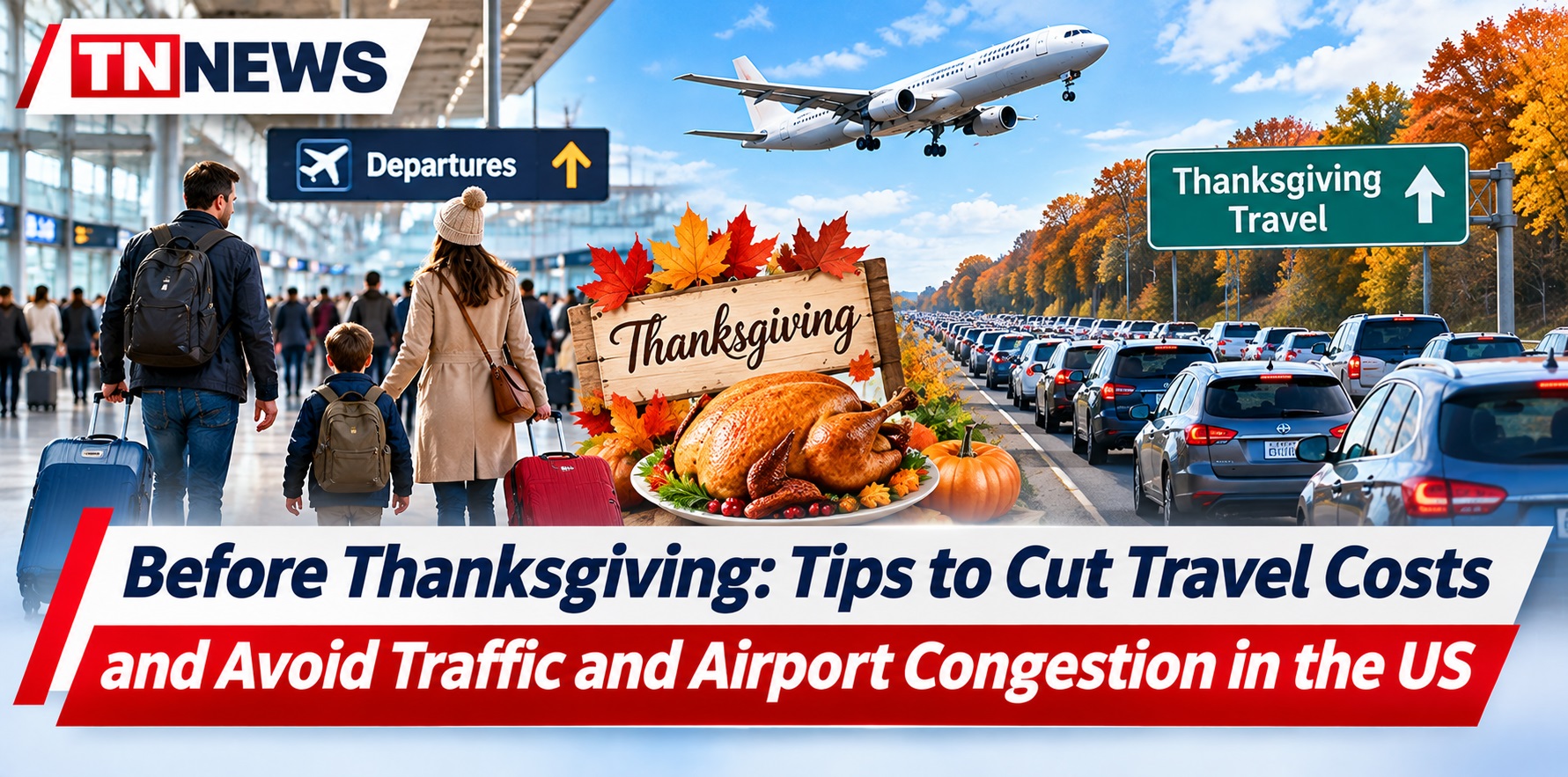
Thanksgiving Travel Demand Puts Pressure on US Transport Networks and Household Budgets
The Thanksgiving holiday is expected to generate one of the largest annual movements of travelers across the United States, with millions of Americans preparing to visit family and friends despite higher transportation costs and the prospect of crowded roads and airports.
The American Automobile Association estimates that 81.5 million people will travel at least 50 miles from home during the holiday period. Around 90% of them are expected to drive, making private vehicles the dominant mode of transportation and placing considerable pressure on the country's highway network.
The scale of expected demand highlights the economic importance of seasonal travel while exposing households to higher expenses and potential disruptions during a period when transportation infrastructure operates under exceptional pressure.
Road Travel Dominates the Holiday Rush
With approximately nine out of every ten holiday travelers expected to use cars, congestion is likely to be concentrated on major highways and routes connecting large cities with suburban and regional destinations.
Tuesday and Wednesday are expected to experience particularly heavy traffic, especially during afternoon and evening periods. Travelers with flexible schedules may reduce their exposure to congestion by leaving early in the morning or postponing departure until Thanksgiving Day.
The concentration of journeys over a relatively short period creates additional challenges for motorists, transportation authorities and businesses operating along major travel corridors.
Fuel expenses, vehicle maintenance and the time spent in traffic can significantly increase the overall cost of holiday journeys. Basic vehicle preparation, including checking tire pressure, reducing unnecessary weight and maintaining steady driving speeds, can help improve fuel efficiency.
Motorists are also encouraged to carry emergency supplies such as drinking water, food, flashlights, first-aid materials, basic tools and clothing suitable for changing weather conditions.
Airports Prepare for Millions of Passengers
Air travel will represent another major pressure point during the holiday period.
The Transportation Security Administration expects to screen approximately 17.6 million passengers, reflecting the substantial demand placed on airport facilities and security operations.
Passengers are advised to arrive around two hours before domestic departures and three hours before international flights. These time allowances are particularly relevant during periods of increased passenger volumes, when check-in procedures, baggage handling and security screening may take longer than usual.
Travelers should also review airport security requirements before packing. Liquids and spreads exceeding 3.4 ounces generally need to be placed in checked baggage, while solid food products can be carried through security checkpoints.
For airlines and airport operators, the holiday rush represents a significant operational challenge involving passenger management, aircraft scheduling and the coordination of ground services.
Higher Airfares Increase the Financial Burden
The cost of reaching holiday destinations has become an important consideration for American households, with higher airfare prices adding pressure to seasonal travel budgets.
Travelers seeking to manage expenses may benefit from considering alternative departure dates, comparing different airlines or checking airports outside their immediate area.
However, the lowest advertised ticket price does not necessarily represent the cheapest overall journey. Baggage charges, seat selection, change fees and other additional services can significantly affect the final amount paid.
A more comprehensive comparison of total travel expenses is therefore essential when selecting flights.
For airlines, the Thanksgiving period creates an opportunity to benefit from strong seasonal demand. At the same time, higher ticket prices and additional service charges may influence consumer choices, particularly among families managing multiple travel expenses.
Technology and Weather Add to Travel Uncertainty
This year's holiday period also coincides with concerns about recent aviation technology problems and forecasts of unsettled weather in several regions.
These factors introduce additional uncertainty into an already demanding travel schedule. Weather-related disruptions can affect airport operations, flight connections and road conditions, while technology-related problems may complicate airline scheduling and passenger services.
Travelers are consequently encouraged to monitor airline notifications, check airport updates and review weather forecasts throughout their journeys.
Maintaining flexible schedules and allowing additional time for connections can help reduce the consequences of unexpected changes.
Travel Planning Becomes an Economic Necessity
The Thanksgiving travel rush illustrates how seasonal demand can affect both transportation infrastructure and household spending.
For consumers, the main challenge is balancing the desire to travel with the rising cost of transportation, accommodation and related services. For airlines, airports and road-service businesses, the holiday period represents a major concentration of demand that requires careful operational planning.
The ability to compare prices, choose less congested departure times and prepare vehicles or travel documents in advance can make a measurable difference to the overall experience.
With 81.5 million Americans expected to travel, preparation and flexibility will remain essential throughout the holiday period. The combination of higher prices, crowded transport networks and potential disruptions makes advance planning particularly important for anyone intending to travel across the United States.
News You Should See
Before Thanksgiving: Tips to Cut Travel Costs and Avoid Traffic and Airport Congestion in the US
Dollar Holds Steady as US Inflation Data and Federal Reserve Decision Approach
US Appeals Court Ends Justice Department Lawsuit Targeting 20,000 California Ballots
Democrats Win Historic House Majority, Reshaping Washington's Political Landscape
Thanksgiving Storm Threatens Major US East Coast Travel Routes With Flooding and 60 MPH Winds
Manchester City Prepare for Tactical Battle Against Napoli in Champions League
Latest News
About 81.5 million Americans are expected to travel for Thanksgiving, facing higher airfare, heavy road traffic and crowded airports. Discover key travel preparations and cost-saving tips.
The dollar index holds near 103.85 as investors await US inflation and GDP figures, with December rate expectations and global monetary policy shaping currency markets.
The 9th Circuit Court of Appeals approved the Justice Department's request to dismiss its lawsuit targeting approximately 20,000 California ballots, ending a dispute over federal election oversight and state authority.
Democrats secure at least 259 House seats and a 56-seat Senate majority, setting the stage for major changes in US healthcare, spending and congressional oversight.
A developing Thanksgiving storm threatens the US East Coast with heavy rain, coastal flooding and wind gusts of up to 60 mph, raising concerns about airport operations, road travel and holiday transportation in major cities.
Manchester City host Napoli in a key Champions League clash, with Haaland, Foden and Cherki expected to lead the English side's attacking efforts.
Arsenal prepare to host Borussia Dortmund in a crucial Champions League clash, with injuries and tactical decisions potentially shaping the outcome.
The Hunger Games: Sunrise on the Reaping earns $225 million worldwide in its opening weekend, strengthening the franchise's box-office position.
Harvard research estimates that 403 US hyperscale data centers consume up to 99 terawatt-hours annually, raising concerns about AI's environmental impact.