Australia Makes Second $525M AUKUS Payment to U.S. as Pact Faces Review
Australia fulfills part of its $239 billion AUKUS submarine pact as Washington reviews cost-sharing and strategic commitments.

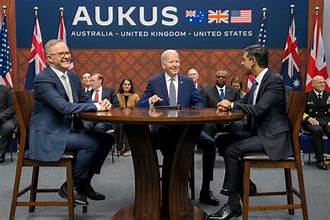
Australia Makes $525 Million AUKUS Payment to U.S. as Strategic Pact Faces Review
On July 23, Australian Prime Minister Anthony Albanese confirmed a second payment of $525 million to the United States as part of the ongoing AUKUS nuclear submarine agreement, according to Reuters. This follows a $500 million installment made in February, bringing total payments so far to over $1 billion.
The payments are part of a massive $239 billion defense commitment Australia made in 2023. While the latest installment helps keep the agreement on track, $2.2 billion of a $4 billion obligation for 2025 remains unpaid.
Why It Matters: U.S. Review of AUKUS Pillar I
The payment comes at a critical time as the United States continues reviewing Pillar I of the AUKUS pact — the component that includes the transfer of nuclear-powered submarines to Australia. The review began in June due to concerns over:
Industrial capacity
Cost-sharing
Strategic return on investment
This new payment reduces the risk that Washington could scrap or revise Pillar I, at least in the short term. It also appeases U.S. concerns around burden-sharing, which may lead to less severe financial demands in any future revisions.
Tensions Over Broader U.S. Demands
Despite the financial commitment, Australia has resisted key U.S. demands, including:
Raising defense spending to 3%–3.5% of GDP (currently around 2%)
Committing to use the submarines in a Taiwan contingency—a move Australia is reluctant to make publicly, especially as Albanese pursues warmer ties with China.
Albanese’s recent July 12–18 visit to Beijing reflects his government’s desire to balance strategic ties with the U.S. while avoiding confrontation with China.
What’s Next for AUKUS
The $525 million payment is in line with Australia’s scheduled contributions, signaling Canberra’s intent to uphold the deal even as the U.S. reevaluates its terms. Australia is also expected to continue investing in:
Submarine crew training
Infrastructure development
Technology integration
These efforts aim to demonstrate long-term commitment to AUKUS, despite geopolitical frictions and budgetary strain.
Australia’s latest installment under the AUKUS pact represents a strategic gesture to reinforce its alliance with the United States. While it may delay or soften U.S. revisions to the agreement, unresolved issues—particularly on military spending and regional commitments—mean that tensions within the alliance are far from over.
News You Should See
Vancouver Launches 12th Annual Korey’s Joy Drive to Support Local Families
Agassi Sports Entertainment Joins Sinclair and Tennis Channel to Expand Padel and Pickleball
Vizrt Completes Chyron Acquisition to Expand Global Broadcast Technology Capabilities
Anyma and Jean-Michel Jarre Announce Major Pyramids of Giza Concerts for 2027
Arsenal Women Strike First Against Barcelona in Champions League Showdown
New Egypt Group Backs Latin Social Organization’s Thanksgiving Food Drive in Bayonne
Latest News
Vancouver, Washington launches its 12th Korey’s Joy Drive, collecting toys, holiday gifts and winter supplies for families through local nonprofits.
Agassi Sports Entertainment partners with Sinclair and Tennis Channel to promote padel and pickleball through nationwide television and digital platforms.
Vizrt completes its acquisition of Chyron, combining broadcast graphics technologies to expand cloud production and real-time augmented reality solutions.
Anyma and Jean-Michel Jarre announce two electronic music performances at Egypt's Great Pyramids in spring 2027, with presale tickets starting November 18.
Arsenal Women take a 1-0 lead over Barcelona after Frida Maanum's 21st-minute goal in their 2026-27 UEFA Women's Champions League encounter.
New Egypt Group supports Latin Social Organization’s Thanksgiving Food Drive in Bayonne by contributing food supplies to help local families prepare for the holiday.
Shorter winter days can affect appetite, sleep and energy. A dietitian explains the biological reasons behind seasonal cravings and the importance of meal planning.
Medical leaders debate whether AI will improve diagnosis and healthcare delivery or weaken doctors' clinical skills through growing reliance on technology.
A study published in PNAS Nexus suggests that differences in immune cells may help explain variations in obesity and fat distribution between males and females.