Archer Acquires Former Rival Wisk in a Bold Move to Build an Autonomous Aviation Platform
The deal brings Wisk, SkyGrid and Insitu under Archer as the eVTOL company expands beyond air taxis into autonomy, defense and airspace technology

Archer Aviation's acquisition of Wisk Aero marks a striking transformation in the competitive landscape of electric aviation. Three years after the two companies settled a major intellectual-property dispute, Archer is turning its former rival into a core component of a much broader aerospace strategy.
Under the agreement, Boeing will transfer Wisk Aero, digital airspace and air-traffic management company SkyGrid, and drone manufacturer Insitu to Archer in exchange for newly issued Archer shares. Boeing will receive shares representing 19.75% of Archer's outstanding stock immediately before the transaction closes, resulting in an approximately 16.5% stake after completion.
The structure is strategically significant because the transaction is not simply about acquiring another eVTOL developer. It combines three businesses operating across different layers of the emerging autonomous aviation ecosystem.
Wisk brings autonomous electric aircraft technology. SkyGrid contributes digital infrastructure for airspace and air-traffic management, while Insitu adds an established unmanned-aircraft business with defense applications.
For Archer, the combination offers an opportunity to evolve from an electric-air-taxi company into a diversified aerospace technology platform.
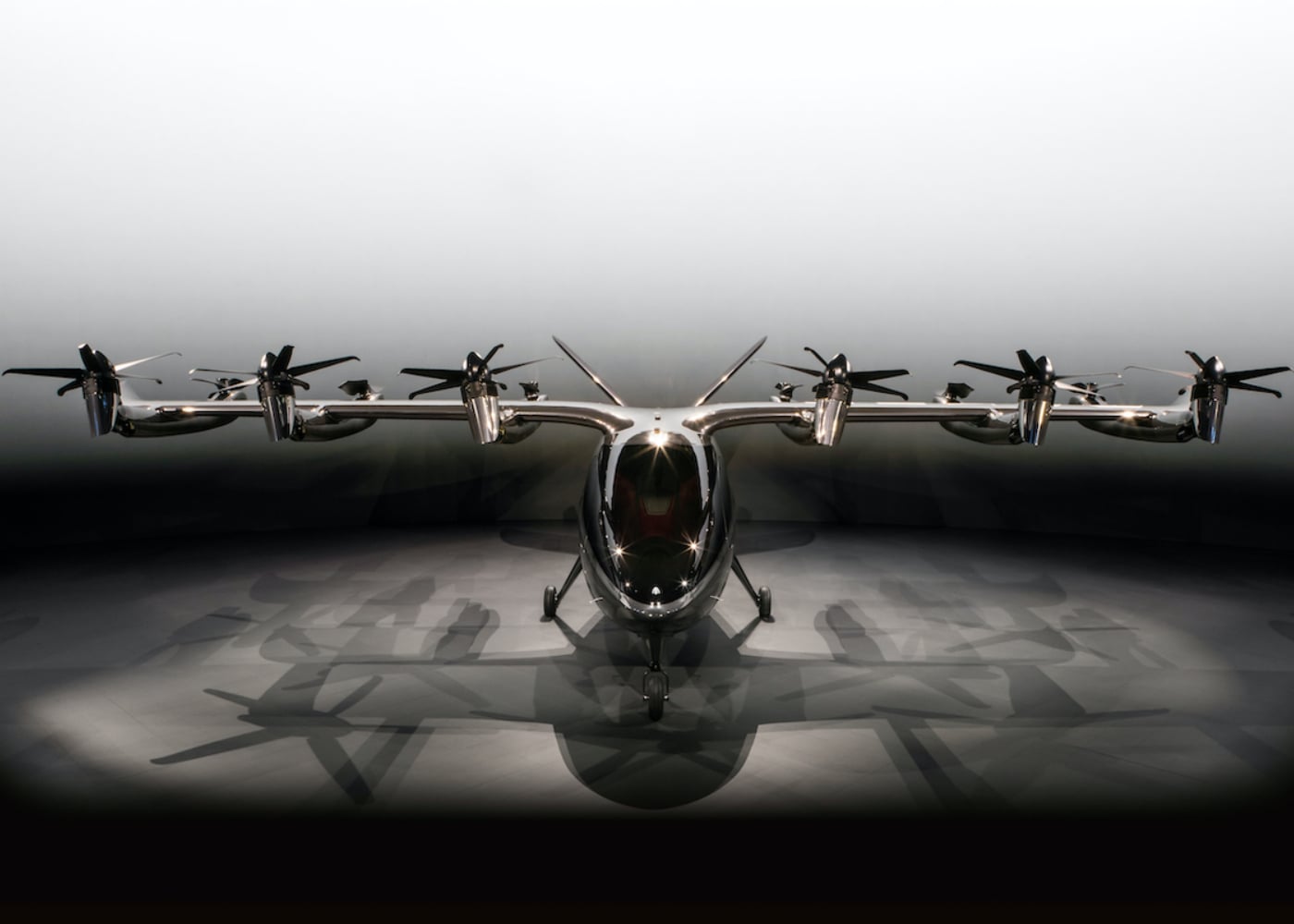
That shift comes at a critical moment for the eVTOL sector. Companies developing electric vertical takeoff and landing aircraft still face lengthy certification processes, infrastructure requirements and the challenge of establishing commercially viable operations. Archer itself continues to develop its all-electric Midnight aircraft and recently completed a piloted round-trip flight between Salinas Municipal Airport and Monterey Regional Airport as it prepares for operations later this year under the White House's eVTOL Integration Pilot Program.
The acquisition therefore gives Archer additional strategic options while its passenger-aircraft business moves toward commercialization.
The most valuable asset may be Wisk's experience with autonomous flight.
Autonomous aviation requires much more than an aircraft capable of vertical takeoff and landing. Vehicles must interpret their environment, navigate safely, respond to unexpected conditions and operate within increasingly complex airspace rules.
Wisk has spent years pursuing precisely this challenge.
The company traces its roots to Kittyhawk, the electric aviation startup backed by Google co-founder Larry Page and led by Sebastian Thrun. Its Cora aircraft program was spun out in 2019 into a joint venture with Boeing, which was subsequently renamed Wisk. Boeing invested another $450 million in Wisk in 2022 and made the company a wholly owned subsidiary in 2023.
Archer is therefore acquiring more than an aircraft program. It is acquiring accumulated knowledge around autonomous flight, certification, testing and system development.
That could shorten development timelines and reduce the need to recreate capabilities internally.
The deal is also a notable example of how competition in emerging technology markets can evolve into consolidation.
In 2021, Wisk sued Archer over alleged theft of confidential information and intellectual property. Archer responded with a countersuit seeking $1 billion in damages. The dispute ended in 2023 with an unusual settlement that included a new technology relationship, under which Archer agreed to make Wisk its exclusive provider of autonomous technology.
The former competitors have now moved from litigation to integration.
From a corporate-strategy perspective, this is a powerful example of converting a competitive threat into an internal capability.
Instead of maintaining two separate technology-development efforts, Archer can bring Wisk's autonomy expertise into its own organization and align it with its aircraft, defense and commercial plans.
However, the deal also changes the company's risk profile.
Archer has been expanding beyond passenger mobility into defense. It raised $430 million for its Archer Defense program in 2024 and another $300 million from institutional investors in 2025. The company also entered an exclusive agreement with Anduril to jointly develop a hybrid gas-and-electric vertical takeoff and landing aircraft for defense applications.
Insitu strengthens that strategy by adding an established drone business rather than another early-stage technology project.
This diversification could become particularly important because passenger eVTOL commercialization is likely to take time.
Defense applications can provide another market for autonomous aviation technologies while Archer works through the regulatory and operational requirements of passenger transportation.
The addition of SkyGrid creates a third strategic layer.
As autonomous aircraft become more common, the infrastructure used to coordinate their movements could become an important part of the aviation value chain.
Aircraft manufacturers may ultimately need to operate within digital systems that connect vehicles, operators, regulators and airspace information.
By acquiring a company focused on this layer, Archer is positioning itself beyond the traditional role of an aircraft manufacturer.
The resulting model could encompass aircraft, autonomy, airspace management and defense systems.
That is a significantly broader commercial proposition than selling air taxis.
The transaction is also strategically important for Boeing.
Rather than maintaining direct ownership of Wisk, Insitu and SkyGrid, Boeing is exchanging these businesses for a substantial ownership position in Archer while retaining access to Wisk's autonomous technology.
The structure allows Boeing to remain financially connected to Archer's future while reducing its direct exposure to businesses outside its immediate corporate priorities.
For Boeing, this is effectively a portfolio strategy.
For Archer, it is a growth strategy.
The two approaches meet through equity ownership and technological cooperation.
Boeing's continued involvement also gives Archer an important industrial relationship with one of the world's largest aerospace companies.
At the same time, the arrangement creates expectations that Archer will be able to integrate the acquired businesses without losing their individual strengths.
That may be one of the most difficult parts of the transaction.
Wisk, Insitu and SkyGrid serve different markets, customers and technological functions. Bringing them together could create synergies, but it could also create organizational complexity.
Archer will need to demonstrate that the businesses form a coherent ecosystem rather than simply a larger corporate portfolio.
The company's brand identity is likely to evolve as well.
Archer has traditionally been identified with electric air taxis and urban air mobility.
Its new structure points toward a much broader identity centered on autonomous aerospace systems.
Artificial intelligence and autonomy can become the common technological foundation connecting passenger aircraft, defense platforms and airspace infrastructure.
This could give Archer a stronger position as the aviation industry increasingly moves toward intelligent automation.
The concept of physical AI is particularly relevant to this transition.
Unlike software operating in purely digital environments, autonomous aircraft and drones must make decisions in the physical world, under strict safety constraints and with immediate consequences.
That makes aerospace one of the most demanding environments for autonomous AI.
A company capable of combining the physical aircraft with the intelligence controlling it could therefore capture more value across the aviation stack.
The competitive implications extend beyond Archer and Wisk.
The eVTOL industry has largely been viewed as a race among companies such as Archer and Joby to bring electric air taxis into commercial service.
But Archer's latest move suggests that the next stage of competition could be broader.
The winners may be determined not only by aircraft performance, but also by autonomy, software, defense capabilities and control of the digital infrastructure surrounding aircraft.
That could change the economics of the industry.
A company with multiple revenue sources can potentially withstand delays in one segment better than a company dependent on a single aircraft program.
For Archer, defense and airspace technology could provide additional commercial opportunities while passenger mobility develops.
Yet diversification does not remove execution risk.
Archer must still complete certification of its passenger aircraft, scale production and establish reliable commercial operations.
It must also integrate three businesses with different operating models.
The success of the transaction will ultimately depend on whether Archer can turn these assets into measurable technological and financial advantages.
The immediate market response was positive, with Archer shares rising following the announcement.
But the long-term test will be whether the company can execute the larger strategy.
Archer is no longer positioning itself simply as an electric-aircraft startup.
It is attempting to become a company spanning autonomous aviation, airspace software, defense drones and electric aircraft.
For Boeing, the transaction offers a way to preserve exposure to autonomous-flight technology while simplifying its ownership structure.
For Archer, it provides technology, talent, industrial relationships and additional business lines.
For the broader aviation industry, the transaction signals that the race toward advanced air mobility may be entering a new phase in which consolidation becomes as important as technological innovation.
The future competition may no longer be about which company builds the most capable air taxi.
It could increasingly be about which company can control the broader system that makes autonomous aviation commercially viable.
By acquiring its former rival, Archer is making a bet on precisely that future.
News You Should See
2026 Nobel Medicine Prize Honors Scientists Behind Optogenetics Breakthrough
Oil Prices Edge Lower as Stronger Middle East Exports and G7 Reserves Ease Supply Concerns
Trump Offers U.S. Assistance to Russia After Death at Siberian Plague Research Institute
Trump Takes Economic Message to Nebraska as GOP Faces Rising Cost-of-Living Pressure
U.S. Appeals Court Weighs Trump Administration’s $2.6 Billion Harvard Funding Fight
U.S. Midterm Elections Begin With Resilient Jobs Market and Persistent Cost Pressures
Latest News
The 2026 Nobel Prize in Physiology or Medicine honors Karl Deisseroth, Peter Hegemann and Georg Nagel for pioneering research behind optogenetics and its impact on neuroscience.
Oil prices edged lower as stronger Middle Eastern exports and a planned G7 release of 100 million barrels eased immediate supply concerns, while Gulf security risks and the Strait of Hormuz kept markets alert.
President Donald Trump said the United States would help Russia if needed after a laboratory worker died at a Siberian plague research institute, as Russian authorities imposed precautionary quarantine measures.
Trump’s Nebraska campaign stop highlights rising fuel and grocery costs, beef prices and growing economic pressure on Republicans ahead of the November midterm elections.
A U.S. appeals court is reviewing the Trump administration’s effort to cut Harvard’s federal research funding, with more than $2.6 billion at stake.
The U.S. enters the 2026 midterm elections with unemployment at 4.2%, while higher living and energy costs create economic pressure for households and businesses.
US services growth eased in September as input prices climbed to their highest level since July 2022, with fuel costs, supply-chain disruptions and strong demand increasing pressure on businesses.
Rising Treasury yields are increasing U.S. borrowing costs as Washington manages record debt, persistent inflation and strong economic demand, narrowing its policy options.
A EGP 16 million corporate partnership will establish and equip a bone marrow transplant unit at Cairo’s Coptic Hospital, supporting access to specialized treatment for patients.