Apple’s Next Hardware Chapter: A Foldable iPhone and a New Test for the Brand’s Design Strategy
Apple is expected to introduce its first foldable iPhone alongside new iPhone, AirPods, and HomePod developments, marking a broader shift in product design, premium positioning, and the company’s hardware ecosystem.

Apple is preparing for one of its most closely watched product launches in recent years, with expectations centered on a potential first entry into the foldable smartphone market and a broader expansion of its connected hardware ecosystem.
The upcoming launch arrives at an important moment for the company. Apple has built its global identity around a combination of industrial design, tightly integrated hardware and software, premium pricing, and a carefully controlled product ecosystem. The expected introduction of a foldable iPhone would therefore represent more than the arrival of another smartphone model. It would signal Apple's move into a product category that has already been explored by several competitors for years.
According to expectations surrounding the company's September launch event, Apple may introduce its first foldable iPhone, while also presenting developments related to the iPhone 18 lineup, AirPods, HomePods, and its broader artificial intelligence strategy.
The foldable device is expected to be one of the most important announcements.
Reports suggest that Apple could position the product under the name "iPhone Ultra," creating a new premium tier within the iPhone family. If introduced as expected, the device would arrive more than five years after Samsung launched its first foldable smartphone.
Apple's delayed entry into the category reflects one of the company's most recognizable product strategies. Rather than always being the first company to introduce a new hardware concept, Apple has often waited for a category to develop before entering it with a product designed around its own approach to usability, integration, and industrial design.
That strategy creates both an advantage and a risk.
Entering later allows Apple to observe the technical weaknesses and consumer concerns surrounding an emerging product category. At the same time, a delayed launch raises expectations that Apple's version must deliver a noticeably different or improved experience.
For foldable smartphones, the challenge is particularly complex.
The concept combines multiple design problems in one device. A foldable phone must provide a display large enough to justify the new form factor while remaining compact enough to fit comfortably into a pocket. It must also manage the mechanical demands created by repeated folding, maintain structural durability, support efficient multitasking, and deliver an experience that feels natural whether the device is open or closed.
Apple is expected to approach these issues through a design focused on portability and a larger internal workspace.
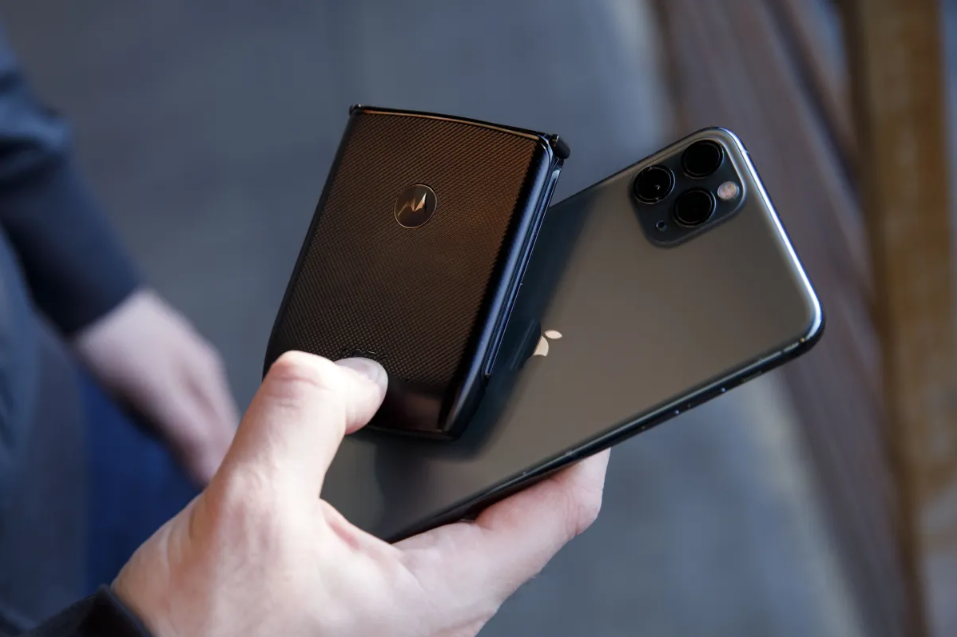
Reports indicate that the foldable iPhone may feature a 5.5-inch external display that expands into a 7.8-inch screen when opened. In its folded state, the device is expected to appear shorter and wider than a traditional iPhone, while the unfolded display could offer an experience closer to a compact iPad.
This creates an important strategic position for the device.
Rather than functioning only as a smartphone with a larger screen, the foldable iPhone could serve as a bridge between Apple's phone and tablet categories.
The economic importance of that positioning is significant.
Smartphones remain one of the world's most established consumer technology categories, while foldable devices have remained largely within a smaller premium segment. Apple could use its brand strength to expand consumer interest in foldable devices, but the company will also need to convince customers that the new design delivers enough practical value to justify a significantly higher price.
Reports suggest that the device could cost more than $2,000.
At that price level, the foldable iPhone would not simply compete with other premium smartphones. It would become part of Apple's ultra-premium hardware strategy, aimed at customers willing to pay for new technology, distinctive industrial design, and access to the company's ecosystem.
The price also highlights a central economic challenge.
Foldable smartphones require more complex displays, mechanical components, and engineering solutions than conventional phones. These additional costs must be balanced against consumer willingness to pay.
Apple has faced similar challenges with other high-priced products, including the Vision Pro headset. However, the smartphone market operates differently from the emerging mixed-reality market.
Consumers replace and use smartphones on a much larger scale, which could give Apple a stronger foundation for introducing a new premium form factor.
The success of the device may therefore depend on whether Apple can transform foldability from a technical feature into a meaningful part of everyday use.
The expected display design will play a central role in that effort.
One of the most persistent criticisms of foldable smartphones has been the visible crease that appears where the screen bends. The crease serves as a reminder of the mechanical compromise behind the product's flexible display.
Reports indicate that Apple may have developed a solution that makes the crease less noticeable.
If successful, this would be important not only from an engineering perspective but also from a branding perspective.
Apple's design identity has historically been associated with polished surfaces, visual simplicity, and products that attempt to hide technical complexity behind intuitive physical experiences.
A foldable display with a highly visible crease could conflict with that design language.
Reducing the visibility of the crease would therefore support the broader goal of making the technology feel less experimental and more consistent with Apple's established hardware identity.
The company is also expected to make several design compromises in order to keep the device sufficiently thin and practical when folded.
Reports suggest that the foldable iPhone may not include a telephoto camera. Instead, it could use a dual-camera system featuring a primary camera and an ultra-wide lens, similar to the approach used in some of Apple's less expensive iPhone models.
This decision would be notable given the expected price of the device.
Customers paying more than $2,000 may expect the most advanced camera system available in the iPhone lineup. The absence of a telephoto lens would therefore demonstrate how form-factor constraints can influence product priorities.
Apple would effectively be making a design decision about which features are essential to the identity of the foldable device.
The company may be prioritizing thinness, portability, and the foldable experience over maximum camera flexibility.
This illustrates a broader principle of product strategy.
Innovation often requires trade-offs.
A new form factor cannot always include every feature from an existing premium product without creating compromises related to size, weight, battery capacity, cost, or structural complexity.
The expected foldable iPhone may also support MagSafe, Apple's magnetic system for wireless charging and accessories.
MagSafe would help maintain continuity with the existing iPhone ecosystem and allow the new device to remain compatible with a growing range of accessories.
Maintaining ecosystem compatibility is strategically important for Apple.
The company does not sell individual products in isolation. Its competitive strength is heavily connected to the relationships between devices, services, software, and accessories.
A new form factor must therefore fit into that ecosystem without making existing accessories and workflows feel disconnected.
Another reported design change involves biometric authentication.
To create additional internal space, Apple may replace Face ID on the foldable device with a Touch ID fingerprint sensor integrated into the side button.
For long-time iPhone users, such a decision would represent a change from the authentication system that has become central to Apple's modern smartphone design.
However, it would also reflect a practical engineering calculation.
The foldable form factor introduces different internal space requirements, and a side-mounted fingerprint sensor could provide an efficient alternative while preserving secure and convenient access.
The change would demonstrate that Apple's design strategy is not based solely on maintaining familiar features. In certain situations, the company may reconsider established design decisions when a new product architecture requires a different solution.
On the software side, the foldable device is expected to support side-by-side multitasking, allowing users to operate two applications simultaneously across the expanded display.
Despite its larger internal screen, the device is expected to continue using iOS rather than iPadOS.
That choice is strategically important.
Apple would be introducing a device that visually and physically overlaps with the iPad while maintaining its identity as an iPhone.
This could allow the company to preserve the familiarity of the iPhone experience while expanding the range of tasks that can be performed on the device.
The challenge will be to ensure that iOS can take full advantage of the larger display without creating an experience that feels like a compromise between a phone and a tablet.
The software design will therefore be as important as the physical hinge and display.
A successful foldable device requires the operating system to understand the changing shape of the hardware.
Applications must transition smoothly between folded and unfolded states, multitasking must feel intuitive, and the interface must make productive use of the additional screen space.
This is where Apple's integrated control over hardware and software could become one of its strongest competitive advantages.
The company designs the processor, operating system, applications, accessories, and many aspects of the broader ecosystem around its devices.
That level of integration could allow Apple to design the foldable experience as a complete product environment rather than simply adapting existing software to a flexible screen.
At the same time, Apple is expected to continue serving consumers who have no interest in foldable devices.
The company may also announce new products within the iPhone 18 family.
Reports have pointed to the expected arrival of the iPhone 18 Pro and iPhone 18 Pro Max. However, the standard iPhone 18 may not arrive at the same time.
Instead, expectations suggest that Apple could release the standard model approximately six months after the September launch.
Such a release pattern would represent an important departure from Apple's traditional iPhone strategy, which has generally involved introducing the main models together.
Launching premium devices before the standard model could create a new product cycle.
From a business perspective, this could allow Apple to concentrate attention and early demand on higher-margin products before expanding the lineup to a broader consumer market.
The strategy could also help distribute marketing activity and product launches across different periods of the year.
However, changing the launch sequence could also alter consumer expectations and affect purchasing decisions.
Customers who normally wait for the full iPhone lineup may need to decide whether to purchase a premium model immediately or wait for a more affordable version.
The potential change demonstrates how hardware strategy is connected directly to revenue design.
Product timing influences not only manufacturing and supply chains but also how consumers perceive value and how the company manages demand.
The upcoming launch may also include developments beyond the iPhone.
Apple is expected to continue expanding its artificial intelligence strategy, including a Gemini-powered update to Siri.
The AI development is particularly important because Apple has historically positioned itself differently from many companies competing aggressively in the generative AI market.
Rather than building its brand primarily around large public AI models, Apple has focused heavily on the integration of technology into its devices and operating systems.
The future of Siri could therefore become an important test of how Apple integrates artificial intelligence into a consumer product ecosystem.
The expected connection between Siri and Gemini suggests that Apple may increasingly combine its own hardware and software strengths with external AI capabilities.
This approach could allow Apple to focus on user experience, device integration, privacy controls, and ecosystem design while using advanced external models to expand the capabilities of its digital assistant.
The relationship between artificial intelligence and hardware may also become more visible through Apple's HomePod strategy.
The company is expected to refresh the HomePod, its smart speaker platform designed to compete with products such as Amazon's Echo devices.
References to unreleased HomePod products were reportedly discovered by users examining a preview build of macOS.
A new HomePod could become more significant as Apple develops a more capable version of Siri.
Smart speakers are no longer simply audio devices.
They are increasingly positioned as interfaces between users, artificial intelligence, connected home systems, and digital services.
For Apple, improving the HomePod could therefore support a broader strategy of making AI part of everyday physical environments.
The most unexpected development connected to the upcoming launch concerns AirPods.
Apple appears to be exploring AirPods with integrated cameras.
References discovered in a macOS preview included a video showing a person wearing the AirPods while interacting with a book.
The concept appears to be connected to Apple's Visual Intelligence strategy.
According to the preview material, users could potentially look at an object and ask the system to save relevant information for later.
The feature would represent a major evolution in the role of earbuds.
Traditional wireless earbuds are designed primarily for audio.
Camera-equipped AirPods could transform them into a new type of wearable interface capable of connecting visual information with artificial intelligence.
This concept has important implications for product design.
The cameras would allow the device to collect information about the surrounding environment, while the AI system could interpret that information and respond to the user's requests.
The result could be a more contextual computing experience.
Instead of interacting with technology only through a screen, keyboard, or voice command, users could potentially allow their devices to understand parts of the physical world around them.
However, camera-equipped wearables also introduce significant privacy concerns.
Consumers may be uncomfortable with devices that can observe what they observe.
Similar concerns have appeared around other camera-enabled wearable products, particularly those developed as smart glasses.
For Apple, privacy will therefore become a central part of the design challenge.
The company has spent years building a brand identity that emphasizes privacy and control over personal data.
Introducing cameras into a highly personal device such as AirPods could test that identity.
Apple will need to demonstrate that the technology can provide useful functionality without creating the perception that users or people around them are being constantly recorded.
Reports suggest that the cameras may function primarily as visual sensors for Siri rather than as traditional cameras designed to capture photographs and videos.
The components could collect visual information at low resolution, allowing the AI system to understand aspects of the environment without necessarily creating conventional media recordings.
This approach could represent an attempt to design the technology around contextual understanding rather than surveillance.
The distinction would be strategically important.
Apple's challenge is not only to create new hardware capabilities but also to define how consumers understand those capabilities.
A wearable camera positioned as an AI sensor may be perceived differently from a camera positioned as a recording device.
Language, interface design, privacy controls, and transparency will therefore become essential elements of the product experience.
The expected combination of foldable smartphones, AI-powered assistants, smart speakers, and camera-enabled earbuds also reveals a broader direction for Apple's ecosystem.
The company appears to be moving toward a future in which devices operate as connected points of access to artificial intelligence.
The iPhone remains the central personal computing device.
A foldable version could expand its productivity and display capabilities.
AirPods could become a more contextual and intelligent interface.
HomePods could provide a voice-based connection between AI and the home environment.
Siri could serve as the software layer connecting these devices.
This design strategy would allow Apple to approach artificial intelligence through hardware relationships rather than through a single standalone AI product.
The company could create value by making AI available across multiple physical devices, each designed for a different context.
From an economic perspective, this ecosystem approach could also strengthen customer retention.
Consumers who purchase several connected Apple devices are more deeply integrated into the company's platform.
Each additional product can increase the value of the broader ecosystem and create stronger incentives to remain within it.
The foldable iPhone could play an important role in this strategy.
As a premium device with a price expected to exceed $2,000, it would target a relatively affluent customer segment.
However, its strategic value may extend beyond direct sales volume.
The device could serve as a demonstration of Apple's design capabilities and establish a new aspirational tier within the iPhone brand.
This is a familiar approach within the luxury and premium technology markets.
A highly visible flagship product can strengthen the perception of innovation across an entire product family, even if only a relatively small number of consumers purchase the most expensive version.
The "Ultra" positioning could therefore become a branding tool as well as a product category.
It would communicate technological ambition and exclusivity while creating a clearer distinction between Apple's standard, professional, and ultra-premium devices.
The launch also arrives during a broader period of transition for Apple.
Expectations are particularly high as Tim Cook hands over the chief executive role to former Vice President of Hardware Engineering John Ternus.
A major new form factor would therefore carry symbolic importance beyond its technical specifications.
The foldable iPhone could become associated with the beginning of a new era in Apple's hardware leadership.
The company's ability to execute this transition will depend on more than individual product announcements.
Apple must demonstrate that it can continue to define meaningful product categories while maintaining the design consistency and ecosystem integration that have become central to its identity.
The upcoming launch is therefore expected to provide a clearer view of Apple's strategy across several dimensions.
The foldable iPhone will test the company's ability to enter an established category and redesign it around its own philosophy.
The iPhone 18 strategy may reveal changes in product timing and market segmentation.
The development of Siri and HomePod will demonstrate how Apple intends to compete in the AI-driven computing environment.
Camera-equipped AirPods could show how the company imagines the future of wearable interfaces.
Together, these products suggest that Apple is not simply preparing another annual hardware refresh.
The company appears to be examining how its devices should evolve as smartphones, artificial intelligence, wearables, and connected environments become increasingly interconnected.
For Apple, the most important question may not be whether it can build a foldable phone.
Other companies have already demonstrated that the technology is possible.
The greater challenge is whether Apple can make the form factor feel necessary.
That has historically been one of the company's strongest capabilities: transforming a technical concept into a product experience with a clear role in everyday life.
The same challenge applies to AI-powered earbuds, smart speakers, and the next generation of digital assistants.
Technology alone will not determine the success of these products.
Their long-term value will depend on whether Apple can design interactions that feel useful, intuitive, trustworthy, and consistent with the brand's identity.
As the company prepares for its upcoming launch, the event is shaping up to be a test of several strategies at once.
It is a test of industrial design, premium pricing, product segmentation, artificial intelligence integration, ecosystem development, and brand continuity.
The products expected to appear at the event could reveal how Apple intends to position itself in the next stage of consumer technology, where the most important innovation may come not from a single device but from the way multiple devices, services, and AI systems work together.
News You Should See
2026 Nobel Medicine Prize Honors Scientists Behind Optogenetics Breakthrough
Oil Prices Edge Lower as Stronger Middle East Exports and G7 Reserves Ease Supply Concerns
Trump Offers U.S. Assistance to Russia After Death at Siberian Plague Research Institute
Trump Takes Economic Message to Nebraska as GOP Faces Rising Cost-of-Living Pressure
U.S. Appeals Court Weighs Trump Administration’s $2.6 Billion Harvard Funding Fight
U.S. Midterm Elections Begin With Resilient Jobs Market and Persistent Cost Pressures
Latest News
The 2026 Nobel Prize in Physiology or Medicine honors Karl Deisseroth, Peter Hegemann and Georg Nagel for pioneering research behind optogenetics and its impact on neuroscience.
Oil prices edged lower as stronger Middle Eastern exports and a planned G7 release of 100 million barrels eased immediate supply concerns, while Gulf security risks and the Strait of Hormuz kept markets alert.
President Donald Trump said the United States would help Russia if needed after a laboratory worker died at a Siberian plague research institute, as Russian authorities imposed precautionary quarantine measures.
Trump’s Nebraska campaign stop highlights rising fuel and grocery costs, beef prices and growing economic pressure on Republicans ahead of the November midterm elections.
A U.S. appeals court is reviewing the Trump administration’s effort to cut Harvard’s federal research funding, with more than $2.6 billion at stake.
The U.S. enters the 2026 midterm elections with unemployment at 4.2%, while higher living and energy costs create economic pressure for households and businesses.
US services growth eased in September as input prices climbed to their highest level since July 2022, with fuel costs, supply-chain disruptions and strong demand increasing pressure on businesses.
Rising Treasury yields are increasing U.S. borrowing costs as Washington manages record debt, persistent inflation and strong economic demand, narrowing its policy options.
A EGP 16 million corporate partnership will establish and equip a bone marrow transplant unit at Cairo’s Coptic Hospital, supporting access to specialized treatment for patients.