Apple’s Fall 2026 Strategy: Folding Hardware, Ambient AI and the Expansion of Its Ecosystem
From the iPhone Duo and advanced Pro cameras to AI-powered wearables, AirPods and a redesigned Health app, Apple’s latest launches reveal a strategy focused on redesigning familiar products while deepening the value of its connected ecosystem.

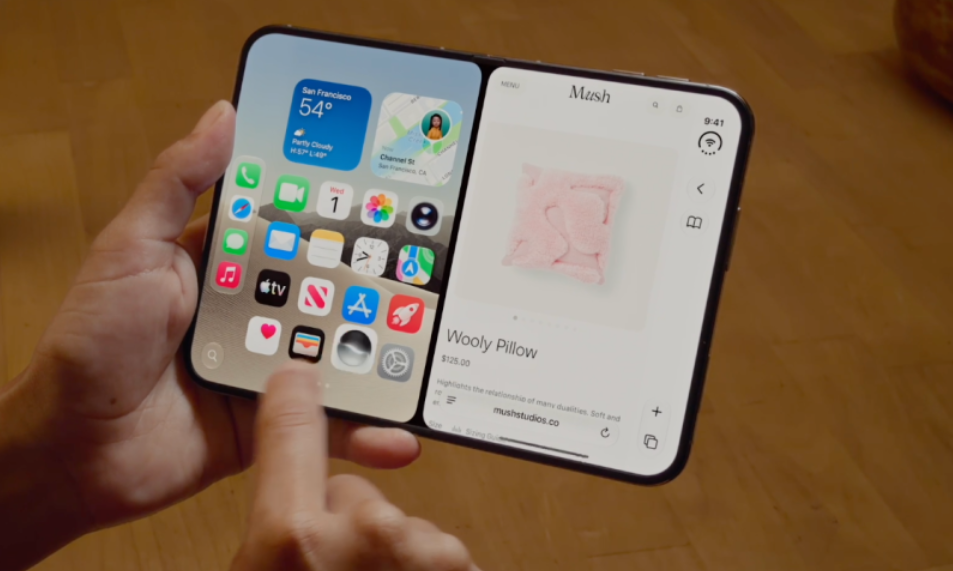
Apple’s Fall 2026 product event was more than a traditional hardware launch. The company used its first major autumn presentation under newly appointed CEO John Ternus to outline a broader direction for its product ecosystem, combining a new foldable iPhone category with camera-focused Pro devices, increasingly intelligent wearables, upgraded wireless audio products and a redesigned approach to personal health data.
The announcements collectively reveal a strategic pattern that has become increasingly important to Apple: the company is not relying on a single product to define its future. Instead, it is redesigning established categories while introducing new form factors and allowing artificial intelligence to connect more deeply with everyday devices. The result is an ecosystem strategy in which hardware design, AI capabilities, services and personal data become increasingly interconnected.
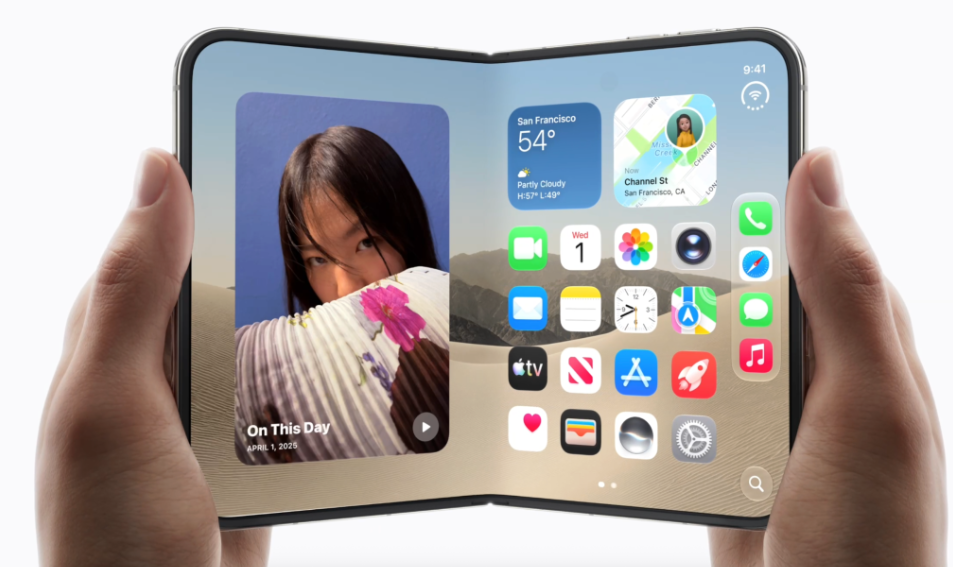
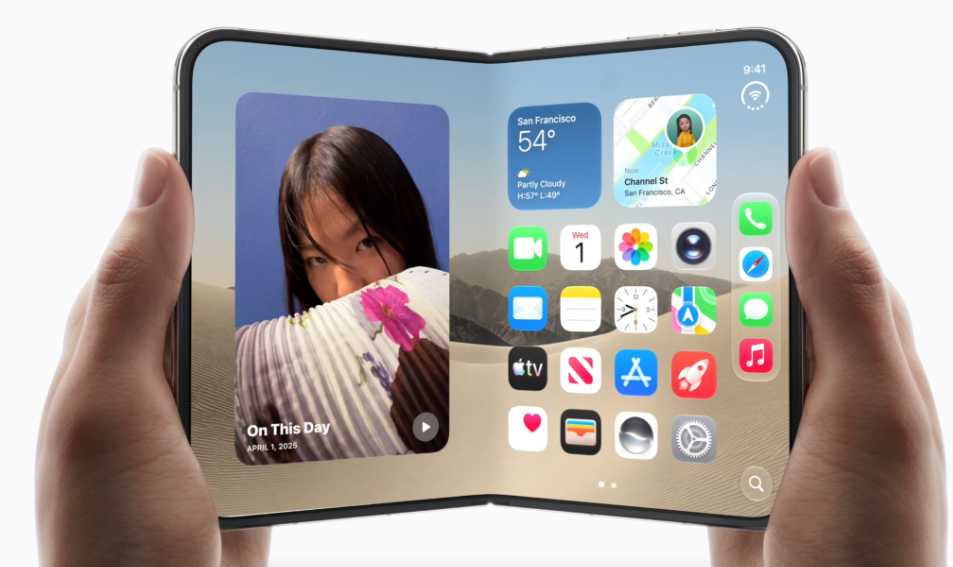
The centerpiece of the event was the iPhone Duo, Apple's first foldable smartphone and one of the most significant changes to the iPhone product line in years. The device features a 7.6-inch Retina display when unfolded and a 5.4-inch external display. Apple describes the concept as being inspired by the versatility of the iPad, positioning the device between the traditional smartphone and the larger-screen computing experience associated with tablets.
From a design strategy perspective, the iPhone Duo represents Apple's attempt to enter the foldable market without simply reproducing the existing design language of competing devices. The wider form factor is intended to create a different experience when the device is opened, particularly for activities such as watching video and working with a larger display. The internal screen also uses an under-display camera, allowing Apple to create a more continuous all-screen appearance.
The device also demonstrates how industrial design has become a central competitive factor in the foldable category. Foldable phones face a structural challenge that traditional smartphones do not: their moving components must remain durable while the product is opened and closed repeatedly throughout its life cycle. Apple says the iPhone Duo uses a Grade 5 aluminum hinge built from more than 100 specially engineered components to support smooth operation.
The hinge itself reflects a broader change in how Apple is approaching product engineering. According to the company's presentation, artificial intelligence and advanced manufacturing technologies were used during the development and production process to improve alignment and reduce imperfections. Apple also described the use of laser scanning, 3D printing and a multilayer material strategy designed to address durability challenges associated with foldable hardware.
This combination of AI and industrial engineering is strategically important because it shows that artificial intelligence is not being positioned only as a consumer-facing feature. AI is also becoming part of the process through which physical products are designed and manufactured. For Apple, this creates an opportunity to connect its software and AI ambitions with its traditional strength in hardware engineering.
The iPhone Duo also introduces a new economic tier to Apple's smartphone portfolio. Starting at $1,999 with 256GB of storage, the device occupies a premium position above the company's conventional iPhone models. Pre-orders are scheduled to begin on October 16, with availability beginning October 23.
From a business perspective, the pricing reflects Apple's ability to treat product innovation as both a technological and economic opportunity. Foldable hardware requires more complex engineering and manufacturing, allowing the company to introduce a new premium category without abandoning its existing smartphone lineup. Rather than replacing the traditional iPhone, the Duo expands the range of experiences and price points available within the ecosystem.
The device also includes a 48-megapixel Fusion main camera and a 48-megapixel ultra-wide camera with 2x optical zoom. Like other foldable smartphones, it allows users to use the rear cameras for selfies while viewing the preview on the external display. Apple says the device can provide up to 31 hours of video playback on the internal display and up to 44 hours on the external display.
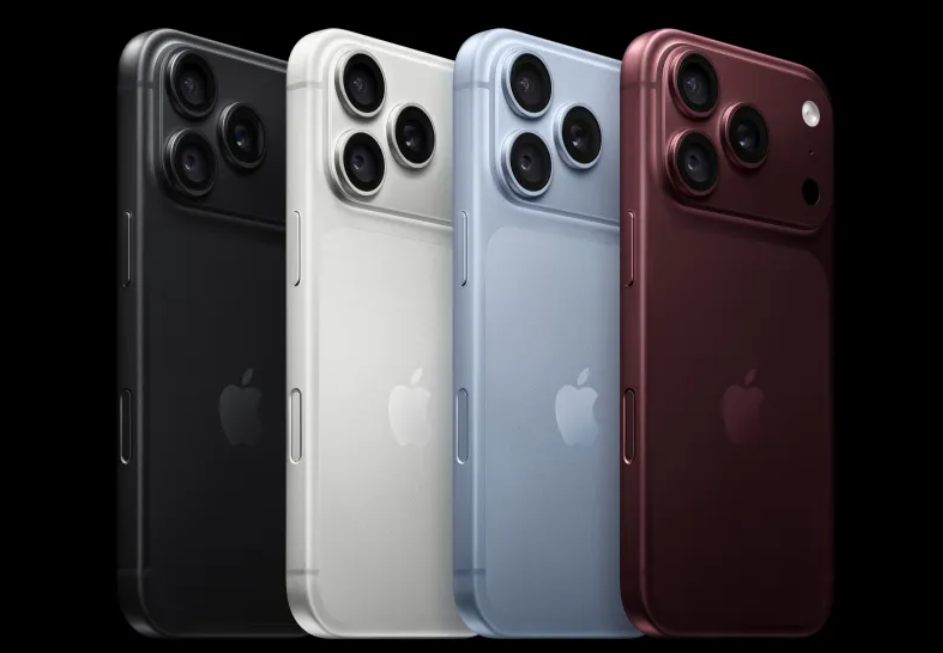
Alongside the new foldable category, Apple introduced the iPhone 18 Pro and iPhone 18 Pro Max. Unlike the Duo, these devices represent a more evolutionary approach to product development. The overall design remains similar to previous generations, but Apple has concentrated its most significant changes on camera technology, performance and advanced creative controls.
The new Pro camera system features a 48-megapixel sensor with a variable aperture controlled by six thin blades. This design is intended to improve low-light photography while also increasing shooting speed. Apple has also expanded professional camera controls to include white balance, shutter speed, aperture and a histogram, while new Photographic Styles provide additional control over texture and grain.
These changes demonstrate Apple's effort to maintain the Pro identity through specialization rather than visual reinvention. The company is increasingly treating advanced photography and video as part of the brand identity of its highest-end smartphones. Instead of asking consumers to purchase a new device because it looks entirely different, Apple is attempting to justify the premium through deeper creative capabilities and more sophisticated imaging technology.
The iPhone 18 Pro lineup can also record 4K video in Dolby HDR Vision and apply cinematic effects after footage has been captured. The devices are powered by Apple's A20 Pro silicon and include a redesigned vapor chamber intended to improve cooling. Apple also introduced battery improvements, with the iPhone 18 Pro supporting up to 36 hours of video playback and the iPhone 18 Pro Max supporting up to 45 hours.
The iPhone 18 Pro starts at $1,199, while the iPhone 18 Pro Max starts at $1,299, representing a $100 increase compared with the previous year's models. Pre-orders open before the devices become available on September 18. The pricing strategy highlights another important element of Apple's economic model: premium hardware continues to serve as the foundation through which the company introduces new technologies while maintaining strong differentiation between product tiers.
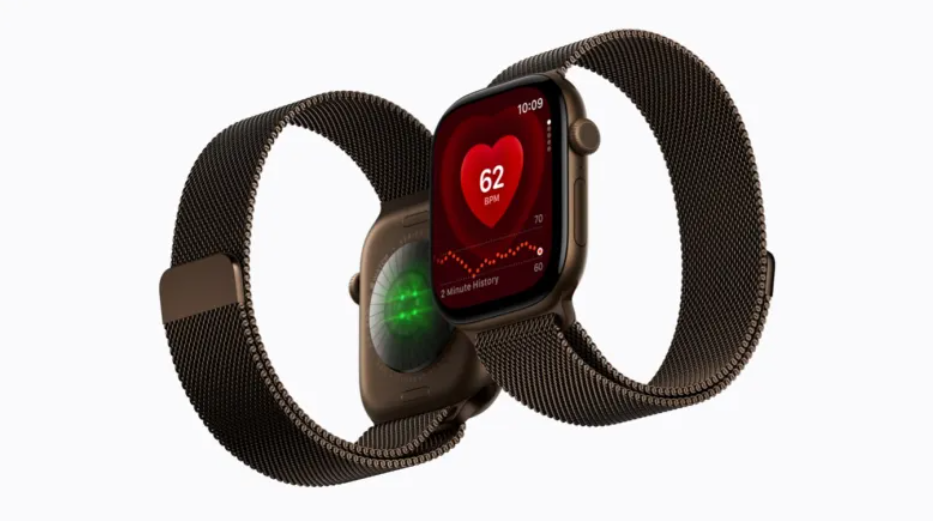
Artificial intelligence also played a larger role in the event, particularly through Apple's wearables. The Apple Watch Series 12 and Apple Watch Ultra 4 did not receive a major physical redesign, but Apple introduced significant software and AI capabilities that expand the role of the smartwatch beyond notifications, health tracking and fitness.
The new Audio Intelligence features represent Apple's response to the growing market for AI-powered wearable devices. Instead of introducing an entirely separate AI assistant or companion device, Apple is integrating contextual intelligence into the Apple Watch. The strategy allows the company to add new forms of interaction to a product that already occupies a central role in its ecosystem.
One of the new capabilities, Live Rewind, allows users to recover up to 15 seconds of recently spoken conversation as a text snippet by double-pressing the Digital Crown. The content can be reviewed through Siri or saved for later reference. Another feature, Siri Recap, is designed to help users remember important moments from everyday conversations, including meeting takeaways and other discussions.
Apple also introduced Sound Recognition, a feature capable of listening for environmental sounds such as sirens, alarms, doorbells and a baby crying. The feature is designed to provide useful alerts, particularly for people who are hard of hearing.
These capabilities demonstrate a significant shift in wearable design. The Apple Watch is becoming increasingly context-aware, moving beyond direct user commands toward technology that can interpret sounds and information from the environment. This approach could make wearable technology more useful, but it also introduces important questions about privacy, consent and how comfortable people will become with devices that continuously process elements of everyday life.
The Apple Watch Series 12 starts at $399, while the Apple Watch Ultra 4 is priced at $499. Pre-orders opened on September 9, with both products scheduled to reach stores on September 18. From an economic perspective, Apple is using software and AI capabilities to increase the strategic value of existing hardware rather than relying exclusively on physical redesigns to drive upgrades.
AirPods also received an important update with the introduction of AirPods 5. The latest generation focuses on improving the everyday audio experience through better sound quality, stronger active noise cancellation and expanded integration with Siri and Apple Intelligence.
Apple says the new AirPods can reduce background noise by 50% more than the previous generation. The company has also added volume controls to the stem, a feature previously associated with the more expensive AirPods Pro line. Transparency mode has been improved to allow users to hear nearby voices and environmental sounds more naturally.
The AirPods 5 provide up to five hours of listening with active noise cancellation on a single charge, while the charging case extends total listening time to up to 22 hours. The standard version starts at $129, while a version with a Wireless Charging Case costs $149. Pre-orders began on the day of the event, with availability scheduled for September 18.
From a product strategy perspective, AirPods remain an important example of Apple's ecosystem design. They are not simply standalone headphones. Their value increases through integration with the iPhone, Apple Watch, Siri and Apple's broader software environment. By expanding Apple Intelligence features into AirPods, the company is further positioning audio as an interface through which users can access AI and connected services.
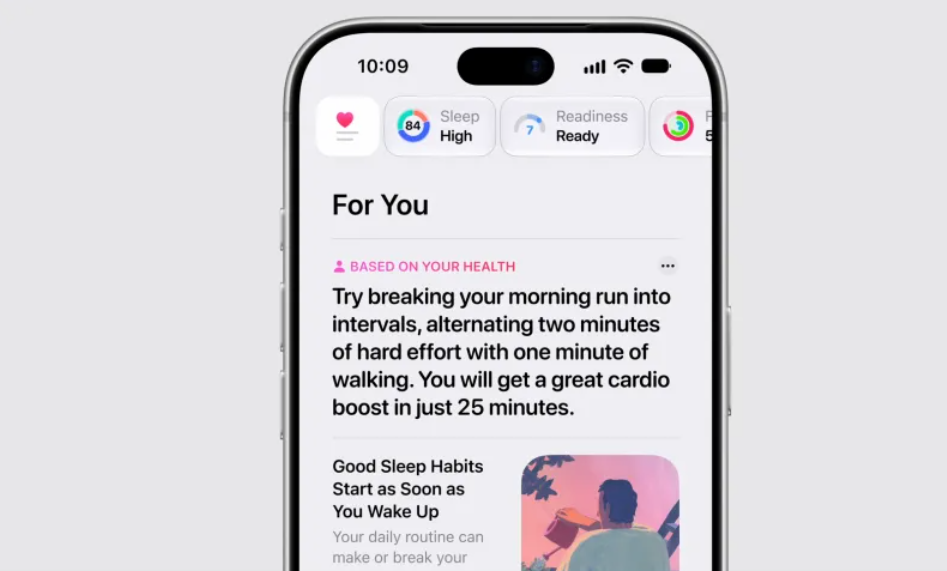
The event also included a redesigned Apple Health app, showing how Apple intends to expand its AI strategy beyond communication and entertainment into personal health information. The updated app uses Apple Intelligence to help users make better sense of the information generated by their devices.
The redesigned experience introduces a new Insights tab that provides a summary of timely health information, along with personalized guidance and assessments. Apple is also introducing a new Readiness score and a Health Age calculation. In addition, a new Longevity tab uses data from the Apple Watch and iPhone to evaluate factors including sleep, movement and heart health.
This development highlights one of the most strategically valuable areas of Apple's ecosystem: the ability to combine hardware, sensors, software and AI around personal information. The Apple Watch generates health and activity data, the iPhone provides a larger interface and processing environment, and Apple Intelligence can organize that information into summaries and recommendations.
From a business perspective, this creates a different type of competitive advantage. Instead of treating AI as an independent product, Apple is embedding intelligence into existing experiences where the company already has hardware, data relationships and consumer trust. The value of each product can therefore increase through its connection to the others.
The redesigned Health app is scheduled to roll out later in the year, beginning with U.S. English.
Taken together, Apple's Fall 2026 announcements reveal a company operating across two strategic directions at the same time. The first is expansion through new hardware categories, represented by the iPhone Duo and Apple's entry into the foldable smartphone market. The second is deeper integration, represented by AI capabilities that make existing products more context-aware, interconnected and capable of understanding user information.
This dual strategy is important for Apple's brand identity. The company has traditionally built its reputation around tightly controlled product design, where hardware and software are developed as parts of a unified experience. The latest announcements extend this philosophy into the AI era.
The iPhone Duo demonstrates Apple's effort to redefine physical hardware design. The iPhone 18 Pro models strengthen the company's creative and professional positioning through camera technology. Apple Watch expands toward ambient intelligence. AirPods become a more advanced audio interface, while the Health app turns data collected across devices into a more personalized system.
The result is not simply a collection of new products. It is an attempt to redesign the role of Apple's ecosystem in everyday life.
Apple's strategy also reflects the economic importance of maintaining multiple paths for consumers to enter and expand within the ecosystem. A customer may begin with AirPods, move to an Apple Watch, upgrade to an iPhone Pro or eventually enter a new premium category through the iPhone Duo. Each device creates additional opportunities for services, software integration and future hardware purchases.
This interconnected structure gives Apple an advantage over companies that rely heavily on individual products. The company does not need every new device to become an independent business immediately. A product can also create strategic value by increasing the usefulness of other devices and strengthening long-term customer loyalty.
The role of AI makes this ecosystem even more important. Artificial intelligence becomes more valuable when it can access relevant context, but Apple controls many of the devices through which users interact with their digital and physical environments. The iPhone, Apple Watch and AirPods each collect or process different types of information, allowing Apple to build more connected experiences across hardware categories.
At the same time, the strategy presents new challenges. Features such as ambient listening and AI-generated conversation summaries raise questions about privacy and social acceptance. Health intelligence creates greater expectations around the accuracy and responsible use of personal information. Foldable hardware introduces durability concerns and a significantly higher price point.
Apple's ability to address these challenges will determine whether the Fall 2026 launches become more than a collection of product upgrades.
The central message from the event is that Apple is no longer treating innovation as a single moment attached to one flagship device. Instead, the company is building a distributed strategy in which new hardware categories, advanced design, artificial intelligence and personal data reinforce one another.
Under John Ternus, Apple's first major fall event has therefore established an important direction for the company. The future Apple is presenting is one where smartphones can unfold into larger computing environments, watches can understand conversations and environmental sounds, headphones become more intelligent audio interfaces and health data becomes increasingly personalized through AI.
The economic objective is equally clear: increase the value of the ecosystem by making every product more connected to the others. The design objective is to make complex technologies feel integrated and familiar. And the brand objective is to preserve Apple's identity as a company where hardware, software and user experience operate as one system.
Whether the iPhone Duo becomes a major new product category and whether consumers fully embrace ambient AI will take time to determine. But Apple's Fall 2026 announcements make one point clear: the company is preparing for the next phase of consumer technology not by abandoning its existing ecosystem, but by redesigning and expanding it around new forms of hardware and intelligence.
News You Should See
2026 Nobel Medicine Prize Honors Scientists Behind Optogenetics Breakthrough
Oil Prices Edge Lower as Stronger Middle East Exports and G7 Reserves Ease Supply Concerns
Trump Offers U.S. Assistance to Russia After Death at Siberian Plague Research Institute
Trump Takes Economic Message to Nebraska as GOP Faces Rising Cost-of-Living Pressure
U.S. Appeals Court Weighs Trump Administration’s $2.6 Billion Harvard Funding Fight
U.S. Midterm Elections Begin With Resilient Jobs Market and Persistent Cost Pressures
Latest News
The 2026 Nobel Prize in Physiology or Medicine honors Karl Deisseroth, Peter Hegemann and Georg Nagel for pioneering research behind optogenetics and its impact on neuroscience.
Oil prices edged lower as stronger Middle Eastern exports and a planned G7 release of 100 million barrels eased immediate supply concerns, while Gulf security risks and the Strait of Hormuz kept markets alert.
President Donald Trump said the United States would help Russia if needed after a laboratory worker died at a Siberian plague research institute, as Russian authorities imposed precautionary quarantine measures.
Trump’s Nebraska campaign stop highlights rising fuel and grocery costs, beef prices and growing economic pressure on Republicans ahead of the November midterm elections.
A U.S. appeals court is reviewing the Trump administration’s effort to cut Harvard’s federal research funding, with more than $2.6 billion at stake.
The U.S. enters the 2026 midterm elections with unemployment at 4.2%, while higher living and energy costs create economic pressure for households and businesses.
US services growth eased in September as input prices climbed to their highest level since July 2022, with fuel costs, supply-chain disruptions and strong demand increasing pressure on businesses.
Rising Treasury yields are increasing U.S. borrowing costs as Washington manages record debt, persistent inflation and strong economic demand, narrowing its policy options.
A EGP 16 million corporate partnership will establish and equip a bone marrow transplant unit at Cairo’s Coptic Hospital, supporting access to specialized treatment for patients.