Apple Watch AI Redefines the Boundary Between Smart Assistance and Constant Listening
Apple is turning ambient audio into a new layer of wearable intelligence, testing whether privacy-focused design can make consumers comfortable with technology that hears more of everyday life.

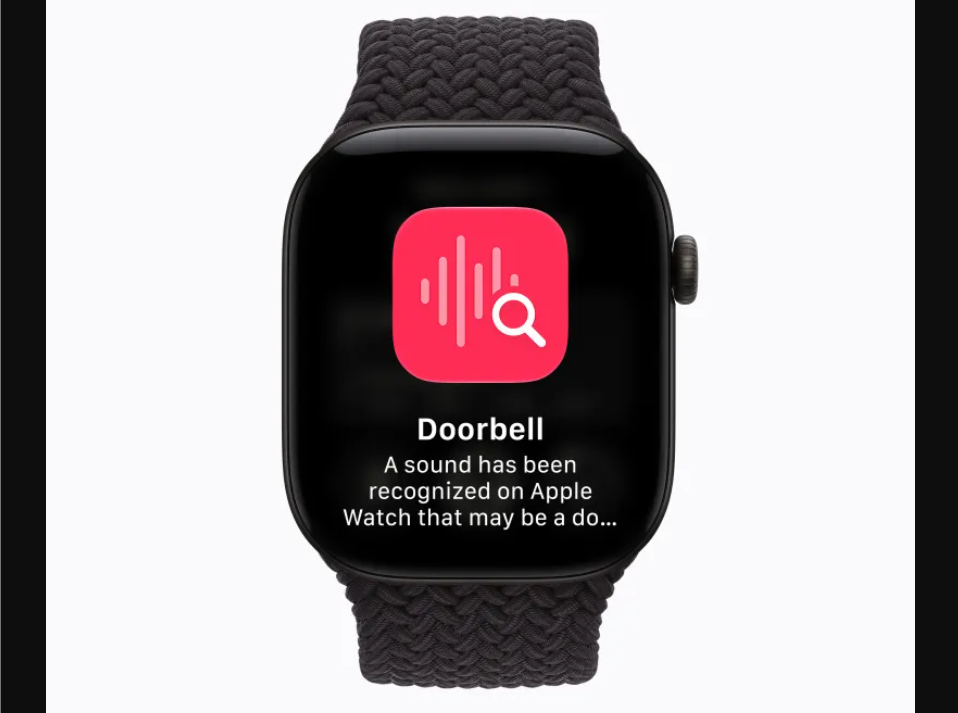
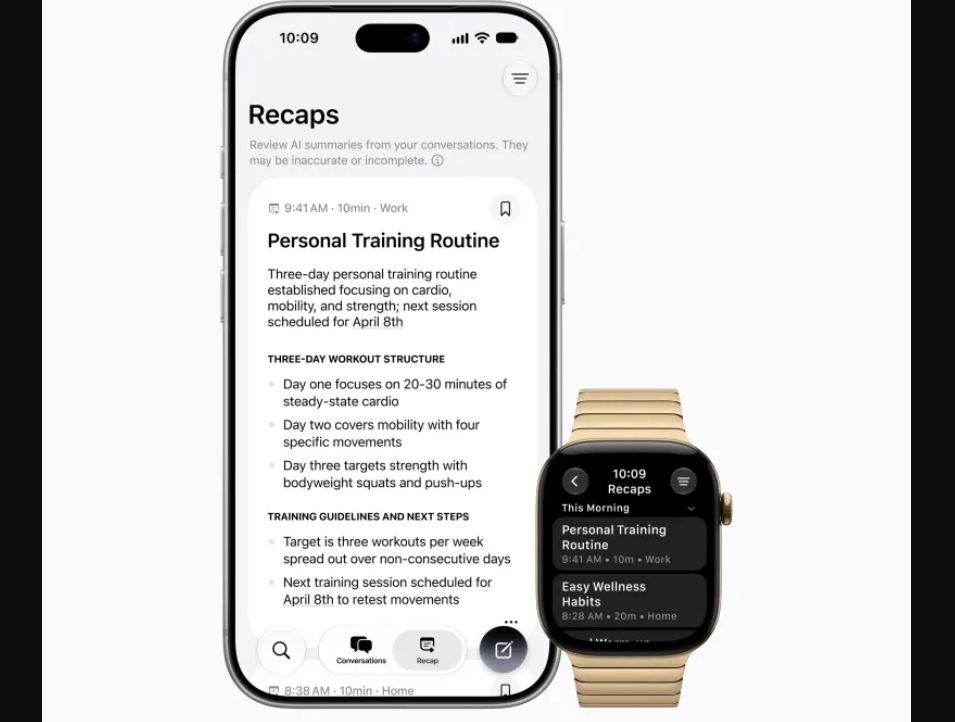
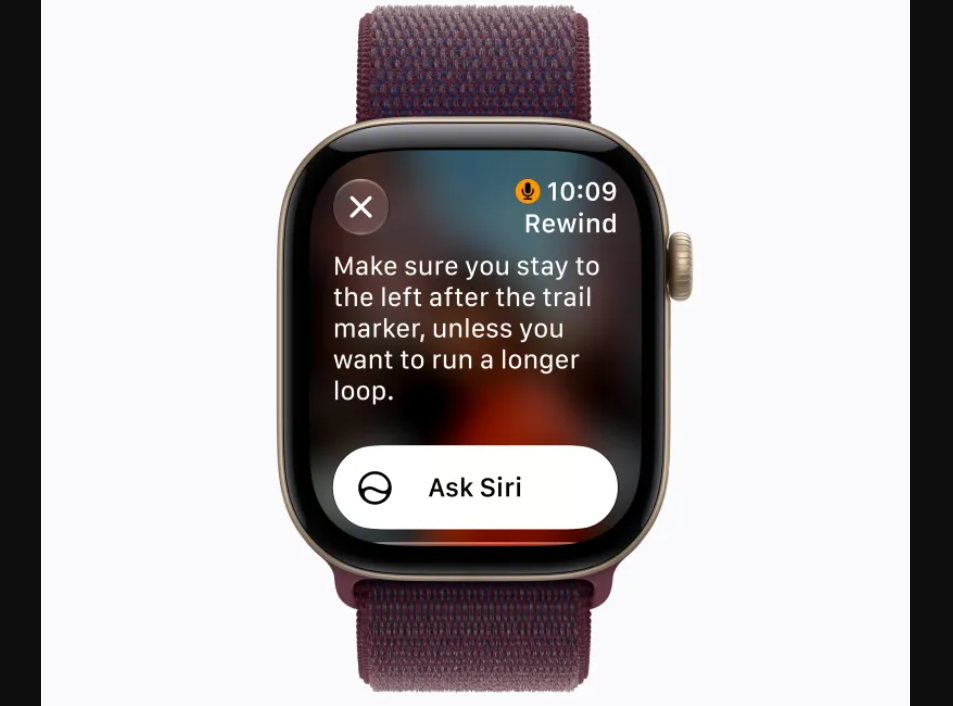
Apple is taking wearable technology into a more sensitive and strategically important territory: devices that do not simply respond when asked, but can understand parts of the world happening around their users. The company's latest Apple Watch features introduce a new layer of audio intelligence capable of recognizing environmental sounds, recovering recently spoken information and generating AI-powered summaries from conversations. While these capabilities may offer clear practical benefits, they also represent a broader shift in how personal technology is designed and what consumers may increasingly be expected to accept from the devices they wear every day.
The development is significant because Apple is not introducing these ideas through an experimental startup device or an entirely new hardware category. Instead, the company is integrating ambient audio intelligence into the Apple Watch, a product that is already familiar to millions of users and strongly associated with personal health, communication, safety and everyday convenience. That decision could help move the concept of technology that continuously interprets its surroundings from the margins of the technology industry into mainstream consumer behavior.
Apple's new approach centers on three audio-focused capabilities: Audio Intelligence, Live Rewind and Siri Recap. Together, they illustrate three different stages of ambient computing. The first focuses on environmental awareness, the second on recovering information from the immediate past and the third on transforming conversations into structured knowledge. Viewed as a product strategy, the combination shows Apple moving artificial intelligence beyond the traditional model of commands, applications and screens toward a system designed to understand context with less direct input from the user.
Audio Intelligence occupies the least controversial position in this strategy. Using on-device AI, the Apple Watch can recognize sounds such as sirens, alarms, doorbells and a baby crying. The feature can work even when the wearer is not carrying an iPhone, allowing the watch to function as an independent layer of environmental awareness. For users who are deaf or hard of hearing, this creates an especially clear value proposition because the device can translate important sounds from the surrounding environment into alerts that may improve awareness and, in certain circumstances, contribute to personal safety.
From a design perspective, this type of feature demonstrates one of the strongest arguments for integrating AI directly into personal hardware. The microphone itself is not the innovation; the strategic value comes from the system's ability to interpret what the microphone detects. Instead of simply collecting sound, the device attempts to distinguish between ordinary background noise and information that may require the user's attention. This transforms a technical sensor into a more meaningful service and reflects Apple's broader design philosophy of hiding complex technology behind a relatively simple user experience.
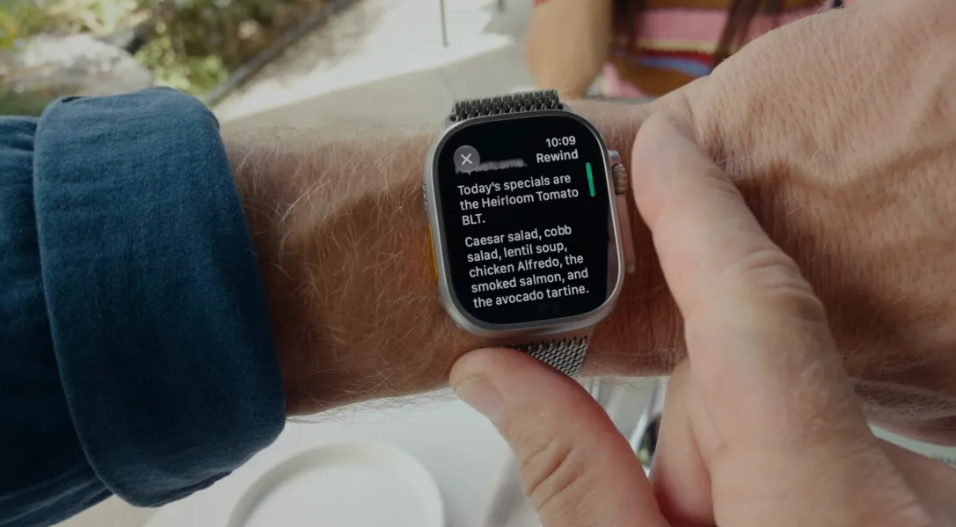
The more complicated questions begin with Live Rewind. The feature allows users to recover approximately 15 seconds of recently spoken conversation by double-pressing the Apple Watch's Digital Crown. The system then converts what was said into text, which can be saved to Apple's standalone Siri app for later reference. Apple positions the feature as a way to remember a recommendation, recover something that was difficult to hear or preserve an idea shared during a conversation.
The underlying interaction model is strategically important because it changes how technology approaches memory. Traditional digital note-taking requires users to decide in advance that something is worth recording. They must open an application, start typing or deliberately activate a recording tool. Live Rewind introduces a different idea: the user can decide after a moment has passed that the information should be preserved. In effect, the device creates a short window in which the past remains digitally accessible.
This may appear to be a relatively small product feature, but it has larger implications for privacy and social interaction. A person speaking to someone wearing an Apple Watch may not know that their words could be converted into text shortly after they are spoken. The interaction required to activate the feature is also more subtle than traditional recording. Taking a photo or recording video usually involves a visible gesture, such as raising a phone or pointing a camera. Activating a short audio transcription from a watch can be considerably less obvious, even though Apple says the feature provides an audible signal and displays a full-screen microphone animation.
This difference matters because technology design influences social behavior as much as technical behavior. When people know they may be photographed, filmed or recorded, they often adjust how they speak and act. The possibility that a wearable device can quietly preserve spoken information introduces a different kind of social awareness. The technology does not need to be permanently recording everything to change the way people think about conversations. The simple knowledge that information can be recovered moments later may affect expectations around privacy, spontaneity and self-expression.
The third feature, Siri Recap, takes the concept even further. Rather than recovering a brief portion of a conversation, Siri Recap uses ambient listening to generate high-level notes from what users discuss. Apple Intelligence can create a title, summary and key points, which can later be reviewed through the Siri app. Apple suggests that the feature could be useful for situations such as preserving meeting takeaways or remembering important information from a parent-teacher conference. The result is not intended to be a word-for-word transcript but an AI-generated interpretation of the main information discussed.
From a productivity and economic perspective, this feature reflects one of the most commercially promising applications of generative AI: reducing the cost of remembering. Meetings, conversations and everyday interactions constantly produce information, decisions and ideas, but human attention is limited. A person cannot fully participate in a conversation while simultaneously documenting every important point. AI-powered summarization attempts to solve this problem by turning spoken interaction into structured information without requiring the user to stop and take notes.
For Apple, integrating this capability into the Apple Watch creates an additional layer of value around an existing product rather than requiring consumers to purchase a separate AI device. This is strategically significant because the technology industry is currently experimenting with multiple forms of AI hardware, including pendants, voice assistants and devices designed to remain available throughout the day. Several companies have built products around the idea that AI transcription and passive note-taking can become central consumer use cases. Apple is pursuing a different route by placing similar capabilities inside an established wearable ecosystem.
That approach provides Apple with an important economic advantage. Creating an entirely new hardware category requires convincing consumers to understand a new product, develop new habits and justify the cost of another device. Apple can instead extend the capabilities of a product category that already has a clear role in its ecosystem. Consumers already understand the Apple Watch as a device connected to health, fitness, notifications, communication and safety. Adding AI-powered audio intelligence allows Apple to increase the strategic value of the watch without asking users to adopt a completely unfamiliar interaction model.
The decision also reinforces Apple's broader ecosystem strategy. The Apple Watch can collect or process contextual information while the iPhone provides a larger interface for reviewing, managing and interacting with that information. Features such as Live Rewind and Siri Recap therefore do not operate as isolated AI products. They strengthen the relationship between Apple's devices and create additional reasons for users to remain inside the company's hardware and software ecosystem.
From a brand identity perspective, however, the strategy presents a more complicated challenge. Apple has spent years positioning privacy as a defining part of its corporate identity. The company has repeatedly argued that privacy should be built into product architecture rather than treated as an optional feature added later. That reputation may make consumers more willing to trust Apple's approach to ambient intelligence, but it also creates a higher standard for the company when introducing technology capable of listening to the world around users.
This tension is particularly visible in Siri Recap. Technology that listens to conversations and extracts useful information can be highly valuable, but it also risks making consumers uncomfortable regardless of the technical safeguards behind it. Apple is therefore attempting to distinguish between ambient intelligence and conventional surveillance through the way the features are designed.
According to Apple, Siri Recap does not need to remain continuously active by default. Users can choose when the feature operates, including setting specific periods such as work hours or daytime use, and can turn it on or off through Control Center. Apple also says the feature does not create or store traditional audio recordings, while raw audio is not accessible even to Apple. The system does not identify or attribute speakers, and the generated transcripts and recaps are protected with end-to-end encryption.
These design choices reveal the central strategy behind Apple's approach. The company is trying to extract the commercial and functional value of ambient AI without creating a permanent archive of everything users hear. In other words, Apple is attempting to separate intelligence from continuous recording. The device may process audio in order to generate useful results, but the company is positioning its architecture around limiting access to raw information and reducing the amount of data retained.
Whether consumers will consider that distinction sufficient remains uncertain. From one perspective, a system that does not preserve raw audio presents a significantly different privacy model from a device designed to maintain permanent recordings. From another perspective, the result can still include sensitive information because spoken conversations may be transformed into text, summaries and notes. The absence of an audio file does not necessarily eliminate every privacy concern related to the information itself.
There are also important questions surrounding consent and legal use. Apple is not presenting these features as conventional recording tools, which creates a potentially complex distinction when spoken information is converted into text without an accessible audio file. If a transcript or AI-generated summary later becomes important in a legal dispute, verifying its accuracy could become more difficult without the original audio. Rules governing consent, recording and evidence also vary across jurisdictions, making the social and legal consequences of this technology more complicated than the product interface may suggest.
The larger issue is therefore not limited to Apple. The company is participating in a broader industry movement toward ambient computing, where technology increasingly understands context without requiring users to constantly issue commands. AI systems are becoming embedded in microphones, sensors, cameras and wearable devices capable of interpreting elements of the user's environment. Sound is particularly valuable because it can reveal context, activity, relationships, plans and decisions.
This shift creates a powerful opportunity for product designers. Technology that understands context can become more useful with less effort from the user. A wearable can recognize an emergency sound without being asked. It can help someone recover a detail they missed without requiring them to record an entire conversation. It can organize important points from a discussion without interrupting the interaction. Each of these experiences reduces friction and makes technology appear more intelligent.
At the same time, greater contextual awareness means that devices must interact with increasingly personal forms of information. This creates one of the defining challenges of AI-era design: how to make technology more aware without making people feel constantly observed. Companies will need to balance utility against visibility, because an AI system can become easier to use precisely when the processes behind it become less obvious.
Apple's design advantage may lie in its ability to integrate these capabilities into familiar products. The company has historically focused on making sophisticated technologies appear simple and intuitive. A complex AI system can be activated with a double press. Environmental sounds can be translated into alerts without requiring the user to configure a complicated model. Conversations can become structured summaries without forcing users to learn a new interface.
This simplicity is central to Apple's brand, but it also creates a responsibility. When powerful technology becomes invisible, users and the people around them may have less awareness of how information is being processed. In the case of AI-powered audio, the design challenge is not only about making the experience intuitive for the person wearing the device. It is also about creating sufficient transparency for everyone else participating in the environment.
The Apple Watch therefore represents an important test for the future of mainstream AI hardware. Smaller startups can experiment with AI pendants and always-available assistants among relatively limited groups of early adopters. Apple operates at a much larger scale. When the company introduces a new interaction model through a familiar consumer product, it has the potential to influence broader expectations about what technology should be allowed to do in everyday life.
The opportunity is clear. Audio intelligence can improve accessibility, strengthen personal safety, reduce the burden of note-taking and help people manage information that would otherwise disappear. These capabilities can make wearable technology more useful and more responsive to the realities of everyday life.
The risk is equally significant. Society may begin accepting new forms of listening technology before clear cultural, ethical and legal expectations have developed around them. Users may trust privacy settings that people around them cannot see. Conversations may increasingly take place in environments where participants are uncertain about whether spoken information is being processed, summarized or preserved.
Apple's strategy is built around the belief that product design and privacy architecture can manage this tension. By limiting audio retention, offering user controls, avoiding speaker identification and protecting generated information through encryption, the company is trying to create a model of ambient intelligence that remains compatible with its privacy-focused identity.
The success of that model will depend on more than technical performance. Apple must demonstrate that intelligence and privacy can coexist inside devices that understand more about the environment around their users. The company is effectively asking consumers to accept a new type of relationship with technology: one in which devices may hear more, process more and remember more useful information without becoming conventional surveillance tools.
That distinction may define the next phase of wearable technology. The future will not simply depend on whether AI can listen and understand. It will depend on whether companies can design systems that use those capabilities without crossing the social boundaries that make personal technology feel trustworthy. Apple's new Apple Watch features place the company directly at the center of that experiment, turning a familiar wearable into a test case for how ambient intelligence, economic value and privacy-focused brand identity can coexist in the AI era.
News You Should See
2026 Nobel Medicine Prize Honors Scientists Behind Optogenetics Breakthrough
Oil Prices Edge Lower as Stronger Middle East Exports and G7 Reserves Ease Supply Concerns
Trump Offers U.S. Assistance to Russia After Death at Siberian Plague Research Institute
Trump Takes Economic Message to Nebraska as GOP Faces Rising Cost-of-Living Pressure
U.S. Appeals Court Weighs Trump Administration’s $2.6 Billion Harvard Funding Fight
U.S. Midterm Elections Begin With Resilient Jobs Market and Persistent Cost Pressures
Latest News
The 2026 Nobel Prize in Physiology or Medicine honors Karl Deisseroth, Peter Hegemann and Georg Nagel for pioneering research behind optogenetics and its impact on neuroscience.
Oil prices edged lower as stronger Middle Eastern exports and a planned G7 release of 100 million barrels eased immediate supply concerns, while Gulf security risks and the Strait of Hormuz kept markets alert.
President Donald Trump said the United States would help Russia if needed after a laboratory worker died at a Siberian plague research institute, as Russian authorities imposed precautionary quarantine measures.
Trump’s Nebraska campaign stop highlights rising fuel and grocery costs, beef prices and growing economic pressure on Republicans ahead of the November midterm elections.
A U.S. appeals court is reviewing the Trump administration’s effort to cut Harvard’s federal research funding, with more than $2.6 billion at stake.
The U.S. enters the 2026 midterm elections with unemployment at 4.2%, while higher living and energy costs create economic pressure for households and businesses.
US services growth eased in September as input prices climbed to their highest level since July 2022, with fuel costs, supply-chain disruptions and strong demand increasing pressure on businesses.
Rising Treasury yields are increasing U.S. borrowing costs as Washington manages record debt, persistent inflation and strong economic demand, narrowing its policy options.
A EGP 16 million corporate partnership will establish and equip a bone marrow transplant unit at Cairo’s Coptic Hospital, supporting access to specialized treatment for patients.