Apple Rebuilds Its AI Strategy Around the iPhone
John Ternus revives a Steve Jobs-era design philosophy, positioning the iPhone as Apple’s intelligent hub for the next generation of personal computing.

Apple is entering a new phase in its product strategy with a familiar idea at its core: the future does not necessarily require abandoning the device that already defines the company. Under new CEO John Ternus, the iPhone is being repositioned not as a product approaching the end of its cycle, but as the central platform from which Apple intends to build its next chapter in artificial intelligence and personal computing.
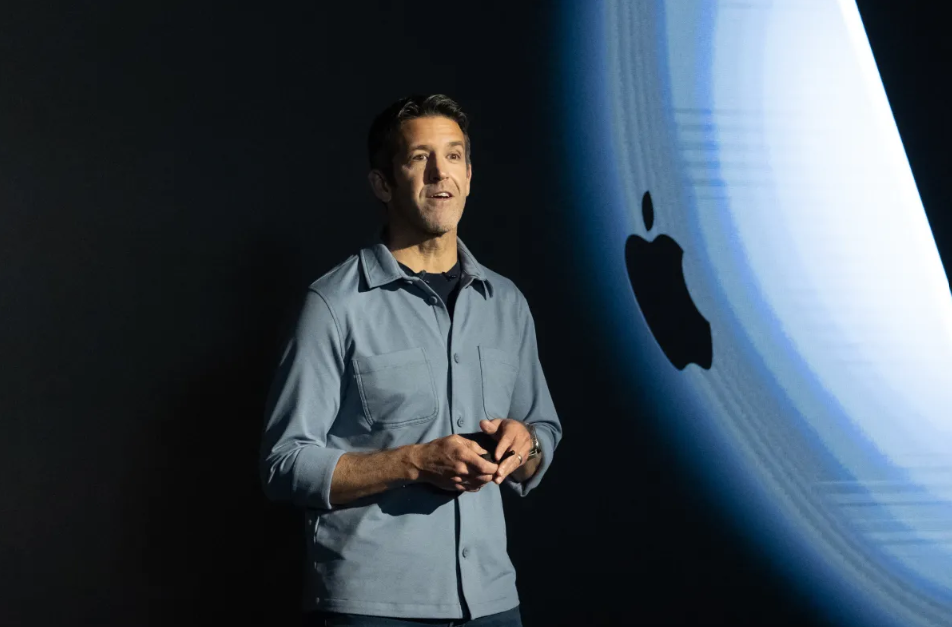
During his first keynote as Apple CEO, Ternus made the company’s direction unmistakably clear. Rather than presenting AI as a reason to search for a replacement for the smartphone, he positioned the iPhone as the natural foundation for an increasingly intelligent digital ecosystem. The strategy reflects a broader design principle that has repeatedly shaped Apple’s history: technological transitions do not always require replacing the center of the user experience; sometimes they require redesigning the ecosystem around an existing center.
This approach marks an important contrast with the messaging of the Tim Cook era. For years, Apple worked to convince investors and markets that its identity extended far beyond the iPhone, expanding its presence across services, wearables, subscriptions, entertainment and other product categories. Ternus, however, appears willing to place the company’s most important device back at the center of the narrative. The message is strategically significant because it transforms the iPhone from a mature hardware success into the anchor of Apple’s AI-era identity.
The design logic behind this strategy is deeply connected to Apple’s historical philosophy. More than two decades ago, Steve Jobs introduced the concept of the Mac as a “digital hub” capable of connecting and adding value to an expanding universe of digital devices. At a time when many observers questioned the future of the personal computer, Jobs argued that the PC was not disappearing but evolving. The computer, in his vision, would remain at the center while cameras, music players, video devices and other technologies expanded around it.
That strategic framework proved highly influential. The Mac became the organizational center of Apple’s emerging ecosystem, and the introduction of the iPod later demonstrated how a new device could strengthen rather than replace the central platform. The commercial success of the iPod helped expand Apple’s business and eventually contributed to the technological and market conditions that made the iPhone possible.
Ternus now appears to be applying a similar principle to a very different technological moment. Instead of the Mac acting as the center of the digital ecosystem, the iPhone is being positioned as the center of an intelligent personal environment. The shift is more than a change in hardware hierarchy. It represents a redesign of the relationship between the user, artificial intelligence, computing power and connected services.
The timing is particularly important. As the iPhone approaches its twentieth anniversary, questions have increasingly emerged about what comes after the smartphone. Analysts and technology observers have speculated that AI-powered wearables, smart assistants and new forms of personal devices could eventually reduce the importance of the phone. Several companies have already attempted to introduce alternative hardware designed around AI and ambient computing.
Apple's response, under Ternus, appears to reject the assumption that technological innovation requires immediate device replacement. Instead, the company is emphasizing the advantages of the iPhone's existing design architecture: powerful processing capabilities, advanced cameras, persistent connectivity, portability and the ability to support increasingly sophisticated on-device intelligence.
From a design strategy perspective, this is one of Apple’s strongest advantages. The iPhone is not simply a piece of hardware. It is a highly integrated system in which industrial design, software, custom silicon, cameras, sensors, connectivity and services operate as parts of a unified experience. Adding AI to this structure allows Apple to extend an established product architecture rather than asking users to learn an entirely new category of device.
This continuity also carries important economic value. Creating a new hardware category requires significant investment in research, manufacturing, supply chains, developer ecosystems, consumer education and distribution. It also introduces uncertainty: consumers may not immediately understand why they need a new device or whether it offers enough value to justify its cost.
By contrast, strengthening the iPhone with AI allows Apple to build on an existing global ecosystem. The company can distribute new capabilities through devices already owned by millions of users while continuing to benefit from its established hardware, software and services infrastructure. This creates a potentially more efficient path toward AI adoption than attempting to build an entirely separate consumer hardware category from scratch.
The economic strategy also reinforces the value of Apple's ecosystem. The iPhone already serves as an entry point to a network of products and services that includes computers, tablets, wearables, entertainment platforms, subscriptions and digital services. Positioning the phone as an intelligent hub could make those connections even more valuable by allowing AI to coordinate information, interactions and experiences across different products.
In this sense, the strategy is not simply about protecting iPhone sales. It is about protecting and expanding the economic architecture built around the iPhone. The more central the device becomes to a user's personal data, communication, productivity, entertainment and intelligent services, the stronger its role becomes as the foundation of Apple's broader ecosystem.
Brand identity is another critical dimension. Apple has built much of its reputation on the belief that technology should become more useful without becoming more complicated. The company’s most successful products have often combined sophisticated engineering with interfaces that make complex technologies feel approachable. AI presents a major test for this philosophy because artificial intelligence can easily become invisible, unpredictable or difficult for consumers to understand.
By placing AI inside the familiar framework of the iPhone, Apple can present intelligence as an evolution of an existing experience rather than as an unfamiliar technological disruption. This supports one of the most recognizable elements of the Apple brand: the integration of advanced technology into products that feel personal, intuitive and deliberately designed.
The strategy also reflects Apple's preference for control over the complete user experience. Rather than allowing AI to exist as a separate layer disconnected from the device, Apple can integrate intelligence across hardware and software. The processor supports computational workloads, cameras collect visual information, connectivity enables access to services and on-device AI can process certain tasks locally. Together, these elements create a system in which intelligence becomes part of the product architecture itself.
This integration could become increasingly important as AI places greater demands on computing resources. Powerful personal devices may gain an advantage when artificial intelligence requires rapid processing, access to sensors, cameras and personalized information. The iPhone's combination of performance and portability therefore gives Apple a strong strategic position in a market where intelligence is becoming more closely connected to the devices people carry every day.
The company's advantage also comes from behavior rather than specifications alone. For many consumers, the smartphone is already the most frequently used and personally important computing device. People may leave home without a laptop or tablet, but the phone typically remains with them throughout the day. This makes the iPhone a natural candidate to become an intelligent personal hub because it already occupies a central place in communication, navigation, photography, payments, entertainment and everyday decision-making.
The failure of many alternative devices to displace smartphones further strengthens Apple's argument. Wearables and experimental AI hardware may introduce new interaction models, but they have yet to demonstrate that they can replace the combination of functionality, computing power, portability and familiarity provided by the modern smartphone.
That does not mean Apple is rejecting the possibility of future devices. History suggests the opposite. Steve Jobs’ digital hub strategy did not prevent Apple from introducing the iPod; it provided the strategic environment in which the iPod could become more valuable. Similarly, positioning the iPhone as the center of Apple's AI strategy does not rule out the arrival of a new product category in the future.
Instead, the current strategy creates a framework in which future devices can complement the iPhone rather than immediately compete with it. Any new Apple product could potentially extend the intelligent ecosystem while the iPhone remains the central point of personal computing, identity and connectivity.
This is where the comparison with the Steve Jobs era becomes particularly meaningful. Apple is once again facing a period in which established technology is being declared obsolete while new categories are being presented as inevitable replacements. Jobs responded to similar skepticism by arguing that the central device was evolving rather than disappearing. Ternus is now applying a comparable argument to the smartphone.
The difference is that Apple today operates on a far larger economic and technological scale. The iPhone is not only a successful product; it is one of the most important platforms in consumer technology. Any decision about its role affects a vast ecosystem of users, developers, suppliers, services and complementary products.
For Ternus, the challenge is therefore both creative and economic. He must demonstrate that Apple can participate aggressively in the AI transition without weakening the product architecture that has generated much of the company's strength. The solution emerging from his early strategy is to turn the perceived vulnerability of the iPhone's maturity into an advantage.
Instead of asking what will replace the iPhone, Apple is asking how the iPhone can become more intelligent, more integrated and more central to the user's digital life. The answer may determine the company's next generation of products, services and business opportunities.
Apple's new direction ultimately represents a broader philosophy of product evolution. The company is not treating AI as a reason to erase the past and begin again. It is using artificial intelligence as a design layer capable of increasing the value of an existing platform.
That approach combines strategic continuity with technological transformation. The iPhone remains familiar, but its role expands. It is no longer only a smartphone, camera, communication device or application platform. Apple wants it to become the organizing center of an increasingly intelligent personal ecosystem.
Whether Ternus is also preparing an entirely new product capable of playing the role that the iPod once played remains unknown. What is clear, however, is that Apple is not ready to accept the narrative that the iPhone has reached the end of its strategic importance.
As the company moves deeper into the AI era, its new CEO appears to be betting on a principle that has shaped Apple before: the most successful response to technological disruption may not be replacing the device people already depend on, but redesigning the future around it.
News You Should See
2026 Nobel Medicine Prize Honors Scientists Behind Optogenetics Breakthrough
Oil Prices Edge Lower as Stronger Middle East Exports and G7 Reserves Ease Supply Concerns
Trump Offers U.S. Assistance to Russia After Death at Siberian Plague Research Institute
Trump Takes Economic Message to Nebraska as GOP Faces Rising Cost-of-Living Pressure
U.S. Appeals Court Weighs Trump Administration’s $2.6 Billion Harvard Funding Fight
U.S. Midterm Elections Begin With Resilient Jobs Market and Persistent Cost Pressures
Latest News
The 2026 Nobel Prize in Physiology or Medicine honors Karl Deisseroth, Peter Hegemann and Georg Nagel for pioneering research behind optogenetics and its impact on neuroscience.
Oil prices edged lower as stronger Middle Eastern exports and a planned G7 release of 100 million barrels eased immediate supply concerns, while Gulf security risks and the Strait of Hormuz kept markets alert.
President Donald Trump said the United States would help Russia if needed after a laboratory worker died at a Siberian plague research institute, as Russian authorities imposed precautionary quarantine measures.
Trump’s Nebraska campaign stop highlights rising fuel and grocery costs, beef prices and growing economic pressure on Republicans ahead of the November midterm elections.
A U.S. appeals court is reviewing the Trump administration’s effort to cut Harvard’s federal research funding, with more than $2.6 billion at stake.
The U.S. enters the 2026 midterm elections with unemployment at 4.2%, while higher living and energy costs create economic pressure for households and businesses.
US services growth eased in September as input prices climbed to their highest level since July 2022, with fuel costs, supply-chain disruptions and strong demand increasing pressure on businesses.
Rising Treasury yields are increasing U.S. borrowing costs as Washington manages record debt, persistent inflation and strong economic demand, narrowing its policy options.
A EGP 16 million corporate partnership will establish and equip a bone marrow transplant unit at Cairo’s Coptic Hospital, supporting access to specialized treatment for patients.