Al Nassr’s Fast Start Reveals a Deeper Strategic Shift Beyond Ronaldo
Al Nassr’s early-season attacking form and João Félix’s rise are reshaping the club’s competitive priorities as the team adapts to a new coaching era and tighter financial constraints.

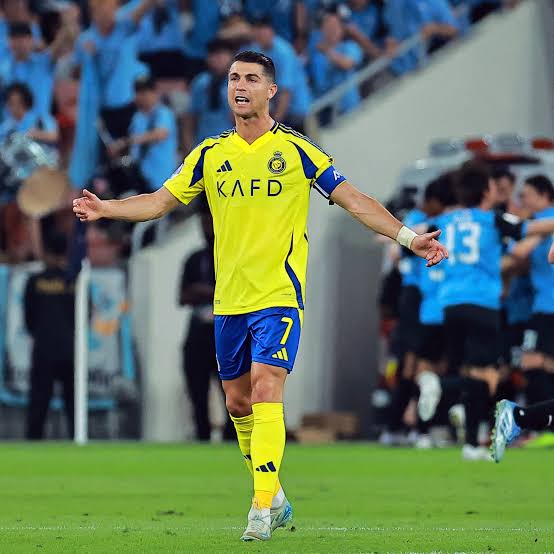
Al Nassr’s opening weeks of the 2026-27 season are producing a more important signal than the results themselves: the Saudi club is beginning to demonstrate that its competitive identity can survive without depending entirely on Cristiano Ronaldo.
The Riyadh side opened its Saudi Pro League campaign with a 3-0 victory over Al Fateh before advancing to the last 16 of the King’s Cup with a 4-1 win against Al Diriyah. The second result was particularly notable because Ronaldo was absent, yet the attacking structure remained productive and flexible.
Against Al Diriyah, João Félix scored twice, while Mohamed Simakan and Abdullah Al-Hamdan also found the net. Al Diriyah had taken an early lead through Óscar Rodríguez, but Al Nassr responded with four goals between the 11th and 68th minutes.
The significance of these performances lies in the way Al Nassr is developing as a team. The club is no longer simply building around the commercial and sporting magnetism of one global superstar. Instead, its early-season results suggest that other attacking players are becoming capable of carrying a larger share of the sporting responsibility.
That distinction could become strategically important if Ronaldo's own suggestion that the current season may be the final chapter of his career eventually becomes reality. At 41, the Portuguese forward remains one of the most recognizable names in world football, but Al Nassr's latest performances offer the club an opportunity to prepare for a future in which its identity is less dependent on one individual.
From a business perspective, such a transition would be significant. Ronaldo has helped transform Al Nassr's international visibility, giving the club a global profile that extends well beyond the traditional Saudi football audience. Any eventual departure would therefore represent more than the loss of a player; it would create a branding challenge for the organization.
The most effective response would be to ensure that the club's next generation of stars is already visible before the transition occurs. João Félix is emerging as one of the clearest candidates for that role. His performance against Al Diriyah, including two goals and an assist, reinforced his importance to the team's sporting structure.
His contractual situation makes the issue even more relevant. Félix's current agreement runs until June 30, 2027, meaning the club will eventually have to make an important decision regarding one of its most productive attacking assets. Preserving the value and continuity of key players could become as important as adding new names to the squad.
This is where Al Nassr's strategy differs from the impression created by the transfer market. While Al Hilal has continued to make major moves, Al Nassr is currently benefiting from a degree of technical stability. The club changed managers during the summer, replacing Portuguese coach Jorge Jesus with Australian Ange Postecoglou, yet the squad has shown signs of cohesion despite the transition.
That continuity is particularly valuable in a market where clubs can rapidly increase their squad quality through expensive recruitment but still require time to integrate new players. A large transfer budget can create potential; it does not automatically create a functioning team.
Al Nassr nevertheless has clear areas requiring reinforcement. Defensive depth remains an issue, with the club needing a central defender and options at both right-back and left-back. An additional foreign striker capable of consistently scoring goals is also identified as a priority.
The financial environment makes those decisions more complicated. The club is operating under stricter financial monitoring, limiting its ability to respond to every move made by competitors. This means recruitment must be more selective, with each addition assessed not only for its sporting value but also for its effect on the club's broader financial structure.
A potential reduction in Ronaldo's salary commitment could create additional flexibility if he leaves at the end of the season. However, that would only solve part of the equation. The club would still need to allocate resources carefully between replacing his output, protecting its existing assets and strengthening positions where the squad remains vulnerable.
The challenge is therefore not simply replacing Ronaldo. It is redesigning the club's economic and sporting architecture after an era in which one of football's biggest global personalities has been central to its identity.
This transition could ultimately strengthen Al Nassr if managed effectively. A club that moves from a superstar-led model toward a diversified sporting identity can reduce its dependence on a single commercial asset while building a broader portfolio of recognizable players.
For João Félix, the next season could consequently represent a defining period. Continued performances at his current level would increase his sporting importance and potentially his commercial value, while also making his future one of the club's most significant retention decisions.
The contrast with Al Diriyah illustrates another side of Saudi football's rapidly developing competitive market. The club is participating in the Saudi Pro League for the first time and began the campaign against two of the country's biggest sides, Al Ahli and Al Nassr. Despite losing both matches, the team was not described as lacking competitiveness; its main shortcomings were experience, cohesion and decisiveness in front of goal.
For a developing club, however, the timing of those defeats matters. Early losses against established opponents can influence confidence and public perception around a new sporting project. Al Diriyah's challenge is therefore not simply to accumulate points, but to demonstrate that its long-term model can withstand a difficult introduction to the highest level.
For Al Nassr, meanwhile, the opening matches offer a different lesson. The club still needs targeted investment, but it has also shown that sporting stability can be an asset in its own right. In an increasingly expensive Saudi football market, the ability to improve through internal cohesion rather than constant recruitment could become a meaningful competitive advantage.
The broader strategic question now facing Al Nassr is how to convert the current momentum into a sustainable identity. Ronaldo's presence may continue to dominate the club's global image for the remainder of the season, but the performances of Félix and the wider squad suggest that the foundations of the next phase are already beginning to emerge.
News You Should See
2026 Nobel Medicine Prize Honors Scientists Behind Optogenetics Breakthrough
Oil Prices Edge Lower as Stronger Middle East Exports and G7 Reserves Ease Supply Concerns
Trump Offers U.S. Assistance to Russia After Death at Siberian Plague Research Institute
Trump Takes Economic Message to Nebraska as GOP Faces Rising Cost-of-Living Pressure
U.S. Appeals Court Weighs Trump Administration’s $2.6 Billion Harvard Funding Fight
U.S. Midterm Elections Begin With Resilient Jobs Market and Persistent Cost Pressures
Latest News
The 2026 Nobel Prize in Physiology or Medicine honors Karl Deisseroth, Peter Hegemann and Georg Nagel for pioneering research behind optogenetics and its impact on neuroscience.
Oil prices edged lower as stronger Middle Eastern exports and a planned G7 release of 100 million barrels eased immediate supply concerns, while Gulf security risks and the Strait of Hormuz kept markets alert.
President Donald Trump said the United States would help Russia if needed after a laboratory worker died at a Siberian plague research institute, as Russian authorities imposed precautionary quarantine measures.
Trump’s Nebraska campaign stop highlights rising fuel and grocery costs, beef prices and growing economic pressure on Republicans ahead of the November midterm elections.
A U.S. appeals court is reviewing the Trump administration’s effort to cut Harvard’s federal research funding, with more than $2.6 billion at stake.
The U.S. enters the 2026 midterm elections with unemployment at 4.2%, while higher living and energy costs create economic pressure for households and businesses.
US services growth eased in September as input prices climbed to their highest level since July 2022, with fuel costs, supply-chain disruptions and strong demand increasing pressure on businesses.
Rising Treasury yields are increasing U.S. borrowing costs as Washington manages record debt, persistent inflation and strong economic demand, narrowing its policy options.
A EGP 16 million corporate partnership will establish and equip a bone marrow transplant unit at Cairo’s Coptic Hospital, supporting access to specialized treatment for patients.