Al Ittihad targets midfield reinforcements as Diaby’s absence raises questions over his future and the club’s squad rebuild.
Al Ittihad is exploring midfield reinforcements while Moussa Diaby’s unexplained absence raises questions over his future, highlighting a broader attempt to rebuild the squad after a difficult previous season.

Al Ittihad has entered the final phase of the summer transfer window with a clear need to reshape its squad after a turbulent previous season. The Jeddah club is simultaneously assessing its midfield options, managing uncertainty around Moussa Diaby and attempting to restore a competitive identity after ending the last campaign without a trophy.
The club’s transfer activity is being driven by more than a desire to add recognizable names. Al Ittihad needs greater balance and reliability across the squad, particularly in midfield, where the possible arrival of Franck Kessie has emerged as a central priority.
Kessie became a free agent after his contract with Al Ahli expired on June 30, 2026. Reports of a possible move across Jeddah have therefore placed the Ivorian midfielder at the centre of the club’s current recruitment strategy. Al Ittihad officials, however, have declined to comment on the speculation, maintaining that the club will not discuss transfers before they are officially completed.
That position reflects a more cautious communication strategy. After a period marked by financial and administrative problems, limiting public commitments until agreements are finalized can help the club avoid unnecessary pressure in an increasingly competitive transfer market.
Kessie’s potential arrival would also address a footballing need rather than simply add another high-profile player. The midfielder offers experience at the highest levels of European football and could provide greater physical presence, defensive coverage and tactical balance in the centre of the pitch.
At the same time, Al Ittihad has opened another channel by contacting Adam Watany, the agent of Egypt international Imam Ashour, to explore the possibility of signing the midfielder from Al Ahly.
The approach does not currently appear to replace Kessie as the club’s primary midfield target. Instead, it gives Al Ittihad an alternative route as it evaluates the market and attempts to strengthen its options.
Ashour’s situation is particularly complicated because Al Ahly has publicly stated that the player is not for sale. The Egyptian club made that position clear after receiving an offer from Turkish side Konyaspor. Al Ittihad’s contact with the player's representative therefore represents an exploratory move rather than evidence that a transfer is close to completion.
From a market perspective, the interest in Ashour illustrates how Saudi clubs can influence transfer dynamics even before formal negotiations reach an advanced stage. Contacting an agent allows a club to assess availability, financial expectations and the player's willingness to move without necessarily committing to a full transfer operation.
For Al Ittihad, this flexibility is important. The club is operating in an environment where major Saudi rivals have access to significant resources, while its own recent financial and administrative difficulties have affected sporting performance.
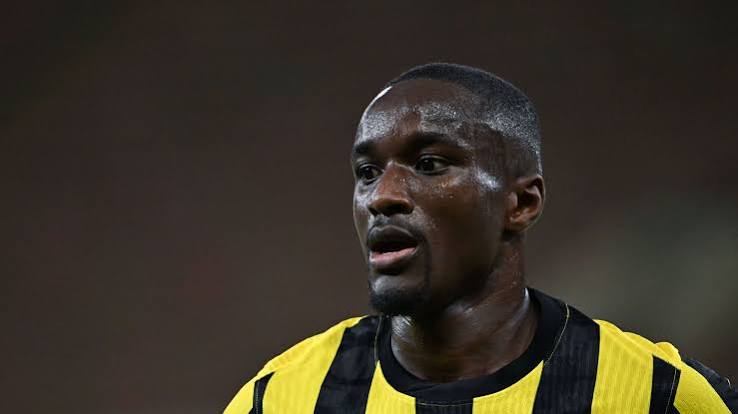
The situation surrounding Moussa Diaby adds another dimension. The French winger was absent from Al Ittihad’s King’s Cup round-of-32 match against Al Najma, and reports indicated that the absence was not related to injury. One explanation being discussed is that the player could be approaching an exit from the club.
If Diaby does leave, Al Ittihad would face a different recruitment challenge. Losing an attacking player would create a need for either a direct replacement or a tactical redistribution of responsibility across the forward line. Any departure would also affect the club's squad planning and the balance between foreign-player positions.
The uncertainty is arriving at an uncomfortable sporting moment. Al Ittihad began the 2026-27 Saudi Pro League campaign with a 1-1 draw against Al Kholood, an outcome that reinforced concerns following a previous season in which the club failed to win a major trophy.
The wider context matters. A club with Al Ittihad’s profile cannot treat recruitment as an isolated exercise. Transfers are part of a broader recovery strategy that includes restoring sporting credibility, strengthening the squad and rebuilding confidence among supporters.
This makes the Kessie and Ashour situations particularly significant. The club is effectively weighing two different recruitment profiles: a readily available experienced midfielder whose contract has expired and a younger Egyptian international who remains under contract and whose current club has publicly resisted selling him.
The economic implications are equally important. A free-agent deal for Kessie could reduce the transfer fee component of the investment, although wages, signing costs and contract length would still determine the overall financial commitment. An Ashour deal, by contrast, would require negotiations with Al Ahly and could involve a substantial transfer package if the Egyptian club were ever to reconsider its position.
The decision-making process therefore needs to balance immediate sporting requirements with financial sustainability. The objective should not simply be to respond to a disappointing season with expensive recruitment, but to build a squad capable of competing consistently over multiple competitions.
Al Ittihad’s communication around transfers also suggests that the club is attempting to exercise greater control over its public narrative. Refusing to comment before a deal is completed reduces the risk of turning negotiations into public campaigns and allows the administration to manage expectations more effectively.
That approach could become important for the club’s brand recovery. Al Ittihad has a major historical identity within Saudi football, but recent instability has created a gap between the club’s reputation and its sporting output. A disciplined transfer strategy can help close that gap if it produces visible improvements on the pitch.
The immediate challenge is to turn market activity into sporting results. The opening draw against Al Kholood means the club cannot afford another season in which investment fails to translate into trophies or sustained competitiveness.
Kessie represents the most direct solution currently being explored, while Ashour provides another potential avenue for strengthening the midfield. Diaby’s uncertain future, meanwhile, could force the club to reconsider its attacking structure before the window closes.
Ultimately, Al Ittihad’s summer strategy will be judged not by the number of names linked with the club, but by whether the final squad is more balanced, financially manageable and capable of competing with Saudi Arabia’s leading teams.
News You Should See
2026 Nobel Medicine Prize Honors Scientists Behind Optogenetics Breakthrough
Oil Prices Edge Lower as Stronger Middle East Exports and G7 Reserves Ease Supply Concerns
Trump Offers U.S. Assistance to Russia After Death at Siberian Plague Research Institute
Trump Takes Economic Message to Nebraska as GOP Faces Rising Cost-of-Living Pressure
U.S. Appeals Court Weighs Trump Administration’s $2.6 Billion Harvard Funding Fight
U.S. Midterm Elections Begin With Resilient Jobs Market and Persistent Cost Pressures
Latest News
The 2026 Nobel Prize in Physiology or Medicine honors Karl Deisseroth, Peter Hegemann and Georg Nagel for pioneering research behind optogenetics and its impact on neuroscience.
Oil prices edged lower as stronger Middle Eastern exports and a planned G7 release of 100 million barrels eased immediate supply concerns, while Gulf security risks and the Strait of Hormuz kept markets alert.
President Donald Trump said the United States would help Russia if needed after a laboratory worker died at a Siberian plague research institute, as Russian authorities imposed precautionary quarantine measures.
Trump’s Nebraska campaign stop highlights rising fuel and grocery costs, beef prices and growing economic pressure on Republicans ahead of the November midterm elections.
A U.S. appeals court is reviewing the Trump administration’s effort to cut Harvard’s federal research funding, with more than $2.6 billion at stake.
The U.S. enters the 2026 midterm elections with unemployment at 4.2%, while higher living and energy costs create economic pressure for households and businesses.
US services growth eased in September as input prices climbed to their highest level since July 2022, with fuel costs, supply-chain disruptions and strong demand increasing pressure on businesses.
Rising Treasury yields are increasing U.S. borrowing costs as Washington manages record debt, persistent inflation and strong economic demand, narrowing its policy options.
A EGP 16 million corporate partnership will establish and equip a bone marrow transplant unit at Cairo’s Coptic Hospital, supporting access to specialized treatment for patients.