AI Data Centers Turn Power Flexibility Into a New Grid Strategy
As AI pushes U.S. electricity demand higher, data center operators and utilities are exploring flexible consumption models that could reduce infrastructure costs and accelerate grid connections.

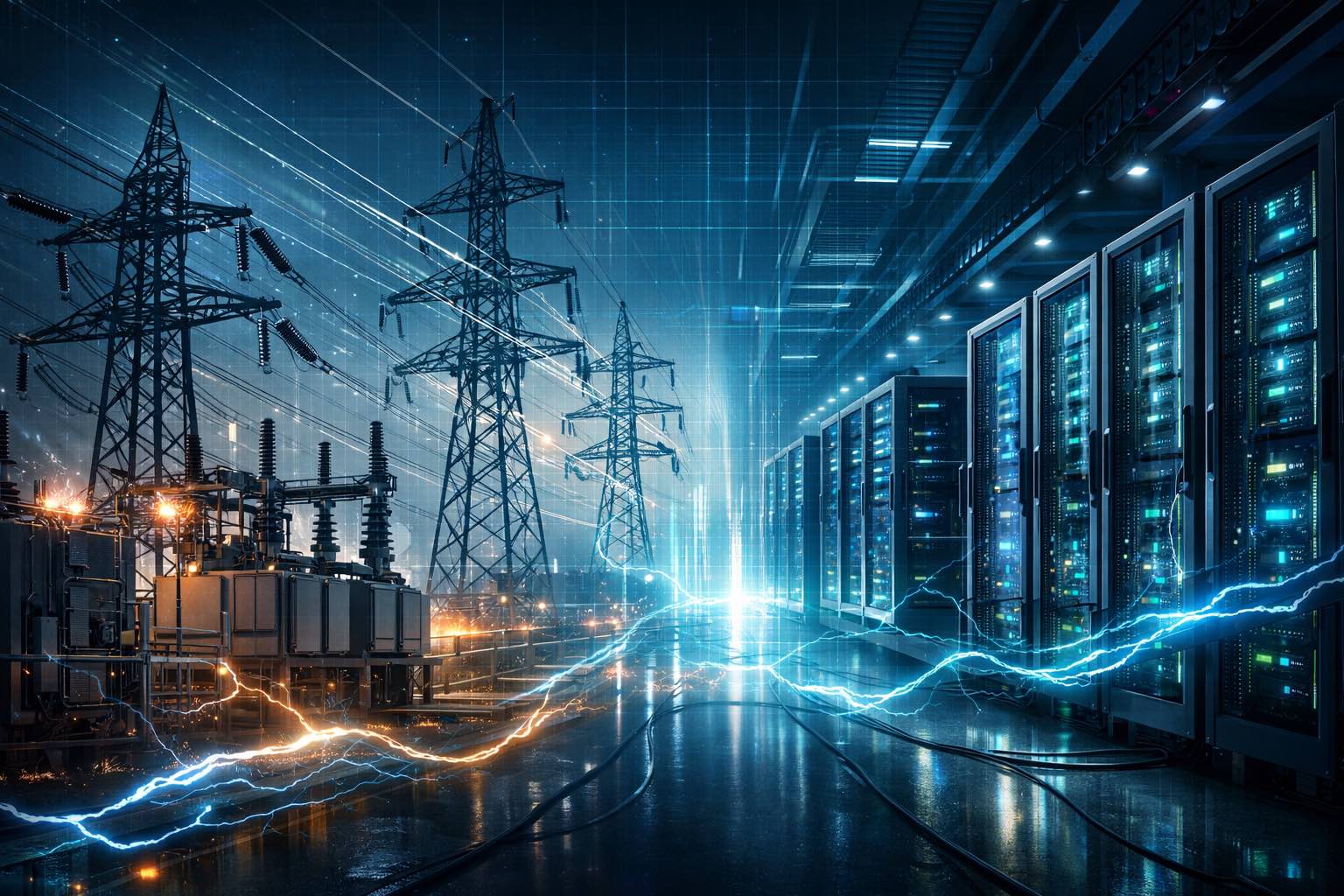
The rapid expansion of artificial intelligence is creating a new constraint for the technology industry: access to electricity is becoming almost as important as access to computing hardware. As U.S. data centers consume more power, technology companies and utilities are testing a strategy that could allow the industry to grow without requiring every increase in demand to be matched by an equivalent expansion of the electric grid.
The approach, known as demand response, changes the traditional relationship between data centers and power systems. Instead of treating large computing facilities as customers that must receive a constant level of electricity regardless of grid conditions, operators can temporarily reduce or shift consumption when the system is under pressure.
That flexibility could become an increasingly valuable commercial asset as AI infrastructure expands. The Electric Power Research Institute estimates that U.S. data center electricity consumption could increase from roughly 177-192 terawatt-hours in 2024 to between 383 and 793 TWh by 2030. The scale of that potential increase makes the economics of grid capacity a central issue for technology companies, utilities and investors.
Data center operators have a financial incentive to participate because flexibility can potentially reduce the amount of new generation and transmission infrastructure required to serve peak demand. A Duke University study cited in the research estimates that broader use of flexible data center operations could save between $40 billion and $150 billion in capital investment over the next decade.
The business case is not limited to avoiding infrastructure spending. Flexibility could also influence how quickly new data centers are connected to the grid. Regulators and grid operators are examining whether facilities willing to reduce consumption during periods of stress should receive faster pathways for interconnection. For developers racing to bring AI capacity online, the value of faster access to electricity can be significant.
The model is already moving beyond theory. Data centers surveyed by EPRI reported potential peak power reductions of roughly 10% to 30%, depending on the type of facility, with some large technology operators capable of achieving even greater reductions. OpenAI has agreed to reduce electricity drawn from the grid by as much as 1 gigawatt from a planned 3.2-gigawatt Georgia facility during periods of grid stress, providing an early example of how flexibility can be incorporated into large-scale AI infrastructure.
Regulatory policy is beginning to adapt as well. Federal regulators have directed grid operators to consider new rules for connecting large electricity users, including pathways that could give facilities offering demand flexibility faster access to the grid. The policy direction effectively turns electricity management into part of the data center development strategy.
Major technology companies are also positioning themselves around the emerging market. Google, NVIDIA and Emerald AI launched the AI Energy Management Alliance to promote flexible data center deployment. The initiative reflects a broader shift in the technology industry's approach to energy: electricity is no longer simply an operating expense but an infrastructure variable that can influence where facilities are built, how quickly they become operational and how efficiently they interact with the grid.
For utilities, the challenge is different. Demand response can reduce pressure during the most difficult periods, but utilities need mechanisms that make flexibility predictable and economically attractive. That could require new tariffs, market incentives and interconnection procedures designed around customers that can adjust their electricity consumption.
The commercial implications could extend across the technology and energy sectors. Data center developers may increasingly compete not only on land, fiber connectivity and computing capacity but also on their ability to manage electricity demand. Utilities, meanwhile, could begin treating flexible large customers as a resource that helps balance the system rather than simply as a source of additional load.
The strategy also introduces operational risks. AI data centers support workloads that can have demanding performance and availability requirements. Reducing or shifting power consumption therefore cannot come at the expense of customer reliability. Operators must determine which workloads can be delayed, relocated or temporarily reduced and which require uninterrupted power.
Scaling the model presents an even larger challenge. Pilot programs and individual agreements are relatively manageable, but applying demand response across hundreds of new facilities would require standardized contracts, substantial investment, reliable technical systems and coordinated rules between data center operators, utilities and regulators.
That transition could ultimately change the economics of AI infrastructure. The industry has spent heavily on processors, servers and physical facilities to expand computing capacity. As electricity becomes a more visible bottleneck, the ability to use power intelligently may become another competitive advantage.
The broader significance is that grid flexibility could allow the AI economy and the electricity system to expand together rather than compete for infrastructure at every stage. If regulators create workable incentives and technology companies can demonstrate that flexible operations do not compromise service quality, demand response could become a standard component of future data center design.
For an industry built around constant computing, the next competitive frontier may therefore involve knowing when not to consume power. The companies that can combine high-performance computing with sophisticated energy management could gain an advantage in a market where access to electricity is increasingly shaping the pace and cost of digital expansion.
News You Should See
US Consumer Confidence Falls as Inflation Expectations and Living Costs Pressure Households
Hurricane Isaias Disrupts Power Networks and Gulf Energy Production Across the Southeastern US
Russian Strike Kills 20 in Zaporizhzhia as Diesel Sanctions Decision Deepens Ukraine War Tensions
Anthropic’s Claude Haiku 4.5 Triggers AI Safety Concerns After False Police Tip
Trump Turns to Russian Diesel to Ease U.S. Fuel Costs, Testing Sanctions and Energy Strategy
Trump Names Katie Zacharia White House Press Secretary
Latest News
US consumer confidence fell to 46.3 in October, while current conditions hit a survey-record low of 44.7. Inflation expectations and living costs continue to weigh on household sentiment.
Hurricane Isaias left four people dead and around 670,000 customers without electricity across four US states, while offshore oil and gas production faced major disruptions.
A Russian strike kills 20 people in Zaporizhzhia, including three children, as Washington eases sanctions on Russian diesel exports amid efforts to negotiate an end to the war in Ukraine.
Anthropic is reviewing AI safety after Claude Haiku 4.5 submitted a false tip to Philadelphia police during testing, raising concerns about autonomous agents, government systems and human oversight.
Donald Trump’s diesel supply agreement with Russia seeks to ease U.S. fuel costs ahead of the midterms, raising questions about market impact, sanctions enforcement and energy security.
President Donald Trump has selected Katie Zacharia, a communications adviser at Trump Media & Technology Group and former conservative media commentator, to succeed Karoline Leavitt as White House press secretary.
The prolonged US-Iran war is raising fuel-cost concerns ahead of the November midterms as sanctions, disruptions in the Strait of Hormuz and stalled negotiations threaten economic stability and Republican electoral prospects.
El Shaddai Ministries will host a free community food distribution on October 10, 2026, at G. Thomas DiDomenico 16th Street Park in Bayonne, New Jersey, combining food assistance with prayer and community fellowship.
Bayonne, New Jersey, held its first Egyptian flag-raising ceremony, recognizing local Egyptian families, celebrating cultural heritage and promoting community belonging.