AI Data Center Expansion Creates New Supply Chain Challenges for US Aerospace and Defense Industries
The accelerating construction of AI infrastructure is intensifying competition for semiconductors, skilled labor, electricity and manufacturing capacity, creating new cost and production pressures for America's aerospace and defense industries.

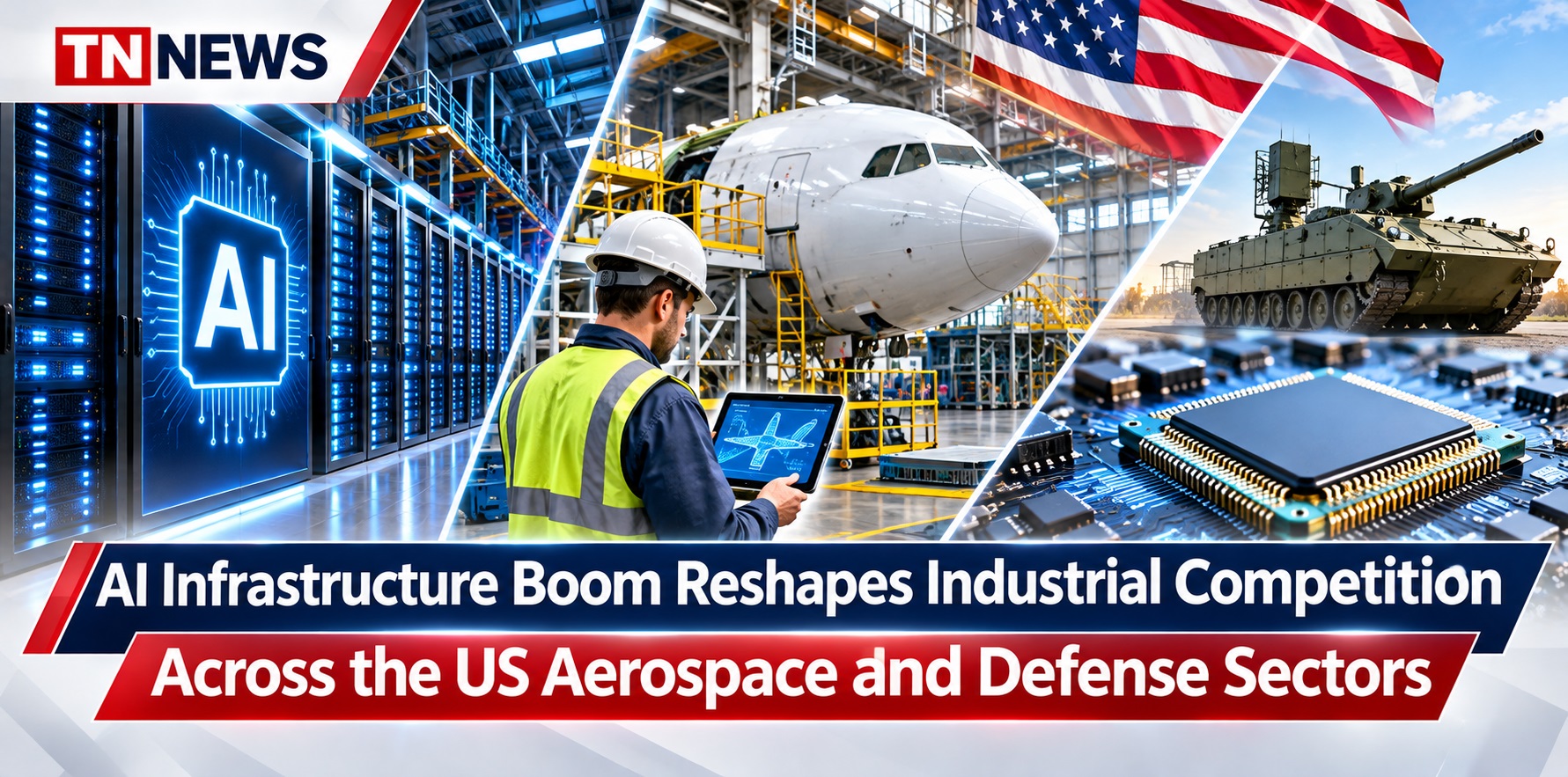
AI Infrastructure Boom Reshapes Industrial Competition Across the US Aerospace and Defense Sectors
The accelerating investment in artificial intelligence infrastructure is creating an industrial challenge that extends well beyond the technology sector. As major companies race to build large-scale data centers, their growing demand for electricity, semiconductors, specialized labor and manufacturing facilities is placing additional pressure on resources also required by America's aerospace and defense industries.
The emerging competition is exposing a structural weakness in the US industrial supply chain: several strategically important sectors are attempting to expand production simultaneously while relying on overlapping networks of suppliers, materials and infrastructure.
A November 28 report by the Financial Times highlighted how technology companies are increasingly competing with traditional manufacturers for critical industrial resources. The consequences could influence production costs, investment decisions and the ability of American manufacturers to meet commercial and government orders.
AI investment creates a new source of industrial demand
The expansion of data centers has transformed computing infrastructure into a major consumer of industrial capacity. Facilities designed to support advanced AI models require substantial quantities of memory chips, circuit boards, electrical equipment, steel and other specialized components.
These requirements overlap with those of aerospace manufacturers and defense contractors, creating competition across several stages of the industrial supply chain.
The challenge is not limited to the availability of finished components. Manufacturers also need engineers, technicians, factory space, industrial land and reliable electricity. When several industries pursue the same resources, securing additional supplies becomes more difficult and expensive.
Technology companies have a particular advantage in this environment. Their financial resources and purchasing power allow them to negotiate large procurement agreements, secure production capacity and compete aggressively for infrastructure.
For smaller industrial suppliers, this imbalance can create difficult commercial decisions. Companies may find themselves allocating limited production capacity toward customers offering larger orders or more attractive financial terms, potentially affecting delivery schedules for traditional industrial clients.
Aerospace manufacturers face additional production pressure
The aerospace industry is particularly exposed because its production systems depend on complex international supply networks and highly specialized manufacturing processes.
Boeing provides a prominent example of the challenges already affecting the sector. The company continues to face a substantial commercial aircraft order backlog while working through delays in its manufacturing recovery and production plans.
Additional competition for electronic components, skilled workers and factory capacity could make the process of expanding output more difficult.
Aircraft manufacturing requires precise coordination between hundreds of suppliers, with disruptions at individual production stages potentially affecting the delivery of complete aircraft. Even when a manufacturer has sufficient customer demand, its ability to increase production depends on whether the wider supplier network can expand at the same pace.
The AI infrastructure boom therefore introduces another source of uncertainty into an industry that is already working to improve manufacturing performance and manage accumulated orders.
Defense production and national security priorities
The pressure is equally significant for defense manufacturers. Governments are seeking to strengthen industrial capabilities and increase production of military equipment and ammunition, placing additional importance on the reliability of domestic supply chains.
Defense contractors depend on specialized electronic components, advanced materials and skilled manufacturing personnel. Many of these resources are also required by the rapidly expanding technology infrastructure market.
This creates a strategic competition between commercial investment and national security requirements.
While technology companies are focused on expanding computing capacity, defense manufacturers must maintain production schedules linked to government procurement programs and military readiness objectives.
The problem becomes more complicated when suppliers hesitate to expand their facilities. Manufacturers are cautious about committing capital to new production lines because future demand is not always guaranteed.
Some companies have previously increased capacity in anticipation of orders that ultimately failed to materialize at the expected scale. The resulting financial exposure has made suppliers more selective about major investment decisions.
This caution can limit the industry's ability to respond quickly when governments seek higher production volumes.
The economics of manufacturing expansion
The growing demand for industrial resources is also creating a cost challenge for companies attempting to expand production within the United States.
Building additional domestic capacity requires significant investment in facilities, equipment, workforce development and infrastructure. Relocating the production of strategically important components can improve supply chain resilience, but it may also increase operating costs compared with established international manufacturing networks.
At the same time, competition for electricity and industrial land could raise the cost of developing new factories and data centers.
The financial strength of major technology companies adds another dimension. Their ability to secure long-term electricity arrangements, reserve semiconductor production and commit substantial capital may influence how industrial resources are distributed across the economy.
For traditional manufacturers operating under tighter margins or longer government procurement cycles, matching this purchasing power may prove difficult.
The result could be a more expensive industrial environment in which access to resources becomes an increasingly important determinant of competitiveness.
A structural challenge for US industrial policy
The situation highlights a broader question for American economic planning: how can the country expand its AI infrastructure without undermining the manufacturing capacity required for aerospace production, military readiness and other strategic industries?
Treating these sectors as separate investment priorities may overlook the extent to which they depend on the same industrial foundations.
A more coordinated approach could involve expanding semiconductor manufacturing, strengthening component suppliers, investing in technical education and improving electricity infrastructure. Greater visibility into future demand could also help suppliers make investment decisions with more confidence.
For policymakers, the challenge is not simply to encourage more domestic production. It is to ensure that investment in one strategically important sector does not unintentionally create bottlenecks in another.
The competitive landscape ahead
The relationship between AI infrastructure and traditional manufacturing is likely to become increasingly important as demand for computing power continues to grow.
If industrial capacity expands more slowly than demand, competition for specialized labor, electronic components and electricity could become a persistent source of cost inflation and production delays.
Aerospace manufacturers may face additional obstacles in clearing order backlogs, while defense contractors could encounter greater difficulty scaling production to meet government requirements.
For technology companies, the same constraints could increase the cost and complexity of building data centers at the pace their AI strategies require.
Ultimately, the issue is becoming larger than a supply chain problem affecting individual companies. It represents a test of America's ability to coordinate technological expansion with industrial resilience and national security priorities.
The industries that secure reliable access to energy, skilled workers, advanced components and manufacturing capacity will be better positioned to compete. The broader challenge for the United States will be expanding these resources fast enough to support multiple strategic sectors without allowing competition between them to weaken the country's industrial base.
News You Should See
CBT-I: How Behavioral Therapy Can Help Treat Chronic Insomnia Without Relying on Sleeping Pills
Moneymaxxing: How Social Media Is Turning Financial Discipline Into a Lifestyle Trend
AI Data Center Expansion Creates New Supply Chain Challenges for US Aerospace and Defense Industries
Supreme Court to Review State Bans on AR-15-Style Rifles in Major Second Amendment Case
Let Go of Their Harm and Trust Allah: Friday Sermon Explores Healing from Past Wounds and Finding Peace Without Abandoning Justice
Misr El-Kheir International to Launch in the United States with Inaugural New York Gala on December 12
Latest News
CBT-I is a behavioral treatment for chronic insomnia that targets sleep habits and anxiety. Research suggests it improves sleep for 70% to 80% of patients.
Moneymaxxing is gaining attention as a social media trend promoting smarter spending, debt reduction, emergency savings and realistic financial goals through practical budgeting habits.
The AI data center boom is intensifying competition for chips, electricity, skilled workers and factory capacity, creating new supply chain challenges for US aerospace and defense manufacturers.
The US Supreme Court will examine state bans on AR-15-style rifles, a landmark Second Amendment case that could reshape firearms regulations nationwide by June 2027.
A Friday khutbah by Detective Mohamed Amen explores how faith, forgiveness, acceptance, and trust in Allah can help individuals overcome emotional pain while preserving their rights and seeking justice.
Misr El-Kheir International will launch in the United States with an inaugural gala on December 12, 2026, at 583 Park Avenue in New York, featuring humanitarian initiatives and fundraising activities.
Kevin Durant became the fifth NBA player to reach 33,000 career points as the Houston Rockets defeated the Phoenix Suns 116-104. Alperen Sengun recorded a triple-double.
Andy Taylor, original Duran Duran guitarist, has died at 65 following prostate cancer. His guitar work helped define the band's iconic 1980s sound.
A cybersecurity investigation raises concerns after confidential links submitted to Chinese AI company MiniMax were reportedly accessed by unidentified parties, highlighting data privacy and third-party security risks.