225-Year-Old Warship Discovered Off Denmark in Remarkable Find
Archaeologists uncover historic wreck from a famous naval battle beneath Copenhagen Harbor.

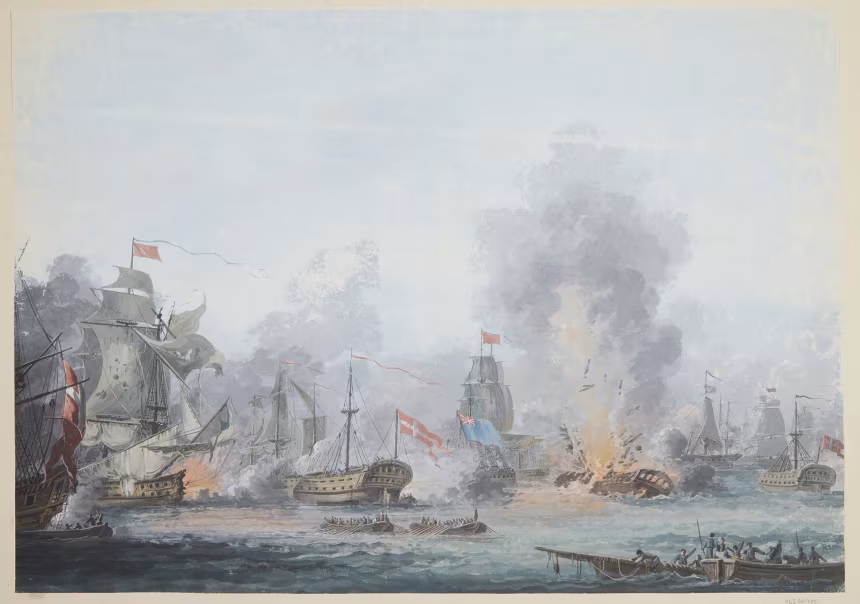
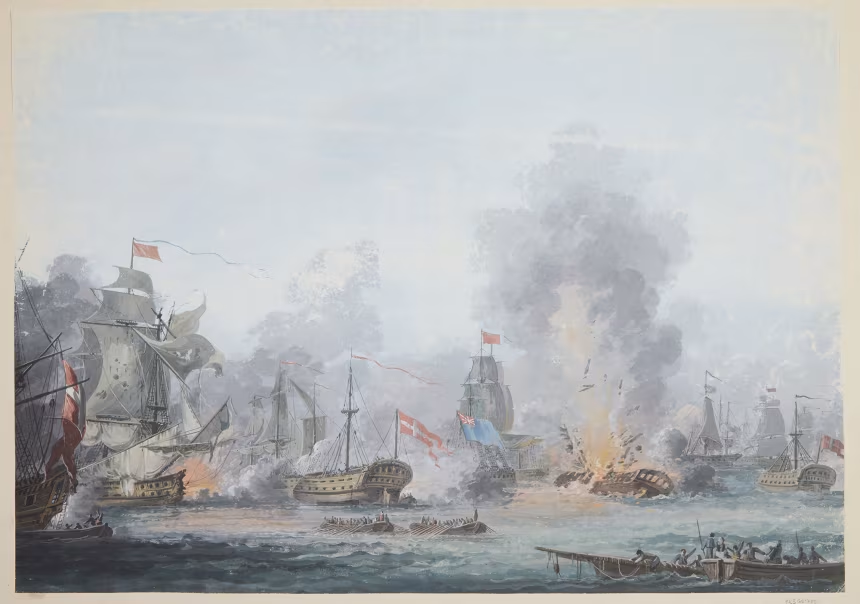
In a discovery described as extraordinary, maritime archaeologists have uncovered the remains of a Danish warship lost more than two centuries ago during the Battle of Copenhagen.
The wreck was identified as the Dannebroge, a vessel that sank in 1801 after being attacked by forces led by British naval commander Horatio Nelson. The find was made by experts from the Viking Ship Museum during a seabed survey in Copenhagen Harbor.
Lying around 15 meters below the surface in near-zero visibility conditions, the ship’s remains were located as part of preparations for the construction of the Lynetteholm, a controversial artificial peninsula designed to protect the Danish capital from rising sea levels.
According to archaeologists, the dimensions of the wreck match historical drawings of the Dannebroge almost exactly. The surrounding seabed is scattered with cannonballs and other battle debris, with at least two cannons already recovered.
The Dannebroge played a central role in Denmark-Norway’s defense during the battle. After hours of intense fighting against the superior British fleet, the ship caught fire and eventually exploded, marking a devastating moment in the conflict.
Beyond the ship itself, the excavation has revealed deeply human traces of the past. Items such as shoes, fragments of clothing, clay pipes, and uniform insignia have been recovered, offering a glimpse into the lives of the crew.
More poignantly, archaeologists also discovered human remains, including a jawbone and several other bones believed to belong to sailors who perished in the battle. Historical records indicate that dozens of crew members died, while many others were listed as missing.
Despite the Battle of Copenhagen being a well-documented event, this marks one of the first times it has been explored through modern archaeological investigation—adding a powerful new dimension to the historical narrative.
All recovered materials are now being carefully documented and scanned in 3D as researchers continue their work at the site.
News You Should See
P&G Raises Fiscal 2027 Cost Warning as Oil and Freight Expenses Threaten Profits
Chemical Tank Leak in Toledo Triggers Evacuations and Industrial Disruptions
Judge Sets December 11 Deadline for Trump Deposition in BBC Defamation Case
Iowa Senate Race Tests How Far Republicans Can Separate Themselves From Trump
California State Workers Strike Over Pay, Healthcare and Return-to-Office Rules
Streaming’s October Showdown: How Disney, Netflix and Major Entertainment Brands Compete for Audiences
Latest News
Procter & Gamble expects commodity, energy and transportation costs to reduce fiscal 2027 profit by $1.4 billion. Quarterly sales rose 4% to $23.28 billion, beating analyst expectations.
A ruptured chemical tank in Toledo, Ohio, prompted evacuations, school closures and an industrial shutdown. Authorities have reduced the restricted zone as the release slows and cleanup preparations continue.
A federal judge has ordered Donald Trump to give a deposition by December 11, 2026, in his $10 billion lawsuit against the BBC, with possible sanctions for noncompliance as the discovery deadline approaches.
Iowa’s 2026 Senate race pits Republican Ashley Hinson, balancing Trump support with economic concerns, against Democrat Josh Turek, who emphasizes bipartisanship amid rising campaign spending.
Thousands of California state workers struck on October 21 over a proposed three-year pay increase, healthcare costs and a four-day office attendance requirement as contract negotiations continued.
October 2026 brings major entertainment releases across Disney+, Netflix, HBO Max, Hulu, Prime Video and Peacock. Explore how familiar franchises, exclusive programming, new music and video games shape competition for streaming audiences.
Saudia advises travelers to book flights through Al Qassim Airport for Riyadh connections, offering free hourly shuttle buses in both directions until further notice.
An AP-NORC poll shows Democratic confidence in accurate vote counting falling to 55%, while Republican confidence rises to 38%, highlighting election integrity concerns ahead of the 2026 US midterms.
Donald Trump campaigns in North Carolina ahead of the November 2026 midterms as low approval ratings, rising fuel costs, Democratic early-voting gains and funding disparities challenge Republican efforts to retain control of Congress.