10 Best Places to Visit in September 2026 for Wildlife, Culture and Adventure
From Namibia’s wildlife and Jordan’s Red Sea to Mongolia’s eagle hunters and Catalonia’s mountains, September opens a diverse window for global travel

September occupies a distinctive position in the global travel calendar. It marks the transition between peak summer and autumn in the Northern Hemisphere, while the Southern Hemisphere begins moving toward spring. For travelers, that seasonal shift can translate into more comfortable temperatures, fewer crowds and a wider choice of experiences.
The appeal of September is not limited to conventional beach destinations. Wildlife viewing, cultural events, outdoor adventures, food experiences and scenic journeys all benefit from conditions that are difficult to replicate during the busiest months of the year.
For 2026, a particularly diverse group of destinations stands out, ranging from remote wilderness in North America to the deserts of Namibia, the mountains of Mongolia and the Mediterranean coast of Türkiye.
Isle Royale, Michigan
Travelers looking for genuine isolation will find few options more compelling than Isle Royale National Park in Michigan.
Located in Lake Superior, the park consists of one large forest-covered island surrounded by roughly 450 smaller islands. It is a UNESCO Biosphere Reserve and provides habitat for species including moose, wolves, otters, loons and numerous birds.
The park is relatively difficult to reach, with access primarily by passenger ferry or floatplane. That inconvenience is part of its appeal: the journey naturally limits visitor numbers and helps preserve the wilderness character of the destination.
September is particularly attractive because the summer crowds and insects have declined while conditions remain suitable for hiking, kayaking and camping. The park contains around 272km of trails, and multi-day paddling routes provide an opportunity to explore its shoreline and inland waterways.
For travelers increasingly interested in disconnecting from crowded destinations, Isle Royale represents a model of low-volume, nature-focused tourism.
Southwest Türkiye
The southwestern Mediterranean coast of Türkiye offers a different September proposition: the possibility of extending summer after the busiest holiday period has ended.
As schools reopen and peak-season crowds decline, the region retains warm weather and comfortable sea temperatures, while archaeological sites remain accessible.
The Turquoise Coast also offers considerable variety.
Ölüdeniz is particularly associated with paragliding, while Patara combines a long sandy beach with historical significance as the birthplace of St Nicholas. In Çıralı, visitors can explore a protected coastal environment where sea turtles nest, with hatchlings potentially appearing from mid-September.
Travelers seeking a quieter experience can continue east of Alanya, where coastal communities receive fewer international tourists. Kızkalesi offers beaches, caves and a striking medieval castle positioned offshore.
The strategic advantage of visiting in September is therefore not simply lower crowd levels. It is the ability to combine beach tourism, heritage and outdoor activities under more manageable conditions.
Namibia
For wildlife enthusiasts, September is one of Namibia’s strongest months.
The country enters a dry period in which vegetation becomes thinner and wildlife increasingly concentrates around a smaller number of water sources. This makes animal sightings easier, particularly in Etosha National Park.
Visitors may encounter elephants, cheetahs, black rhinos, giraffes, oryx and other species around water holes.
Another advantage is the accessibility of the park. Its road network makes self-drive safaris practical for experienced travelers, allowing visitors to explore independently rather than relying exclusively on guided tours.
The appeal of Namibia in September consequently comes from the interaction between climate and wildlife behavior. The harsher dry-season landscape creates conditions in which observing animals becomes more predictable, turning the natural environment itself into the central tourism asset.
Guyana
Guyana offers a markedly different form of nature tourism.
The country combines rainforest, waterfalls, rivers and wildlife, with opportunities to encounter jaguars, giant otters, harpy eagles and nesting turtles.
September is particularly useful because it falls between major wet periods in much of the country. Road travel can become easier, while the rainforest remains exceptionally green.
Kaieteur Falls is the headline attraction, dropping 226 meters in a single plunge into the surrounding rainforest.
But the wider experience extends beyond the waterfall. Visitors can explore the Iwokrama rainforest and its canopy walkway, stay at ecolodges connected to Indigenous communities, search for wildlife in the Rupununi and experience the vast landscapes around Dadanawa Ranch.
Guyana’s tourism proposition is therefore based less on mass-market attractions and more on biodiversity, conservation and immersive experiences.
Dublin
September provides an attractive balance for visitors to Dublin.
The city typically sees tourist numbers begin to fall after the busiest summer months, while the weather can remain relatively favorable.
Dublin combines a lively pub culture with museums, galleries and historic landmarks. One notable cultural institution is the Chester Beatty Library at Dublin Castle, recognized for its important collections.
September also brings the Dublin Fringe Festival, adding a significant program of performances to the city’s cultural calendar.
For travelers, this makes Dublin particularly suitable for a city break that combines heritage, arts and social experiences without the intensity of peak summer tourism.
The destination demonstrates another advantage of September travel: cultural cities can become more comfortable and accessible once the largest seasonal crowds begin to disappear.
Altai Mountains, Mongolia
Western Mongolia provides one of September’s most distinctive cultural travel experiences.
The Altai Mountains sit at the meeting point of several major geographic and cultural spheres, with Russia, China, Kazakhstan and Mongolia converging around the wider region.
Among the Kazakh communities of western Mongolia, the ancient practice of golden-eagle hunting remains an important cultural tradition.
September and October are associated with festivals in locations including Altai, Ölgii and Sagsai, where eagle hunters demonstrate their skills while wearing traditional clothing and participating in competitions involving wrestling, archery, horse riding and other activities.
The season is also well suited to exploring Altai Tavan Bogd National Park, where visitors can hike among waterfalls, ancient petroglyphs and mountain lakes.
Travelers can experience the landscape on horseback or with Bactrian camels, while staying in traditional gers.
The destination therefore combines cultural heritage with adventure tourism in a way that few mainstream destinations can replicate.
Nova Scotia
September transforms Nova Scotia into a destination for travelers whose priorities revolve around food and seasonal produce.
The Canadian province enters the early stages of autumn harvest, creating opportunities to experience seafood, wine and fruit at their seasonal peak.
Visitors can sample scallops from the Bay of Fundy, try lobster rolls along the coast and explore the province’s growing wine industry.
The Annapolis Valley is home to vineyards including Domaine de Grand Pré, while Benjamin Bridge in the Gaspereau Valley has gained attention for its sparkling wines.
September is also an important month for local blueberries and apples, which appear in pies and other regional foods.
Nova Scotia demonstrates how culinary tourism can be driven by seasonality. Rather than focusing on a single landmark, the visitor experience is distributed across farms, vineyards, coastal communities and local producers.
Red Sea, Jordan
Jordan’s Red Sea coast around Aqaba becomes particularly attractive as the extreme heat of summer begins to ease.
September and October are considered among the strongest months for diving, with sea temperatures around 26°C and exceptionally clear water.
The marine environment contains more than 510 recorded fish species, alongside eagle rays, moray eels, turtles, lionfish and other reef life.
Aqaba offers more than 30 dive sites, many of them close to shore and accessible to snorkelers as well as experienced divers.
The sites range from shallow coral gardens to underwater canyons and shipwrecks, including the Cedar Pride wreck, located between roughly 7 and 25 meters below the surface.
This combination of warm water, visibility and accessible dive sites makes Aqaba a strong option for travelers seeking an aquatic experience without the extreme heat associated with the height of summer.
New Zealand
September marks the beginning of spring in New Zealand, creating a landscape that combines snow-covered mountain peaks with newly green fields and relatively low tourist numbers.
For travelers concerned about unpredictable spring weather, the country’s scenic railway network offers an alternative way to experience the landscape while remaining comfortable.
The Northern Explorer connects Auckland and Wellington, crossing farmland and passing the volcanic landscapes of Tongariro.
After crossing to the South Island, travelers can take the Coastal Pacific along the shoreline between Picton and Christchurch, before continuing on the TranzAlpine across the Canterbury Plains and Southern Alps.
The rail experience turns transportation into part of the destination itself.
Instead of simply moving between attractions, travelers can treat the journey as a scenic experience, observing mountains, coastlines and rural landscapes from the train.
Catalonia, Spain
Catalonia offers one of the most versatile September experiences on the list.
While Barcelona is widely associated with overtourism, the wider region provides a much broader tourism landscape, extending from the Mediterranean to the Pyrenees.
September temperatures, with average highs around 25°C, are suitable for outdoor activities without the intensity of midsummer heat.
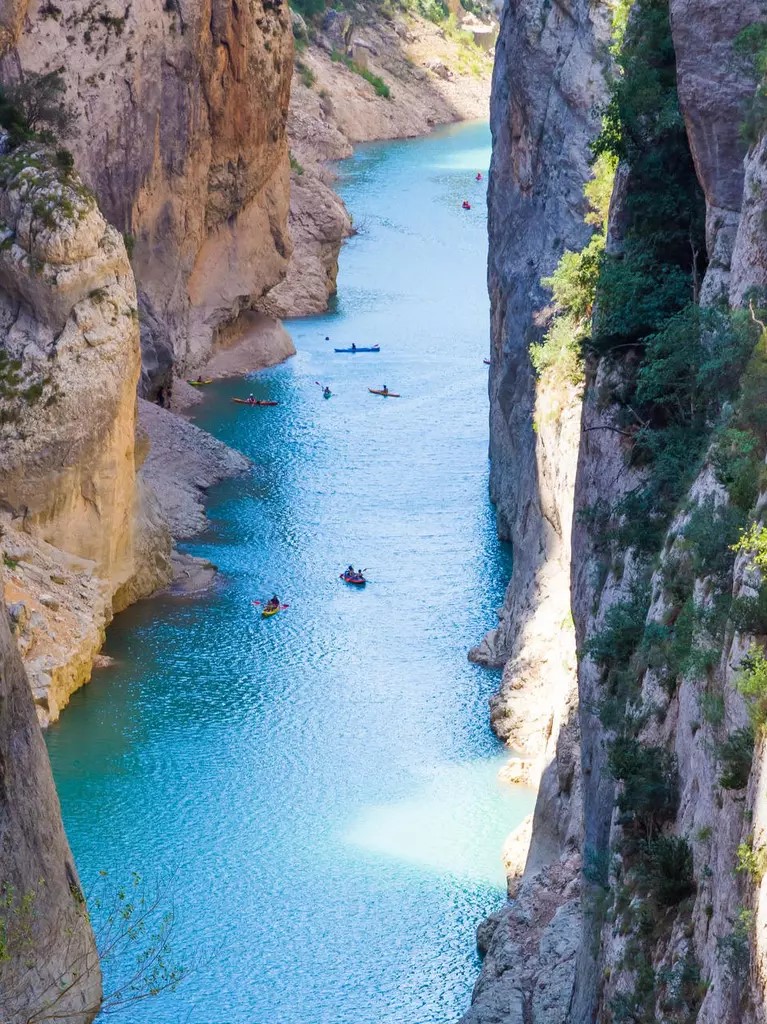
Water-based travelers can kayak through the Mont-rebei Gorge, where cliffs rise around 500 meters above the water, explore the Ebro Delta and raft along the Noguera Pallaresa River.
On land, the options include hiking around the lakes of Aigüestortes i Estany de Sant Maurici National Park, cycling through the volcanic landscapes of La Garrotxa and climbing in the Val d’Aran.
Catalonia’s approach also reflects a broader shift toward sustainable tourism. The region was the first to receive UNESCO’s Biosphere Sustainable tourism certification, highlighting an effort to connect tourism development with environmental protection.
For travelers, that creates an opportunity to move beyond Barcelona and distribute their experience across a much larger geographic area.
Why September stands out
The strongest argument for September travel is not that every destination is universally better during this month.
Rather, September changes the balance between weather, crowds, access and experiences.
Mediterranean destinations such as southwest Türkiye remain warm while becoming quieter. African destinations such as Namibia enter a period that favors wildlife observation. Cultural destinations such as Dublin benefit from a reduction in summer crowds, while Mongolia offers access to seasonal cultural festivals.
The month also supports a broader trend in tourism: travelers are increasingly looking for experiences rather than simply destinations.
Wildlife encounters, regional food, cultural traditions, outdoor adventure and scenic transportation can become the central reason for a trip.
This makes September particularly valuable for travelers willing to move beyond the conventional summer itinerary.
It also provides an opportunity for destinations to distribute tourism more evenly throughout the year. Extending the travel season can reduce pressure on peak periods while supporting local businesses during months that might otherwise experience weaker demand.
For travelers planning their next trip, September therefore offers something more valuable than simply favorable weather.
It offers flexibility.
From remote islands and African national parks to Mediterranean beaches, Central Asian mountains, Canadian food trails and Jordanian reefs, the month provides an unusually broad range of experiences.
The best destination ultimately depends on the type of journey a traveler wants.
For solitude, Isle Royale stands out. For wildlife, Namibia is difficult to ignore. For cultural immersion, the Altai Mountains offer something rare. For food, Nova Scotia provides a seasonal advantage. For warm-water adventure, Jordan’s Red Sea is compelling.
And for travelers who want several experiences in one trip, Catalonia, Türkiye and New Zealand demonstrate how geography can turn September into a season of exploration rather than simply the end of summer.
News You Should See
2026 Nobel Medicine Prize Honors Scientists Behind Optogenetics Breakthrough
Oil Prices Edge Lower as Stronger Middle East Exports and G7 Reserves Ease Supply Concerns
Trump Offers U.S. Assistance to Russia After Death at Siberian Plague Research Institute
Trump Takes Economic Message to Nebraska as GOP Faces Rising Cost-of-Living Pressure
U.S. Appeals Court Weighs Trump Administration’s $2.6 Billion Harvard Funding Fight
U.S. Midterm Elections Begin With Resilient Jobs Market and Persistent Cost Pressures
Latest News
The 2026 Nobel Prize in Physiology or Medicine honors Karl Deisseroth, Peter Hegemann and Georg Nagel for pioneering research behind optogenetics and its impact on neuroscience.
Oil prices edged lower as stronger Middle Eastern exports and a planned G7 release of 100 million barrels eased immediate supply concerns, while Gulf security risks and the Strait of Hormuz kept markets alert.
President Donald Trump said the United States would help Russia if needed after a laboratory worker died at a Siberian plague research institute, as Russian authorities imposed precautionary quarantine measures.
Trump’s Nebraska campaign stop highlights rising fuel and grocery costs, beef prices and growing economic pressure on Republicans ahead of the November midterm elections.
A U.S. appeals court is reviewing the Trump administration’s effort to cut Harvard’s federal research funding, with more than $2.6 billion at stake.
The U.S. enters the 2026 midterm elections with unemployment at 4.2%, while higher living and energy costs create economic pressure for households and businesses.
US services growth eased in September as input prices climbed to their highest level since July 2022, with fuel costs, supply-chain disruptions and strong demand increasing pressure on businesses.
Rising Treasury yields are increasing U.S. borrowing costs as Washington manages record debt, persistent inflation and strong economic demand, narrowing its policy options.
A EGP 16 million corporate partnership will establish and equip a bone marrow transplant unit at Cairo’s Coptic Hospital, supporting access to specialized treatment for patients.